

16 min 11 sec
Available in: English
Shrinks: The Untold Story of Psychiatry
A psychiatrist's history of his own field, from chained asylums and lobotomies to Freud, the first psychiatric drugs and genetics, showing how evidence finally replaced untested theory as psychiatry's guide.
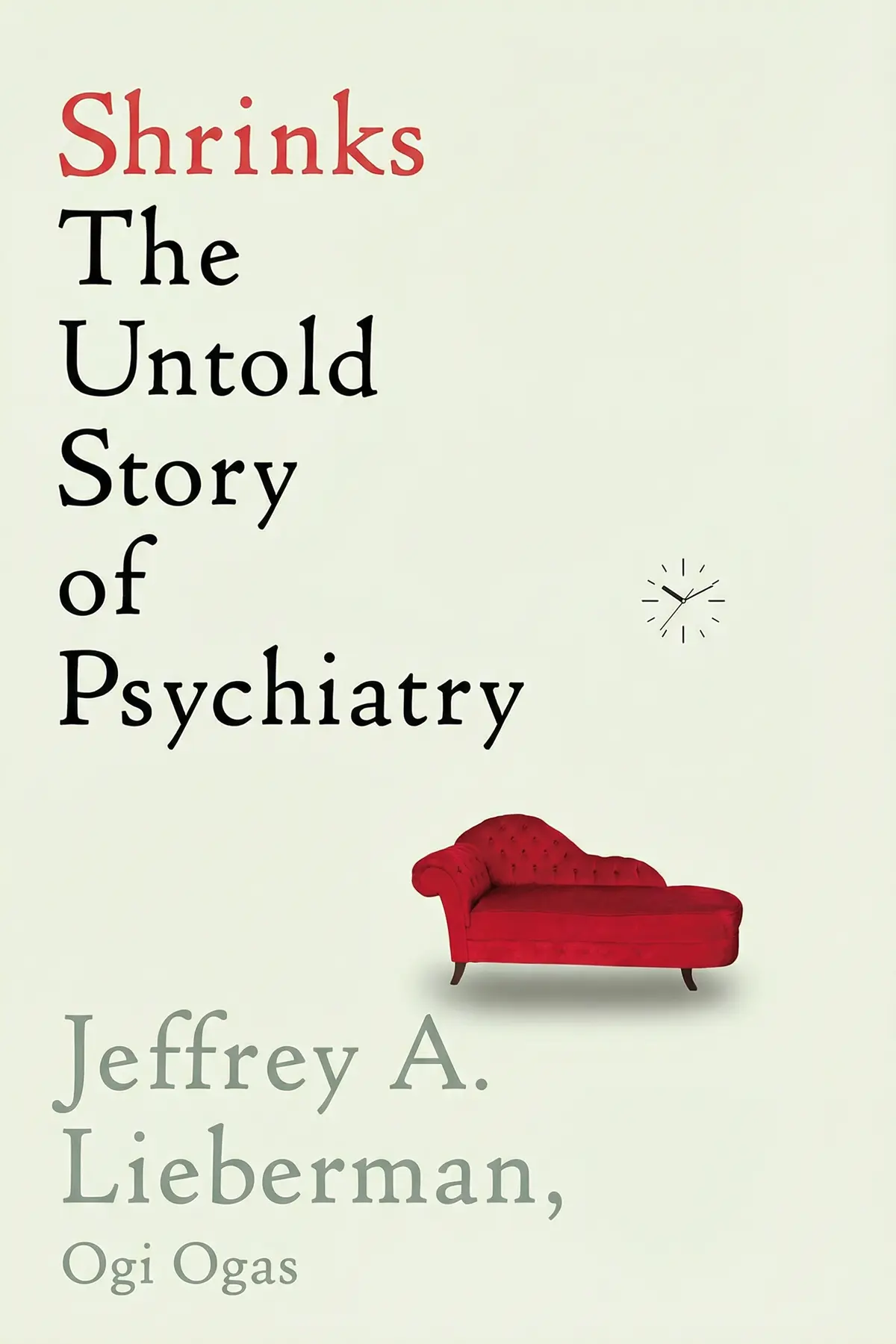
Table of Content
1. Introduction
58 sec
About one person in three will face some form of mental illness in their lifetime, yet most of us picture psychiatry as little more than a couch and a doctor taking notes. In Shrinks, Columbia psychiatrist Jeffrey A. Lieberman, writing with neuroscientist Ogi Ogas, tells a darker and more hopeful story than that.
For roughly two centuries, psychiatry ran on confident theories nobody bothered to test. Patients paid for those theories in chains, spinning chairs, deliberate fevers and damaged brains. The field earned its place in medicine only when it began tying diagnosis to what could be observed and treatment to evidence about the brain.
That arc gives you a practical test for any claim about the mind you meet, whether it comes from a friend, a therapist or a headline about a new drug. Ask what the evidence shows, however convincing the story sounds.
2. Basic dignity was psychiatry's first real medicine
2 min 04 sec
Two physicians took the chains off asylum patients and gave them clean rooms and daily routines. One of them then strapped his patients into a spinning chair, and his reasons explain a mistake that kept repeating for centuries.
3. Understand the inner conflict Freud put at the center
1 min 57 sec
A hungry churchgoer staring at the communion wafers holds the key to Freud’s model of the mind. His picture of warring inner forces changed psychiatry, and it still shapes the way people talk about themselves.
4. Popularity is no proof, as psychoanalysis showed
2 min 08 sec
By 1960 nearly every top psychiatric job in America belonged to one school of thought. Its followers then began blaming mothers for schizophrenia and autism, with almost nothing to support the charge.
5. Tell a reckless cure from a refined one
2 min 06 sec
Two Nobel Prizes went to treatments that involved infecting patients with malaria and cutting into their brains. A third method, born from violent seizures, survived and is still used today, for a revealing reason.
6. The medicines that finally let patients go home
1 min 58 sec
A violent young man in a French hospital was given an allergy drug, and within weeks he walked out. His case opened a decade that emptied wards and gave depression and mood swings their first real treatments.
7. Learn why a public scandal forced honest diagnosis
2 min 01 sec
Eight healthy volunteers faked one symptom, got admitted to psychiatric hospitals and were labeled with a serious illness. Nobody caught them, and the embarrassment pushed psychiatry into rewriting how it names every disorder.
8. Genes and brain scans are making treatment personal
1 min 49 sec
Some relatives of a famous actress had psychiatric symptoms traced to a single extra gene copy, and a simple supplement helped them quickly. Their case hints at where mental health care is heading.
9. Conclusion
1 min 10 sec
Shrinks is a story about healers who trusted their ideas more than their results. Pinel and Rush showed real compassion, and Rush still spun his patients in a chair. Freud drew a brilliant map of the mind, and his followers used it to blame mothers for schizophrenia. Nobel Prizes went to malaria fevers and to lobotomy. In Lieberman’s account, psychiatry recovered when it accepted the discipline the rest of medicine already followed: name an illness by what can be observed, and keep a treatment only if it helps.
That discipline is worth carrying into your own life. When someone explains a mental struggle, yours or a loved one’s, ask whether the explanation can be checked or can only be believed. Treat family history as information a doctor should hear. And look again at treatments that carry old stigma, from medication to a much gentler ECT, judging them on today’s evidence instead of yesterday’s horror stories.
Pinel took the chains off in 1792. Freeing psychiatry from its own untested certainties took almost two centuries longer, and that harder release is what gives its future real promise.
About this book
What is this book about?
Roughly a third of all people will be struck by a mental illness sometime in life, yet most picture psychiatry only as a couch and a doctor taking notes. Jeffrey A. Lieberman, a Columbia psychiatrist and former head of the American Psychiatric Association, tells the real story of his profession, including the parts it would rather forget. With neuroscientist Ogi Ogas, he follows psychiatry from eighteenth-century asylums, where patients were chained and put on public display, through spinning chairs, animal magnetism and orgone boxes, Freud's talking cure and its decades of dominance, fever cures, lobotomy and shock treatments. Then come the drugs of the 1950s, the public backlash of the 1960s and 1970s, and the 1980 rewrite of the diagnostic manual. The thread running through it all is that psychiatry hurt people whenever it trusted elegant ideas over checkable results, and it improved whenever it looked at symptoms, outcomes and biology. Readers get a clear history of mental health care and a practical habit for judging any claim about the mind.
Book Information
Who it's for
Curious how psychiatry evolved
Readers curious about how mental illness has been understood and treated, from asylums to genetics.
Families weighing treatment options
People with a family member facing mental illness who want to weigh treatments with clearer eyes.
Considering psychology or medicine
Students considering psychology, medicine or psychiatry who want the field's honest history.
About the Author
Jeffrey A. Lieberman
Jeffrey A. Lieberman, MD, chairs the psychiatry department at the Columbia University College of Physicians and Surgeons, directs the New York State Psychiatric Institute and has served as psychiatrist in chief of New York-Presbyterian Hospital. He is a former president of the American Psychiatric Association and was elected to the Institute of Medicine in 2000. Ogi Ogas is a writer and neuroscientist who studies the brain with mathematical and computational methods and was a visiting scholar at Harvard's Graduate School of Education.
Ratings & Reviews
Ratings at a glance
What people think
Listeners find this work to be essential reading for those in psychiatry, commending the superb writing style and precise narrative. Furthermore, the text provides an engaging look at the history of the profession and offers deep perspectives on managing mental illness. Listeners also appreciate how accessible the material is, with one listener noting it is mandatory reading for psychiatry residents, while another emphasizes the author’s rare level of modesty within the field.
Top reviews
Luke
Lieberman offers a raw, unfiltered look at a field that usually hides its skeletons behind clinical jargon and white coats. This isn't just a dry textbook; it’s a narrative journey through the dark ages of lobotomies and "ice-pick" surgery toward the modern neuroscientific era. To be fair, the author’s background as a past president of the APA could have led to a defensive tone, but he displays unusual humility throughout. He acknowledges that for centuries, we were essentially guessing, often with catastrophic results for the patients. The sections on the DSM’s evolution are particularly gripping, revealing the political infighting that shaped what we now consider "disorders." While some might find the heavy focus on biology a bit narrow, it serves as a necessary course correction for the profession. Every medical student should have this on their shelf.
Show moreCee
Finally, a book that treats the history of mental health like a gripping biography rather than a dusty encyclopedia. Dr. Lieberman writes with a brilliant style that manages to be both authoritative and deeply personal. I’ve always been curious about why psychiatry has such a "stepchild" reputation in medicine, and this book clarifies the systemic failures and the eventual rebirth of the field. The account of the 1973 crisis, where researchers exposed the inability to distinguish "sane" from "insane," was a genuine page-turner. Look, the book isn't perfect; there’s a distinct bias toward biological treatments that might irk fans of talk therapy. However, the sheer scope of the research and the author's willingness to "throw Freud under the bus" makes for an incredibly compelling narrative. It's essential reading for anyone who wants to understand the machines inside our heads.
Show moreGabriel
Wait until you get to the chapter on Robert Spitzer and the DSM-III; it’s basically a political thriller. Who knew that a diagnostic manual could cause so much blood on the floor? Lieberman’s writing is sharp and he has a knack for turning dry medical history into a series of vivid portraits. From Mesmer to Freud to the modern genomic revolution, the "story" here is one of constant failure and occasional, brilliant success. Gotta say, the way he describes the internal civil war between the psychoanalysts and the biological psychiatrists is worth the price of admission alone. While it’s technically "required reading" for residents, it’s accessible enough for any layperson with an interest in the human condition. It’s a warts-and-all masterpiece that finally gives the profession the honest reckoning it deserves.
Show moreTern
The level of detail in this account is staggering, yet it never feels like a chore to read. Lieberman and Ogas have crafted an incredibly accurate and insightful narrative that tracks the evolution of the mind-sciences. I was particularly impressed by the discussion on homosexuality and how it was eventually—and rightfully—removed from the list of disorders. The book doesn't just list dates and names; it captures the atmosphere of desperation and the "audacious treatments" that defined early psychiatry. To be fair, the author’s enthusiasm for the latest drugs might come off as a bit biased to some, but he backs it up with a clear explanation of the underlying science. It’s a brilliant synthesis of history, medicine, and human drama. If you’re at all interested in how we define "normal," you need to read this.
Show moreAndrew
How did we get from "animal magnetism" to modern Prozac? Shrinks answers this question by dragging psychiatry’s past out of the shadows and into the light. It’s a fascinating, if sometimes grisly, overview of how doctors tried to treat the mind before they even understood the brain. I was particularly struck by the detailed account of the "refrigerator mother" myth and how long it took to debunk that harmful theory. The writing style is surprisingly accessible for such a technical subject, though it does drag slightly in the middle sections concerning administrative changes in the DSM. Truth be told, it’s a bit of a horror story until the 1970s, but Lieberman’s optimism for the future of genetics and neuro-imaging is infectious. It’s a solid, informative read that doesn't shy away from the profession's many missteps.
Show moreNarongrit
Picked this up on a whim and was immediately sucked into the "horror story" that was early 20th-century medicine. It’s hard to believe that malaria therapy and insulin comas were once considered cutting-edge treatments. Lieberman does a great job of explaining why doctors were so desperate that they turned to such barbaric methods—the alternative was simply letting people rot in asylums. The book is written with an unusual humility that you don't often see from high-ranking medical professionals. My only real gripe is that the ending feels a bit too "happily ever after," glossing over some of the modern issues with overmedication. Still, the historical context provided here is invaluable for anyone trying to navigate the mental health system today. It’s a dense read, but well worth the effort.
Show moreSupachai
Ever wonder why people still joke about "shrinks" and couches? This book peels back the curtain on the "Viennese rogue" Sigmund Freud and explains how his ideas held American medicine hostage for decades. It’s an eye-opening look at how psychiatry struggled to find its footing compared to other fields like surgery or cardiology. The writing is clear and engaging, though I think the authors could have trimmed some of the more repetitive arguments about the biological basis of mental illness. In my experience, the most interesting parts were the specific case studies and the descriptions of how treatments like Thorazine finally allowed the "asylums" to be emptied. It’s a fascinating overview that balances the grim past with a hopeful, data-driven future. A bit didactic in spots, but ultimately very rewarding.
Show moreTariq
After hearing so many conflicting things about psychiatry, I wanted a definitive history. Shrinks delivered exactly that, though it’s a much darker journey than I anticipated. The descriptions of the "Rotational Chair" and early "shock treatment" are genuinely disturbing, but they provide the necessary context for where we are today. The book is surprisingly readable, though it occasionally veers into "professional defense" mode, where the author justifies the field's existence. I appreciated the deep dive into the anti-psychiatry movement of the 60s, as it added a lot of needed perspective to the narrative. It’s not a light read, but it’s an important one for understanding the stigma that still surrounds mental health. A highly informative, well-researched book that manages to make technical concepts feel personal and urgent.
Show moreSayan
As someone who has always been curious about the inner workings of the DSM, I had high hopes for this one. There are certainly chapters that are absolutely riveting, especially the parts regarding the "ice-pick" lobotomies and the rise of ECT. However, the structure feels somewhat chaotic at times, jumping between decades without a clear through-line. Personally, I found some of the terminology a bit dated, and the way developmental disorders like autism are framed occasionally felt a bit off. The author is clearly an expert, but he spends so much time defending the profession's current state that the "untold story" part gets buried under a layer of PR. It’s a decent history, but it lacks the nuance I’ve found in other books on the same topic.
Show moreOrm
Not what I expected based on the glowing blurbs. While I was hoping for a layperson’s guide to modern mental health, I found myself wading through an overly didactic history lesson that felt like running uphill in roller skates. The prose is dense, and the "storytelling" often gets lost in long-winded arguments for psychiatry’s legitimacy as a medical science. Frankly, the chapters on early asylums are repetitive and focus more on the "barbarism" for shock value than on actual patient experiences. It felt like the author had an axe to grind against the Freudians, which made the narrative feel one-sided and dated in its perspective. I appreciate the research involved, but the execution was just too heavy for a casual reader like myself. I struggled to finish it.
Show moreQuestions about this book
What is Shrinks by Jeffrey Lieberman about?
Shrinks tells the history of psychiatry, written by a leading psychiatrist with neuroscientist Ogi Ogas. It runs from chained eighteenth-century asylums through Mesmer, Freud and psychoanalysis, fever cures, lobotomy and shock treatment, to the drugs of the 1950s, the anti-psychiatry backlash and today’s genetics and brain imaging. Its argument is that psychiatry did harm when it trusted untested theories and improved once it based diagnosis and treatment on evidence.
What does Shrinks say about Freud and psychoanalysis?
The authors credit Freud with giving psychiatry its first coherent theory of the mind, built on the id, ego and superego, and with inventing the talking cure. They also criticize psychoanalysis as closer to faith than science. Freud treated his assumptions as unquestionable and cast out dissenting students, and later analysts blamed mothers for schizophrenia and autism without solid evidence.
Is electroconvulsive therapy still used according to Shrinks?
Yes. The book traces ECT to 1938, when Ugo Cerletti and Lucino Bini in Italy first used electric shocks to trigger seizures and found symptoms eased, especially in depression. Today it is used for severe schizophrenia, depression and mania. Thanks to anesthesia, muscle relaxants and lower, targeted doses, the authors call it effective and safe, unlike the earlier insulin and metrazol seizures.
What was the Rosenhan experiment described in Shrinks?
In 1973 psychologist David Rosenhan published a study in Science in which eight healthy people claimed to hear voices and were admitted to twelve psychiatric hospitals. They then said the voices had stopped, yet all but one were diagnosed with schizophrenia and nobody detected the pretense. The scandal fed the anti-psychiatry movement and helped push the 1980 rewrite of the diagnostic manual around observable symptoms.
How can I apply the lessons of Shrinks?
The book’s history suggests asking whether any explanation of a mental health problem can be checked or only believed. It shows the value of symptom-based diagnosis, which makes second opinions meaningful. It also shows that family history matters: schizophrenia risk rises from one percent to ten percent with one affected relative, so share that history with a doctor.
Readers also enjoyed


A History of Iran: Empire of the Mind
Michael Axworthy

ADHD an A-Z: Figuring It Out Step by Step
Leanne Maskell

A History of the World in 6 Glasses
Tom Standage


A Long Way Gone: Memoirs of a Boy Soldier
Ishmael Beah


AUDIO SUMMARY AVAILABLE
Listen to Shrinks in 15 minutes
Get the key ideas from Shrinks by Jeffrey A. Lieberman, plus 5,000+ more nonfiction titles.
- 5,000+ titles
- Listen as much as you want
- 7-day free trial
- Cancel anytime









