

59 Seconds: Change Your Life in Under a Minute
Richard Wiseman
 English
Uses the parts of a motorcycle to show how to stop living in the past, drop fear-driven excuses, improve one percent a day and gather mentors and peers who help you steer toward your goals.
1 min 02 sec
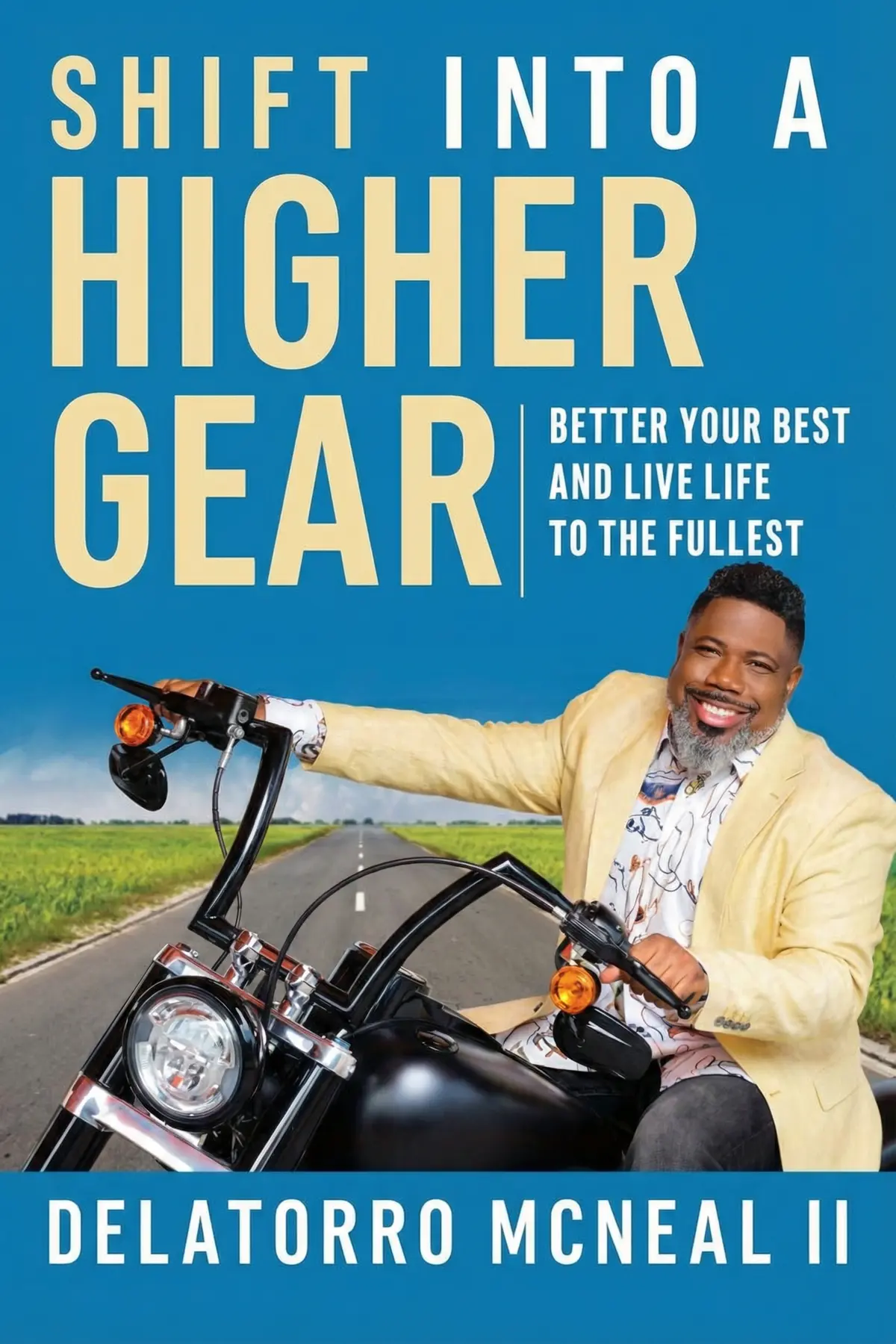
If you feel stalled, coasting through the same weeks or replaying old disappointments, the problem may not be your engine. It may be the way you are sitting on the bike. In Shift Into a Higher Gear, speaker and performance expert Delatorro McNeal II, who brings his own motorcycle along when he gives his talks, treats a life as a motorcycle: the back wheel that drives you is your past, and the front wheel that steers is your vision of what comes next. Many people, he argues, ride facing backward and let old mistakes choose the direction.
The argument runs like this. Progress comes from facing forward, lifting the fears that keep you parked and moving through small, steady shifts, with your emotions as fuel and the right people leaning with you. Each part of the bike becomes a practical check for your own week: where you are looking, what keeps you stopped, which gear you are in and who rides beside you.
1 min 31 sec
Nobody would mount a motorcycle facing the back wheel, yet many people live exactly that way. How a bike delivers its power reveals what your history is for, and what it should never be allowed to do.
1 min 48 sec
A motorcycle refuses to start while one small part is still down. McNeal says your excuses work the same way, and he offers a surprising fact about where most of your fears came from.
1 min 36 sec
You can be busy every day and still be coasting, or parked without admitting it. Three unhealthy gears hide in plain sight, and each one damages you in a different way.
1 min 35 sec
Big goals tempt ambitious people into big, sudden changes, and that is often exactly why they end up back where they began. McNeal explains the difference between leaping and shifting.
1 min 31 sec
Most motorcycles cannot go backward at all. McNeal uses that design to explain what really drives you forward, and why even your worst moods may be carrying useful instructions.
1 min 42 sec
Riders cannot hide from rain or wind, and pretending the weather is fine gets them hurt. McNeal argues that optimism works the same way, and he adds a second way of looking at every problem.
1 min 37 sec
A motorcycle turns only when the rider leans, and a passenger leaning the wrong way can bring it down. That simple fact shapes how McNeal thinks about effort, mentors and the friends you keep.
1 min 03 sec
McNeal’s motorcycle works as a checklist you can carry in your head. It asks where you are looking, what keeps the engine off, which gear you are really in, which feelings you burn as fuel, how honestly you read the road and who is leaning with you. None of the answers calls for a dramatic reinvention. Each points to a small correction you can make while already moving.
The book’s strongest practical claim is that ordinary, repeated progress outlasts heroic jumps. Take the excuse you repeat most and rewrite it as an asset you actually believe. Choose one area of your life and define what one percent better looks like tomorrow. And find a few people heading the same way, ideally a small group of about five that meets regularly, so someone notices when you drift back into neutral.
There is a reason he rolls a motorcycle onto the stage. The machine only knows how to go forward, and the rider steers it by leaning into the turn they want.
Plenty of capable people feel stalled. They coast through routines, give up on goals or keep replaying old failures, and they assume the cure is a dramatic leap. Delatorro McNeal II, a speaker who rides his own motorcycle onto the stage, argues for something smaller and steadier. He treats your life as a motorcycle. The back wheel, which drives the bike, is your past and what it taught you. The front wheel, which steers, is your vision. The kickstand is the fear and excuses that keep the engine off. The gears show whether you are coasting, parked, stuck in reverse or actually driving, and your emotions are the engine. Steering means leaning your time and effort toward what you want, with riding partners who lean with you. Readers get a set of simple checks to run on their own lives: reframing the excuse they repeat most, spotting which gear each area of life is in, aiming for one percent better each day, naming the emotions they want as defaults, viewing problems in their current state alongside their potential state, and forming a small mastermind group of mentors, mates and mentees.
Professionals who feel stuck in a career or routine and keep explaining why now is not the time.
People restarting after a setback who tend to replay old mistakes instead of planning the next move.
Anyone who wants a simple, memorable framework and a small group to keep them accountable.
Delatorro McNeal II is a motivational speaker, performance expert and entrepreneur who holds the Certified Speaking Professional designation. He has spoken for companies including Johnson & Johnson and JP Morgan Chase, as well as professional sports teams and church groups. He has written eight books, among them Thriving Through Your Storms and Caught Between a Dream and a Job. He has coached more than 350 aspiring speakers, authors, coaches and experts, led live training events such as Crush The Stage, and in 2016 became executive producer and star of THE KEYNOTE, a reality TV show about the speaking industry.
Listeners find this motivational book skillfully leads them on a path of personal evolution, incorporating insightful analogies throughout. Additionally, the text is simple to follow, with one listener observing that the principles are described in layman’s language. They also value its focus on implementation, with one listener highlighting the action steps provided, and describe it as useful and ready for instant use. However, the overall pacing of the content draws mixed reactions from listeners.
This book is like a shot of adrenaline for anyone feeling stuck in a rut. Delatorro McNeal II uses the motorcycle metaphor brilliantly to illustrate how we often sabotage our own progress by leaving the 'kickstand' of fear down. I loved the emphasis on making small, one percent improvements rather than trying to overhaul my entire life overnight. It makes the journey toward big goals feel manageable rather than overwhelming. The writing is punchy and direct, avoiding the fluff often found in this genre. I’ve already started looking for my 'posse' to help me lean into the turns. If you are tired of being in neutral, grab this immediately and start shifting gears.
Show morePicked this up during a particularly low point and it genuinely helped me reframe my perspective on failure. The idea that your past is just the rearview mirror and not the windshield is such a simple but powerful image. I’ve been letting old mistakes keep my kickstand down for years without even realizing it. The workbook is also a fantastic companion that helps you actually do the work instead of just nodding along to the text. I’m currently on my third week of 'shifting' and the small changes are already adding up. Dr. Delatorro has a way of making you feel capable of massive things. This is a must-read for anyone needing a mental reset.
Show moreI honestly think this is one of the most practical personal development books I've picked up this year. Dr. Delatorro takes complex ideas about emotional intelligence and success and breaks them down into layman’s terms. The motorcycle analogy is perfect because it emphasizes that you are the one in the driver’s seat. I’ve already shared the chapter on the 'kickstand of fear' with several of my colleagues who are struggling with new projects. It's an empowering read that doesn't just tell you what to do, but shows you how to think differently. Make sure you get the workbook too, as it really helps cement the lessons. Five stars for the clarity and the passion behind the writing.
Show moreEver wonder why some people seem to accelerate through life while you’re stuck in the slow lane? This guide provides a very clear roadmap for shifting your mindset and your actions. I found the concept of the 'posse' particularly helpful because I’ve always tried to be a lone wolf in my career. The author explains that you need people leaning with you to make the big turns, which really changed how I view networking. My only minor gripe is that some of the analogies feel a bit repetitive by the middle of the book. Still, the action steps at the end of each chapter are gold. It’s practical, grounded, and very easy to digest.
Show moreAs someone who usually finds self-help books a bit too abstract, I really appreciated the layman’s language used here. The author doesn't hide behind academic jargon; instead, he talks to you like a coach on the sidelines. Chapter 5 was a standout for me because it forces you to look at the words you use every day. It’s amazing how much we hold ourselves back just by the way we frame our challenges. The focus on cognitive reframing is presented in a way that feels immediately applicable to real-world problems. It took me a little longer to get through than expected because I wanted to sit with the prompts. Definitely a solid addition to my shelf.
Show moreThe chapter on shifting your posse was a massive wake-up call for my current social circle. I realized I was riding with people who were constantly leaning in the opposite direction of my goals. McNeal explains that who you ride with matters just as much as how you drive, and that resonated deeply with my current business struggles. Truth is, I’ve been playing it safe in neutral for too long because I was afraid of the 'accidental ignition' of real change. The writing style is conversational and high-tempo, which kept me engaged throughout most of the chapters. I would recommend this to any aspiring entrepreneur who feels like they’re hitting a ceiling. It's a very motivating read.
Show moreAfter hearing about the '1% better every day' concept in other books, I liked seeing it applied through the lens of shifting gears. The author makes a compelling case for why massive, sudden changes usually fail in the long run. By focusing on small, sustainable shifts, he makes success feel like an inevitable outcome of discipline rather than a stroke of luck. I’ve started applying the 'leaning' technique to my fitness goals, and it’s helping me stay consistent. The tone is very encouraging without being overly cheesy or unrealistic. It’s a very practical guide for anyone who is tired of the 'all or nothing' mentality. Definitely worth the time to read.
Show moreNot what I expected, but it still had some pearls of wisdom hidden in the pages. While the motorcycle theme is creative, it felt a bit stretched thin across the entire length of the book. I struggled with the reading pace in the middle sections where the momentum seemed to stall out significantly. To be fair, the advice on forming a mastermind group is excellent and something I plan to implement next month. It’s a decent introductory text for personal development, though seasoned readers might find some of the concepts a bit basic. If you’re new to goal setting, this is a great place to start. Otherwise, it might feel like a refresher course.
Show moreLook, the book has some fantastic 'golden nuggets' regarding accountability and steady growth. I particularly liked the advice to find a mastermind group of four or more people. However, the pace of the book felt very uneven to me, with some sections dragging on while others flew by too fast. I think the core message could have been delivered in about fifty fewer pages without losing much impact. On the positive side, the action-oriented approach ensures you aren't just consuming content passively. It’s a good book to keep on your desk for quick inspiration. Just be prepared for some sections that feel a bit repetitive if you read it straight through.
Show moreFrankly, I found the motorcycle analogy to be a bit distracting after a while. I understand the author's passion for riding, but it felt like every single point had to be forced into that specific framework. The book is very easy to read, which is a plus, but I was looking for more depth in the psychological aspects of change. It felt a bit like a collection of motivational speeches rather than a cohesive strategy. I did like the section on mentors and mentees, but it wasn't enough to save the experience for me. If you enjoy high-energy, metaphorical writing, you might love it. For me, it just didn't quite click or offer enough new information.
Show moreDelatorro McNeal II compares a life to a motorcycle. The back wheel that drives you is your past, the front wheel that steers is your vision, the kickstand is fear and excuses, the gears show whether you are coasting, parked, in reverse or driving, and your emotions are the engine. His argument is that progress comes from facing forward and making small, steady shifts, with people who lean in the same direction.
Leaping is trying to jump to a new level in one bound, like a crash diet that changes everything at once and collapses within weeks. Shifting means small, steady changes in habits, behavior and performance. McNeal suggests aiming to get one percent better each day at one thing, such as handling money or looking after your health, and letting consistency add up over time.
He traces most excuses to fear of failure or rejection, and notes that people are born with only two fears, of falling and of loud noises, so the rest were learned and can be unlearned. His tool is cognitive reframing: turning too old into rich in experience, or little money into a valuable idea. He adds that you must truly believe the new version, with faith in your idea and your talents.
Check which gear each area of your life is in, from career to health. Rewrite your most common excuse as an asset. Name the five emotions you usually fall into and the five you want instead. Then form a mastermind group of about five people with a shared goal who meet regularly and act as mentors, mates and accountability partners for one another.
It suits people who feel stalled, coasting or stuck replaying the past, and who respond well to a clear, memorable metaphor. Career changers worried they are too old, people facing debt or a disappointing investment, and anyone who wants mentors and peers to keep them on track will find practical checks they can use the same week.
Richard Wiseman





William B. Irvine


Andrew D. Thompson


Deepak Chopra
AUDIO SUMMARY AVAILABLE
Get the key ideas from Shift Into a Higher Gear by Delatorro McNeal II, plus 5,000+ more nonfiction titles.









