
14 min 47 sec
Available in: English
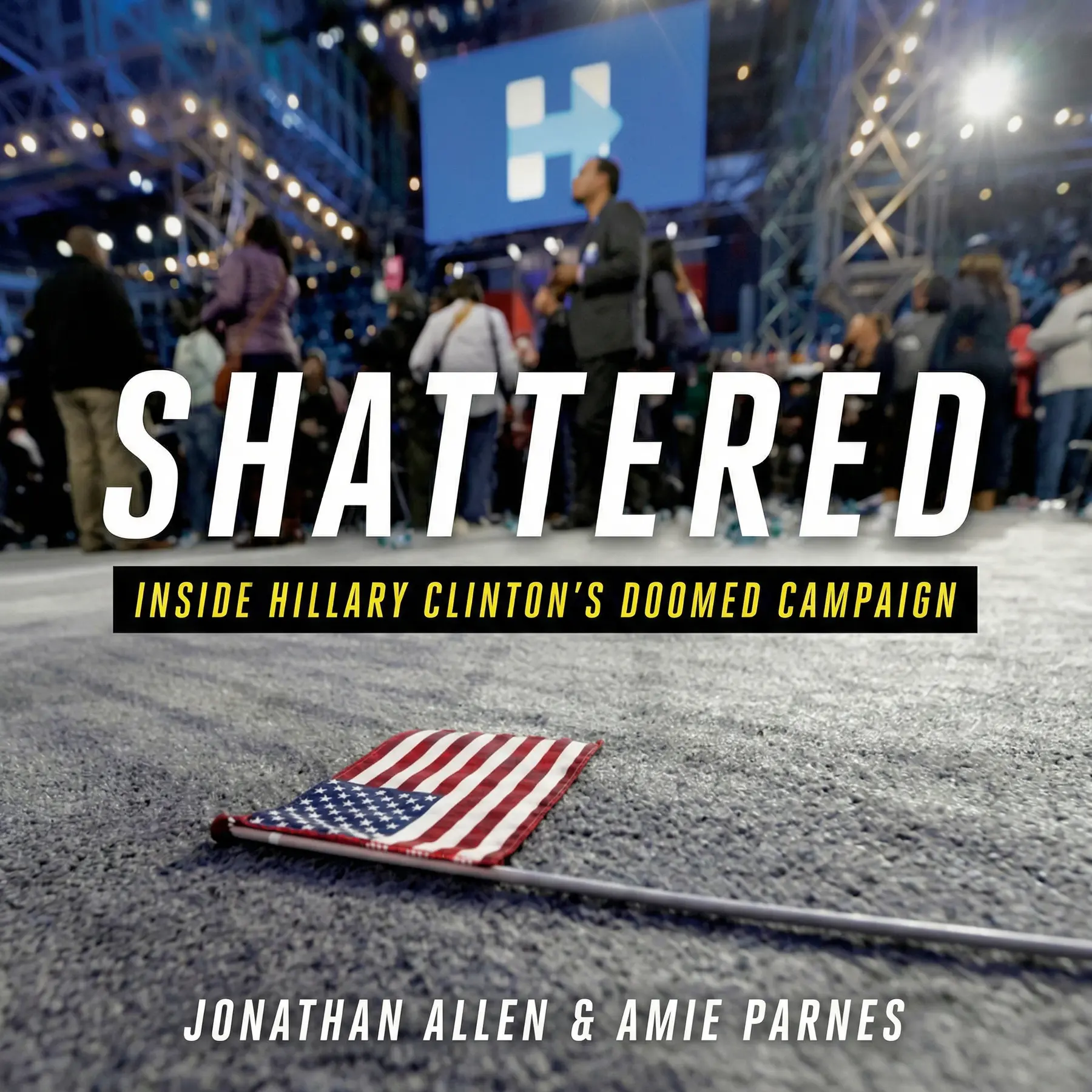
Shattered: Inside Hillary Clinton’s Doomed Campaign
An inside account of how Hillary Clinton's favored 2016 campaign came apart. A muddled message, an email scandal, a surprise challenger, feuding staff and blind faith in data together explain how strong teams lose.
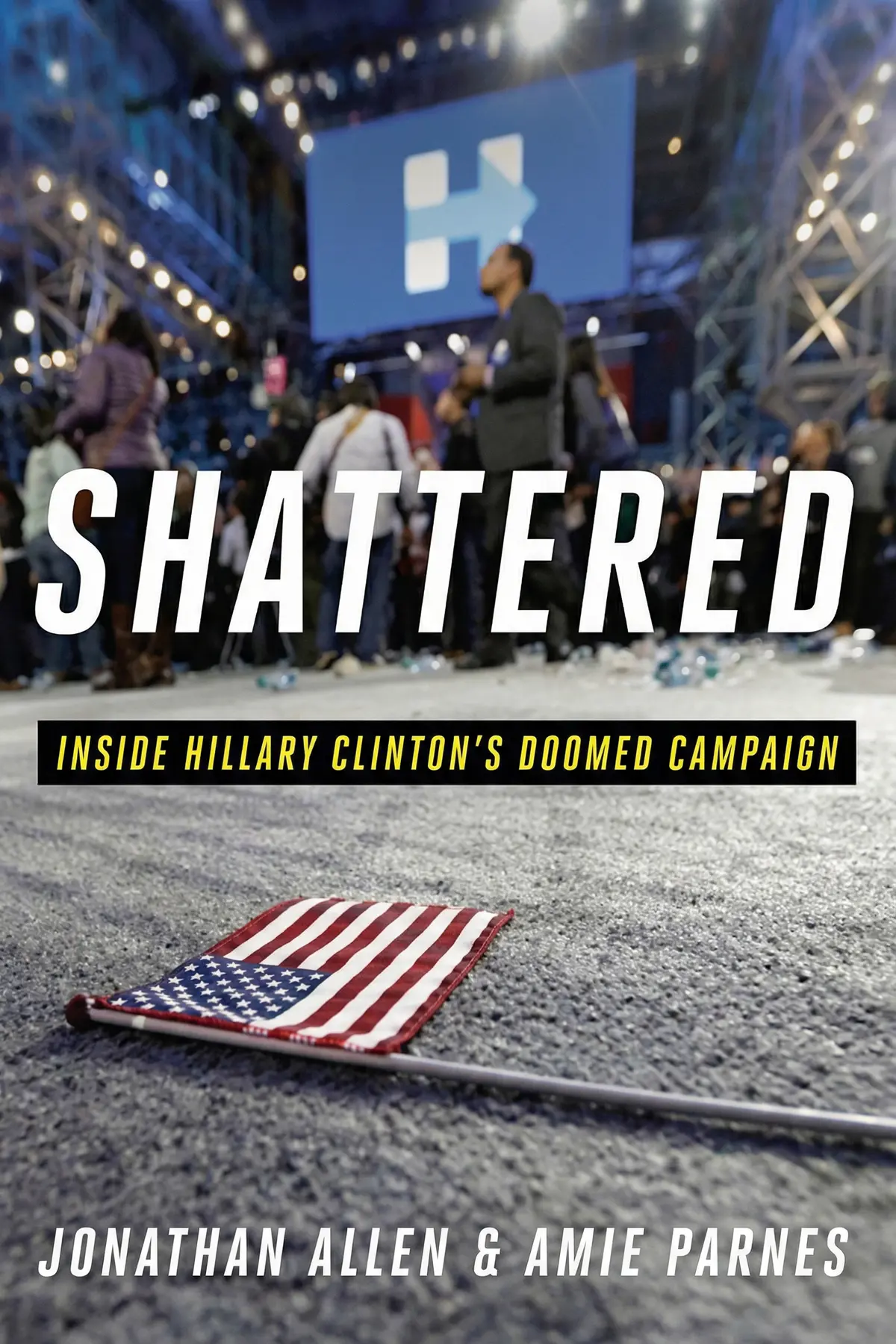
Table of Content
1. Introduction
57 sec
Strong credentials do not win a contest if nobody can say why you want the job. That is the hard lesson in Shattered, Jonathan Allen and Amie Parnes’s inside account of Hillary Clinton’s 2016 presidential campaign. Clinton entered the race with experience, a popular president behind her and a map that seemed to favor her party. Yet her opening speech passed through at least five writers and came out confused.
The two veteran political reporters show that this empty center made every later problem worse. A scandal over a private email server, a fierce challenge from Bernie Sanders, rival camps on her own staff and a manager who trusted data over doorsteps all rushed into the space a clear message should have filled. There was no single fatal blow. Follow the story and you learn to spot how a favored team loses, whether in a campaign, a startup or your own office.
2. A clear reason beats a strong resume
1 min 34 sec
She had the experience, the endorsements and a map that looked friendly. Something far more basic was missing from the first day, and a speech drafted by at least five people showed it.
3. One sticky word can outlast the facts
1 min 44 sec
The FBI director closed the case without charges, and the problem still grew. The way unrelated events kept attaching themselves to one scandal shows how reputations really get damaged.
4. Take the outsider's energy seriously from day one
1 min 36 sec
Clinton judged her rival’s plans unrealistic and expected the mood to pass. Instead he left her in a trap where both attacking him and defending herself could cost votes.
5. Rival camps turn small crises into big ones
1 min 44 sec
A six-person committee was formed to end the power struggles. What happened when the candidate fell ill shows why shared titles mean little when each leader treats information as private property.
6. See how good data can still miss the voters
1 min 37 sec
The numbers kept saying the strategy worked, and for months the delegate count agreed. The weakness only showed in what the model was never built to see.
7. Let your opponent's own words do the work
1 min 29 sec
A convention handed Clinton a clear lead, and a single careless word helped take it away. Her strongest moments on stage came from a surprisingly simple move anyone can use.
8. Bad news sticks when it fits the story
1 min 31 sec
A leaked video that many expected to end a campaign barely moved it, while dull internal emails did lasting harm. The difference explains how audiences decide which news counts.
9. Expect a loss to have many authors
1 min 32 sec
Her aides blamed turnout, anger and misogyny, and her husband reached for a comparison overseas. The authors weigh every explanation and arrive somewhere less comfortable for the candidate.
10. Conclusion
1 min 03 sec
Shattered works as a postmortem with no single fatal wound. Clinton had experience, a popular president’s goodwill and a map that seemed to favor her. She lacked one sentence that told voters why she wanted the job, and everything else flowed into that gap: a word that gathered every leak under one suspicion, a Vermont senator whose concrete promises exposed her vagueness, a staff that hoarded what it knew, and a model that counted friends and overlooked everyone else.
Favored teams lose this way far from Washington too. If you lead something, write down why it exists in words a stranger would remember, and check that your plans serve that reason. Make bad news travel fast, because a hidden diagnosis can turn into a public collapse. And when the metrics look good, go and meet the people they leave out.
Clinton’s campaign had the data and the resume. What it never had was a reason anyone could repeat, and in a close race that silence was enough to lose.
About this book
What is this book about?
Hillary Clinton entered the 2016 race with years of experience, a popular president's goodwill and a set of states her party believed it could count on. She still lost to Donald Trump. Political reporters Jonathan Allen and Amie Parnes set out to explain how. Their answer is not a single villain. They trace a campaign that never settled on why its candidate wanted the job, and they show how every later problem pushed into that gap. A private email server turned into an FBI investigation that would not die. Bernie Sanders drew crowds with concrete promises that made her message sound empty. Rival camps on her own staff hoarded information, and a data-driven campaign manager turned down door-to-door work in favor of what his models said. The book follows the race from a confused launch speech through a strong convention, the October shocks of hacked emails and a leaked video, and an election night few on her team expected. Readers get a close look at how a front-runner loses, and lessons on message, team trust and the limits of metrics that apply well beyond politics.
Book Information
Who it's for
Curious why Clinton lost
Readers who want a clear inside account of why Hillary Clinton lost in 2016.
Watched good teams stall
Team leads and founders who have watched strong teams stall from feuds or fuzzy goals.
Curious about data's limits
Marketers and analysts curious about where data-driven strategy goes blind.
About the Author
Jonathan Allen
Jonathan Allen is a political journalist and analyst who has worked at NBC News and earlier reported for Congressional Quarterly, The Hill, Politico, Bloomberg News and Vox. He has won awards for congressional and political reporting and taught presidential politics at Northwestern University. Amie Parnes is a senior correspondent at The Hill who has also reported for CNN and Politico and served as a CNN political analyst. She has covered five presidential campaigns. The pair have since written more books together, including Lucky.
Ratings & Reviews
Ratings at a glance
What people think
Listeners find the work well-crafted and educational, with one individual noting that it has the feel of a thriller. Feedback on the level of detail is divided; some listeners consider it very thorough, while others argue that more information is needed. The tempo is often seen as a bit hurried, and many find the granular details uninteresting. While the book offers an effective breakdown of the Clinton campaign, some listeners portray the effort as poorly organized. The political subject matter and storytelling also draw varied responses, as some appreciate the insider perspective while others perceive the narrative as lackluster.
Top reviews
Lily
Wow, the level of access Allen and Parnes secured for this book is absolutely staggering. The fly-on-the-wall descriptions of election night and the subsequent concession speech were genuinely moving and cinematic. It’s a rare look at a candidate’s most vulnerable moments. The authors managed to balance the dry data of the Mook analytics team with the high-stakes human drama of the campaign trail. I couldn't put it down. Even knowing the outcome, I found myself holding my breath during the descriptions of the final weeks. It provides a necessary perspective on the "perfect storm" of external factors and internal mismanagement that led to the upset. This is easily one of the most informative political books I've read in years. It’s a must-read for anyone trying to understand the current political landscape.
Show moreFang
Shattered offers a masterclass in how not to run a modern presidential campaign. The authors meticulously document how the campaign ignored the warning signs from the Rust Belt until it was far too late. It’s a fascinating, if depressing, look at a candidate who was arguably the most qualified person to ever run but couldn't find her true public voice. The contrast between her private brilliance and her public stiffness is central to the book's thesis. I loved the "behind-the-scenes" look at the decision-making process—or lack thereof—within the inner circle. The pacing is excellent, making a 400-page book feel like a breeze. It’s informative and provides a much-needed dissection of the 2016 cycle. Whether you love or hate the Clintons, this is a compelling piece of journalism.
Show moreTun
Finally got around to reading this post-mortem on the 2016 election, and it reads surprisingly like a political thriller. The authors do a fantastic job of illustrating the internal friction within the Clinton camp. You can feel the tension between the "old guard" Bill Clinton loyalists and Robby Mook's data-driven analytics team. While some of the minute details about staffing changes felt a bit dry, the overall narrative flow kept me engaged throughout. It's a sobering look at how a campaign can become paralyzed by its own institutional weight. I particularly appreciated the insights into the "blue wall" strategy and why it ultimately crumbled. Even if you aren't a political junkie, the behind-the-scenes drama is compelling enough to justify the read. It’s a well-written, though sometimes frustrating, dissection of a historic collapse.
Show moreKanchana
As the old saying goes, victory has many fathers while defeat is an orphan. This book proves that in politics, defeat is actually a circular firing squad where everyone is looking for someone else to blame. Allen and Parnes provide a gripping account of how the Clinton campaign took the Midwest for granted. The clash between old-school retail politics and the new-age "Moneyball" analytics is the heart of the story. While the writing is occasionally melodramatic, it effectively captures the arrogance that often precedes a fall. The detail level is high, perhaps too high for some, but it paints a complete picture of the dysfunction. I was fascinated by the descriptions of the debate prep and the struggle to find a coherent message. It’s a solid, well-researched work that feels authentic to the chaos of that cycle.
Show moreCarter
The chapter detailing election night was genuinely heartbreaking to revisit. Reading about the "shattered" glass ceiling that never actually broke reminded me of the raw emotion of that night. The book does a great job of explaining the strategic blunders without being overly cruel. It’s a balanced look at how Hillary’s strengths as a policy wonk were also her greatest weaknesses as a campaigner. She was prepared for a debate, but Trump was prepared for a show. Got to say, the section on the Comey letter was particularly well-handled. It showed exactly how it sucked the oxygen out of the room at the worst possible time. It’s a very detailed account that might be a bit much for casual readers, but for political junkies, it’s gold. I finished it in just two sittings.
Show moreSavannah
It is fascinating to see how the "Moneyball" approach to politics completely backfired in the Midwest. This book highlights the danger of relying on data over human intuition. While Hillary’s team was staring at spreadsheets, Trump was connecting with people’s anger on the ground. The authors do a great job of showing how the campaign became a victim of its own perceived inevitability. Some of the prose is a bit theatrical, but it fits the high-stakes nature of the subject matter. I appreciated the honest look at the email scandal and how it haunted the campaign like a ghost. It’s a well-written dissection of a massive failure. Not a perfect book, but definitely an insightful one that captures the mood of a country in transition.
Show moreKan
Ever wonder how such a massive institutional machine could just... fail? This book tries to answer that, but it often gets bogged down in the weeds of campaign bureaucracy. Frankly, the pacing feels quite rushed in the final chapters, while the early primary sections move at a snail's pace. I found the endless lists of aides and their specific grievances to be a bit monotonous. However, the authors do provide a very informative look at the disconnect between the D.C. bubble and the actual electorate. It highlights how Hillary struggled to articulate a clear "why" for her candidacy beyond just being the next logical step. It’s a decent enough read for the historical record, but it lacks the punchy narrative of something like Game Change. A bit too much focus on the "firing squad" and not enough on the broader cultural shifts.
Show moreNoah
To be fair, this book provides a decent autopsy of the campaign, even if the narrative structure feels a bit flimsy in spots. The authors rely heavily on anonymous sources, which gives it a "he-said, she-said" quality that can be taxing. One moment you're reading about the email server, and the next you're buried in a list of DNC staffers you've never heard of. I think the book is well-written, but it fails to truly penetrate Hillary’s "armor" to show who she really is. She remains a somewhat distant figure in her own story. The descriptions of the "basket of deplorables" comment and the 9/11 health scare were interesting, but they felt glossed over. It’s informative, yes, but it doesn’t quite reach the level of a definitive historical account. A good starting point, but not the final word on the matter.
Show moreCharles
Personally, I found the first half of the book a bit of a slog through primary delegate math and internal DNC squabbles. It feels like the authors were trying to include every single interview they conducted, regardless of whether it moved the story forward. The truth is, the book is quite informative, but the sheer volume of names and titles becomes overwhelming. It’s a bit of a "firing squad" where everyone blames everyone else, which gets repetitive after a while. However, the final third of the book is much stronger. The countdown to election day is handled with the tension of a ticking clock. It’s an okay read, just be prepared for some dry stretches. I’d recommend it for the insights into Robby Mook's flawed data models alone.
Show moreHassan
Look, I was expecting a deep dive into the actual scandals, but this felt like a collection of excuses from background sources. Most of the narrative seems designed to shield the candidate from any real accountability by blaming Comey, Russia, or the primary process. It felt less like an objective piece of journalism and more like a series of "not my fault" memos stitched together into a book. The writing is technically fine, but the lack of new, substantial information was a major letdown for me. If you followed the news in 2016, you’ve already heard ninety percent of what is in here. The authors portray Hillary as a victim of circumstances rather than a candidate who made several fatal, unforced errors. It’s an exhausting read that left me more frustrated than informed. I wouldn't recommend it if you're looking for an unbiased analysis.
Show moreQuestions about this book
What is Shattered by Jonathan Allen and Amie Parnes about?
It is an inside account of Hillary Clinton’s 2016 presidential campaign. The authors follow it from a muddled launch speech through the email investigation, the primary fight with Bernie Sanders, staff infighting, the convention and debates, and the October leaks, ending with election night. Their argument is that no single cause explains the loss, but a campaign without a clear message left her exposed to every other blow.
Why did Hillary Clinton lose in 2016, according to Shattered?
Allen and Parnes point to several causes working together: the private email server and the FBI investigation, Sanders’s unexpectedly strong challenge, feuding camps on her staff, Robby Mook’s reliance on analytics over door-to-door organizing, and losing Wisconsin. Her aides added low African-American turnout, loyal white suburban Trump voters and misogyny. The authors suggest much of the blame lies with Clinton herself, especially her failure to explain why she was running.
What role did data analytics play in Clinton's campaign?
Campaign manager Robby Mook relied heavily on data and careful budgets. That approach won delegates, including 47 to Sanders’s 49 in Wisconsin, and secured the nomination. But when Bill Clinton and John Podesta urged more volunteers knocking on doors, Mook rejected it as a waste of resources. The authors argue his model focused on likely Clinton voters and ignored everyone else, which hurt her later.
What lessons does Shattered offer outside politics?
The book shows how a favored team can lose. A strong record does not replace a clear, repeatable reason for what you are doing. Leaders who hoard information let small problems become public crises, as with Clinton’s hidden pneumonia diagnosis. Metrics can look healthy while missing the people you never reached. And bad news hurts most when it fits a suspicion your audience already holds.
Readers also enjoyed


A Promised Land
Barack Obama

A River in Darkness: One Man’s Escape from North Korea
Masaji Ishikawa

A Theory of Justice
John Rawls



A Warning
Miles Taylor


AUDIO SUMMARY AVAILABLE
Listen to Shattered in 15 minutes
Get the key ideas from Shattered by Jonathan Allen, plus 5,000+ more nonfiction titles.
- 5,000+ titles
- Listen as much as you want
- 7-day free trial
- Cancel anytime









