

14 min 07 sec
Available in: English
Sensitive: The Hidden Power of the Highly Sensitive Person in a Loud, Fast, Too-Much World
Shows that high sensitivity is a normal, measurable trait shared by about a third of people, and how to manage its overload so its empathy, creativity and depth become strengths.
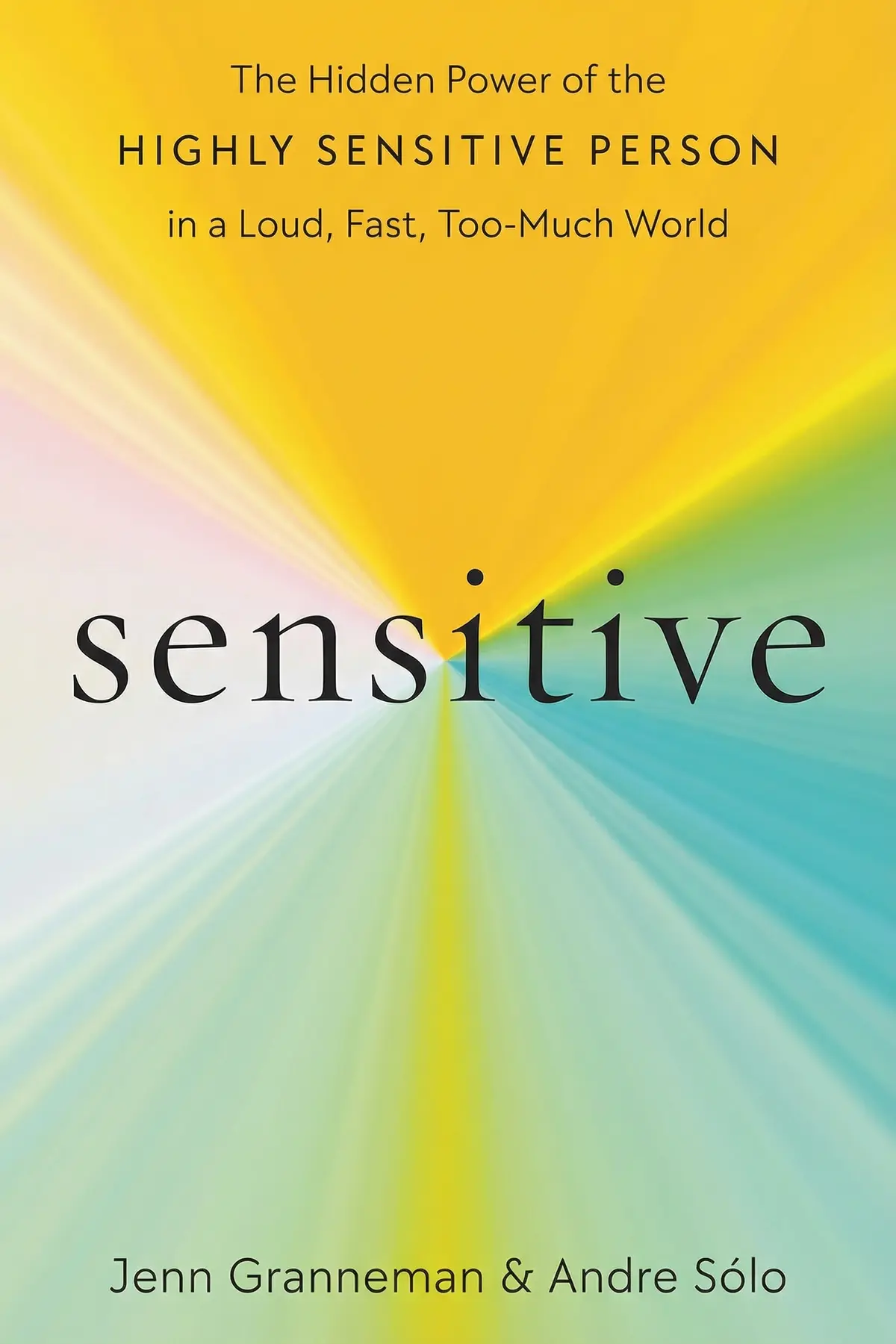
Table of Content
1. Introduction
58 sec
Maybe loud offices, crowded parties or a partner’s bad mood leave you drained while others seem fine, and someone has told you that you are too sensitive. In Sensitive, Jenn Granneman and Andre Sólo argue that this is a measurable personality trait shared by about a third of people, and that it comes with real strengths: above-average empathy, creativity and intuition. The wiring that makes noise and chaos exhausting is the same wiring that lets sensitive people notice what others miss.
The authors’ case is that sensitivity pays off when the person and their surroundings support it, and costs a great deal when they don’t. They show where the trait comes from, what it makes possible, and how to handle its downside at work, in love and in raising children. By the end you will have a better word for yourself, or for someone you care about, and a few tools for the moments when the world gets too loud.
2. See your sensitivity as a trait you can name
2 min 03 sec
Two Midwestern children hid from the noise of school, one in a storm pipe and one in her bedroom. What they had in common turns out to be shared by roughly one person in three.
3. Build a supportive setting where sensitive people thrive
2 min 03 sec
An abusive father tried to shout a rock star out of his sensitivity and failed. A study of children’s homes suggests why the trait survives, and when it turns into an advantage.
4. Put your five sensitive gifts to work
2 min 00 sec
An untrained young woman won the trust of wild chimpanzees, and another woman woke in the night just in time to save a life. Both drew on abilities most workplaces never think to look for.
5. Catch overload early and recover fast
2 min 00 sec
A drill next door, a crying baby, loud music in a café: some people shrug these off, while others feel their whole system flooding. Small moves, some almost invisible to others, can bring the flood down.
6. Make conflict safe enough to face
2 min 02 sec
Deep empathy should make sensitive people easy to live with, yet relationships often wear them out the most. A two-word agreement and a change in how requests are phrased can turn that around.
7. Raise a sensitive child who thrives
1 min 57 sec
A baby who cries at bright lights and loud sounds can leave parents wondering what is wrong. A different response to tantrums, and a twist on a familiar punishment, change what that child learns about feelings.
8. Conclusion
1 min 04 sec
Granneman and Sólo began as two Midwestern children hiding, one in a storm pipe and one in her bedroom. Their book reads like a reply to those children and to everyone like them. The trait that made school unbearable is the same one that helped Jane Goodall win the trust of chimpanzees and woke a woman in the dark when her husband’s breathing changed. Springsteen’s father could not shout it away, and no amount of pressure will. What changes the outcome is the setting.
That makes the work practical. Learn your body’s early signals and step away before overload wins. Keep a corner of calm at home. Agree on a storm warning with the person you love, and say what you need in sentences that begin with I. If you raise a sensitive child, trade the time-out for a time-in and let the tears be.
In a loud, fast world, the most useful thing a sensitive person can do is stop apologizing for noticing so much, and start arranging life so that noticing pays off.
About this book
What is this book about?
Many people grow up hearing that they are too sensitive. Noise, crowds and other people's moods wear them out faster than everyone else, and they learn to hide it. Jenn Granneman and Andre Sólo, both highly sensitive themselves, argue that this is a normal and measurable personality trait. About one person in three has it, and it is as common in men as in women. The authors explain where sensitivity comes from, through genes and childhood surroundings, and why a supportive setting can push sensitive people ahead of their peers, an effect they call the Sensitive Boost Effect. Five gifts come with the trait, they say: empathy, creativity, sensory intelligence, a deep way of processing information and emotional depth. Their examples range from Jane Goodall to a woman who woke because her husband's breathing changed. The second half is practical. Readers get ways to spot and recover from overstimulation, a method for making conflict with a partner feel safe, words for asking for what they need, and gentle discipline tools for parents of sensitive children.
Book Information
Who it's for
Told they're too sensitive
People who feel drained by noise, crowds and other people's moods and have been told they are too sensitive.
Partners who avoid arguments
Partners who avoid conflict and struggle to say what they need.
Parents of reactive kids
Parents of children who react strongly to lights, sounds and correction.
About the Author
Jenn Granneman
Jenn Granneman founded IntrovertDear.com in 2013 and has written The Secret Lives of Introverts. The New York Times, the Washington Post and the Guardian have featured her work. Andre Sólo is a researcher who calls himself a sensitive person. He cofounded the website Sensitive Refuge and is its editor-in-chief, and he has written about sensitivity for Psychology Today and Forbes. He also speaks internationally on sensitive leadership. Both authors have spent years writing for quiet and sensitive readers.
Ratings & Reviews
Ratings at a glance
What people think
Listeners find this book to be a great, well-written read that provides factual information and deep insight into life as a sensitive person. They appreciate how it helps them understand themselves and those around them, with one listener noting that it helped them feel less alone. The book earns positive feedback for its creativity, with listeners highlighting its remarkable creative potential.
Top reviews
Noppadol
Finally got around to reading this and I feel completely seen for the first time in years. The authors do an incredible job of dismantling the 'Toughness Myth' that many of us grew up with. I particularly appreciated the section on sensory intelligence and how it relates to our creative potential. While the book felt a bit long in some sections, the validation I felt was worth the trek. It provides excellent writing and factual information that helps you understand how DNA and environment shape our reactions. I now feel empowered to set better boundaries and honor my needs at home and work. This is a must-read for anyone who has ever been told they are too emotional.
Show moreMoo
The chapter on 'the boost effect' changed my entire perspective on my career and personal growth. I never realized that a little extra recognition could help someone like me skyrocket past others in success. This book helped me identify my specific gifts, including depth of processing and extreme empathy for others. The writing is incredibly insightful and provides a factual foundation for why we feel things so deeply. I especially loved the focus on creativity and how sensitive people can sink into a deep flow more easily. Since reading this, I have stopped apologizing for my nature and started viewing it as an asset. It is a powerful read that helps you navigate a world that is often too loud and fast.
Show moreYulia
This book provides the factual foundation I have been searching for regarding my own temperament. Learning that sensitivity is a genetic trait helped me stop feeling like there was something inherently wrong with me. The authors explain how our brains are wired differently, allowing us to pick up on subtle cues others miss. I found the section on creating a sensitive-friendly home environment to be immediately applicable to my daily life. It is written with a lot of heart and clearly aims to empower those of us who feel everything. The creative potential discussed in the later chapters gave me a lot of hope for my future projects. Truly, this is an incredible book for anyone who wants to harness their internal strengths.
Show moreNook
Wow, this book found me at the exact moment I needed a personal soul shift in my life. I have spent years apologizing for being 'too sensitive' or for taking things too seriously in my relationships. Chapter six was a total revelation for me and helped me realize that my empathy is actually a gift. The authors write with such compassion and provide the tools needed to turn sensitivity into a major strength. It is a comprehensive guide that covers everything from neurological differences to practical life changes for the highly sensitive. I no longer feel the need to minimize my feelings or make myself small for other people. This is a life-changing read that I will be recommending to all of my friends and family.
Show moreLaddawan
As someone who has always been labeled as 'too much,' this book was a refreshing and usable guide. The breakdown of neurological differences was fascinating, especially the specific split between genetic factors and our upbringing. I loved the practical tips for combatting overstimulation and the advice on turning empathy into actionable compassion. However, the pacing felt slightly off because of some wonky chapter organization in the middle. I also found the section on Bruce Springsteen to be a bit excessive and unnecessary for the main point. Despite these minor pacing issues, the book is incredibly informative and helps normalize a trait that is often stigmatized. It is a comprehensive look at how one in three people actually process the world around them.
Show moreYindee
Picked this up after following their blog for a while and found it to be very grounding. The section on job crafting was interesting, even if some parts felt like doing more labor for the same pay. I really appreciated the checklists and practical tools provided for managing daily stress and creating a quiet space. It was vindicating to read about the needs of sensitive children, as it explained so much about my own childhood. My only real complaint is that the tone is almost excessively positive, treating sensitivity like a literal superpower. Sometimes being sensitive is just plain hard, and I wish they had acknowledged the daily struggles a bit more. Still, it is a great read that provides much-needed insight into the sensitive brain.
Show moreWin
Ever wonder why you need so much downtime compared to everyone else in your social circle? This book answers that question by explaining the biological roots of our deep processing and sensory intelligence. I found the information on the 47% DNA versus 53% environment split to be particularly enlightening and well-researched. The authors provide a great deal of factual information that helps combat the pervasive stigma against being a sensitive person. I did feel that some sections, like the one on raising kids, belonged in a more narrowly focused book. However, as an adult who was once a sensitive child, it was still somewhat valuable to have those feelings validated. It is a solid resource for anyone looking to make accommodations for their mental and physical health.
Show moreGai
Truth is, I didn't expect to see myself on every single page of this book. The quiz in the first chapter confirmed exactly how much my behaviors are tied to my high sensitivity levels. I appreciated the specific tips for creating accommodations at work, which is something I have always struggled to navigate. While the book can be a bit of a trek to get through, the knowledge gained is very refreshing. Some of the anecdotes about famous sensitive people felt a little forced and could have been edited down significantly. Despite the wonky organization, the core message about honoring your needs is something I will carry with me forever. It makes you feel much less alone in a world that rarely slows down for anyone.
Show moreDao
To be fair, I went into this with high expectations but left feeling a bit conflicted about the content. My biggest issue is that the authors do a poor job of differentiating between sensitivity and autism. Most of the traits described, especially regarding sensitive children, felt like they were just describing the autistic experience. They mention neurological patterns, but the lack of diverse brain samples makes that argument feel very full of holes. Also, the constant mentions of their online community felt a little like a sales pitch for their own website. There is some value here for communicating with loved ones, but I found myself disagreeing with several major premises. It is informative overall, but it struggles to draw clear distinctions between empaths and highly sensitive people.
Show morePairot
Look, I am just not much of a self-help person and this book did not change my mind. Calling sensitivity a 'superpower' felt quite corny and it lost me a bit in the middle sections. The authors make some very bold claims about historical figures like Thomas Jefferson being highly sensitive without real proof. If you want hard science, you might be better off reading the original research by Elaine Aron instead. It might help some people feel less alone, but it mostly felt like anecdotal filler to me personally. The pacing was quite slow and I struggled to push through the chapters that felt repetitive or unnecessary. I give it two stars because the checklists might be useful for someone else trying to understand a loved one.
Show moreQuestions about this book
What is the main idea of Sensitive by Jenn Granneman and Andre Sólo?
The authors argue that high sensitivity is a normal, measurable personality trait, not a weakness. About a third of people have it, and it is equally common in men and women. Sensitive people process input more deeply, which makes them prone to overload but also gives them strengths such as empathy, creativity and intuition. In a supportive setting, the authors say, sensitive people often outperform others.
What is the Sensitive Boost Effect?
It is the authors’ name for the finding that sensitive people tend to do better than others when their environment supports them. They cite research showing that sensitive people given relationship help are more likely to save their marriages, and that sensitive children in supportive settings outdo their peers in grades, social skills and kind, generous behavior.
How do you deal with overstimulation as a highly sensitive person?
The authors suggest regular self-check-ins to spot early signs such as irritability, tight muscles or an upset stomach. When overload builds, step away briefly to a quiet room or a short walk, and tell others you need a few minutes. Leaning your back flat against a wall or performing gentle push-ups on a counter can settle you, and a calm private refuge at home helps you recover.
How should parents discipline a sensitive child?
The authors recommend gentle correction over harsh punishment, because a raised voice can overwhelm a sensitive child. Speak calmly, explain the reasons for rules and name the child’s feelings during a tantrum. They suggest a time-in, where the parent sits with the child in a calm space and helps them process emotions, and they advise acknowledging tears rather than dismissing them.
Readers also enjoyed


Acting with Power: Why We Are More Powerful Than We Believe
Deborah Gruenfeld




Age of Propaganda: The Everyday Use and Abuse of Persuasion
Anthony Pratkanis



A Guide to the Good Life: The Ancient Art of Stoic Joy
William B. Irvine
AUDIO SUMMARY AVAILABLE
Listen to Sensitive in 15 minutes
Get the key ideas from Sensitive by Jenn Granneman, plus 5,000+ more nonfiction titles.
- 5,000+ titles
- Listen as much as you want
- 7-day free trial
- Cancel anytime









