
14 min 30 sec
Available in: English
Sales EQ: How Ultra High Performers Leverage Sales-Specific Emotional Intelligence to Close the Complex Deal
By Jeb Blount
Shows why buyers decide with feelings and justify with logic, and how salespeople win complex deals by earning liking and trust, avoiding buyer defensiveness, reading emotions with empathy and staying calm under pressure.
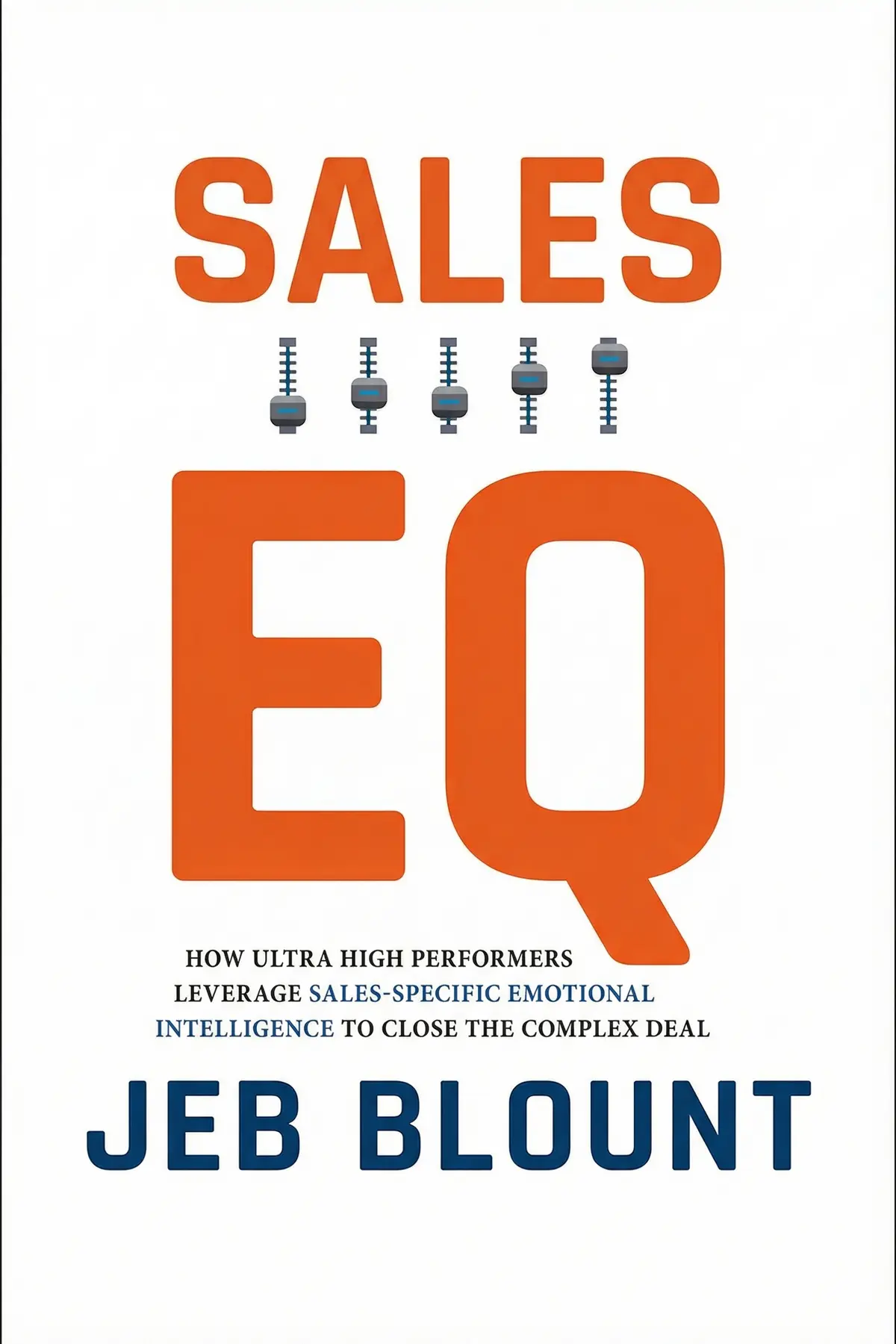
Table of Content
1. Introduction
59 sec
Most salespeople lose winnable deals because they argue with logic while the buyer decides with feelings. In Sales EQ, sales trainer Jeb Blount describes a liquor store where German beer sold better while German music played, and the shoppers credited a friend’s advice instead.
Blount’s case is that buying is emotional. The best sellers win by reading and steering their prospects’ emotions while keeping tight control of their own. He calls these people ultra high performers, and what sets them apart is a sales-specific emotional intelligence that can be learned.
Each of its habits answers a common way deals go wrong. You can earn liking before saying a word about features and build trust in small steps. You can avoid making a buyer feel foolish, sense the fear behind a purchase, stay calm when the room turns hostile, and break the script when a deal stalls. Every one of them can be tried on your very next sales call.
2. Sell to the feeling first, the facts later
1 min 52 sec
Shoppers swear they chose for sensible reasons, yet something they never noticed shaped their choice. Worse, sellers and buyers move through a sale on opposite emotional clocks, and the mismatch costs deals at the worst possible moment.
3. Earn the buyer's liking before you pitch
1 min 44 sec
A shopper drove to a second store and paid more for the identical product. Her reason was the person behind the counter, and it points to a habit most salespeople get exactly backward.
4. Build trust one small promise at a time
1 min 49 sec
Most deals that collapse over trust never see a dramatic betrayal. Something far more ordinary wears the relationship down, and a coffee-stained business card turns out to be part of the story.
5. Never make a buyer defend a bad choice
1 min 43 sec
A salesperson brings hard proof that a prospect’s current supplier is failing him, and the prospect turns against her. Blount explains the mental trap behind that reaction and offers one gentle question that avoids it.
6. Read the fear behind every big purchase
1 min 47 sec
The top seller at a jewelry store could easily push bigger diamonds, and she chooses not to. Her restraint, and a simple self-test about how you judge strangers, reveal where your own empathy stands.
7. Keep your temper when the room turns hostile
1 min 52 sec
After months of work on a major prospect, one interrupting executive pushed a capable seller past her limit. What happens inside the brain under pressure explains her collapse, and preparation offers the way out.
8. Break the script and let buyers argue for you
1 min 44 sec
A stalled truck leasing deal with a stubborn baker was rescued by a brown paper bag. The mentor who carried it combined surprise, a single question and the buyer’s own pride into a signed contract.
9. Conclusion
1 min 00 sec
Sales EQ turns the usual picture of selling around. The pitch, the features and the clever rebuttal all matter less than how the buyer feels about you and about himself, and less than how well you hold your own nerves. Blount’s ultra high performers notice emotion, theirs and the customer’s, and let it decide the timing of everything else.
That gives you plenty to watch for this week. Before your next meeting, write down the questions and the feelings you expect, so nothing in the room catches you unready. In the first minutes, talk less and ask about the buyer’s world, offering a compliment only when you mean it. When a rival comes up, ask what the buyer likes about them and let him find the faults himself. And treat every returned call and every accurate figure as one more brick in the wall.
The baker did not sign because Joe won the argument about price. He signed because, for ten minutes, someone let him talk about what he was proud of.
About this book
What is this book about?
Many salespeople lose deals they should have won. They build a careful case, present it well and still hear no, often for no reason they can see. Jeb Blount argues that the reason is emotional. Buyers decide with their feelings and explain the choice with logic afterward, and the seller's own fear and frustration make things worse. In Sales EQ, Blount describes the habits of what he calls ultra high performers, salespeople with a sales-specific emotional intelligence. They make the buyer like them before they talk about features. They build trust through small, consistent actions. They never make a prospect defend a bad decision. They use empathy to sense the fear behind a purchase, and they prepare well enough that a hostile meeting cannot knock them off balance. The book makes its case through memorable scenes: a mentor who saves a stalled truck leasing deal with two loaves of bread, a top jewelry seller who reads couples' emotions and suggests only rings that fit them, and a seller who wins an argument and loses the deal. Readers learn when to pitch, what to ask, and how to stay steady when a deal gets tense.
Book Information
Who it's for
Sellers losing expected wins
Salespeople who lose deals they thought were logically won.
Founders and account managers
Account managers and founders selling complex, high-value offers to skeptical buyers.
Managers coaching sales reps
Sales leaders coaching reps who talk too much or lose their temper under pressure.
About the Author
Jeb Blount
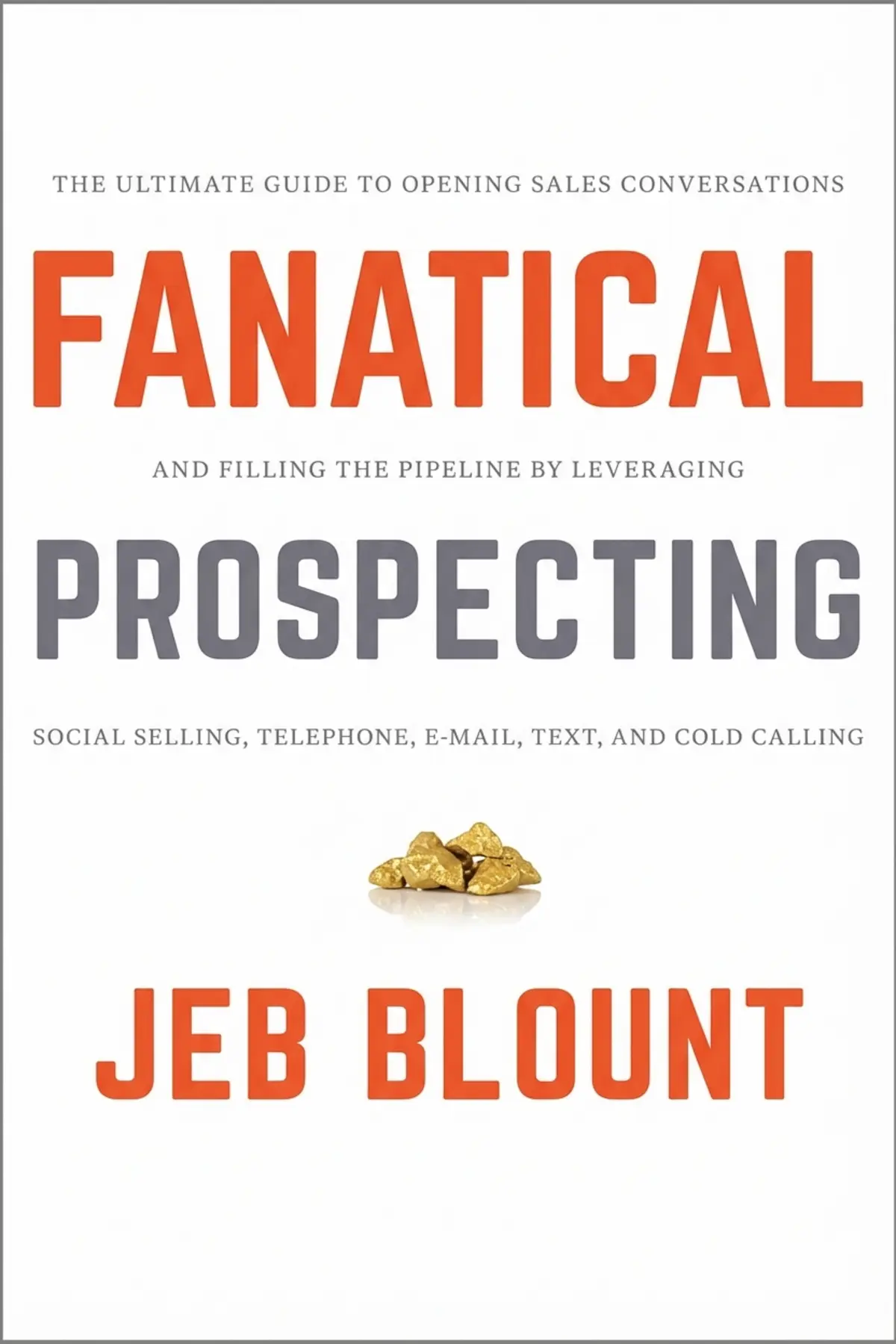
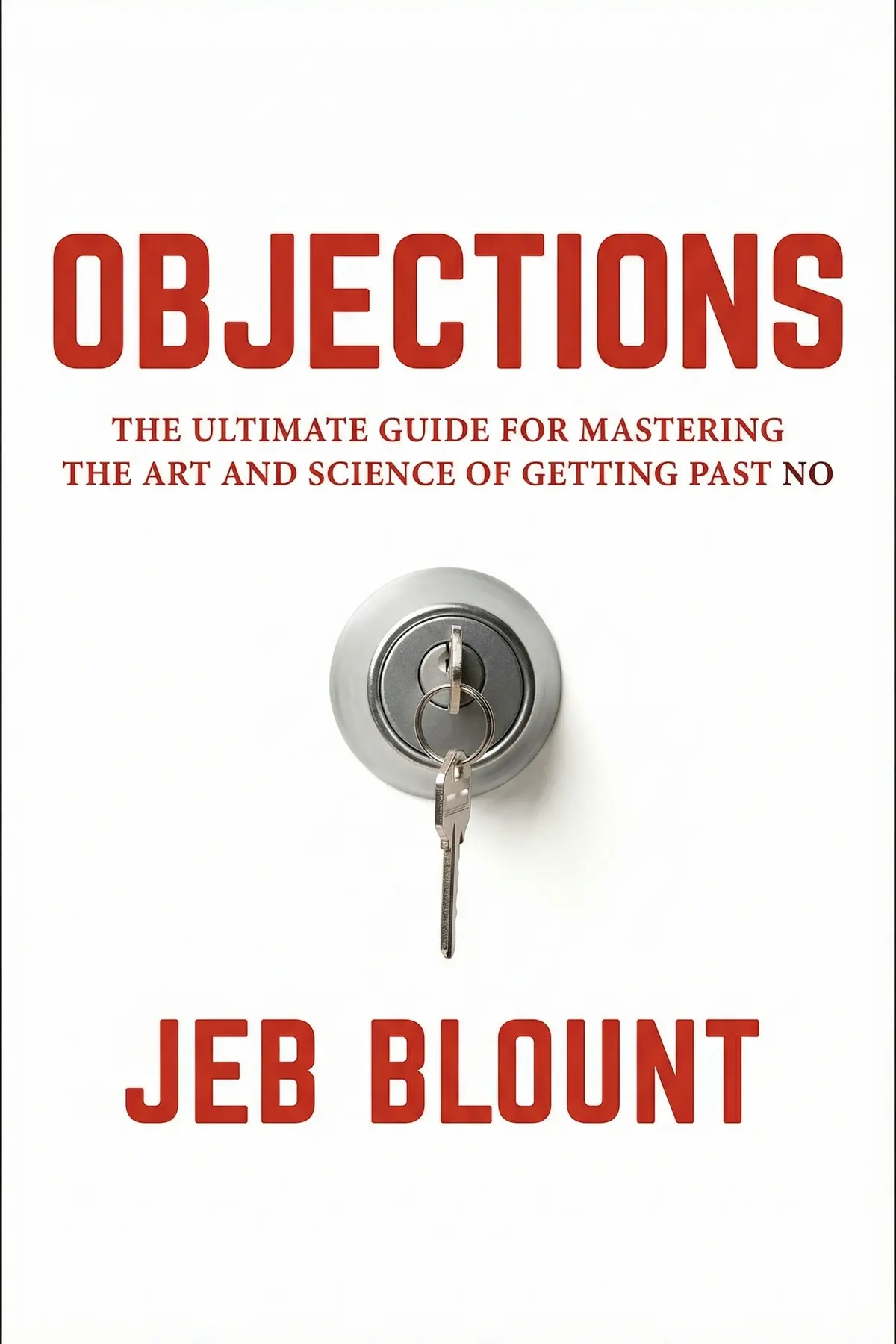
Jeb Blount has spent decades selling in the field and now works as a business coach and speaker. He leads Sales Gravy, a global training organization that trains and advises well-known companies, and its podcast has passed 60 million downloads. His other books include Fanatical Prospecting and Objections. Top Sales Magazine named him one of its 50 most influential sales and marketing leaders, and Forbes listed him among 30 leading social selling influencers.
Ratings & Reviews
Ratings at a glance

What people think
Listeners find the work exceptionally useful and educational, with one individual mentioning it is full of outstanding points to contemplate. Furthermore, they value its perspectives, with one noting its lessons on psychological triggers and another emphasizing the practical advice shared through engaging narratives. The book also earns praise for its intellectual depth, merging technical strategies with interpersonal skill analysis, and listeners consider it a valuable purchase. Nevertheless, opinions on the tempo are varied, as several listeners remark that it is not a fast read.
Top reviews
Suwit
This book completely shifted my perspective on what it means to be a professional closer. We often get caught up in the 'slick' side of selling, but Blount argues that true mastery comes from reading people's emotions. I’ve started implementing his advice on giving sincere compliments and the response from my prospects has been night and day. It turns out that people actually want to be seen and valued, not just treated like a number in a CRM. The stories he shares are relatable and help illustrate exactly why some reps struggle while others consistently crush their numbers. If you’re tired of the hard sell and want to build real partnerships, you need this on your shelf. It’s jam-packed with considerations that most training programs completely ignore.
Show moreChanon
Not gonna lie, I usually find non-fiction books about as exciting as watching paint dry. I expected another dry manual on cold calling, but Sales EQ actually hooked me by the third chapter with its focus on human psychology. Blount does an exceptional job of using real-world incidents to explain complex concepts like rationalization and drive. The way he compares average salespeople to 'Ultra High Performers' is eye-opening and provides a clear roadmap for improvement. It’s a productive read that doesn't just give you a checklist but actually changes how you think about communication. I’ve already recommended it to several colleagues who are struggling to navigate longer, more complex sales cycles. This was interesting as hell and definitely worth the investment for any career salesperson.
Show moreYam
The chapter on the gift of a compliment alone was worth the price of admission for me. We often overlook the power of likability, but this book proves that it’s a measurable skill that can be developed. I appreciated the balance between high-level psychological theory and the gritty, tactical advice you can use in a meeting tomorrow. Managing your own disruptive emotions is a huge part of the battle that most other sales trainers completely ignore. Look, if you can't control your own nerves and responses, you'll never be able to influence the emotions of your buyer. This is a must-read for anyone who wants to move beyond basic techniques and achieve true mastery in their field. It’s intelligent, thoughtful, and incredibly actionable.
Show morePruet
Wow, this is easily one of the most jam-packed sales books I’ve picked up in years. It effectively summarizes the essence of selling down to 'shut up and listen' while providing the psychological tools to actually do it. The actionable guidance on qualifying prospects saved me from wasting hours on a deal that was never going to close anyway. Jeb Blount has a way of cutting through the noise and getting straight to the heart of why people buy. It’s not just a book; it’s a framework for becoming a more empathetic and effective human being. Stop reading those outdated manuals and start learning how to actually connect with your customers on an emotional level. This is the new gold standard for the industry.
Show moreTantipat
Picking this up was a strategic move for my career, and the investment has already paid off. Sales EQ takes you on a fascinating journey inside the human mind to understand the biases that hold us back. I learned so much about interpreting the emotions of stakeholders and responding in a way that builds rapport rather than tension. The author does a great job of explaining how to manage the 'disruptive emotions' that often lead to mistakes during high-pressure negotiations. Every chapter is filled with relatable scenarios that make the psychological concepts easy to grasp and even easier to apply. This isn't just a book about selling; it's a masterclass in human influence and professional relationship management. If you want to become a UHP, start here.
Show moreWitthaya
Ever wonder why a perfectly logical pitch falls flat while a less 'qualified' competitor wins the deal? This book dives deep into the psychological levers that drive human decision-making, emphasizing that logic only comes after the emotional sale is made. Blount explains how our brains are wired to prioritize likability and trust over raw data or fancy slide decks. I really appreciated the breakdown of cognitive biases and how they sabotage our interpersonal relationships with stakeholders. The chapter on pattern painting was a bit abstract, but the overall framework is incredibly practical for anyone in a complex sales environment. It’s not just about what you say, but how you make the prospect feel during the interaction. The pacing is a bit slow, but the insights are worth the extra time spent reading.
Show moreChon
As someone who spends hours in the car between client meetings, I consumed the Audible version of this over two weeks. It’s basically an encyclopedia of modern sales tactics that blends old-school methodology with contemporary soft skills. I loved the deep dive into DISC profiles and how to adapt your communication style to match the prospect’s language. Some of the early chapters felt like a review of basic sales 101, but the second half really picks up the pace. Truth is, most of us forget to focus on our own 'Sales EQ' when we're stressed about hitting monthly quotas. This serves as a vital reminder that the human element is the only thing that can't be automated. It’s a valuable reference that I plan to revisit when I feel my discovery calls getting robotic.
Show moreWararat
After hearing several people in my network rave about this, I decided to see what the hype was about. It’s a very intelligent blend of sales methodology and the softer, more nuanced skills required to build trust. Blount makes it clear that while process is important, the magic happens when you have the emotional intelligence to deviate from it. The book provides a solid walkthrough of all the emotional factors at play during every stage of a deal. My only gripe is that some sections are a bit dense and require a lot of concentration to get through. Personally, I think this should be required reading for any team that deals with high-stakes, multi-stakeholder environments. It forces you to look inward at your own cognitive biases before you try to influence others.
Show moreBig
Finally got around to finishing this one, and I have mixed feelings about the execution. Blount makes a strong case for why the 'Ultra High Performer' relies on empathy rather than just a rigid script. I found the sections on managing disruptive emotions particularly enlightening because we all get triggered during tough negotiations. However, the book feels like it could have been trimmed by a hundred pages without losing the core message. It often repeats the same points about human connection until it starts to feel a bit tedious. To be fair, the actionable advice on setting firm next steps is a total game-changer for my daily workflow. It’s a solid resource for those with the patience to dig through the fluff. I would recommend it, but prepare for a bit of a slog through the middle chapters.
Show moreIngrid
I've been in this industry for over thirty years, and frankly, I didn't find much here that felt revolutionary. While I agree that emotional intelligence plays a role, focusing almost entirely on the EQ aspect feels a bit reductive for complex sales. Successful sellers come in all flavors, and many of them succeed through sheer technical expertise or superior product knowledge. The writing style is a bit long-winded, and I found myself skimming through pages of stories just to find a single takeaway. It’s a decent primer for someone brand new to the field who hasn't read anything else. However, for a seasoned veteran, it’s mostly a collection of common-sense observations wrapped in fancy psychological terminology. Just not a compelling read for me personally.
Show moreQuestions about this book
What is the main idea of Sales EQ by Jeb Blount?
Blount argues that buying is emotional, so the best salespeople win by managing feelings: the buyer’s and their own. Buyers first decide whether they like a seller, then whether they trust him, and only late in the process turn to logic. Ultra high performers use sales-specific emotional intelligence to earn liking, build trust, avoid making buyers defensive, show empathy and stay calm under pressure.
Why does Sales EQ say you should not criticize a competitor?
Pointing out that a prospect’s current vendor is failing creates cognitive dissonance, because the prospect chose that vendor and wants to believe he chooses well. To protect his self-image, he defends the vendor and starts seeing you as an opponent. Blount suggests asking what the prospect likes about the vendor instead. Thanks to negativity bias, that question leads him to recall the problems himself.
Why do salespeople talk too much, according to Blount?
Blount links over-talking to four emotions. Fear of the unknown makes talking feel safer than waiting for hard questions. A need for control creates the false belief that the talker runs the meeting. A wish to feel important leads to interrupting to sound clever. Impatience makes sellers jump in when a customer is slow to get to the point. Managing these feelings is what lets a seller listen and become more likeable.
How can I stay calm in a tense sales meeting?
Blount explains that stress triggers the fight-or-flight response, which shuts down the reasoning part of the brain. His answer is preparation before every call and pitch. Research the people you will meet, list the questions they might ask and plan answers, and get ready for the worst case. Role-play with a coworker or rehearse with your boss, and predict which negative emotions might appear so they cannot take you by surprise.
Who should read Sales EQ?
It suits salespeople who lose deals despite strong products and solid arguments, especially those selling complex, high-value offers. It also helps sales managers coaching reps who pitch too early, talk over buyers or lose their temper with difficult executives. Its lessons come through concrete scenes, from a jeweler who reads an anxious groom to a mentor who saves a truck leasing deal with two loaves of bread.
Featured in
Readers also enjoyed





AUDIO SUMMARY AVAILABLE
Listen to Sales EQ in 15 minutes
Get the key ideas from Sales EQ by Jeb Blount, plus 5,000+ more nonfiction titles.
- 5,000+ titles
- Listen as much as you want
- 7-day free trial
- Cancel anytime









