

13 min 59 sec
Available in: English
Rituals Roadmap: The Human Way to Transform Everyday Routines Into Workplace Magic
By Erica Keswin
Shows how small, repeated workplace rituals help teams feel they belong, meet with purpose and stay connected. Shared meals, odd awards and end-of-day emails are among them, along with a simple test for telling which rituals are worth keeping.
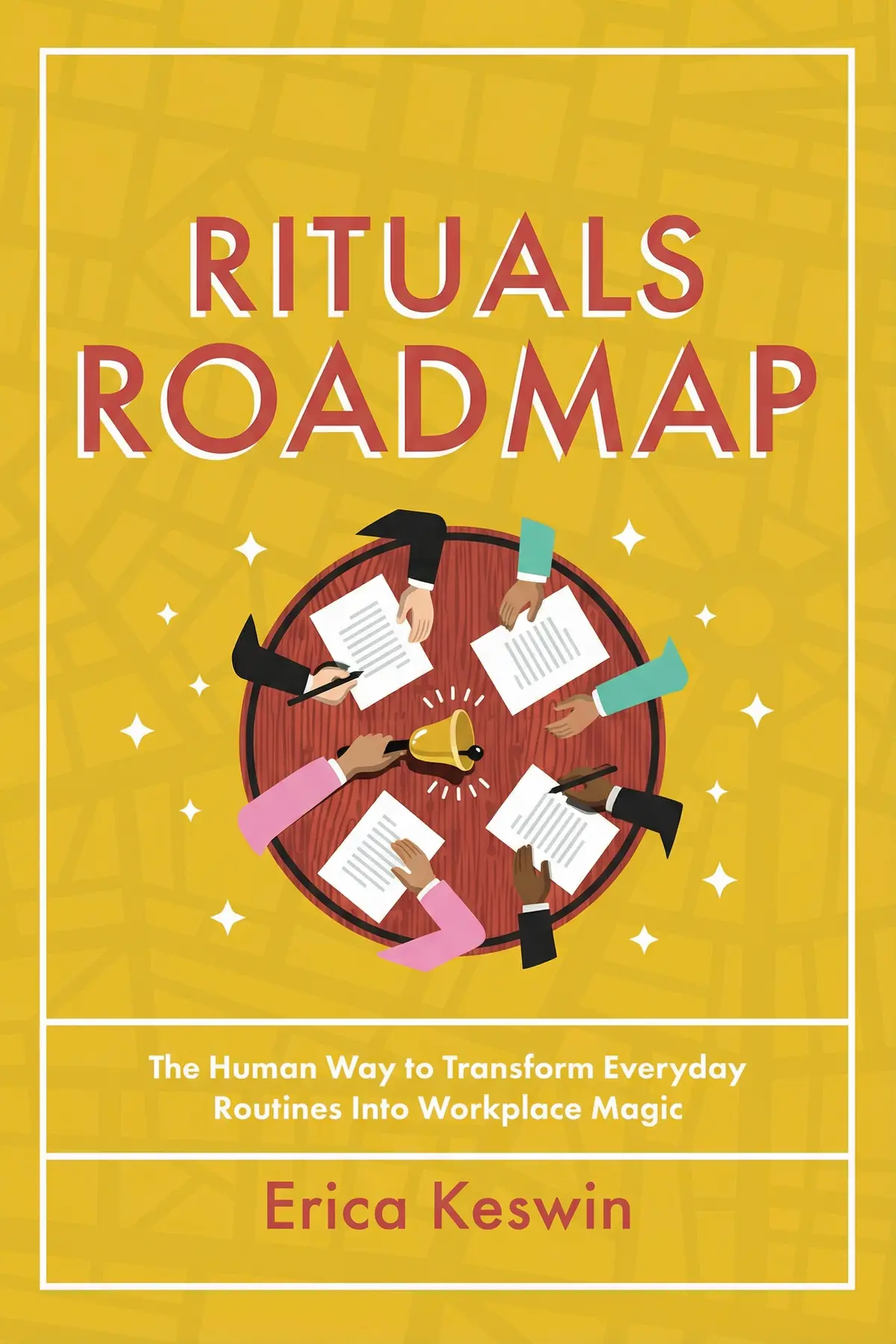
Table of Content
1. Introduction
1 min 01 sec
If your team’s days blur into emails and meetings, the fix may cost less than any new software: a small, repeated act that means something. In Rituals Roadmap, workplace strategist Erica Keswin argues that rituals, from a shared coffee break to a silly award, are a serious business habit. They let people feel part of a family instead of parts in a machine, and that feeling shows up in the work.
Her argument fits in one sentence. A good ritual rises above its practical job, gives people purpose and psychological safety, and better performance follows. Keswin follows that idea across the whole working day, from the first minutes of the morning to the last email at night, and into the strange months of the pandemic. Her examples come from newsrooms, fire stations, restaurant kitchens and beauty services.
By the end, you will have a test for telling a real ritual from an empty routine, and several cheap ones to try with your team.
2. Spot the rituals that pay for themselves
1 min 50 sec
A coffee cart that nobody actually needed left a famous newsroom poorer when it disappeared. What made it matter so much points to a simple test for every habit your team repeats.
3. Start each workday in the mindset you choose
1 min 36 sec
Some leaders take the long way to the office on purpose, and one professor refuses all email until late morning. Their habits look like lost time, yet they shape everything that follows.
4. Turn a dull meeting into a real gathering
1 min 37 sec
Millions of meetings happen every day, and many of them burn money. A question borrowed from a holiday dinner and a single bell can change what happens in the room.
5. Shared meals that make a team stronger
1 min 44 sec
Researchers spent more than a year watching firefighters eat, and what they found reached well beyond the kitchen. There are two caveats, though, before any company starts a shared lunch.
6. Make people feel seen with small celebrations
1 min 44 sec
A magazine once mocked an entire generation for wanting attention. Keswin reads the same data another way, and one example she offers is a cheap golden prize that a PR firm hands out for surviving a rough moment.
7. Close the day, the week and the project well
1 min 32 sec
A chain of urgent care clinics has well over a hundred end-of-day emails reach its whole leadership team, CEO included, each night, and about one in three gets a direct reply. The habit says a lot about how endings shape a team.
8. Keep a remote team close through shared ceremony
1 min 38 sec
When offices emptied, a stuffed penguin and a chief executive’s dog turned up in meetings. These playful moments did more serious work than they appeared to, especially for people working alone.
9. Conclusion
1 min 17 sec
Rituals Roadmap makes a modest-sounding claim with large consequences: the small things a team repeats together are part of how the work gets done, not decoration around it. A bagel run, a bell before a meeting or a golden toilet costs little. Each one tells people they belong and are safe, and Keswin argues that performance grows from there. The Times snack cart shows the reverse. Take a ritual away and people feel the gap for years.
Keswin applies the idea to herself as well. She keeps what she calls her Attagirl folder, a manila folder holding her big wins: awards, praise, glowing notes and emails. On days when her confidence runs low, she opens it and reads. It is recognition she gives herself, ready for the hard weeks.
You could begin there, saving your own wins as they arrive. Or begin with your team. Open the next meeting by saying why you are gathering, or ask the group which shared moment they would miss most, and protect it. Whatever you choose, let people shape it, and drop it when it turns stale.
The best test of a ritual is still the one the newsroom taught: when it is gone, someone asks for it back.
About this book
What is this book about?
Most teams spend their days on emails, meetings and deadlines that blur together. Erica Keswin, a workplace strategist, argues that one of the cheapest ways to make that work feel human, and to make it work better, is the ritual. She means a small act repeated with meaning, from a shared coffee break to a goofy prize. Keswin gives every ritual three tests. It must rise above the practical. It must meet her Three Ps: purpose, psychological safety and the performance that follows from them. And people must miss it when it is gone. She then walks through the working day, from morning routines and meetings to shared meals, recognition and endings, using examples from the New York Times, Chipotle, Ketchum, GoHealth Urgent Care and others. The book closes on the pandemic, when rituals helped scattered teams feel less alone. Readers get a clear way to judge their current habits and a set of low-cost rituals to try with their own teams.
Book Information
Who it's for
Team leads wanting engagement
Team leads who want people engaged in meetings and connected to each other without big budgets.
Founders and HR staff
Founders and HR professionals shaping a culture that feels human, in the office or remote.
Remote workers needing boundaries
Professionals working from home who need a clearer start and end to the day.
About the Author
Erica Keswin
Erica Keswin is a workplace strategist who has advised well-known brands as a consultant, speaker and writer. Her work focuses on improving the performance of companies and individuals by valuing relationships, combining technology with a human touch. Her writing has appeared in Harvard Business Review, Forbes and Fast Company. She holds an MBA from Northwestern University's Kellogg school and an undergraduate degree from the University of Vermont, and she is also the author of the bestselling Bring Your Human to Work.
Ratings & Reviews
Ratings at a glance
What people think
Listeners find that the book encourages them to develop personal rituals, with one listener observing how these habits foster psychological safety. The content is grounded in solid research, utilizing engaging case studies and life-like examples to create a quick, smooth read with friendly storytelling. Additionally, they value the supportive guidance, as one listener emphasizes the practical tips for infusing meaning.
Top reviews
Kek
Ever wonder how to build a workplace where employees feel truly seen and valued? Erica Keswin delivers a compelling argument for the power of intentionality through her 'Rituals Roadmap' framework. I was particularly struck by how these small, repetitive actions can foster deep psychological safety among team members, which is something every manager should strive for today. The book is packed with real-world examples. While it’s definitely a quick read, the storytelling is approachable and genuinely inspiring for anyone in a leadership position. I am already planning my next moves for Monday morning.
Show moreThongchai
Wow, what a refreshing take on how to bring people together around a shared purpose! I love how the author takes the concept of rituals—something we usually associate with religion or family—and applies it so effectively to the modern office environment. The book is incredibly well-researched, yet the storytelling remains very approachable and easy to digest over a single weekend. It helped me recognize that even the smallest traditions can improve employee satisfaction and build a stronger foundation of trust. If you want to transform your team's energy, this is an excellent and practical place to begin your journey.
Show moreAurora
As a leader in the direct sales space, I found the mantra 'start as you mean to go on' to be incredibly insightful for my business. In my industry, retention is absolutely everything. Keswin correctly identifies that the initial onboarding ritual can make or break a new hire’s long-term experience within a company. Frankly, the corporate case studies provided a clear roadmap for infusing meaning into mundane tasks. Some sections felt a bit repetitive, but the advice is solid and very easy to implement immediately. It is a leadership read that actually prioritizes the human element of corporate life over just the bottom line.
Show moreMats
Finally got around to finishing this, and I have to say my gears are definitely spinning after reading through all of these fascinating corporate traditions. Keswin does a fantastic job of highlighting how rituals create a sense of belonging. This sense of belonging is absolutely vital in our current fragmented work environment where people feel increasingly isolated from their peers. I just wish there was more focus on the remote work aspect because building culture through a computer screen is an entirely different beast than doing it in person. Overall, it is a very solid and helpful read for the modern age.
Show moreSamira
After hearing a colleague rave about this, I decided to see if the hype was real. Keswin provides a wealth of inspiration for anyone looking to support their teammates through meaningful connection and shared experiences. I appreciated the practical tips for infusing purpose into everyday meetings, which often feel like a total drain on creativity. The book is well-paced and uses compelling case studies to prove that culture isn't just a buzzword. While some ideas felt a bit basic, the overall 'roadmap' is very helpful. It is a great tool for any manager wanting to do better by their people.
Show moreMaria
The specific examples in this book were exactly what I needed to kickstart a culture shift in my department. I’m especially looking forward to figuring out which of our current rituals are actually helping and which ones are just holding us back. Keswin's writing style is friendly and direct, making it very easy to breeze through the chapters without feeling overwhelmed. It’s quite clear she understands the human need for connection and how it translates to better work performance. Personally, I found the advice on onboarding rituals to be the most valuable part of the entire roadmap for my current team.
Show moreGun
To be fair, I walked into this with high expectations because I’m obsessed with books about community building. I truly enjoyed the core message of this book. However, I couldn't help but compare it to 'The Power of Moments' by Chip and Dan Heath, which feels much more thorough in its psychological analysis. This felt like a slimmed-down version of those deeper dives into human behavior. It is a good starter book for those new to the concept of company culture. There are gems here, but seasoned managers might find the insights a little bit thin compared to other classics.
Show morePreeda
Gotta say, I have mixed feelings about this one despite the very interesting premise. On one hand, the author clearly recognizes the importance of rituals in our lives and provides a plethora of examples to learn from. On the other hand, it felt a little too 'corporate' for my tastes at times. The focus is heavily on big-brand success stories rather than the nitty-gritty of small-team struggles or individual growth. I’ll keep it on my shelf for referencing certain ideas, but it didn't fully grab my attention. It's a decent read, just not necessarily a life-changing one for me.
Show moreJun
Picked this up because I’m constantly scanning for ways to bring more meaning to my work environment. It’s a vaguely interesting read with some nice bits of inspiration scattered throughout, but it didn't quite hit the mark for me. Many of the suggestions felt like common sense dressed up in new terminology, and I was hoping for deeper insights. It’s definitely a good starter book for someone new to the topic. However, if you’ve read a lot of leadership literature, this might feel like a refresher. It is a quick and easy read if you need some basic inspiration for your office.
Show morePrinya
Not what I expected based on the description, and I’m feeling a bit let down by the content today. As a solitary remote worker, I was hoping for personal rituals to improve my day-to-day focus and connection while working from my home office. This was a total letdown for someone in my position. Instead, the book is heavily skewed toward C-suite executives and managers looking to implement top-down company-wide changes for thousands of employees. Truth is, it just didn't offer the practical insights I needed for a one-person team. Womp womp, I suppose this one just wasn't written for me.
Show moreQuestions about this book
What is the main idea of Rituals Roadmap?
Erica Keswin argues that workplace rituals are a sound business tool. A ritual goes beyond its practical purpose, creates a sense of purpose and psychological safety, and from those two comes better performance; she calls this the Three Ps. Her clearest sign of a good ritual is that people miss it when it ends, as journalists still miss the afternoon snack cart the New York Times once ran.
What are the Three Ps in Rituals Roadmap?
The Three Ps are purpose, psychological safety and performance. Purpose is the feeling of being part of something bigger than your own tasks. Psychological safety is feeling secure and comfortable with your team. Keswin argues that when a ritual delivers the first two, the third, better performance, follows. She also warns that a ritual like a shared lunch only works where the culture already lives up to these three.
How can I make meetings better using rituals?
Keswin suggests two steps. First, give the meeting a purpose by asking why the group is gathering and how this meeting differs from others, an idea Priya Parker calls the Passover Principle. Second, make people present with a chiming-in ritual. Eileen Fisher rings a bell for a minute of silent meditation, and Daisy Auger-Dominguez rotates who leads her meetings so everyone takes part.
Do workplace rituals have to be expensive?
No. Many of Keswin’s examples cost very little. DoSomething passes a stuffed penguin around its meetings, Microsoft marks work anniversaries with M&Ms, and Ketchum’s golden toilet award costs $14.99. Some rituals cost more, like the team outings Black Sheep holds for first anniversaries, but Keswin argues the return is the same: people feel seen and valued. The real investment is emotional, not financial.
How do you create a new ritual at work?
Keswin recommends building rituals from the bottom up by asking employees for ideas instead of imposing one, since a ritual cannot be mandated. Choose something authentic that people would protest losing, check it against purpose, psychological safety and performance, and scrap it if it becomes dull. An employee at KIND Snacks who makes waffles for his team each week shows a ritual can start anywhere.
Readers also enjoyed


A Year with Peter Drucker: 52 Weeks of Coaching for Leadership Effectiveness
Joseph A. Maciariello





Acting with Power: Why We Are More Powerful Than We Believe
Deborah Gruenfeld

All In: How Great Leaders Build Unstoppable Teams
Mike Michalowicz

AUDIO SUMMARY AVAILABLE
Listen to Rituals Roadmap in 15 minutes
Get the key ideas from Rituals Roadmap by Erica Keswin, plus 5,000+ more nonfiction titles.
- 5,000+ titles
- Listen as much as you want
- 7-day free trial
- Cancel anytime









