

13 min 47 sec
Available in: English
Respect: How to Change the World One Interaction at a Time
Shows how to build respect through small daily choices, from a steady sense of your own worth to five visible habits, and how to carry them into work, family life and public debate.
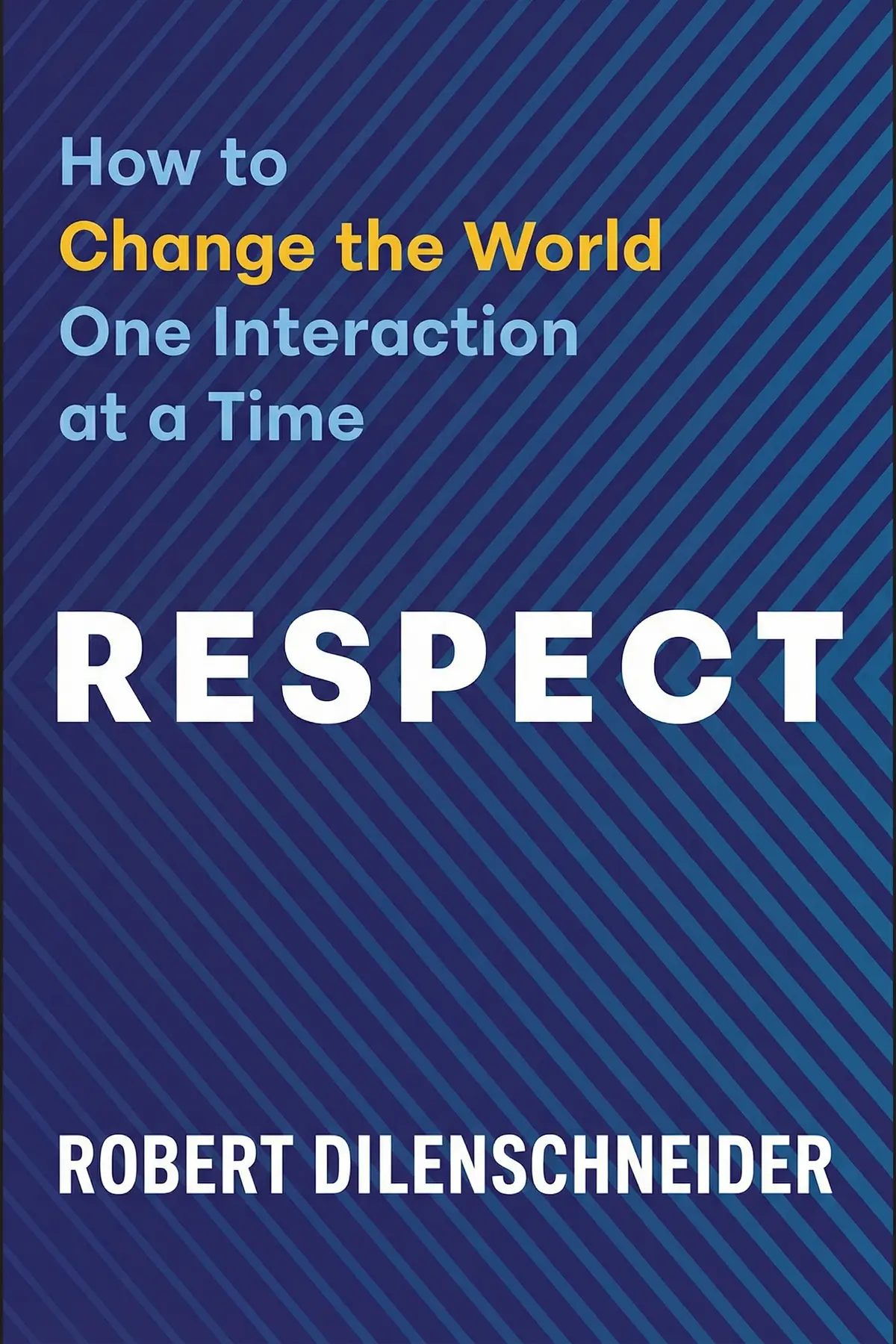
Table of Content
1. Introduction
58 sec
If daily life feels rougher than it should, with meetings that sting, family arguments that end in silence and online threads that turn into pile-ons, the fix may be smaller than you expect. In Respect, public relations veteran Robert Dilenschneider argues that respect is not a mood you wait for others to grant but something you can build through choices you repeat every day. His sharpest observation is about incentives: a culture that rewards outrage has made respect look naive, yet plain kindness still spreads, because people can see it and copy it.
The argument runs in widening circles. Respect begins with a steady sense of your own worth, shows up in a handful of visible habits, and moves outward from your desk to your kitchen table to public life. Along the way there are five habits to try in your next conversation, a way to correct rudeness at work on the spot, and a calmer way to argue at home and in public.
2. Answer a culture of outrage with visible kindness
1 min 58 sec
Much of modern life rewards the cheap shot, and asking people to be respectful often sounds empty. Dilenschneider points to a smaller, more ordinary behavior that people still notice and still imitate, even when respect itself feels out of fashion.
3. Build a steady core of self-respect first
2 min 01 sec
Kindness that depends on applause tends to vanish when the applause stops. The CEO of Northwell Health, who grew up in a struggling family in rural Ireland, shows where a sturdier base comes from, and how it can be built one stretch at a time.
4. Five daily habits that make respect visible
1 min 53 sec
Plenty of people think of themselves as respectful, yet the people around them do not feel it. Dilenschneider traces the gap to five small behaviors, and the list starts with listening.
5. Lead a team people choose to stay with
2 min 03 sec
A talented colleague who belittles others can look like an asset on paper. Dilenschneider sees it differently, and his approach to meetings, hiring and on-the-spot correction explains why some teams see low turnover.
6. Turn your home into a school for decency
1 min 45 sec
Children rarely learn respect from being told to show it. They learn it from moments their parents barely notice, and from the difference between two ways of ending an argument that look alike from the outside.
7. Disagree in public without losing your footing
1 min 52 sec
A rabbi faced a military government that lied to his face about murdered children. How he responded offers a model for any heated debate, from a city council meeting to a comment thread that is turning ugly.
8. Conclusion
1 min 17 sec
What the book adds up to is a shift in who holds the power. Respect, in Dilenschneider’s account, belongs to whoever starts it, in the next conversation, without a title or anyone’s permission. The rabbi who refused to answer lies with anger and the manager who steps in when a colleague is talked over are doing the same thing at different scales: holding a line on human dignity while keeping their own composure.
That composure is built at home and inside. A short list of values tied to real behavior keeps you steady when approval is missing. At work, the habit with the most reach may be the simplest one: when someone is cut off, hand them the floor right away and save the coaching for later. At home, a pause in place of the cold shoulder, and a daily round of gratitude, teach children what decency sounds like. Online, the move is to take hard topics off the screen and into a real conversation.
None of this changes a culture by next week, and the author does not claim it will. His bet is that small acts of respect are contagious, and that enough of them, repeated, can soften polarized rooms and rebuild trust. The first one is yours to make today.
About this book
What is this book about?
Rudeness often seems to pay. Online pile-ons, combative public figures and dramatic feeds have made respect look naive, and polite requests to be civil tend to fall flat. Robert Dilenschneider, who has worked in public relations since 1967 and whose firm advises large companies, families and individuals, argues that respect can still be built, one interaction at a time. His case starts inside, with self-respect, illustrated by Northwell Health CEO Michael J. Dowling, who grew up poor in rural Ireland. From there he lays out five habits that make respect visible: full attention, openness to other views, courtesy, compassion and concrete regard for dignity. He then follows those habits into the workplace, where leaders hire for attitude and step in the moment someone is dismissed, into the home, where children learn by watching, and into civic life, where Rabbi Arthur Schneier kept his composure while confronting Argentina's military junta. Readers get practical moves for each setting: how to correct rudeness in a meeting, how to pause an argument without punishing anyone, and how to take a heated online exchange into a real conversation.
Book Information
Who it's for
Managers and team leads
Managers and team leads who want to stop rudeness in meetings without becoming the office police.
Parents and couples
Parents who want their children to learn decency by example, and couples tired of arguments that end in silence.
Professionals worn down online
Professionals worn down by online hostility who want a calmer way to disagree in public.
About the Author
Robert Dilenschneider
Robert L. Dilenschneider has worked in public relations since 1967, when he started in New York after earning degrees from the University of Notre Dame and, in journalism, from Ohio State University. He spent nearly 25 years at Hill & Knowlton, serving as president and CEO from 1986 to 1991, and in 1991 founded The Dilenschneider Group, which advises large companies, families and individuals from New York and Chicago. He created the Borromean Lecture on ethics in business and government in 2001, and his firm launched the Civility in America Lecture Series in 2012.
Ratings & Reviews
Ratings at a glance

What people think
Listeners value the author's hands-on "road map" for returning to civility, finding the tips both direct and simple to use throughout their personal and professional lives. Furthermore, they appreciate the wide-ranging stories from corporate and civic leaders which show that respect is a high-impact strategy for becoming an effective leader. They also highlight the book's easy-to-read format, with one listener mentioning that the three-step self-improvement guides provide a clear and actionable path for growth. Additionally, listeners see the focus on self-respect and "servant leadership" as a timely and vital resource for bettering social discourse one interaction at a time.
Top reviews
Pannipa
Robert Dilenschneider has essentially codified decency in a way that feels actionable for the modern professional. Instead of vague platitudes, he offers what he calls an 'active strategy' to repair rifts in our families and workplaces. I found the emphasis on 'servant leadership' particularly compelling because it shifts the focus from power to contribution. The writing is incredibly straightforward, avoiding the usual business-speak that clutters this genre. It’s a road map for those who want to be effective without losing their humanity. If you’re tired of the noise in public discourse, this is a refreshing alternative that actually offers a path forward.
Show morePui
Could a single book really help heal our current cultural divide? Dilenschneider makes a powerful argument that it can, provided we approach change one interaction at a time. The author draws on his deep experience in public relations to show how respect functions as a 'force' rather than just a polite suggestion. I loved the diverse range of anecdotes from business icons and civic leaders; they provide concrete proof that civility isn't a weakness. It’s a masterclass in communication that feels both timely and timeless. Personally, I think this should be required reading for anyone entering a leadership role today. It’s a triumph of clarity.
Show moreJoy
After decades in the workforce, it’s rare to find a manual that addresses the soul of leadership rather than just the mechanics. This book isn't just about manners; it's about the fundamental way we view our responsibilities to those around us. The concept of 'TouchPoints' really resonated with me, highlighting how every small conversation is an opportunity to build or break a relationship. Dilenschneider reminds us that we aren't powerless in the face of societal erosion. We have the agency to build a culture of respectfulness starting with our own behavior. It is a passionate, clear-eyed call to action that left me feeling genuinely optimistic about the future.
Show moreViolet
Most people assume respect is an external transaction, but this text argues beautifully that it begins with a foundation of self-respect. I found the sections on 'servant leadership' to be a necessary antidote to the ego-driven management styles we see so often in the news. The writing is straightforward and avoids unnecessary irony, which is refreshing in an age of constant snark. It’s a book that encourages you to be better without making you feel lectured. By the time I reached the end, I felt equipped with a new 'toolbox' for my professional and personal life. Truly a wonderful read that I will likely revisit whenever I feel burnt out.
Show moreNathan
Wow, this was exactly the palate cleanser I needed after scrolling through the negativity that dominates social media these days. Dilenschneider doesn't just complain about the state of the world; he provides a tangible strategy for changing it through individual effort. The 'three dimensions' of respect he outlines provide a very clear framework for self-evaluation and growth. I especially appreciated how he pulled from such a wide variety of sources, from religious leaders to political titans. It proves that the need for respect is a universal human requirement, regardless of your background or industry. This is a slim volume, but its impact is quite substantial and very heartfelt.
Show morePatchara
I picked this up during a particularly toxic week at the office, hoping for some guidance on navigating prickly colleagues. What I found was a very accessible guide that breaks down respect into three digestible dimensions: self-respect, respect for others, and earning it in return. To be fair, some of the advice feels like common sense that we should have learned in grade school, but in today's world, that common sense is sorely lacking. The three-step self-improvement guides at the end of each chapter make the concepts easy to implement immediately. It’s not a dense academic text, but it’s a practical tool for anyone looking to improve their daily interactions.
Show moreNew
Finally, a business book that doesn't hide behind thick layers of corporate jargon or abstract theories. The prose is lean and direct, making it a quick read that stays with you long after you close the cover. While I would have liked a few more 'post-mortems' on failed interactions to see the reverse side of the coin, the success stories are undeniably inspiring. Dilenschneider’s perspective as a seasoned executive shines through every page, offering a level of authority you just don't get from younger gurus. It’s a solid, practical manual for navigating the complexities of modern society with grace. Worth the time for the insights on Chapter 9 alone.
Show morePreeda
The anecdote about the Four Seasons in Chapter 3 really drove the point home for me regarding how respect functions in high-pressure environments. Robert Dilenschneider uses his vast network to pull in stories that feel both exclusive and universally applicable. Look, the world is increasingly volatile and ambiguous, and having a 'road map' like this is incredibly grounding. My only minor gripe is that some of the bios for the featured icons felt a little gushy, almost like promotional material. However, the core message about restoring civility is so vital that it’s easy to overlook a bit of fluff. It’s a great gift for a recent college graduate.
Show moreSamira
Drawing from a diverse pool of sources ranging from civic leaders to religious icons, the author provides a universal framework for civility. In my experience, books written by PR experts can sometimes feel a bit manipulative, but this one is genuinely sincere and grounded in real-world application. The focus on 'active strategy' makes respect feel like a tool you can use to achieve your goals rather than just a soft skill. While a few more details on how to handle truly intractable conflicts would have been helpful, the general guidance is excellent. It’s an easy-to-read, optimistic book that serves as a timely reminder of what we've lost and how to get it back.
Show moreBee
Truth is, I found the advice here a bit too elementary for anyone who has already spent time in a professional environment. While the anecdotes are flashy and the chapters are quick to digest, it feels like a collection of 'bottled wisdom' that lacks real psychological depth. For someone who never learned basic manners from their parents, this might be a godsend, but the well-nourished reader may find it a bit thin. I appreciated the upbeat tone, but the three-step self-improvement guides felt a bit too formulaic for my taste. It’s a pleasant enough read, but it simply didn't provide the 'magnum opus' level of detail I expected.
Show moreQuestions about this book
What is the main idea of Respect by Robert Dilenschneider?
Dilenschneider argues that respect is built through small, repeatable choices, not handed down by authority. It starts with self-respect, a settled sense of your own worth, and becomes visible through five habits: full attention, openness to other views, courtesy, compassion and concrete regard for dignity. Those habits then widen from the workplace and the home into civic life, where they can cool polarized debate.
What are the five habits of respect in the book?
The first is listening with full attention, with the phone away and open questions instead of a rehearsed reply. The second is accepting that others bring their own experiences, and hearing the whole story before disagreeing. The third is courtesy, such as a sincere thank-you or refusing to gossip. The fourth is compassion that builds belonging. The fifth is honoring dignity concretely, by learning names and greeting people personally.
How can a manager build a respectful workplace according to Respect?
Dilenschneider suggests respecting people’s time, apologizing when a meeting overruns and listening before asserting authority. He favors hiring for attitude, curiosity and shared values over pedigree, and notes that some leaders meet every new group of hires to talk about decency. If a colleague is interrupted or brushed aside, intervene right away, then coach the offender in private. Even a brilliant performer who demoralizes the team is a liability.
How does the book suggest handling arguments at home?
Describe how you felt instead of labeling the other person, for example saying you felt overwhelmed by a messy kitchen rather than calling someone lazy. When tempers rise, call a pause and agree to return later, which is a reset, unlike the cold shoulder, which punishes. For sensitive topics such as money, state your goal at the start, and use a short daily gratitude check-in to notice what went right.
Readers also enjoyed









AUDIO SUMMARY AVAILABLE
Listen to Respect in 15 minutes
Get the key ideas from Respect by Robert Dilenschneider, plus 5,000+ more nonfiction titles.
- 5,000+ titles
- Listen as much as you want
- 7-day free trial
- Cancel anytime









