

10 min 08 sec
Available in: English
Relationships at Work: How to Authentically Network within Your Company
By Rachel Simon
Shows how to build genuine relationships inside your own company through small, sincere habits: early outreach in a new role, prompt personal follow-ups, introductions, repairing strained ties and staying connected when you move on.
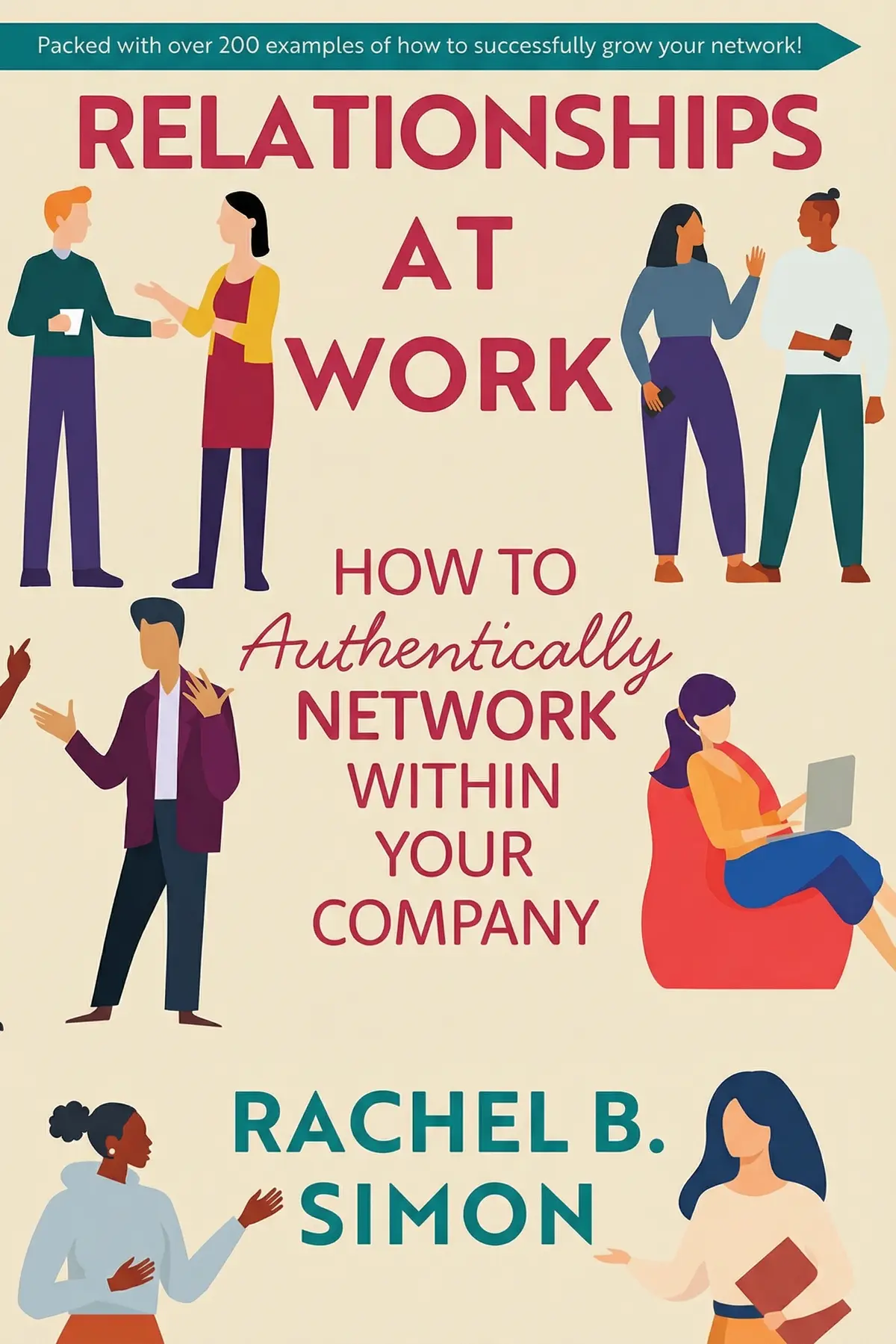
Table of Content
1. Introduction
1 min 02 sec
If company networking events leave you counting the minutes until you can leave, Rachel Simon offers some relief: the relationships that matter are built in small, ordinary moments, far from any crowded room. In Relationships at Work, Simon, an executive at AT&T, treats networking as a set of habits: reaching out early, following up promptly and staying in touch through good times and bad. These connections, she argues, take you directly to the people who can help, so work moves faster and feels better. They also bring you views, cultures and experiences you would not meet otherwise, and new job offers may follow, though she treats that as a bonus.
The argument comes down to one claim: sincere, well-timed relationships inside your company, built before you need them and kept up through every change, make work easier and your world wider. What follows are moves an introvert can make from a desk, from a first email in a new role to a well-paced request for someone’s time.
2. Make allies in your first weeks on the job
1 min 17 sec
The early days in a new role feel like the worst time to ask anyone for anything. Simon argues they are the best time to reach out, for a reason that only becomes clear months later.
3. Send the note the day after you meet
1 min 19 sec
Most promising work connections die in the same place, and it is not the first conversation. Simon pinpoints the small step most people skip and the common shortcut that does more harm than good.
4. Grow your circle one introduction at a time
1 min 20 sec
Your network is probably bigger than it looks, but most of it is hidden behind people you already know. Simon describes a simple chain for reaching it, and why it has to run in both directions.
5. Lean in when work relationships turn tense
1 min 29 sec
When criticism lands or a project fails, pulling back feels like self-protection. Simon makes the case for the opposite instinct, including toward the colleague you have been avoiding.
6. Leave a role without losing your people
1 min 16 sec
A new job, a career break or parental leave can undo years of careful relationship building in a few weeks. Simon describes the small gesture that keeps the bridge standing.
7. Pace your asks and shrug off silence
1 min 22 sec
An unanswered email, an eager follow-up, an ambitious request to a near stranger: each can quietly sink a connection. Simon names the missteps and the balance that keeps relationships growing.
8. Conclusion
1 min 03 sec
What Simon describes is a network built in small installments: a first email in week one, a note the morning after a meeting, one introduction asked for and one given. None of it needs a crowded room or a big personality, which is good news for anyone who dreads company events. The relationships grow because they are started early, kept up when work gets hard and carried forward through every change of role.
Begin with the move that costs least. After your next meeting with someone new, write to them the following day and mention something they actually said. When things are tense with a colleague, ask for an honest conversation instead of keeping your distance, and apologize if you owe it. And when you want more from someone, ask for a coffee long before you ask for months of their time.
In Simon’s telling, the people around you are what make a working life worth it, and your next opportunity may already be one introduction away.
About this book
What is this book about?
Plenty of people dread company networking events and treat networking as something to survive. Rachel Simon, an executive at AT&T, sees it differently. In her view the relationships that matter are built in ordinary workdays, through a series of small, sincere moves that suit introverts as well as anyone. Simon argues that strong internal connections lead you directly to those colleagues who are able to assist, speed up the work and make it more enjoyable, and bring you into contact with perspectives and cultures you would otherwise never encounter. Her tips cover the whole arc of a working relationship. They include writing to your team in your first weeks, sending a personal note the day after you meet someone, asking for one introduction at a time and repairing tense relationships with an honest conversation. They also cover thanking colleagues individually when you leave. Readers get a practical set of habits, plus a clear sense of the common mistakes to avoid: giving up after silence, pushing too hard, sending mass emails and asking for too much too soon.
Book Information
Who it's for
Hoping for early allies
New hires and newly promoted managers who want allies in their first weeks.
Introverts who dread networking
Introverts who dread company networking events and want quieter, practical habits.
Employees in transition
Employees changing roles, leaving a company or going on leave who want to keep their relationships alive.
About the Author
Rachel Simon
Rachel B. Simon is an executive at AT&T who has served as a Vice President in several parts of the company, including Finance, Customer Care and Privacy. She has spent nearly 30 years working on talent development, diversity and inclusion, and she has founded employee networks built around mentoring. She also speaks on networking and work-life balance, which gives her advice on building relationships inside a large organization the weight of long practice.
Ratings & Reviews
Ratings at a glance
What people think
Listeners find that this guide offers 20 highly valuable suggestions and is packed with real-world scenarios, making the advice simple to put into practice. Furthermore, the content delivers a sensible strategy for networking, as one listener mentioned how it eliminates anxiety and hesitation when forging fresh connections. Listeners also value the work for its accessibility, humor, and authenticity, with one individual pointing out that it works every single time.
Top reviews
Emily
This book is a masterclass in humanizing the corporate environment. Instead of the usual fluff about 'leveraging your circle,' Rachel Simon provides a very practical, step-by-step primer on building one-on-one connections that actually matter. I’ve always been skeptical of business self-help, but the humor and authenticity here won me over quickly. The inclusion of real-life emails from her own career makes the concepts feel tangible rather than theoretical. It’s a relief to read something that recognizes networking isn't just for people who enjoy schmoozing in ballrooms. I’ve already started using some of the templates to reach out to colleagues in different departments. Truth is, it removes a lot of the trepidation associated with 'cold' outreach. Highly recommended for any new grad or seasoned pro.
Show morePat
Picked this up during my transition back into the office after maternity leave, and it was exactly the boost I needed to feel confident again. Building new relationships can feel daunting after being away, but Rachel breaks it down into such manageable chunks. I loved her 'nerdiness' and how she isn't afraid to show the awkward side of professional life. The book is full of relatable tips that make the whole idea of networking feel kind rather than transactional. It’s not about schmoozing on a golf course; it’s about making genuine connections one person at a time. I’ve already implemented three of her suggestions and the results were immediate. This is a must-read for anyone who wants to feel more connected to their workplace culture.
Show morePui
After hearing my colleagues rave about Rachel Simon’s 'nerdiness' and her down-to-earth advice, I finally dove into this book. It is fantastic! She manages to take the fear out of professional social situations by breaking everything down into small, manageable steps. Look, networking shouldn't feel like a chore, and this book proves it can actually make people feel good when done with genuine intent. The 20 tips she shares are incredibly easy to implement immediately. I loved how relatable the scenarios were, especially for those of us who aren't naturally extroverted. Her writing style is so engaging and kind that it feels like getting advice from a trusted mentor over coffee. This is a must-read for anyone looking to nurture connections without losing their soul.
Show moreEthan
Rachel Simon has managed to write a networking book that doesn't actually feel like a networking book. It feels like a guide on how to be a better, more connected human being in a professional setting. The humor peppered throughout made me laugh out loud several times, which is rare for a business read! I personally loved the emails and annotated the book with sticky notes so I can refer to them as templates in the future. It’s the kind of practical, thoughtful advice that works every single time because it's rooted in kindness. Whether you are a college student or a seasoned executive, you will find something here that resonates. This book completely demystifies the process of making connections and makes it feel achievable for anyone.
Show moreSaengdao
The chapter on reaching out to different departments really opened my eyes to the silos I’ve been living in. I never thought to connect with people outside my immediate circle, but Rachel makes it seem so easy and, more importantly, necessary. Her 20 tips are common sense but often overlooked in the hustle of daily work. I appreciate the authenticity she brings to the table; it’s clear she’s lived through these corporate scenarios herself. The book is incredibly readable and the tone is just downright kind. I’ve already recommended it to several friends who are struggling with workplace politics. It turns out that networking isn't about being the loudest person in the room. It's about being the most genuine. Five stars for such a practical and heartwarming guide.
Show moreDimitri
Ever wonder how some people seem to know everyone in a giant corporation without being annoying? This book demystifies that process entirely. Rachel’s writing is incredibly engaging and personable, making a potentially dry subject like professional networking feel like a fun afternoon project. I particularly enjoyed the 20 incredibly useful tips that serve as the backbone of her strategy. My only small complaint is that the focus is very heavy on email communication, whereas I would have loved a few more tips on navigating impromptu Zoom calls or coffee chats. Regardless, the common-sense approach is refreshing. It’s simple. It’s practical. It works. If you feel like your career has plateaued because you don't know the 'right' people, this will give you the tools to fix that.
Show moreNong
As someone who dreads the typical convention ballroom schmoozing, I found the common-sense approach here incredibly refreshing. Rachel focuses on the 'one person at a time' method, which feels much more natural for introverts like me. The book is packed with practical examples and real-life emails that show exactly how to bridge the gap between departments. While I think the advice is most applicable to those in larger corporate cultures, there are definitely takeaways for the self-employed or those in small startups. My palms didn't sweat once while reading this! It removes the mystery from business connections. I did feel that a few chapters were a bit repetitive, but the overall message of authenticity is so important that it’s easy to overlook. Definitely a helpful guide.
Show moreOmar
Finally got around to reading this over the weekend and I’m genuinely impressed by how actionable the advice is. For anyone working in a larger company, the struggle to make vital connections outside of your immediate team is very real. Rachel provides a great common-sense approach that removes the sweaty-palm anxiety often associated with business networking. While I think some of the email templates are a little repetitive, the underlying strategy is gold. It’s especially helpful for introverts who need a nudge to reach out. I appreciate that she includes her own failures and successes, making the whole journey feel very authentic. It’s a quick read, but the impact is lasting. I’m already planning to share this with my mentees who are just starting out.
Show moreFah
Gotta say, the step-by-step primer Rachel provides is perfect for anyone just starting their career or even mid-level managers looking to refresh their network. The book is filled with practical examples that actually work in a real-world corporate culture. One minor gripe is that I wish there was more focus on maintaining relationships long-term after the initial outreach. However, the humor and readability make up for any small gaps. It’s simple, practical, and devoid of the usual business jargon that makes most networking books unbearable. Rachel’s voice is thoughtful and downright kind throughout every chapter. I particularly liked the section on making others feel good through your interactions. It's a solid 4-star read that I'll likely refer back to when I need a template for a tricky email.
Show moreRay
To be fair, I found the heavy reliance on email examples a bit limiting for my specific field. While the twenty tips are undeniably useful, I was hoping for more guidance on face-to-face interactions or navigating modern platforms like Slack and Teams. Some of the emails included felt a little canned, though I appreciate having a starting point. That said, the core philosophy—that authenticity results in effortless networking—is a gem that everyone should hear. The book is well-written and Rachel’s personality shines through, which makes it a quick and pleasant read. It’s a solid foundation for introverts, but I think it could have explored other mediums more deeply to be truly comprehensive for a 5-star rating.
Show moreQuestions about this book
What is the main idea of Relationships at Work by Rachel Simon?
Simon argues that networking inside your company works best as a series of small, sincere actions instead of an ordeal at events. Reach out early in a new role, follow up personally after meetings, ask for and offer introductions, invest more in relationships during hard times and stay in touch when you move on. She says these ties lead you straight to people who can help and make work easier and more enjoyable.
How should I network when I start a new job?
Simon suggests building relationships before you need them. Send a friendly introduction to the people who report to you, including those several levels down, saying you want to learn about them and support them. Chat with peers who share your supervisor to understand the team’s culture. Ask colleagues who you should know beyond your own circle and contact those people, then keep booking time with important partners you barely know.
What networking mistakes does Rachel Simon warn against?
She names a handful. Don’t let an unanswered email discourage you; keep reaching out without heavy expectations. Balance persistence with judgment, following up when there is real connection and reading the signals when there isn’t. Avoid blind-copy mass emails, which feel impersonal, and write to people individually by name. And don’t ask too much too soon: start with a coffee or a lunch instead of asking a new contact to mentor you for months.
Is Relationships at Work useful for introverts?
Yes. Simon opens by acknowledging that many people, especially introverts, feel out of place at networking events, and most of her advice happens away from crowded rooms. Her tips rely on personal emails, next-day follow-ups, one-to-one conversations and introductions through people you already know. These are steady, low-pressure habits that suit someone who prefers small interactions to working a room full of strangers.
Readers also enjoyed









AUDIO SUMMARY AVAILABLE
Listen to Relationships at Work in 15 minutes
Get the key ideas from Relationships at Work by Rachel Simon, plus 5,000+ more nonfiction titles.
- 5,000+ titles
- Listen as much as you want
- 7-day free trial
- Cancel anytime









