

14 min 39 sec
Available in: English
Read Your Mind: Proven Habits for Success from the World’s Greatest Mentalist
By Oz Pearlman
A mentalist shows how to read people on purpose: name what they are thinking, rehearse for bad moments, remember the details that matter to them, tell stories that stick and move steadily toward your goals.
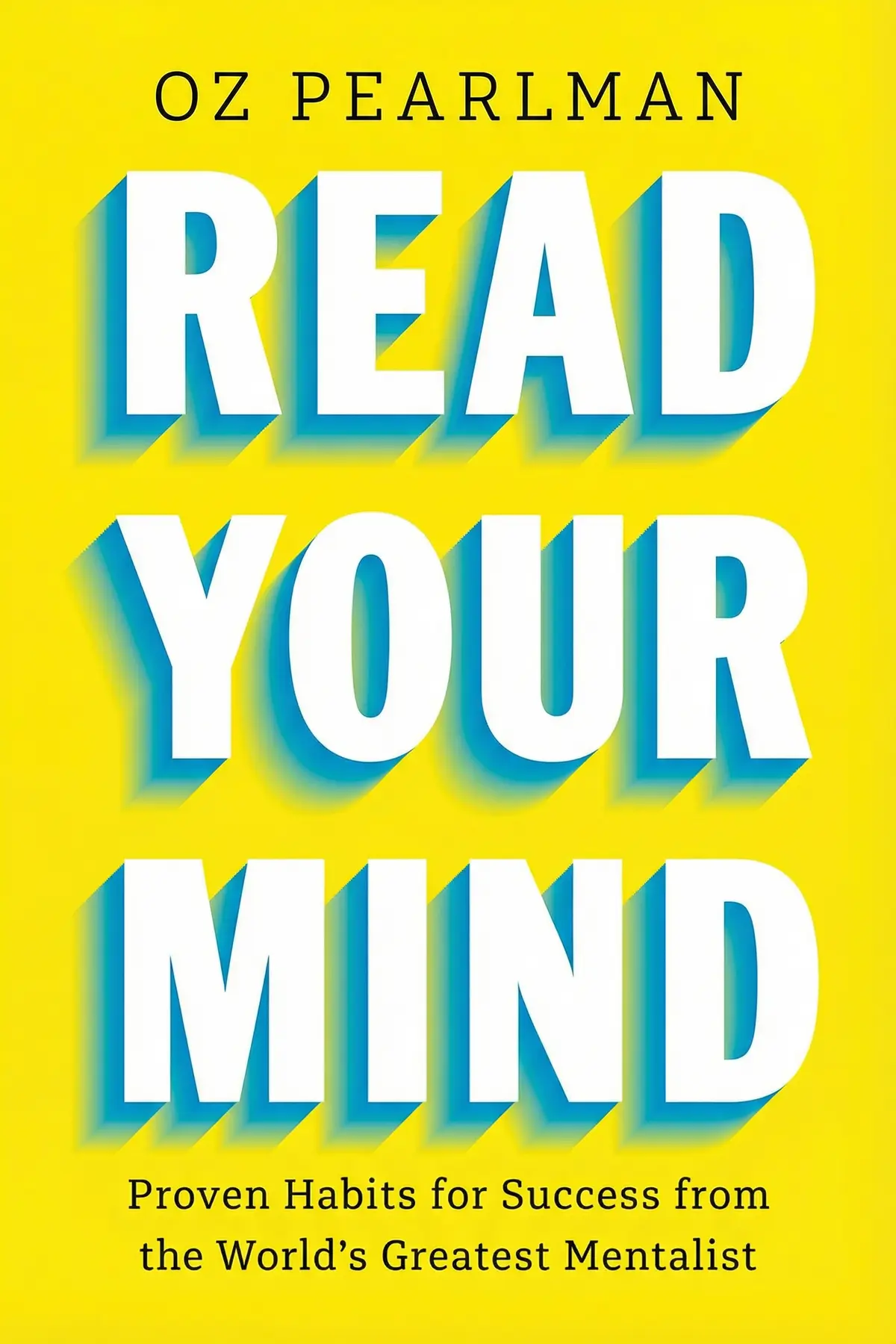
Table of Content
1. Introduction
1 min 05 sec
Most of us spend the day guessing what other people think: whether a client is bluffing, whether a boss is ready for a request, whether a stranger is uneasy. Oz Pearlman’s first lesson is that the guess works better when you say it aloud, because naming someone’s private worry lowers their guard at once. In Read Your Mind, Pearlman, a mentalist who has performed for sports teams and large companies, explains that his act depends on reading people, not minds. His tools are observation, timing and the small signals people give off without knowing it.
His argument is that what looks like mind reading is attention, preparation and follow-through, and that anyone can practice all three. He learned this early: as a teenager he talked his way into a restaurant job by projecting a confidence he did not yet feel. Ahead are ways to calm a nervous listener, rehearse for a bad moment, make names stick, tell a story people repeat, and turn a vague ambition into a step you can take today.
2. Speak the thought they haven't said yet
1 min 51 sec
People lower their guard and trust you faster when you put their unspoken thoughts into words. A mentalist’s opening move works on clients, students and strangers alike, and it takes only one well-chosen sentence.
3. Rehearse the disaster so pressure can't rattle you
1 min 43 sec
Most people picture success before a big moment and then freeze when something breaks. Pearlman prepares in a way that looks pessimistic at first, and it is what keeps him calm in front of a live audience.
4. Win the room by being the most interested
2 min 04 sec
You may think you need an impressive career or a great life story to hold attention at an event. Pearlman disagrees, and his approach includes a small notebook habit that makes people feel almost magically remembered.
5. Make names stick and earn lasting trust
2 min 06 sec
Forgetting a name seconds after hearing it feels like proof of a weak memory. Pearlman locates the failure somewhere else entirely, and a three-step routine he uses fixes it in the moment of meeting.
6. Tell the story people will repeat for you
2 min 16 sec
A fake royal entourage fooled a New York nightclub and a celebrity magazine. A college prank ended in a jail cell. Both episodes taught Pearlman something about persuasion that a slide full of data never could.
7. Turn a vague goal into today's first step
2 min 22 sec
A fellow performer wanted to know how Pearlman kept landing on television. His reply exposed the habit that holds most careers back, and the fix starts with a goal far smaller than you expect.
8. Conclusion
1 min 12 sec
Pearlman’s stage act and an ordinary workday turn out to run on the same machinery. An audience gasps at a mentalist who seems to know their thoughts, yet what he is doing is watching closely, preparing for what could go wrong, remembering the small thing that mattered to someone, and showing up again tomorrow. None of it requires a gift. All of it requires practice.
That makes his ideas easy to test this week. Before your next tense conversation, name out loud the worry you suspect the other person is carrying, and watch whether the room relaxes. When you meet someone new, spend a minute noting their name, a detail about them, and something that matters to them, and bring it up once the next time you see them. And pick one vague ambition, shrink it to a first action small enough to do today, and tell someone about it.
Motivation will fade at some point; Pearlman expects it to. His answer is to take the next step anyway, without waiting for the feeling to return and without starting over from zero. The trick that looks like magic is mostly a person who kept paying attention after everyone else stopped.
About this book
What is this book about?
Every day we guess what other people are thinking: whether a client is bluffing, whether a boss is in the mood for a request, whether a new contact is uneasy. Mostly we guess by accident. Oz Pearlman, who has made a career of seeming to read minds, argues that his act depends on reading people, and that the same skill can be practiced deliberately by anyone. Read Your Mind turns the habits behind his performances into everyday tools. Pearlman explains how voicing someone's unspoken worry lowers their guard and how detailed rehearsal keeps you steady when things go wrong. He covers why the most interested person in a room is the one others warm to, and how to make names and details stick. He tells two stories from his own life, a Prince Harry prank at a New York nightclub and a weekend in a Michigan jail, to show why stories persuade where data does not. The book closes on momentum: turning vague ambitions into precise targets, small daily actions and public commitments. Readers get practical methods for conversations, presentations, networking and goals, built on the idea that seeming magic is mostly careful attention.
Book Information
Who it's for
Salespeople and presenters
Professionals who pitch, sell or present and want to read a room before they speak.
New to networking
Newcomers to networking who forget names and feel they have nothing impressive to say.
Stalled on a goal
Anyone with a stalled goal who keeps waiting for the right moment to begin.
About the Author
Oz Pearlman
Oz Pearlman is an Israeli-American mentalist, magician, author and keynote speaker. He became widely known as a finalist on America's Got Talent and later won a New York Emmy Award for Oz Knows, an NBC travel show about him. He has performed mentalism for the Dallas Cowboys, New York Jets, Green Bay Packers and Los Angeles Lakers, and for Fortune 500 companies, and in 2025 he gave a TED Talk called The Art of Reading Minds. He is also a marathon and ultramarathon runner.
Ratings & Reviews
Ratings at a glance
What people think
Listeners find this book absorbing and simple to follow, packed with useful psychological knowledge and realistic suggestions. They are impressed by the author’s narrative ability and personal stories, and one listener mentions how Oz clarifies complicated theories about intuition. Listeners value the book's effectiveness in fostering better relationships, with one labeling it a masterclass in connection and communication.
Top reviews
Carter
Picked this up on a whim and couldn't put it down. Pearlman takes the mystery out of 'intuition' and shows how it’s actually a skill built on data points we usually ignore. The way he describes 'theory of mind'—the ability to understand what someone else is thinking or feeling—is brilliant. It’s not about psychic powers; it’s about deep empathy and observation. Since reading this, I’ve been much more aware of my own non-verbal cues and how they affect the people I lead. The book is incredibly easy to digest and filled with actionable habits that don't require a PhD in psychology to understand. It’s rare to find a book that is this entertaining while also providing a roadmap for better human connection. If you want to improve your influence and build stronger relationships, this is a must-read.
Show morePete
Not what I expected, but in the best way possible. I thought I was getting a book of magic tricks, but I ended up with a blueprint for a better mindset. Pearlman’s approach to growth and resilience is infectious. He uses his experiences as both a world-class entertainer and an ultramarathoner to show that the limits we set for ourselves are mostly mental. The practical advice on breaking down large goals into 'micro-goals' has been a game-changer for my productivity this month. Look, some people might find his confidence a bit much, but his results speak for themselves. The writing is clear, the stories are engaging, and the psychological insights are actually useful in the real world. This is a masterclass in how to present yourself and connect with others in a meaningful way.
Show moreLucia
The chapter on memory alone made this worth the purchase for me. I’ve always struggled with names at networking events, and Oz provides some very practical, low-stakes methods to improve recall through visualization and repetition. Beyond the memory tips, the book serves as a masterclass in modern communication. He explains how to lower someone’s defenses by acknowledging their internal narrative, which has already helped me in a few tense meetings at work. The writing style is punchy and energetic, much like his stage persona. While I understand why some readers are frustrated that he doesn’t reveal his magic tricks, I think the 'reading people' angle is a much more useful takeaway for the average person. It’s about being present and intentional. A very solid 4-star read that offers a unique perspective on influence.
Show moreElise
Wow, Oz really knows how to spin a yarn. This isn't just a manual; it’s a collection of high-stakes stories from his career that illustrate his points beautifully. I found the segments on 'reading the room' particularly insightful. He breaks down how subtle cues in body language can signal when a deal is going south or when someone is finally opening up to you. Truth is, most of us walk through life with our eyes half-closed. This book is a loud wake-up call to start observing the world with the precision of a performer. I loved the emphasis on being 'interested rather than interesting.' It’s a simple shift, but it changes the entire dynamic of a conversation. It loses a star because the pacing gets a bit sluggish during the middle autobiographical chapters, but the ending picks the energy right back up.
Show morePreeda
After seeing Oz Pearlman perform live, I was dying to know what goes on in his head. While he doesn't reveal the mechanics of his illusions, he does reveal the mental architecture required to pull them off. The book focuses heavily on the 'habit' side of success. He argues that confidence isn't a trait you're born with, but a result of obsessive preparation and the ability to visualize setbacks. I actually found his advice on 'mental rehearsal' more helpful than most sports psychology books I've read. He makes a compelling case that we are all 'reading minds' every day through empathy and intuition; we just don't do it consciously. The tone is encouraging and the anecdotes about his failures make him feel relatable rather than just another untouchable celebrity. Definitely recommended for anyone looking to sharpen their social awareness.
Show moreFah
Ever wonder how some people just seem to 'get' everyone in the room? Oz Pearlman breaks down that exact skill set here. It’s less about 'mind reading' in a supernatural sense and more about being a high-level observer of human nature. I appreciated the specific tips on angled approaches in conversation and using relaxed posture to build trust. Personally, I found the mix of memoir and self-help to be quite engaging, though I can see why some might want more 'how-to' and less biographical content. Still, the core message about shifting your focus outward is something we all need to hear. It’s a fast-paced, insightful guide that bridges the gap between performance art and everyday interpersonal success. Worth the read for the communication tips alone.
Show moreElias
Is this a magic book? Not even close. If you pick this up hoping to learn how to guess someone’s PIN or find a hidden object, you’ll be disappointed. Oz is very clear that he isn’t giving away his professional secrets. Instead, he focuses on how the principles of a mentalist—like extreme preparation and outward focus—can be applied to corporate life and personal relationships. The advice on 'theory of mind' and anticipating objections before they happen is actually quite solid. However, much of the book feels like a retread of established self-help concepts. It's an easy, breezy read with some fun stories from his time on TV, but it lacks the 'wow' factor of his live performances. It’s fine for a weekend read if you need a little motivation, but don't expect to be reading minds by the final chapter.
Show moreMarco
Finally got around to reading this after hearing Oz on a podcast. He’s incredibly charismatic, and that definitely translates to the page. The book is structured around his own journey, which makes the advice feel more grounded than your typical dry textbook. He touches on why we procrastinate and how to build rapport by simply paying better attention to the people in front of us. To be fair, a lot of this is common sense, like the importance of eye contact and remembering small details about your coworkers. Still, the way he frames these habits as the 'magic' behind his success is a clever hook. It’s a decent guide for someone just starting their career who needs to work on their soft skills. It didn't change my life, but I appreciated the glimpses into his professional mindset and the emphasis on empathy.
Show moreConnor
As a long-time fan of Oz’s appearances on TV, I had high hopes for this one. Unfortunately, the narrative is a messy cocktail of autobiography, marathon training anecdotes, and basic self-help advice. The sections about his ultramarathons felt particularly out of place and, frankly, a bit humble-braggy. I was looking for deep insights into the human psyche or even some practical mentalism tips, but instead, I got a lot of 'visualize success' and 'set SMART goals.' It reads like a garden-variety business book you’d find at an airport bookstore. There are a few nuggets about remembering names and active listening that are useful, but they are buried under layers of filler about his personal accolades. It’s a quick read, but it simply doesn't deliver on the promise of the title.
Show moreSavannah
I wanted to believe Oz was sharing actual psychological breakthroughs, but this felt like a massive letdown. If you follow his career, you know he's a phenomenal magician, yet the book tries to frame his stage craft as simple observation and 'reading people.' Let’s be real: he’s using classic mentalism tricks, not just watching body language. It feels disingenuous to market this as a guide to human behavior when the foundation is built on performance secrets he refuses to actually reveal. The writing is also quite repetitive, circling back to the same 'have a plan' mantra without offering much depth. If you want to learn real behavioral science, look into Joe Navarro or Paul Ekman instead. This is just a glossy promotional piece for his brand that left me feeling more than a little cheated out of my time and money.
Show moreQuestions about this book
What is the main idea of Read Your Mind by Oz Pearlman?
Pearlman argues that what looks like mind reading is really reading people: careful attention, preparation and follow-through. He shows how to imagine what others are thinking and say it aloud, rehearse for things going wrong, show genuine interest, remember names and details, tell emotional stories and turn vague ambitions into small daily actions. He presents all of it as learnable skill, not magic.
How does Oz Pearlman suggest remembering names?
He uses three steps: listen, repeat, reply. Give the person your full attention as they say their name, say it back out loud, then create a hook by checking the spelling, offering a brief compliment or linking it to something personal. He argues most forgetting happens because the name was never properly stored, and that writing details down right after a meeting helps you recall them much later.
Who should read Read Your Mind?
It suits people whose work depends on other people: those who pitch ideas, sell, lead teams, teach or meet clients. It also helps anyone who feels awkward at networking events, forgets names or freezes under pressure. Its final section on goals speaks to readers who keep postponing an ambition and want a concrete way to start moving.
How can I apply Read Your Mind in daily life?
Before a tense conversation, ask what the other person is thinking and voice it in your opening line. Before a talk, rehearse in detail what could go wrong and how you would recover. After meeting someone, note their name, one detail and one thing they care about. For a goal, make it specific, shrink it to a first action, tell people about it and restart after slips.
Why does Pearlman say stories persuade better than facts?
He explains that stories draw on emotion, attention and empathy, and that they release cortisol to aid memory, dopamine to drive motivation and oxytocin to build connection. He illustrates this with two episodes from his own life: posing as Prince Harry’s entourage at a New York nightclub during a Merrill Lynch program, and a college prank that led to a felony larceny charge and a weekend in jail.
Readers also enjoyed




A Guide to the Good Life: The Ancient Art of Stoic Joy
William B. Irvine


A High-Performing Mind: Strengthen Your Mind and Live Your Best Life
Andrew D. Thompson


Abundance: The Inner Path to Wealth
Deepak Chopra

AUDIO SUMMARY AVAILABLE
Listen to Read Your Mind in 15 minutes
Get the key ideas from Read Your Mind by Oz Pearlman, plus 5,000+ more nonfiction titles.
- 5,000+ titles
- Listen as much as you want
- 7-day free trial
- Cancel anytime









