

14 min 45 sec
Available in: English
Radiant Rebellion: Reclaim Aging, Practice Joy, and Raise a Little Hell
Shows why the dread of growing older is a recent and profitable story rather than a fact. It also shows how to replace that story with curiosity, health experiments, deep friendships and open resistance to ageism.
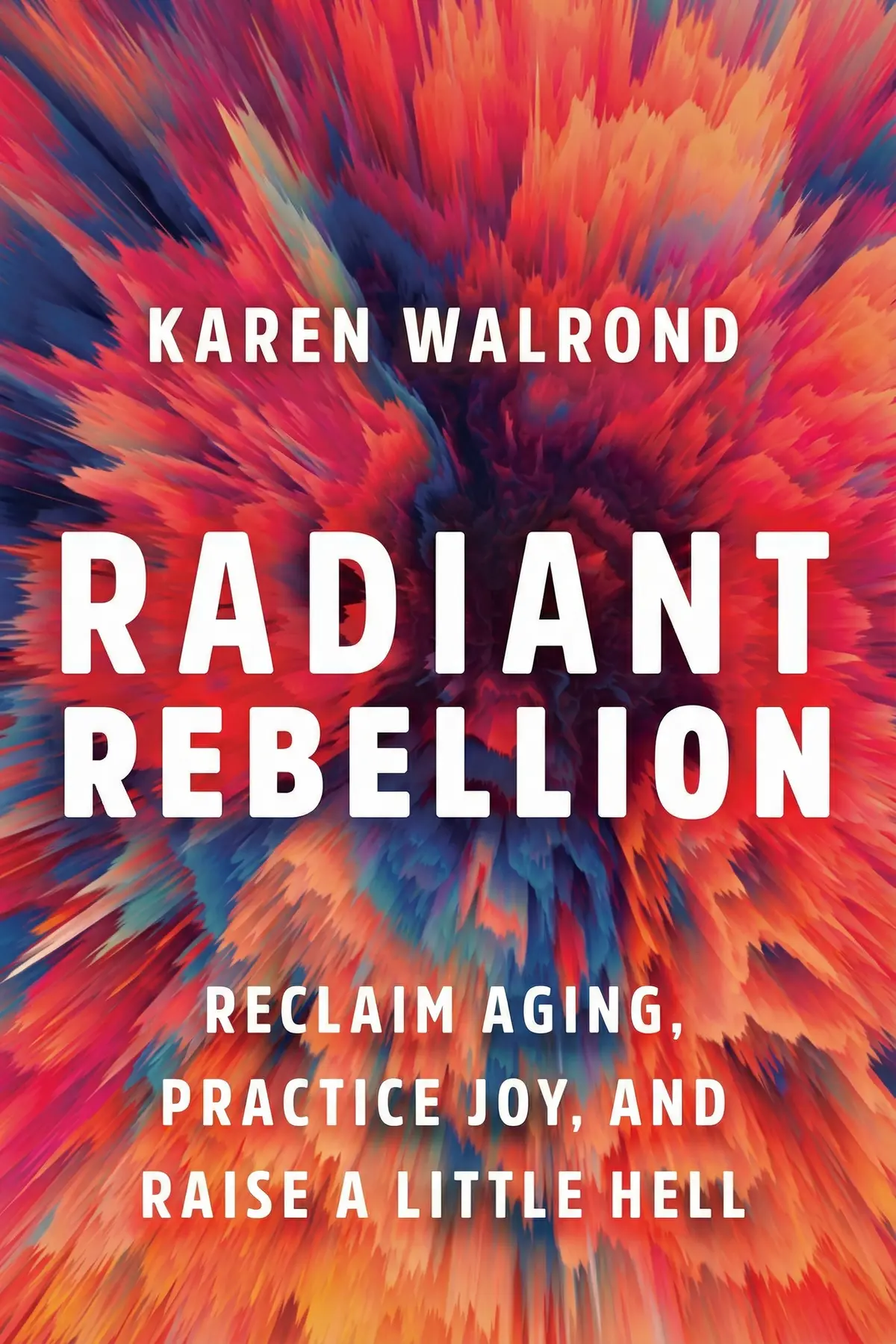
Table of Content
1. Introduction
59 sec
If every birthday past fifty arrives like bad news you are meant to take politely, start with one finding Karen Walrond puts up front. In a 2016 study, people over 70 said they were happier and more content than in their younger years. In Radiant Rebellion, Walrond, a former attorney turned positive psychology leadership coach and activist, asks why a stage that often feels good is treated as a loss.
She wrote the book in the year she turned 55, marked twenty years of marriage and watched her only child leave for college. People kept offering sympathy instead of congratulations. Her argument is that the dread of aging is a story, young in origin and profitable for some, and that anyone can rewrite it. What follows shows how to spot that story in your words and your shopping, how to test your health against your own body, and how to lean on friends and push back in public.
2. Expect your later years to bring more happiness
1 min 46 sec
The common picture of old age is loneliness, frailty and a care home. Walrond sets that picture next to the actual figures, and the gap between the two raises an awkward question about where our fear comes from.
3. Trace the fear of aging to its recent roots
1 min 56 sec
Around 1900, people in their eighties were writing magazine essays about how much they loved growing older. Within fifty years that attitude had flipped, and the forces that flipped it were surprisingly ordinary.
4. Catch the ageism hiding in your everyday words
1 min 52 sec
Saying you don’t feel old sounds like a confident thing to say. An activist showed Walrond why it can be a small insult, and why the feeling behind it has little to do with age.
5. Ask what an anti-aging cream is really selling
1 min 35 sec
Women still in their early twenties are buying wrinkle products, and gray hair can still cost a news anchor her job. Walrond offers one small habit at the checkout that changes how these purchases feel.
6. Treat your health as a personal experiment
1 min 49 sec
Many aches blamed on the calendar may have other causes, and a neurologist convinced Walrond to drop a popular phrase about food. The method she arrived at reaches well beyond diet.
7. Build friendships that keep you growing
1 min 37 sec
Walrond’s father has an unusual theory of what a friend is for, and her grandmother, who lived to 102, taught her a lesson about faith she still carries. Both point to how a self keeps forming in later life.
8. Age with power and raise a little hell
1 min 57 sec
Aging gracefully sounds like a compliment, but Walrond hears something more troubling in it. She swaps the phrase for advice from a fashion designer and turns her personal discoveries into a call to action.
9. Conclusion
1 min 14 sec
Radiant Rebellion adds up to a reversal. The sympathy Walrond received at 55 did not contain any wisdom about aging. It came from a script, and a young one, written in the twentieth century by a retirement rule, a medical standard based on five-year-olds and an industry that profits from shame. The people writing magazine essays in 1900, many of them in their eighties, followed a different script, and the happy over-70s in the 2016 study seem to be following it still.
Walrond offers a way to change scripts without pretending the old one has lost its force. Gray hair can still cost a news anchor her job, and bias against your future self still slips into everyday speech. So the rebellion is practical. Replace the word old with the feeling you actually mean. Pause before an anti-aging purchase and ask what it says about your self-talk. Choose one thing you assumed you were too old for and treat it as an experiment, the way she imagines trying surfing. And invest in the friends who, as Kermitt Walrond sees it, each look after a part of you.
The person you are becoming deserves more from you than sympathy. Look forward to meeting them.
About this book
What is this book about?
Many people treat each birthday after fifty as bad news, even though a 2016 study found that people over 70 report being happier than they were when younger. Karen Walrond wrote Radiant Rebellion the year she turned 55. People kept offering her sympathy instead of celebration, and she could not see why she was supposed to be upset. She traces the dread of aging back to its roots. A fixed retirement age, a medical standard based on five-year-olds and a booming anti-aging industry all helped build it within the twentieth century. She then tests the alternatives on herself. She lets her hair go gray, goes on a silent retreat, rethinks her health with a nutritional neurologist and talks with activists, clergy, neurologists and social workers. The book turns her findings into practice: spotting ageism in your own speech and purchases, choosing health experiments over generic age-based rules, valuing friendship and spirit, and aging with power instead of quiet resignation. Readers get a new way to picture their future selves, plus journal prompts for building their own rebellion against ageism.
Book Information
Who it's for
Women uneasy about aging
Women in midlife who feel uneasy about turning fifty, sixty or older.
Professionals tired of ageism
Professionals tired of anti-aging marketing and ageist jokes at work.
Planning purposeful later years
Anyone planning their later years who wants curiosity, community and purpose instead of quiet decline.
About the Author
Karen Walrond
Karen Walrond was born in San Fernando, Trinidad and Tobago. She worked as an attorney before becoming a positive psychology leadership coach, and she is also an activist. Her other books include The Lightmaker's Manifesto, about working for change without losing your joy, and The Beauty of Different. She runs the blog Chookooloonks and hosts The Make Light Show podcast. As a photographer, she traveled through Africa with the ONE Campaign, which works to end extreme poverty and preventable disease.
Ratings & Reviews
Ratings at a glance
What people think
Listeners value the author’s inviting and hopeful spirit, even though perspectives differ regarding the ratio of personal narrative to research-backed guidance. Many listeners find the "pro-aging" perspective revitalizing, observing that these insights help deconstruct ageist marketing tropes while fostering spiritual and mental energy. Furthermore, the presence of reflection exercises and "spark statements" offers functional resources for introspection, with one listener highlighting that the emphasis on play and spirituality ensures it remains an accessible guide for any age group. They also note that the collection of relatable stories and interviews provides "wisdom and insight" for reclaiming one's authentic self while navigating the challenges of getting older.
Top reviews
Wacharapol
Wow, Walrond has a way of making you feel both calm and ready to set the world on fire at the same time! Being a fellow caribeña, I felt an immediate connection to her storytelling and the way she weaves spirituality into the everyday. This isn't your standard, dry self-help manual; it’s a vibrant call to reclaim the joy of movement and play without pressure. The interviews she included were incredibly insightful and offered diverse perspectives on what it means to age with grace and grit. I found myself highlighting many nuggets of wisdom that I am already planning to reread next month. It’s approachable, compassionate, and deeply necessary for women of any age who feel bogged down by societal expectations.
Show moreScarlett
The chapter on how we are marketed to by the anti-aging industry was a massive wake-up call for my consumer habits. I had never really stopped to consider that the negative messages I feel about my own face are essentially a racket. Hearing that seventy percent of women color their hair really put the social pressure into a staggering new perspective for me! Walrond’s writing style is relaxed and conversational, making it feel like you’re having a heart-to-heart with a wise friend over coffee. Her emphasis on finding a lode star for this stage of life is something I’ll be thinking about for a long time. This book is a wonderful blend of personal journey and a fierce manifesto for living loudly.
Show moreYindee
Finally got around to finishing this, and I can say it's more than just a book; it’s a total mindset shift. As an adoptive mom myself, I found Karen’s personal stories about her family to be moving and incredibly relatable for my journey. She speaks with a voice that is both feisty and determined, which gave me the courage to stop hiding my true age. The way she dismantles the ageist agenda of capitalist industries is brilliant and honestly quite empowering for any woman today. I loved the emphasis on mental and spiritual vibrancy as much as physical health. This is a must-read for anyone who wants to age with courage and compassion. I feel much more intentional about how I want to show up.
Show moreChokdee
As someone who is currently wrestling with the visibility of middle age, this book arrived at the perfect moment in my life. Walrond challenges the capitalist machine that profits off our insecurities, and she does it with such a warm, energetic spirit that is infectious. I particularly appreciated the concept of spark statements as a way to redefine our mission as we grow older and wiser. To be fair, there were times when the narrative felt a little repetitive, but the actionable invitations kept me moving forward through the chapters. This isn't just about looking better; it's about spiritual vibrancy and reclaiming our authentic selves. I’ve already started incorporating her journaling prompts into my quiet morning routine.
Show moreKevin
Picked this up on a whim and found the journaling prompts surprisingly deep and helpful for my own daily self-reflection. While some parts of the memoir sections felt a bit long-winded, the core message about pro-aging is something I desperately needed to hear. The author’s focus on intentionality and going within is a great antidote to the frantic, youth-obsessed pace of modern life. I liked how she addressed wellness from a compassionate lens rather than a restrictive or punitive one. It’s not just about health; it’s about figuring out your purpose and mission when you're no longer young by society's narrow definitions. I gave it four stars because some of the advice felt familiar, but the presentation was beautiful.
Show moreNing
To be fair, I usually prefer data-heavy self-help books, but the narrative flow here won me over despite the lack of hard facts. Walrond writes with a kindness that is rare in the wellness space, focusing on play and spirituality rather than just physical maintenance. Her experiences with motherhood and adoption resonated with me deeply and added a layer of vulnerability that made her advice feel earned. I did think some of the spark statement exercises were a bit abstract for my taste, but the overall push was valuable. It’s a book that invites you to take your time rather than rushing to the finish line of the next chapter. Definitely worth a read if you feel burned out by traditional self-improvement.
Show moreBig
Ever wonder why we're so terrified of a few wrinkles or a bit of gray hair in the mirror every morning? This book tackles those fears head-on and offers a much more beautiful alternative: a radiant rebellion against the boring status quo. I loved the practical steps Walrond provides, especially the focus on finding your own spark and mission through her specific exercises. The interviews she shared were my favorite part, as they showed so many different ways to live a vibrant life regardless of age. It’s optimistic and kind, though I wish there was a bit more scientific data to back up some of the claims. If you're feeling bogged down by ageist ideas, please read this game-changer.
Show moreRapee
Look, this isn't your typical how-to guide because it asks you to do the internal work instead of just following a list. It’s more of a thoughtful meditation on what it means to grow older with intention and grace in a loud world. I appreciated the specific mentions of wellness through a compassionate lens, which is a relief compared to the usual anti-aging noise. While the pacing felt a little slow in the middle, the author’s warm voice kept me coming back for more insight. The focus on setting a personal lode star was particularly helpful for me during my recent career transition. It’s a book that encourages you to be your most authentic self, which is a message we need.
Show moreChan
Frankly, I expected more meat on the bones of this one, as the prose often prioritizes fluff over facts. While Walrond’s voice is undeniably kind, the book leans so heavily into her personal memoir that the actual how-to elements feel sparse and repetitive. I struggled to stay engaged when the chapters drifted into lengthy descriptions of her own meditation habits and gratitude letters. Truth is, the most compelling segments were actually quotes from other people she interviewed, rather than her own original insights. It’s a very optimistic read, but if you’re looking for a data-driven approach to aging, you might find this a bit too light. It is essentially just a middle-of-the-road experience for me.
Show moreMan
After hearing so many good things about her previous work, this felt like a gentle, if slightly underwhelming, follow-up to her manifesto. I absolutely loved her earlier writing, so I went into this with very high expectations for a similar emotional punch. This book is certainly joyful and compassionate, which makes it a relief to read, but it lacks a certain depth I was craving. The sections on facing internalized racism and colonialism were the highlight, though they felt brief compared to the rest of the text. It’s a decent book to skim for summarizing points, but seasoned self-help readers might find these journaling prompts a little basic. It works well as a light meditation but didn't quite change my life.
Show moreQuestions about this book
What is Radiant Rebellion by Karen Walrond about?
The book argues that the dread of aging is a learned story, not a fact. Walrond shows that people over 70 often say they feel happier than they did when younger, traces modern ageism to twentieth-century forces such as a fixed retirement age and the anti-aging industry, and tests alternatives on herself. Those tests include going gray, a silent retreat and new health practices. She ends with a call to age with power and resist ageism openly.
What does Walrond mean by internalized ageism?
She describes it as bias against our future selves, absorbed from a culture that treats getting older as bad. Her conversation with activist Ashton Applewhite showed her that saying I don’t feel old usually means not feeling unsexy, invisible or irrelevant. Those feelings can strike at any age. Walrond argues this bias can be unlearned, starting with naming what we actually feel instead of using old as an insult.
Why does Walrond reject aging gracefully?
To her, aging gracefully suggests cheerful resignation to decline. She adopts fashion designer Norma Kamali’s advice to age with power, which she understands as grounded confidence in setting your own standards. Grace still has a place: she offers it to herself when her own absorbed ageism makes her fall short of society’s expectations. She also leaves each reader to define what aging well means for them.
How can I apply the ideas in Radiant Rebellion?
Walrond suggests small, practical moves. Catch ageist language, such as using old to mean bad, and name the real feeling. Before buying an anti-aging product, ask why hiding the signs of age feels important. Get advice based on your own body, as she did with blood work and a nutritional neurologist. Treat things you think you are too old for as experiments, and invest in close friendships.
Who should read Radiant Rebellion?
It suits readers in midlife or beyond who feel pressure to dread birthdays or hide gray hair. It also suits younger readers who want a healthier picture of their future selves, and anyone interested in ageism as a social issue. Its mix of research, interviews and Walrond’s personal experiments, plus journal prompts at the end, makes it useful both for reflection and for planning change.
Readers also enjoyed




A Guide to the Good Life: The Ancient Art of Stoic Joy
William B. Irvine


A High-Performing Mind: Strengthen Your Mind and Live Your Best Life
Andrew D. Thompson


Abundance: The Inner Path to Wealth
Deepak Chopra

AUDIO SUMMARY AVAILABLE
Listen to Radiant Rebellion in 15 minutes
Get the key ideas from Radiant Rebellion by Karen Walrond, plus 5,000+ more nonfiction titles.
- 5,000+ titles
- Listen as much as you want
- 7-day free trial
- Cancel anytime









