

14 min 23 sec
Available in: English
Purposeful: Are You a Manager or a Movement Starter?
Shows how anyone, from an activist to a founder, can turn a clear purpose into a movement: framing a vision people feel, winning over decision-makers, keeping supporters engaged and handling critics and failure.
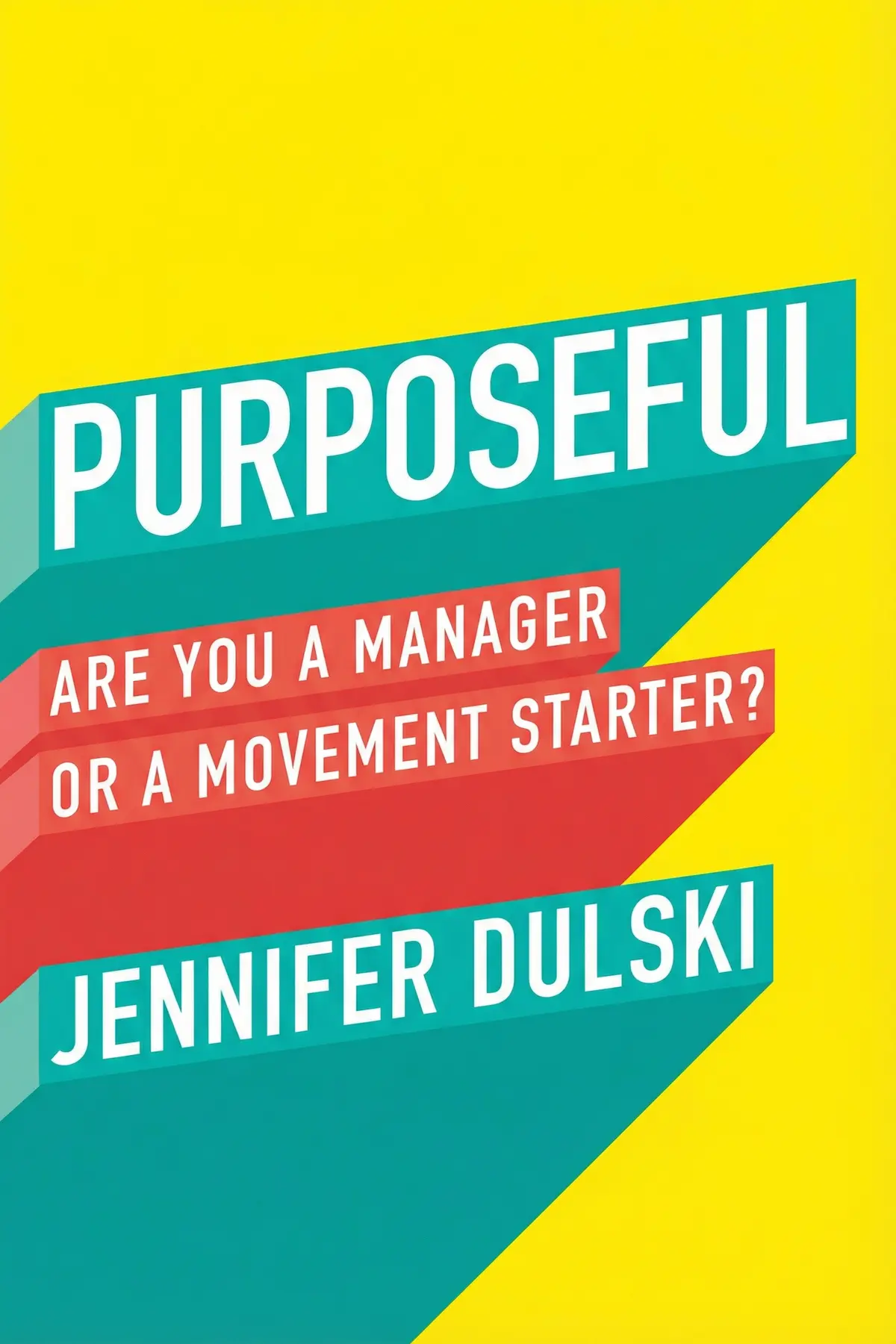
Table of Content
1. Introduction
1 min 11 sec
Most people who want something to change stop at complaining, because they assume movements are led by famous people with titles. In Purposeful, Jennifer Dulski, former president of the petition platform Change.org, argues that a movement is simply a group of people rallying behind one vision, and that a founder with a product can start one as surely as an activist with a cause. Her examples come from campaigners and entrepreneurs, and her own work has given her firsthand experience with the problems they face.
Her case runs like this: movements begin with an ordinary person’s clear purpose, spread through a vision people can feel, and last through respect, shared growth and a steady way of handling critics and failure. Along the way you meet a runner who got Nike to design for women in hijabs, a father who changed a federal law because of a hotel phone, and a founder who turned an executive’s put-down into a brand valued at $100 million. Each story leaves a move you can try on your own idea, at work or beyond it.
2. Find a purpose strangers want to join
1 min 45 sec
Plenty of capable managers never make anyone care about their work. An Egyptian runner, tired of being judged for her headscarf, shows what draws people in, and how far one clear reason can travel.
3. Take the first step before you feel qualified
1 min 53 sec
Most would-be leaders stall because they compare themselves with Nobel laureates. A silent man in an Istanbul square and a worried sports-drink customer suggest the real barrier sits somewhere else entirely.
4. A true story moves people more than goals
1 min 42 sec
A cause can feel urgent to you and leave everyone else cold. A baby-food founder and a grieving father show the two things that change that, and why one of them must come first.
5. Win over people in power without attacking them
1 min 49 sec
Calling out a chief executive online feels satisfying and rarely works. A woman pushed out of the Boy Scouts found a better route, one that ran around the people who kept saying no.
6. Keep supporters committed long after the launch
1 min 39 sec
Most teams and causes start with a rush of energy that fades within months. A Monday ritual, a bold rule about decisions and a Facebook finding point to what keeps people showing up.
7. Turn harsh criticism into your next advantage
1 min 43 sec
Anyone who starts something visible will meet trolls and dismissive experts. One beverage founder heard a senior executive wave away her product, and what she did with that remark shaped her company.
8. Get back up after your Rocky Moment
1 min 36 sec
Every leader eventually hits a point where success looks impossibly far away. Dulski describes what happens next, why one company throws a party for its worst mistakes, and where a Russian campaigner found unexpected help.
9. Conclusion
1 min 05 sec
Dulski’s subtitle asks whether you are a manager or a movement starter, and her stories suggest the difference has little to do with talent or status. A man standing still in a square, a woman worried about a sports drink and a father with a terrible story about a hotel phone all had less power than the people they wanted to move. What they had was a reason others could share, and the persistence to keep going after the first response.
The advice works in an office as well as in a campaign. Write one sentence on why your idea matters and one on what the world looks like once it works, then find the true story that makes both felt. When the obvious person says no, map who stands around them and approach those people with respect. When criticism or failure arrives, reread what your supporters have told you, and ask the people already on your side for help.
Manal Rostom started with a Facebook group for women who felt judged. Before long, Nike was making clothes for them.
About this book
What is this book about?
Many people want something to change, at work or in the world, but assume that real movements belong to famous leaders with titles and platforms. Jennifer Dulski disagrees. As president of Change.org, she watched ordinary people win campaigns against large companies and governments, and she argues that a movement is simply a group of people united behind one vision. A business idea can start one as surely as a political cause. Dulski lays out what separates a manager from a movement starter. It begins with a purpose others share and a vision of the future told through a story people feel. It grows through respectful pressure on decision-makers and a map of everyone who might help. It lasts when supporters keep growing and feel connected, and when leaders treat critics and failure as material to learn from. The lessons come through vivid cases: a runner who got Nike to design for women in hijabs, a father who changed a federal law, a campaigner who went around a board's executives, and a founder who built a $100 million drink brand out of an executive's put-down.
Book Information
Who it's for
Leaders seeking real commitment
Founders and team leads who want people to care about the work, not just complete it.
Unsure of their standing
Employees and volunteers with an idea for change who doubt they have the standing to push it.
Campaigners facing setbacks
Campaigners facing trolls, unresponsive decision-makers or a first failure.
About the Author
Jennifer Dulski
Jennifer Dulski has held executive roles at start-ups and at large internet companies, including Yahoo and Google. In January 2013 she left Google to become president and chief operating officer of Change.org, a social enterprise that helps people launch and win campaigns for change. She later led Groups at Facebook, the product people use to build communities around shared interests. She has written about management and leadership for Fortune, Forbes, the Huffington Post and LinkedIn. Purposeful, her first book, is a Wall Street Journal bestseller.
Ratings & Reviews
Ratings at a glance
What people think
Listeners find the book both actionable and motivating, with one listener noting its helpful advice for starting and maintaining movements. The included stories are deeply moving, as one listener points out how they successfully renew faith in the goodness of humanity.
Top reviews
Sebastian
Wow, this was exactly the kick in the pants I needed to stop overthinking my new project. Jennifer Dulski writes with such clarity about how ordinary people make extraordinary change. It works. Her advice on conflict resolution was a total eye-opener for me personally. I loved reading about Amanda Nguyen and how she turned difficult circumstances into a platform for influence. The parallel she draws between the five stages of grief and the process of convincing an audience is a brilliant, meaningful translation of psychological concepts into leadership strategy. This is a must-read regardless of your experience level. Whether you are an influencer or a pioneer, there are powerful tools here to help you understand your vision. I plan to refer to this book until the edges are smudged! It’s easily one of the most authentic business books I’ve picked up this year.
Show moreLeila
Honestly, it is refreshing to read a leadership book that doesn't just focus on corporate boardrooms but dives into grassroots activism. Jennifer Dulski is a person worth following. She provides a brilliant overview of how every action we take can contribute to society. The stories are the heart of this book. I was particularly impressed by the stories of young people and the massive changes they brought in through their own motivation. The book gives you the tools to become an influencer and a pioneer even if you feel like an 'ordinary' person. Her advice on how to use your own strength to make change happen is incredibly empowering. It serves as a great prompt for those who have achieved a lot but need a reminder of why they started. This is an outstanding, meaningful book for leaders and NGOs alike. Every page feels authentic.
Show moreRung
As someone who navigates the messy world of community organizing, I found Dulski’s insights into movement building both grounded and actionable. The advice is practical. While some of the leadership advice felt a bit like common sense—work hard, be nice, accept feedback—the way she weaves in real-world stories from Change.org makes the concepts stick. I especially appreciated the tools for helping an idea move through its budding phase. Gotta say, seeing how ordinary people have used their own strength to influence massive change renewed my faith in humanity’s goodness. It’s a smart and insightful read, though perhaps a bit fundamental for those already deep in the activism world. Still, it’s an excellent prompt for those needing the courage to finally chase after a big idea. I’ll be keeping this on my shelf for whenever my team needs a motivational boost.
Show moreMeen
Picked this up on a whim after a colleague mentioned it provided great tips for building and sustaining movements. I’m glad I did. The stories are immensely inspiring and serve as a powerful reminder of what happens when we take action. Personally, I found the chapter on navigating the 'budding phase' of an idea to be the most useful section. Dulski does a strong job of making her case and illustrating it with insightful examples from her time at Change.org. While it is true that some parts feel a little fundamental, the authenticity of the human narratives kept me engaged. Look, it’s a 3.5 or 4-star read—smart and enjoyable. It gives you the actual tools to work through resistance and turn a vision into reality. If you’re trying to make the world a better place, this is worth a read for the motivation alone.
Show morePongpan
The chapter on translating the five stages of grief into a process for influencers was worth the price of the book alone. Dulski has a way of taking complex social dynamics and making them feel manageable. Look, some critics might say it’s a bit light on theory, but I found the focus on practical application to be a breath of fresh air. It’s an excellent guide for anyone trying to navigate the budding phase of a new venture. The stories from Change.org are woven in perfectly to show how ordinary people can scale their impact. It’s a smart read. I’d recommend this to anyone in a management position who needs to encourage their staff to become more purposeful. It provides a solid framework for building a company or a movement with real intention. It’s not a deep academic study, but it is a very useful manual for action.
Show moreElise
To be fair, I went in with low expectations for another ‘find your purpose’ book, but Dulski manages to provide actual mechanics for building influence. The narratives are truly the highlight here. They are immensely inspiring. I loved reading about the specific steps people took to turn their ideas into global movements. The book gives you the tools to handle conflict and resolution in a way that feels very human. It’s a smart look at how we can all contribute to society. While the writing style is quite casual and easy to breeze through, the underlying message is powerful. She helps you understand why you have a vision and, more importantly, how to achieve it. Even if you consider yourself a purposeful person already, this book is a must-read for the practical tips on sustaining a movement over the long haul. It's a solid addition to any leader's library.
Show moreSing
Finally got around to finishing 'Purposeful' and I'm left feeling surprisingly hopeful about the state of our world. In my experience, most business books lack the soul that Dulski brings to these pages. She opening by saying 'This book is about how ordinary people make extraordinary change,' and she really sticks to that promise. The stories of young influencers were particularly moving. It’s a great overview of leadership. Some parts were a little fundamental, but the way she frames the process of making change is very clear. The advice for those in the budding phase of an idea is especially helpful for entrepreneurs. It serves as a meaningful prompt for anyone wanting to use their power for good. It’s a book to refer back to often. While it’s not reinventing the wheel of leadership, it’s a very well-executed and inspiring guide for anyone with a mission.
Show moreJirapat
Ever wonder how a small idea transforms into a massive social change? Dulski offers a decent overview of the mechanics behind successful campaigns, but the truth is, if you’ve already read the major management tomes, you might find this a little redundant. It’s a bit light-weight. The stories are immensely inspiring, particularly the narratives about young people making a difference, yet the content feels stretched out to justify the page count. I was expecting a more communal vibe given her background as head of Groups at Facebook. Instead, it felt like a casual pep talk. It’s a fine book for someone just starting out in a non-profit role or taking over their first leadership position. For the rest of us, it’s mostly a ‘been there, done that’ experience with very few new tools for the toolbox.
Show morePick
I’ve been working in management for a decade, and while I found the anecdotes about Facebook interesting, the advice felt a bit like a ‘pep talk’ for beginners. Frankly, I expected something more communal and rigorous. The book is enjoyable, but it doesn't offer much in the way of new mechanics for power or motivation. The narratives are authentic and human, which I appreciated. However, like many non-fiction books, it feels like the central thesis is repeated a few too many times. It’s a good overview, but there are better books on personal effectiveness out there. If you’re already an experienced activist, you’ve likely heard most of this before. It might be worthwhile for a student or someone just starting to think about leadership. It’s insightful, just not particularly groundbreaking for those of us who have been doing this for a while.
Show moreFang
Not what I expected from someone with such an impressive resume at places like Facebook and Change.org. To be blunt, the book felt obnoxious and intellectually light-weight. It’s too basic. Most of the advice boils down to being polite, working hard, and taking criticism, which is fine for a blog post but frustrating in a full-length book. I struggled to connect with the narratives because they felt glossed over to fit a specific ‘feel-good’ mold. It’s a very casual pep talk that lacks the grit of real-world activism. If this book hadn't been written, absolutely nothing would have happened. There are much better books on the mechanics of power or finding one's purpose. It felt like the content was stretched thin just to fill the space between the covers. I finished it, but I didn't come away with anything new for my professional toolbox.
Show moreQuestions about this book
What is Purposeful by Jennifer Dulski about?
Purposeful argues that anyone can start a movement, whether it is a political cause or a business. Dulski, former president of Change.org, defines a movement as a group of people united behind one vision. She shows how to begin with a clear purpose, share a vision through stories, win over decision-makers respectfully, keep supporters engaged and handle critics and failure, drawing on cases such as Manal Rostom’s work with Nike and the campaign behind Kari’s Law.
What is the difference between purpose and vision in Purposeful?
In Dulski’s terms, purpose is why you want to act, and vision is what the future looks like once the change has happened. Neil Grimmer of Plum Organics wanted babies to be fed healthy food by their parents, and that was his purpose. His vision was grocery shelves full of organic baby food. Dulski compares a vision to a compass and suggests defining it before you start.
How does Dulski suggest dealing with trolls and criticism?
She separates constructive feedback from trolls and haters. Most petition starters she met at Change.org coped by rereading positive messages from supporters, a reminder that critics do not speak for everyone. Irrelevant comments, such as remarks about appearance, should be ignored, while rude but useful points still deserve thought. Criticism can also reveal an opening, as when Kara Goldin built Hint Water after an executive claimed Americans only want sweet drinks.
How can I apply the ideas in Purposeful at work?
Remind your team of its shared purpose regularly, as Grimmer did every Monday. Give people real decisions to own, in the spirit of Dulski’s 90/10 model at Change.org. Build trust so people feel safe to take risks, which a Google study linked to top performance. And make failure something to discuss openly, the way Change.org does with its Festival of Failure.
Readers also enjoyed


A Year with Peter Drucker: 52 Weeks of Coaching for Leadership Effectiveness
Joseph A. Maciariello



Acting with Power: Why We Are More Powerful Than We Believe
Deborah Gruenfeld

All In: How Great Leaders Build Unstoppable Teams
Mike Michalowicz



7 Powers: The Foundations of Business Strategy
Hamilton Helmer
AUDIO SUMMARY AVAILABLE
Listen to Purposeful in 15 minutes
Get the key ideas from Purposeful by Jennifer Dulski, plus 5,000+ more nonfiction titles.
- 5,000+ titles
- Listen as much as you want
- 7-day free trial
- Cancel anytime









