


59 Seconds: Change Your Life in Under a Minute
Richard Wiseman
 English
A manual for acting while you are still afraid. Build a steady sense of self, stop shrinking for others, tell hard truths kindly, share the load and keep friends who both support and challenge you.
1 min 08 sec
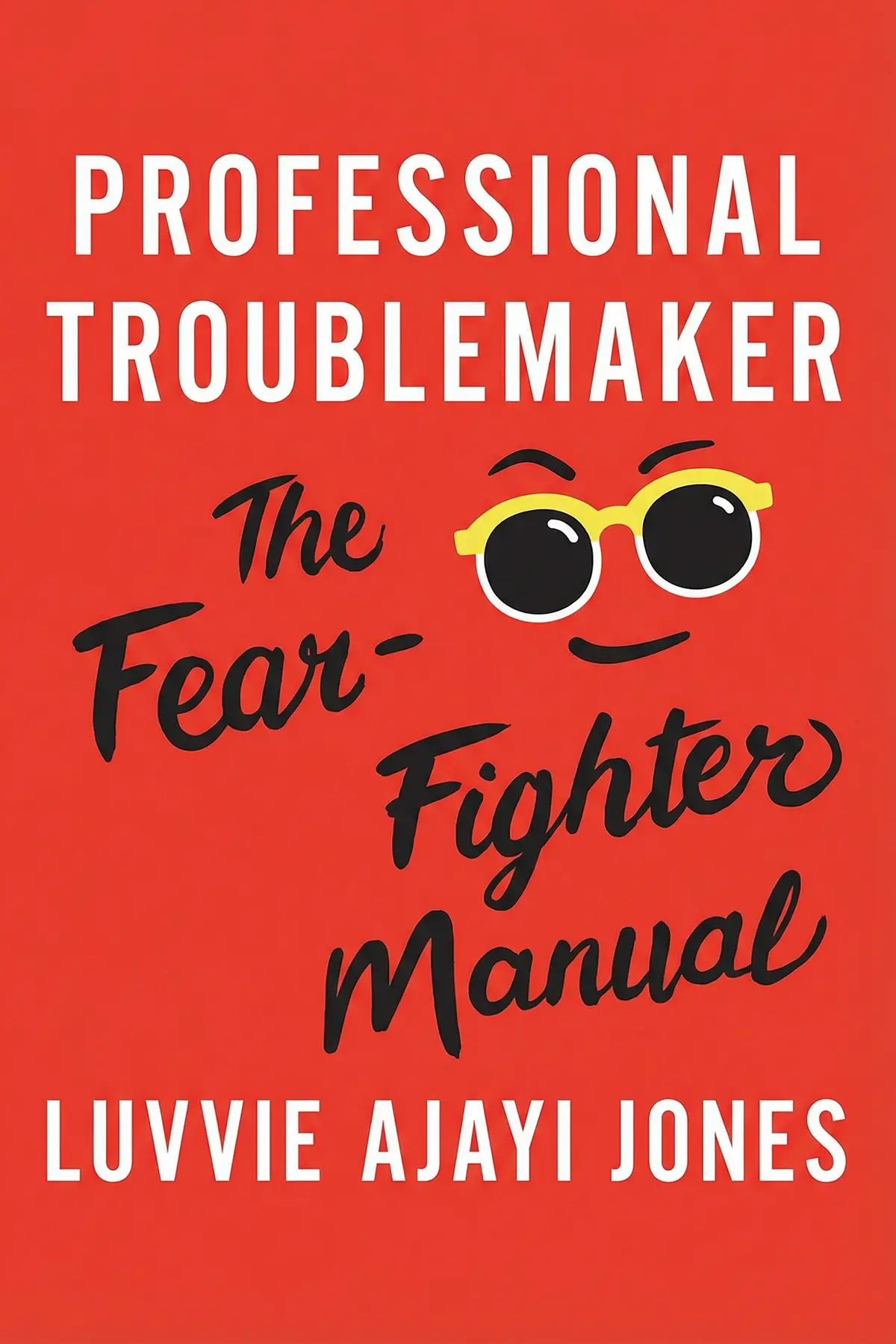
Most of us shrink when fear shows up. We soften an opinion, swallow a complaint, keep the peace and call it maturity. In Professional Troublemaker, writer, speaker and podcast host Luvvie Ajayi Jones argues that fear never fully leaves, so waiting for it to pass is a losing plan. What changes things is how you stand when it arrives. Her professional troublemakers treat honest confrontation as a form of care, and they stay rooted in who they are instead of shrinking to please the room.
Her case is that you can act through fear once you have built ground under your feet. That ground is a clear identity, permission to be fully yourself, a habit of truth and kindness that acts. It also includes a shared load and a circle of friends. Along the way come a Yorùbá praise poem, a test for when criticism deserves your attention, and two sets of three questions to carry into your next hard conversation.
1 min 42 sec
Fear of risk often hides an older fear about not being good enough. A West African tradition, and a famous television queen, suggest a surprising place to find your footing before you take any risk at all.
1 min 52 sec
Being told you are too loud or too sensitive sounds like feedback, but it is really a request. Ajayi Jones explains why giving in costs more than it seems, and when the criticism actually deserves a hearing.
1 min 44 sec
Most people slip a small lie into almost every conversation, usually to keep the peace. Ajayi Jones argues that some of us owe the truth more than others, and offers a simple way to say it without starting a war.
1 min 55 sec
Being pleasant keeps conversations smooth and keeps you out of trouble. So why does Ajayi Jones think it leaves people dissatisfied and lets problems grow? Her answer comes down to an umbrella.
1 min 48 sec
Doing everything yourself can look like strength and responsibility. Ajayi Jones sees something else underneath it, and she has blunt advice for anyone who runs the household, the team and the group chat single-handed.
1 min 40 sec
Calling yourself a lone wolf can feel like independence. Ajayi Jones argues it runs against something basic in us, and explains why the right few people matter far more than a crowded contact list.
1 min 08 sec
What Ajayi Jones offers is a way of living alongside fear without letting it make your choices. She never promises the fear will go. Her claim is that it loses its grip once you have something solid to stand on. That means a name you have written in your own praise and traits you no longer apologize for. It also means a habit of honest questions, kindness with a backbone, work that others share and a few friends who will tell you the truth.
Put that foundation to use in small ways first. When you notice yourself shrinking to fit someone else’s comfort, run the questions about growth, harm and good will before you change anything. When a truth needs saying, check that you mean it, can defend it and say it with good intent, then speak while you are still nervous. And when you want something, ask for it out loud. Silence guarantees nothing, and as the old saying she cites puts it, “Closed mouths don’t get fed.”
Taking up the space you deserve will rarely feel comfortable. It gets easier once you stop waiting for permission.
Most people know the feeling of holding back: softening an opinion, swallowing a complaint, toning down a trait because someone called it too much. Luvvie Ajayi Jones argues that fear will always show up. Waiting for it to pass is a losing plan, and what matters is how you stand when it arrives. Her professional troublemakers treat honest confrontation as a form of care. They stay rooted in who they are instead of shrinking to please the room. The book builds that footing step by step. It starts with oríkì, a Yorùbá tradition of personal praise poems, and moves through a test for when criticism deserves your attention, the case for speaking up while still nervous, and the gap between being nice and being kind. It ends with advice to fire yourself from tasks others can carry and to keep a small gang of friends. Readers get concrete tools: a praise mantra to write and keep, two sets of three questions to run before changing yourself or speaking up, and the habit of asking questions that make people explain what they really mean.
Professionals who soften their opinions in meetings and swallow complaints to keep the peace.
People who keep hearing they are too loud, too bossy or too sensitive and wonder whether to change.
Overloaded doers who run everything themselves and feel guilty asking for help.
Luvvie Ajayi Jones, born Ifeoluwa Ajayi in 1985, is a Nigerian-American writer, speaker and podcast host whose work brings together culture, business and leadership. She is CEO and Chief Creative Officer of Awe Luv Media and founded The Book Academy, a coaching program that takes people from a first idea to a published book. Her TED talk, Get Comfortable with Being Uncomfortable, has been translated into 23 languages. Her other books include I'm Judging You: The Do-Better Manual.
Listeners find this book an exceptional experience featuring superb prose and wit, characterizing it as both authentic and sincere. Furthermore, they value the substance provided, with one listener pointing out the wide variety of subjects covered, while another emphasizes its usefulness for managing both professional paths and personal journeys. They also commend its motivating quality, as one review describes how it assists people in flourishing within their calling, while another recognizes it as a top-tier resource for developing self-awareness.
Luvvie Ajayi Jones has a way of getting into your head that is both uncomfortable and incredibly necessary. This isn't your standard "rah-rah" motivational text; it’s a rigorous fear-fighter manual that demands you look at the monsters you've built in your own mind. I found the "Be, Say, Do" structure particularly helpful for breaking down large, systemic anxieties into manageable steps. Her voice is brilliantly funny and real, though I will say the religious references were more frequent than I anticipated. Still, the way she weaves in stories about her grandmother, Funmilayo Faloyin, adds a layer of heritage that makes the advice feel grounded. It's a comprehensive tool for anyone trying to navigate their career or personal life with more audacity. Personally, I think this is a must-read for anyone struggling with imposter syndrome.
Show moreWow, this is a total masterclass in living your truth without apologizing for your existence. Luvvie Ajayi Jones has crafted something that is part-memoir, part-manifesto, and entirely inspirational. I loved how she encourages us to audaciously step into our legacies, especially the bit about not bowing to others' expectations. The "Say" section really challenged me to think about the times I've stayed silent to keep the peace at my own expense. Her Grandma is basically the hero of the book, and those stories provide such amazing context for Luvvie's personality. Not gonna lie, I was highlight-happy throughout the whole thing because the side-eye wisdom is just that good. It’s a comprehensive guide for anyone ready to thrive in their purpose.
Show moreAfter hearing Luvvie on a podcast, I knew I needed her fear-fighter manual in my permanent collection. It is a powerful, no-nonsense guide to facing your fears head-on. The way she breaks down fear as something to be managed rather than erased is such a transformational perspective. Frankly, it’s the most honest book I’ve read in a long time. I especially loved the exercises provided to help maximize core values; they weren't just fluff but required real work. Her Grandma Fáloyin is a legend, and those segments are worth the price of the book alone. If you are looking to become your most authentic self and stop opting out of your "best-case scenario," buy this immediately.
Show moreTruth is, I didn't expect to laugh this much while reading a manual on fighting fear. Luvvie’s brand of empowering truth talk is infectious and her energy literally jumps off the page. This book is an amazing read that manages to be both hilariously witty and deeply profound. She uses her own episodes of impulsiveness as learning experiences, which makes her feel like a relatable guide rather than a distant guru. I found the sections on career navigation particularly valuable, as she provides a roadmap for speaking up when it’s hard. It’s an indispensable tool for anyone trying to build a legacy that goes beyond their wildest dreams. Highly recommended for those who need a push to be more independent.
Show moreFinally got around to reading this after seeing it all over social media. Frankly, I was skeptical, but the humor won me over almost immediately. Luvvie writes with a sharp, side-eye energy that makes even the most difficult self-reflections feel like a conversation with a blunt best friend. The Grandma Fáloyin anecdotes were definitely the highlight for me; they provided such a vivid, colorful backdrop to the lessons on courage. While some of the advice felt a bit like a repeat of other self-help books I’ve picked up, her delivery is what makes it stick. It’s an excellent tool for self-awareness, especially when you're trying to figure out how to speak your truth in professional spaces. I do wish it was a bit less memoir-heavy at times, but the core message is solid.
Show moreThe chapter on setting boundaries and owning your space was exactly the kick in the pants I needed this month. Luvvie's writing is excellent, blending high-stakes career advice with a sense of humor that kept me turning the pages. Look, the book isn't perfect—it's a bit long-winded in the middle sections—but the "fear-fighter" framework is genuinely useful for anyone feeling paralyzed by the "worst-case scenario." I appreciated how she emphasizes that being a troublemaker isn't about being difficult, but about being authentic. The lessons drawn from her Nigerian heritage gave the book a unique flavor that differentiates it from the typical American self-help genre. It’s a very real, very loud call to courage that I’ll likely revisit when I’m feeling small.
Show morePicked this up during a particularly rough patch at work, and the timing could not have been better. Luvvie tackles imposter syndrome with a bluntness that is refreshing in a world of toxic positivity. This book is a comfort and a challenge all at once. While the religious undertones weren't always my vibe, her overarching message about truth-telling is universal. The writing style is conversational and fast-paced, making it an easy read despite the heavy themes of fear and systemic barriers. I did feel that some chapters echoed her previous blog posts a bit too closely, but for a new reader, it’s all gold. It really serves as an excellent tool for self-exploration and navigating tricky professional landscapes.
Show moreNot what I expected, but in a way that actually challenged my perception of what it means to be "good." Luvvie argues that being a professional troublemaker is a necessary role for social change, and her logic is hard to argue with. The book is bold and enlightening, even if it feels a little defensive in the early chapters. To be fair, she has a lot of naysayers, and it shows in her tone at times. However, the practical advice on how to stop being afraid of things that haven't happened yet is incredibly valuable. It’s a comprehensive look at how to thrive in your purpose without losing your soul. A solid four stars for a book that is as funny as it is useful for personal growth.
Show moreEver wonder if you’re actually a "professional troublemaker" or just someone who likes to complain? This book tries to answer that by defining a troublemaker as someone who disrupts the status quo for the greater good. In my experience, the first half of the book is much stronger than the second. The "Be" section offers some great introspective exercises, but by the time I got to "Do," the momentum slowed down significantly. The writing is undeniably funny and the tone is incredibly honest, but I couldn't help but feel like I'd heard many of these transformational tips before. It’s a fun read, and Luvvie’s infectious energy is great for a quick boost. However, if you're looking for deep, groundbreaking strategies, you might find this a little light on new material.
Show moreAs someone who absolutely adored Luvvie's first book, I found this follow-up to be quite a disappointing departure. To be fair, there are a few nuggets of wisdom here, but they are buried under what feels like a half-baked memoir. It often felt like the author was being defensive, explaining herself to an invisible audience rather than focusing on the reader's growth. The unique "troublemaker" angle is interesting, but the execution felt repetitive and lacked the fresh perspective of her debut. I also struggled with the sweeping generalizations that seemed to divide more than they united. If you want a guide on fighting fear, there are better, more focused options out there. The Grandma stories were sweet, but they weren't enough to save a book that felt like it had an agenda other than helping me.
Show moreIt is a manual for acting despite fear. Ajayi Jones argues that fear never fully disappears, so the goal is to build a foundation that lets you speak and live honestly anyway. That foundation includes a strong sense of identity, refusing to shrink when called too much, telling the truth, choosing kindness over niceness, sharing responsibility and keeping a small circle of good friends.
An oríkì is a personal praise poem from the Yorùbá tradition of West Africa, unique to each person and marking their place in the community. Ajayi Jones compares it to the grand title lists in Game of Thrones. She asks readers to write their own bold version, without false modesty, and keep it close as a reminder of who they are when confidence slips.
Ajayi Jones offers three questions. Is the trait holding back your own growth? Is it genuinely harming other people? Does the person criticizing you really want the best for you? If any answer is yes, it is worth honest reflection. If all three are no, she says to keep being yourself, since most such traits are strengths in the right setting.
In Ajayi Jones’s view, niceness is surface politeness that puts others first to keep them pleased, often at the cost of your own voice. Kindness comes from real empathy but never forgets the self, and it acts. Her image: nice is chatting about the weather, while kind is making sure someone has an umbrella before it rains.
Use questions to challenge bad ideas or offensive remarks, asking people to explain themselves in detail. Before speaking up, check that you mean it, can defend it and have good intentions. Hand off tasks you only keep out of fear of losing control. And ask directly for what you want, since staying silent guarantees you will not get it.
Richard Wiseman





William B. Irvine


Andrew D. Thompson


Deepak Chopra
AUDIO SUMMARY AVAILABLE
Get the key ideas from Professional Troublemaker by Luvvie Ajayi Jones, plus 5,000+ more nonfiction titles.









