

13 min 12 sec
Available in: English
 ไทย
EnglishไทยPrisoners of Geography: Ten Maps That Explain Everything About the World
By Tim Marshall
Shows how mountains, plains, rivers and coastlines shape what nations fear and how rich they can become, from Russia's western border and China's hold on Tibet to the hills above Seoul and Africa's shallow coasts.
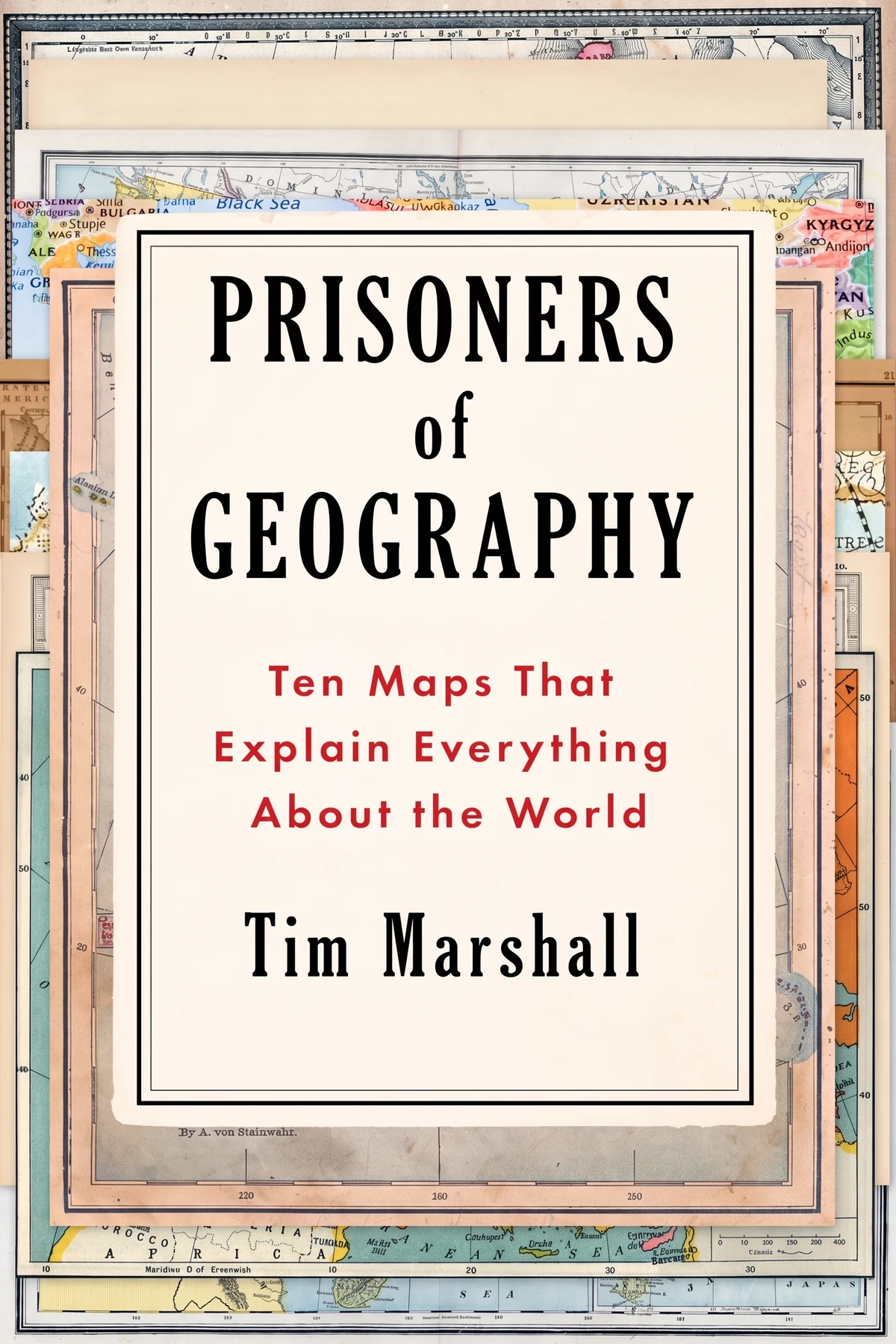
Table of Content
1. Introduction
59 sec
World news can feel like a stream of random quarrels, until you notice that many of them follow the shape of the land. In Prisoners of Geography, British journalist Tim Marshall argues that mountains, plains, rivers and coastlines steer what leaders fear and what economies can become. Russia’s anxiety about its western border, for example, goes back to one stretch of flat ground that invaders have crossed again and again since 1812.
Marshall’s throughline is simple: the land a nation sits on shapes its safety and its wealth, and its leaders often act as its prisoners. He follows that idea through six places, from the Baltic states to the hills above Seoul, from the Tibetan Plateau to the shallow coasts of Africa. By the end, a headline about troops, ports or protests will arrive with a question that makes it easier to read: what does the map leave this country afraid of, or short of?
2. Read Russia's moves through one flat plain
1 min 59 sec
The largest country on Earth spans eleven time zones, yet its leaders lose sleep over a strip of land that looks like a slice of pizza. That strip explains centuries of Russian behavior toward its western neighbors.
3. Hills can outweigh a richer army
1 min 43 sec
One Korea has twice the people, eighty times the economy and a superpower ally. The other has kept it nervous for more than half a century. The difference lies in a few miles of ground.
4. See Tibet as China's door and water tower
1 min 56 sec
International pressure over Tibet has been loud and constant for years, and Beijing has not moved. Its reasons have less to do with Tibet itself than with a neighbor on the far side of the mountains.
5. Oceans and neighbors keep America safe
1 min 42 sec
Most powers spend their history watching a dangerous border. One country got a very different starting position, and Marshall adds a defense to it that has nothing to do with rivers or mountains.
6. Explain Europe's north-south gap without stereotypes
1 min 56 sec
When the Eurozone crisis peaked, a popular explanation blamed the character of whole nations. Marshall offers a different culprit, one that was in place long before any of today’s workers were born.
7. What Africa's beautiful waters cost its trade
1 min 47 sec
A continent with stunning beaches and legendary rivers should be a natural trading power. Instead, its waters have kept regions apart. Now some countries are trying to rebuild the shoreline itself.
8. Conclusion
1 min 10 sec
Marshall’s maps share a lesson that sounds obvious once it is said aloud: countries are not free to be whatever they choose. The same kinds of ground, flat or high, shallow or deep, turn up behind a dictatorship’s threats, a superpower’s calm and a continent’s struggle to trade. Fears that look irrational from far away, like Russia’s grip on its western neighbors or China’s hold on Tibet, become logical once you see what the land would let an enemy do.
Geography is not frozen, either. The deepwater harbors being built with Chinese partners in Tanzania and Angola show that people can bend the land’s rules, though they always begin from them.
That leaves a habit worth building. When a country acts in a way that seems stubborn or aggressive, look at its map and ask what its terrain leaves it exposed to. When a region is dismissed as lazy or backward, ask what its soil, coasts and rivers could ever support.
The walls of this prison are mountains, plains, rivers and coastlines, and they were standing long before any of the prisoners arrived.
About this book
What is this book about?
Headlines about troops on borders, crackdowns in distant provinces or one region's economic troubles can look like the work of stubborn leaders or flawed national characters. Tim Marshall, a foreign affairs journalist with decades of reporting behind him, argues that much of it starts with the ground under people's feet. He shows how terrain sets the fears and limits of nations. A flat plain leaves Russia open to invasion from the west. Hills on the North Korean side of the border put Seoul within range. The Tibetan Plateau gives China both high ground facing India and the sources of its biggest rivers. Oceans and large, friendly neighbors make the United States extremely hard to attack. Fertile soil helped build northern Europe's trading cities, while shallow coasts and waterfalls held back trade across Africa. Readers get a simple lens for the news: before judging a country's choices, ask what its land leaves it afraid of and what it allows it to produce and trade. Marshall also shows where human effort, such as new deepwater harbors, is starting to bend those old rules.
Book Information
Who it's for
Professionals following world news
Professionals who follow world news and want a simple way to make sense of conflicts and borders.
Students seeking map-based clarity
Students of politics, history or economics looking for a clear, map-based frame for international affairs.
Tired of national stereotypes
Readers tired of national stereotypes who want a fairer explanation for why some regions grew richer than others.
About the Author
Tim Marshall
Tim Marshall is a British journalist, author and broadcaster who specializes in foreign affairs and international diplomacy. He worked for the BBC and as Paris correspondent for IRN before joining Sky News, where he was Middle East Correspondent in Jerusalem and later Diplomatic Editor. He reported from the Balkan wars of the 1990s and covered conflicts in Iraq, Afghanistan, Libya and Syria. After about thirty years in news he turned to writing and analysis. Prisoners of Geography became a New York Times and number one Sunday Times bestseller, and he has written seven books.
Ratings & Reviews
Ratings at a glance
What people think
Listeners find this work both captivating and accessible, noting its well-crafted writing which effectively links geographic factors with historical developments. Its educational merit is highly valued, especially for students or those curious about geopolitics, serving as an ideal starting point for the subject. Throughout the text, intriguing details are shared that provide a fresh perspective on world history. Opinions on the map quality are divided, as some find them helpful while others consider them subpar.
Top reviews
Lek
Finally got around to reading this, and it’s a total game-changer for how I view the nightly news. Tim Marshall has this incredible knack for taking dense, intimidating geopolitical concepts and breaking them down into prose that actually flows. I never realized how much a country's coastline—or lack thereof—dictates its entire destiny on the world stage. The sections on Russia’s need for warm-water ports and the navigable rivers in the US really made the "why" of history click for me. While some might find it a bit introductory, it’s the perfect starting point for anyone who wants to understand why global conflicts keep repeating. It’s accessible, informative, and frankly, pretty hard to put down once you get into the rhythm of it.
Show moreCaleb
Ever wonder why certain regions seem stuck in a cycle of poverty while others thrive with almost no effort? This book dives deep into the "fucked-up-ness" of our physical world, showing how waterfalls in Africa or mountains in Tibet shape entire civilizations. I found the section on the Middle East particularly enlightening, even if it was a bit depressing to realize how much geography fuels their rivalries. Marshall’s writing is punchy and direct, making complex international relations feel like a conversation at a bar with a very smart friend. It isn’t an exhaustive academic tome, but it doesn't try to be; it's a brilliant introduction to the forces of nature. Every student of history should have a copy of this on their shelf.
Show moreKofi
Wow, what an eye-opening journey through the various "prisons" that define our modern global borders and historical conflicts. I was particularly struck by the chapter on Latin America and how the rugged terrain of the Andes has historically isolated its nations. Marshall has a way of making you feel like you’re zooming out from a satellite view to see the big picture of human movement. It’s educational without being boring, and the chapters are short enough to keep the momentum going throughout the entire book. Personally, I think this should be required reading for anyone entering a career in international relations or political science. It’s a rare book that makes you rethink things you thought you already understood about the world.
Show moreRome
Picked this up on a whim and ended up finishing it in two sittings because the information was so compelling. The way Marshall links the "North European Plain" to centuries of warfare really helped me connect the dots between Napoleon, Hitler, and modern Russia. It’s a novel way to look at historical events that usually get blamed entirely on ideology or personality quirks of leaders. I loved learning about the "strait of Nicaragua" and China’s potential involvement in building a competitor to the Panama Canal. The writing is incredibly clear, making it a perfect gift for that person in your life who is obsessed with the news. It’s a fascinating, high-level summary that manages to be both informative and deeply entertaining.
Show morePrapaiwan
If you've ever felt overwhelmed by the complexity of the Middle East or the tension in the South China Sea, read this. Marshall strips away the confusing political rhetoric and shows you the mountains and waters that are actually driving these massive decisions. He explains how geography acts as a barrier or a bridge, defining who can trade and who must fight for survival. While it’s true that some of the maps could be more detailed, the actual content is top-notch and very easy to digest. It’s one of those rare books that makes you feel significantly smarter by the time you reach the final page. I’ll definitely be picking up his follow-up book, "The Power of Geography," to see what else I’ve missed.
Show morePakpoom
The chapter on Russia alone makes this book worth the price of admission, especially given everything happening in Ukraine today. Marshall explains the North European Plain in a way that makes Russian paranoia feel almost logical, even if you don't agree with their actions. My only real gripe is that the physical maps in my edition were a bit underwhelming and hard to read in grayscale. You’d think a book titled "Ten Maps" would have higher-quality visuals to accompany such sharp analysis. Still, the way he links the Himalayan mountains to the eternal standoff between India and Pakistan is masterful. It’s a great primer for people who want a broad overview of why the world looks the way it does.
Show moreKan
As someone who usually finds history books a bit dry, I was pleasantly surprised by how much this one reads like a narrative. Marshall manages to avoid the "textbook" trap by focusing on the physical realities that human leaders simply cannot change. He argues that we are all, to some extent, prisoners of the terrain we inhabit, which is a fascinating lens. However, I did feel like the "America is awesome" tone was laid on a bit thick in the US chapter. The author sometimes ignores the political and social nuances in favor of pure geographic determinism, which can feel a bit reductive at times. Regardless, the insights into Africa’s lack of natural harbors were eye-opening and explained a lot about its economic development.
Show moreStella
This book provides a solid, entry-level look at how the physical world dictates the movements of armies and the flow of trade. It’s fascinating to see how the "Great Wall" of the Himalayas or the vastness of the Arctic shapes the ambitions of superpowers like China. I appreciated the facts about the Mississippi basin having more navigable river miles than the rest of the world combined. Even if that specific stat is debated by some, the broader point about American prosperity being tied to its geography holds up. It’s a fast read that will definitely give you a new perspective next time you look at a world map. Just don’t expect a deep dive into the cultural or religious nuances of these regions.
Show moreThanakorn
Truth is, the premise here is better than the actual depth of the information provided by the author. It’s a decent enough introduction for a complete novice, but if you’ve followed world events for more than a year, you won't find much new. I found the chapter on Western Europe to be particularly thin, focusing mostly on Greece and the European Union rather than actual geography. The maps themselves are a huge letdown—I was expecting something unique or data-driven, but they are very basic. Marshall’s style is engaging, but he has a tendency to make sweeping generalizations that don't always hold up under scrutiny. It’s okay for a light read on a plane, but don't expect it to change your worldview fundamentally.
Show moreChamp
Look, I wanted to love this because the premise is brilliant, but the execution feels incredibly shallow and dated. Marshall leans so heavily into 19th-century geographic determinism that he almost completely ignores the impact of technology and human agency. To suggest that Africa is struggling primarily because of its rivers feels like a massive oversimplification that ignores centuries of colonial exploitation and political maneuvering. Also, the "Ten Maps" in the title is basically a marketing gimmick; they are just standard regional maps you could find on Wikipedia. It’s a smug, Eurocentric take on the world that assumes geography is the only factor that matters in the grand scheme of things. If you want real depth, you’re better off looking elsewhere for your geopolitical fix.
Show moreQuestions about this book
What is the main idea of Prisoners of Geography?
Tim Marshall argues that the physical land a country occupies shapes both its security and its economy. Flat plains invite invasion, high ground gives a military edge, oceans protect, fertile soil builds trading cities, and shallow coasts and waterfalls hold back commerce. Leaders often make decisions that look stubborn or aggressive but follow from what their terrain leaves them exposed to, which is why he calls them prisoners of geography.
Why does Russia want control of Poland and the Baltic states, according to Tim Marshall?
Marshall points to the North European Plain, a flat band of land running from France to the Ural Mountains that has given invaders an easy road toward Moscow, including the Germans in both world wars. Since 1812, he counts an attack from that direction about every 33 years. Near Poland and the Baltic states the plain narrows to around 300 miles, so holding that strip gives Russia a front it can realistically defend.
Why won't China give up Tibet in Prisoners of Geography?
Marshall gives two reasons. Tibet’s plateau sits on China’s side of the Himalayas, so an Indian army that seized it would look down on the Chinese heartland. And three of China’s main rivers, the Yangtze, the Yellow River and the Mekong, start there, earning Tibet the name China’s water tower. Beijing reasons that India’s ability to cut that water is threat enough, whatever India intends.
Does Prisoners of Geography say geography is destiny?
Not entirely. Marshall treats geography as a powerful starting point that technology can now bend. His example is Africa, where Tanzania and Angola are working with China to build deepwater harbors on coasts that nature left shallow, with Tanzania’s port of Bagamoyo planned to handle 20 million containers a year. Even so, he holds that the land remains essential to understanding why nations look the way they do today.
How can I use the ideas in Prisoners of Geography?
Treat the map as the first question when reading the news. When a country acts aggressively, ask what its terrain leaves it afraid of, as with Russia’s flat western approach or the hills that put Seoul within range. When a region is called lazy or backward, ask what its soil, coasts and rivers could support, as Marshall does for Greece during the 2012 Eurozone crisis.
Readers also enjoyed


A Promised Land
Barack Obama

A River in Darkness: One Man’s Escape from North Korea
Masaji Ishikawa

A Theory of Justice
John Rawls



A Warning
Miles Taylor


AUDIO SUMMARY AVAILABLE
Listen to Prisoners of Geography in 15 minutes
Get the key ideas from Prisoners of Geography by Tim Marshall, plus 5,000+ more nonfiction titles.
- 5,000+ titles
- Listen as much as you want
- 7-day free trial
- Cancel anytime









