

15 min 51 sec
Available in: English
 ไทย
EnglishไทยPresence: Bringing your Boldest Self to your Biggest Challenges
By Amy Cuddy
Shows how posture, breathing and a few simple mental exercises calm your nerves and make you more convincing, so you can face presentations, interviews and other high-stakes moments with steady confidence.
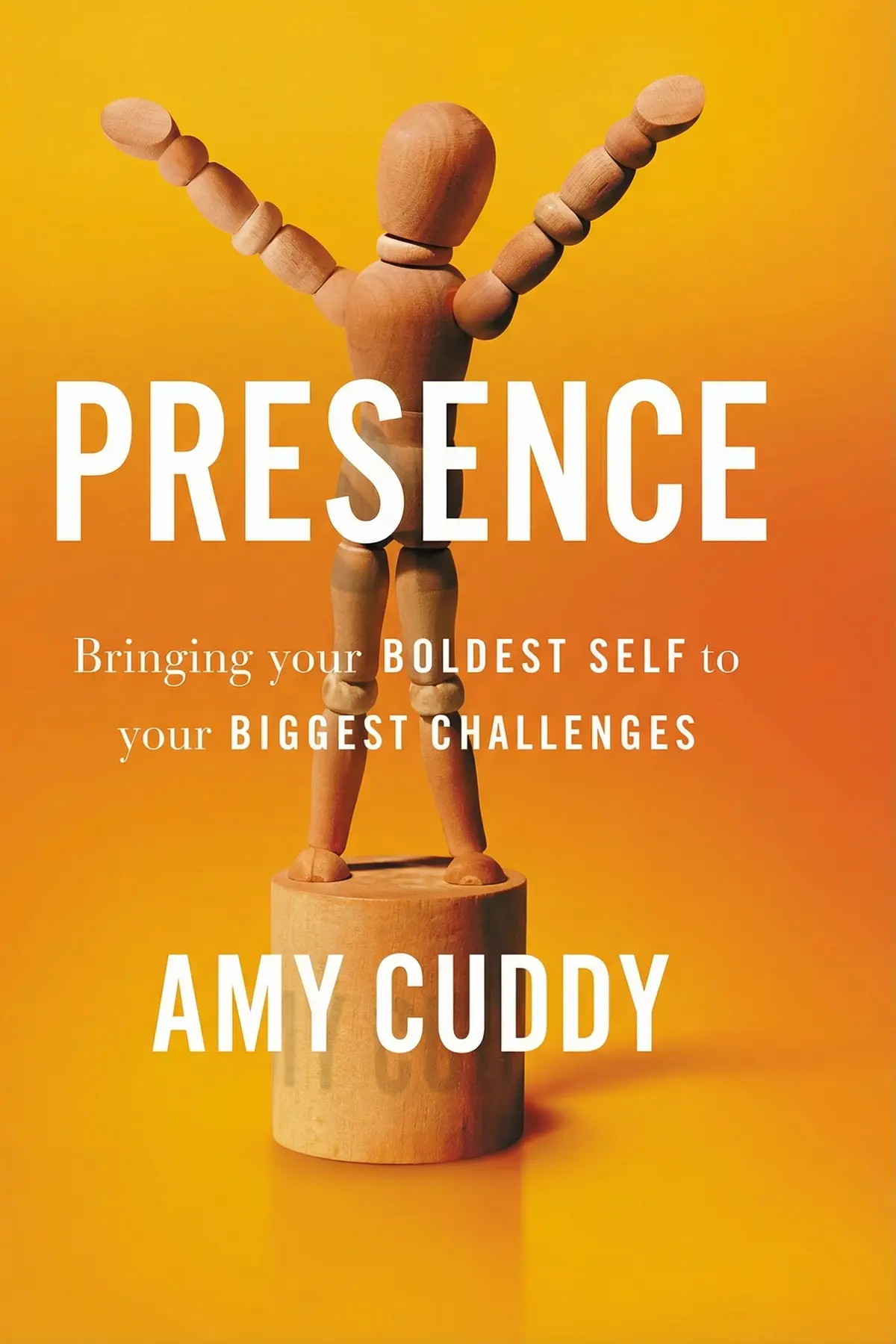
Table of Content
1. Introduction
1 min 00 sec
If your voice shakes and your shoulders creep up whenever you have to speak, the fix may start below the neck. In Presence, social psychologist Amy Cuddy argues that the gap between a shaky, mumbled talk and a calm, convincing one comes down largely to managing your body and nervous system. Your body sometimes reveals more of your true feelings to an audience than your words do, and it shapes your own state of mind as well.
That two-way link runs through the whole book. Posture, movement and breath shape how powerful you feel, and that feeling shapes how you stand and speak. Cuddy adds two mental tools: naming your core values and seeing the fraud feeling for what it is.
What follows is a toolkit for the hours before a pitch, an interview or a tense meeting. It holds a short writing exercise, a memory to recall, a breathing pattern and a few postures, each backed by a study you can retell.
2. Make your body agree with your words
1 min 38 sec
A gentle lullaby can sound like a threat, and people who struggle to understand speech turn out to be better lie detectors. Both point to the signal audiences trust most when deciding whether to believe you.
3. Spot the fraud feeling before it silences you
1 min 40 sec
A psychologist with a long record of success was sure she had only been lucky. When she studied others like her, she found the same feeling almost everywhere, and men were hiding it best.
4. Write about one value to stay calm under pressure
1 min 45 sec
Repeating cheerful phrases to yourself rarely helps. A different kind of writing exercise, done in a few minutes, kept people’s stress hormones flat while they faced a hostile panel of judges.
5. Break the loop that keeps you feeling small
1 min 49 sec
A former college athlete lost her sense of strength after graduation and could not find it again. Two systems in the brain explain how one bad stretch can harden into a rut.
6. Move like you own the room
1 min 43 sec
Viewers judged power from nothing more than moving lines and dots. One common gesture, made by many speakers without thinking, gives away weakness for reasons that go back to escaping predators.
7. Slow breathing that tells your brain you are safe
1 min 47 sec
Being told to relax almost never works. One nerve carries signals in both directions between brain and body, and that gives you a way to send calm upward on purpose.
8. Your posture decides whether you speak up
1 min 46 sec
Some business school students stayed silent even when speaking counted toward their grade. A study with two dollars and a die showed how much the way people sit changes their appetite for risk.
9. Prepare in private, then stay open in the room
1 min 33 sec
Hands on hips works in a bathroom but would look strange in front of a client. The method has two parts, one for the minutes before and one for the moment itself.
10. Conclusion
1 min 10 sec
Presence describes a loop you can enter from either side. A cramped body breeds anxious, powerless feelings, and those feelings cramp the body further. Cuddy’s argument is that the same loop can turn the other way. A value written down, a strong moment remembered, a slow breath and an open stance each send a signal of safety and strength, and the mind follows. Audiences, who read bodies before words, follow too.
Nothing here requires becoming a different person. The night before a pitch or an interview, write a few lines about the value you care about most, and recall a time you acted on it. In the minutes before, find a private corner, stand tall with hands on hips or arms raised, then breathe in deeply, pause and breathe out slowly. Once you are in the room, keep both feet planted and your eyes up. When the fraud feeling arrives, remember that nearly everyone around you has heard the same voice.
The silent students at the edge of the classroom never lacked knowledge. They lacked room, and they could give it to themselves.
About this book
What is this book about?
For many people, standing up to speak brings a racing heart, a shaky voice and shoulders that creep toward the ears. Amy Cuddy, a social psychologist who has taught at Harvard Business School, argues that the difference between a nervous talk and a confident one comes down largely to how you manage your body and your nervous system. Her case rests on a two-way link. Audiences read your body before they weigh your words, and your own mind reads it too. A contracted, hunched body feeds feelings of powerlessness, while expansive movement, slow breathing and an upright posture feed feelings of control. Cuddy draws on studies of lie detection, stress hormones, imposter syndrome, brain systems for approach and caution, and her own research on posture and risk taking. Readers get a practical routine: a short essay on a core value, a memory of a time they felt powerful, a breathing pattern that calms the nervous system, and poses to hold in private before a challenge, along with ways to keep a strong posture once the challenge begins.
Book Information
Who it's for
Nervous before big talks
Professionals and students whose voice shakes before presentations, pitches or interviews.
Accomplished but feeling fake
High achievers who privately feel like frauds despite a strong record.
Hoping to speak up
People who go silent in meetings or classes and want simple physical habits that help them speak up.
About the Author
Amy Cuddy
Amy Cuddy is an American social psychologist, author and speaker who earned her Ph.D. at Princeton. She has taught at Rutgers University, at Kellogg and at Harvard Business School, and she co-developed the stereotype content model behind her most-cited research. Her 2012 TED Talk on power posing made her widely known, although other researchers have raised doubts about the scientific basis of the technique. Presence became a New York Times bestseller.
Ratings & Reviews
Ratings at a glance

What people think
Listeners consider this work highly valuable, supported by significant psychological research, and they enjoy the excellent actionable tips that expand past just building confidence through power posing. Furthermore, the writing is clear and engaging, incorporating authentic anecdotes that make the scientific data feel relevant. They also appreciate the motivating message, with one listener highlighting how the book enables people to stay fully engaged in any environment.
Top reviews
Lily
Ever wonder why you feel small in big meetings despite having all the right answers? This book dives deep into the psychological bridge between our physical bodies and our mental states, offering tools that are both simple and profound. Frankly, the concept of the 'starfish' pose sounded silly at first, but practicing these expansions truly changed how I approached my last promotion board. Cuddy backs her claims with extensive psychological studies that make the advice feel grounded rather than just another 'think positive' mantra. I appreciated the real-life stories from people who used these techniques to overcome paralyzing anxiety in high-stakes moments. It is a wonderful guide for anyone looking to reclaim their personal power and show up as their most authentic self.
Show moreKai
Amy Cuddy offers an empowering perspective on how small physical adjustments can lead to massive shifts in self-perception and external influence. This isn't just a book about standing like Wonder Woman; it is a deep dive into the science of how we inhabit our own skins. Not gonna lie, I was moved to tears by her personal story of recovery and how she fought to regain her cognitive identity after her accident. The research presented is incredibly accessible, making complex social psychology feel relevant to everyday interactions. I’ve started implementing the 'presence' techniques before my public speaking engagements, and the difference in my internal calm is palpable. This is an essential read for anyone who has ever felt like an impostor in their own life.
Show moreSureerat
As someone who has always struggled with impostor syndrome, I found the chapter on personal power and the 'starfish' pose deeply resonant. I remember feeling completely out of my league in a graduate-level theory class, much like one of the students mentioned in the book’s examples. After applying these techniques to my posture and mindset, I stopped feeling like a fraud and started actually engaging with the material. The results were tangible; my final presentation was the best I’ve ever given, and I finally felt like I belonged in that room. Cuddy’s writing is clear and cogent, turning complex behavioral science into a roadmap for personal growth. This book changed how I view my interactions with the world and gave me the courage to be seen.
Show moreSaowalak
The connection between our physiology and our feelings of presence is something we often overlook in our digital-first, hunched-over world. Frankly, this book is an eye-opener regarding how our slumped postures over phones are literally draining our confidence and power. I loved the technical explanations of how breathing and movement can reset our nervous systems before a high-pressure event. It’s more than just a quick fix; it’s about developing a permanent habit of occupying space and owning your presence. The stories included are genuinely inspirational and illustrate the research in a way that feels human and attainable. I’ve recommended this to several colleagues who struggle with anxiety, and they have all found the 'power poses' to be effective.
Show moreOrawan
Not what I expected, as I usually find self-help books to be a bit dry or overly simplistic in their approach to mental health. Instead, I found an utterly fascinating and profound exploration of how we can use our bodies to hack our brains and improve our presence. Got to say, the author’s vulnerability about her own struggles with feeling present makes the scientific advice feel much more authentic. While there are a few chapters that feel like they are just rehashing the same point, the overall message is transformative. It empowers you to stop being a bystander in your own life and start showing up with genuine bold confidence. It’s a great mix of academic research and practical application that actually works if you’re willing to try it.
Show moreOn
This book provides a fascinating bridge between psychological theory and the physical way we carry ourselves in the world. To be fair, some sections do wander into long-winded territory with endless anecdotes, but the core message regarding the body-mind connection is undeniably powerful. I found the sections on 'power posing' before an interview to be particularly actionable and easy to implement immediately. Even as someone skeptical of the self-help genre, I was impressed by the scientific rigor woven throughout the narrative. It explains why we retreat into ourselves during conflict and how to physically interrupt that cycle of powerlessness. While it could have been edited more tightly, the practical advice is well worth the time spent reading.
Show moreNarongrit
Picked this up during a particularly stressful season at work when I felt my confidence slipping away into the floorboards. The book is wonderfully written and manages to bring dry psychological research to life through compelling, relatable narratives. I particularly liked the distinction between social power and personal power, as it shifted my focus toward internal validation. Some critics say it’s just 'fake it till you make it,' but Cuddy argues for something much deeper: faking it until you become it. While the middle chapters felt a bit bogged down with redundant examples, the overall impact on my daily routine has been significant. It’s a solid resource for building a toolkit to handle those 'biggest challenge' moments without losing your cool.
Show moreSebastian
Look, I appreciate what Amy Cuddy is trying to do here, but the book feels significantly longer than it needs to be. The central premise—that our posture influences our hormones and confidence—is brilliant and backed by interesting research, yet it gets buried under layers of repetitive stories. In my experience, you can get the gist of the 'fake it till you become it' philosophy from her TED talk without needing to slog through every fan letter she has ever received. There are some gems about breathing and yoga that I hadn't considered before, which were quite helpful. However, the pacing is so slow that I found myself skimming large sections just to get to the actual techniques. It is a decent resource, but it lacks the punch of a shorter, more focused manual.
Show moreSiraporn
After hearing the TED talk years ago, I expected much more depth from this full-length book. Truth is, most of the valuable information is squeezed into the final chapters, while the rest feels like a repetitive collection of fan mail and old research. While I admire the author’s resilience in overcoming her traumatic brain injury, the narrative often slips into a self-congratulatory tone that makes it difficult to stay engaged. It feels as though the publishers took a brilliant twenty-minute presentation and stretched it thin with anecdotes and repetitions to meet a standard industry word count. If you have already watched the video online, you have likely absorbed eighty percent of the useful takeaways. Save your time and just revisit the talk instead.
Show moreSuthida
Wow, I really wanted to like this book, but it felt like a 200-page version of an old Cosmo magazine article from the mid-nineties. The 'advice' boils down to standing tall and smiling, which most of us learned in elementary school or from a basic etiquette guide. Personally, I found the constant self-congratulatory tone about how her TED talk 'saved lives' to be incredibly off-putting and borderline narcissistic. Every few pages, there is another story about a stranger tearfully thanking her, which adds zero value to the actual science of the book. It’s a lot of fluff and padding around a very thin premise that could have been summarized in a single blog post. If you want real psychological depth, look elsewhere because this is mostly just expensive cheerleading.
Show moreQuestions about this book
What is the main idea of Presence by Amy Cuddy?
Amy Cuddy argues that body and mind shape each other. Audiences read your body language to judge whether you mean what you say, and your own brain reads it too. A hunched, contracted body feeds feelings of powerlessness and anxiety, while slow breathing and open, expansive posture feed confidence and control. Combined with affirming your core values, these habits help you stay calm and convincing in stressful moments.
What is a power pose?
A power pose is a posture that expands the body, such as standing tall with hands on hips or raising both arms high. In a 2010 study by Cuddy and colleagues, people who held such poses were far more willing to gamble two dollars on a die roll than people who held hunched poses, 33 percent versus 8 percent. Other researchers have raised doubts about the scientific basis of power posing.
How can I calm my nerves before a presentation, according to Amy Cuddy?
Cuddy suggests slow breathing: a deep breath in, a pause, then a long, slow breath out, repeated several times. This engages the parasympathetic nervous system through the vagus nerve and signals safety to the brain. She also recommends a private power pose beforehand and writing a short essay about a core value, which in one study kept stress hormones from rising.
What does Presence say about imposter syndrome?
Cuddy describes imposter syndrome as the feeling of being a fraud who does not deserve success. Psychologist Pauline Clance found it in most of the successful women she studied in 1978, and later found men just as affected but less willing to admit it. Since success alone does not cure it, Cuddy suggests remembering how common it is and recognizing it when it appears.
Featured in
Readers also enjoyed


Acting with Power: Why We Are More Powerful Than We Believe
Deborah Gruenfeld




Age of Propaganda: The Everyday Use and Abuse of Persuasion
Anthony Pratkanis



A Guide to the Good Life: The Ancient Art of Stoic Joy
William B. Irvine
AUDIO SUMMARY AVAILABLE
Listen to Presence in 15 minutes
Get the key ideas from Presence by Amy Cuddy, plus 5,000+ more nonfiction titles.
- 5,000+ titles
- Listen as much as you want
- 7-day free trial
- Cancel anytime









