

59 Seconds: Change Your Life in Under a Minute
Richard Wiseman
 English
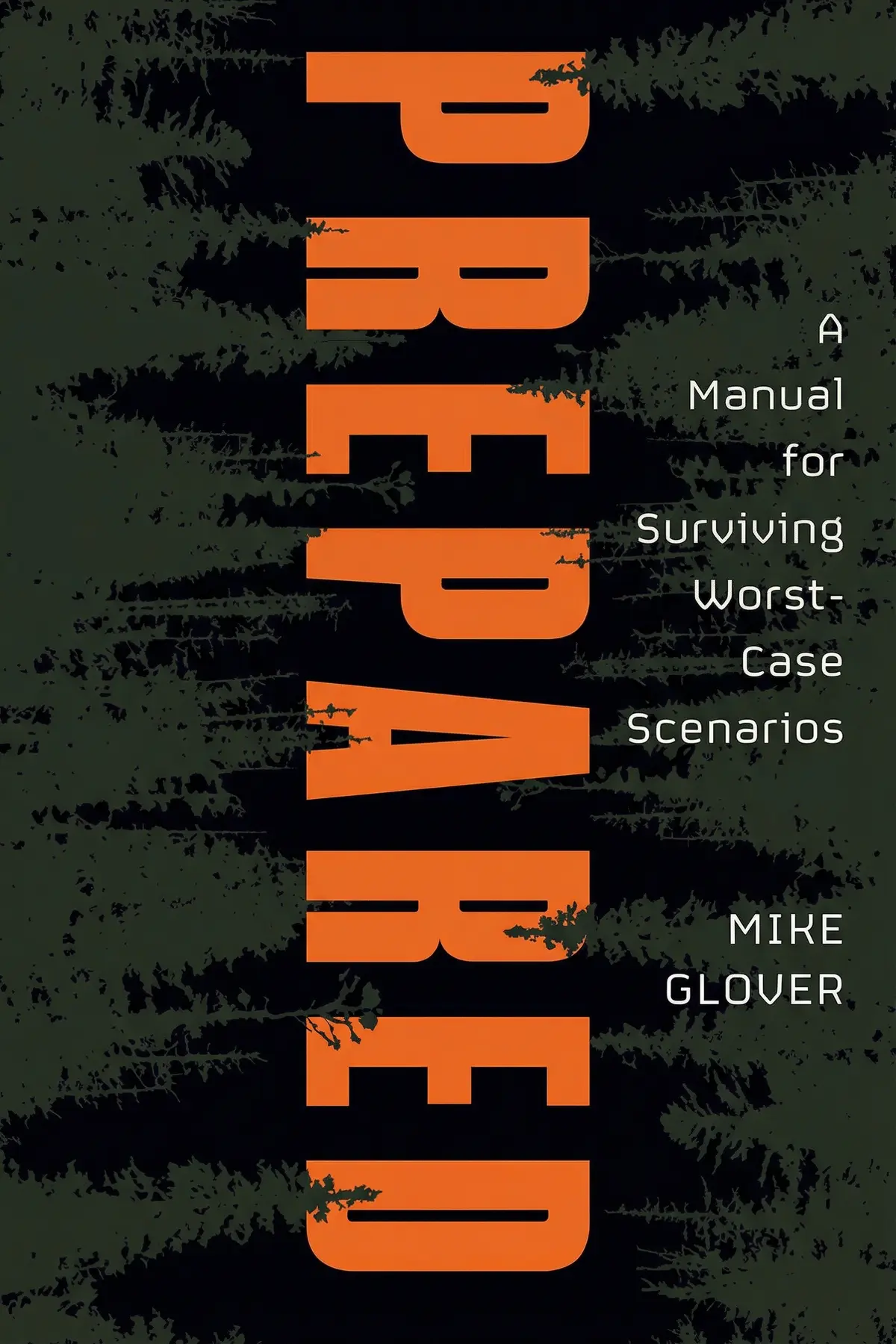
A former Green Beret's plan for staying functional when disaster hits: train your nerves against freezing, rehearse backup escape plans, read your surroundings, and keep gear ready in layers from your pockets to your car and home.
1 min 02 sec
If disaster reached your street tonight, the thing most likely to fail you is not your gear but your head. In Prepared, former Green Beret Mike Glover argues that your brain is the most important survival tool you own, and that under heavy stress it tends to lock up exactly when you need it. Glover spent about twenty years in the US Army and Special Forces, then protected government officials as a CIA security contractor, and he has little patience for bunkers and hoarded rations.
He builds readiness in layers. A steady mind, rehearsed plans and sharp eyes come first, then gear arranged in rings from your pockets to your car to your home. Catastrophe, he notes, ignores wealth, status and kindness, so everyone needs this, and nobody needs to be a soldier to learn it. Follow his method and a house fire, a car crash or a hurricane stops being a vague dread and becomes a set of steps your family has already practiced.
1 min 46 sec
Under real threat, the body can stop doing anything at all, even in trained soldiers. Glover explains the wiring behind that paralysis and why he believes nobody escapes it entirely, though almost anyone can shorten it.
1 min 49 sec
A winter jog in shorts and a weekend without a pillow sound like odd survival training. Glover argues they prepare your hands and head for the moment a life depends on a steady grip.
2 min 00 sec
The Titanic’s crew had lifeboats for barely half the people aboard and had never practiced leaving. Glover traces that failure to a common attitude, then offers a four-step military method for escaping a burning house.
1 min 45 sec
A ten-year-old on a Phuket beach saw what the adults around her missed. Her advantage was a habit of noticing that anyone can practice in an airport, an office or a train carriage.
1 min 28 sec
When danger appears, most people wait to feel ready before they act. A wrestling lesson and a simple military rule suggest the opposite order, and show which single action should always come first.
1 min 57 sec
Police can take ten minutes or more to arrive, and a great deal can happen in that time. Glover’s answer fits in a slim bag, and only part of it is for self-defense.
1 min 48 sec
Hurricane Ida showed how fast shelves empty and roads jam when people wait until the last moment. Glover’s alternative skips the bunker and starts with the place where disaster is likeliest to find you.
1 min 01 sec
Glover’s manual turns the survivalist image around. Preparedness, in his telling, looks like a person who has rehearsed: someone whose freeze lasts a heartbeat, whose family knows a go word, who notices the stranger doing what nobody else does, and whose car holds a tourniquet. He also sets the bar above staying alive. The goal is to get through a crisis and keep living well, with family and community, even when conditions turn harsh.
Fear plays no part in the first step. Spend a cold morning outside and practice the four-part breath while you are uncomfortable. Walk your family through two exits this weekend, with a word that sends everyone moving. Put a tourniquet and a first aid kit where you will actually have them, in your bag and in your car, and learn to use both.
Glover’s freeze in Iraq ended the moment he found work for his hands. That is the habit the book trains: when the world tilts, have your next move ready.
Most people picture preparedness as a bunker full of rations, and then do nothing, assuming help will arrive in time. Mike Glover argues that this leaves them exposed to the emergencies that actually happen: house fires, car crashes, power failures, storms and violence while police are still minutes away. Drawing on two decades in the US Army and Special Forces, Glover starts with the brain. He explains why stress can trigger a freeze, and how small doses of chosen discomfort, controlled breathing and spoken self-talk shorten it. He then adds the military PACE method for layered backup plans, the habit of reading a place's normal baseline so anything odd stands out, and a simple rule for the first decision in danger: get moving. The physical half of the book arranges gear in widening circles. Readers learn what to keep on their person to last 72 hours, why first aid in the car matters most, and how to stock a home they use every day rather than one they hide in. The result is a calm, practical routine for an unpredictable world.
Parents who want a fire plan and a few skills their whole family has actually practiced.
Commuters and frequent travelers who want to notice trouble early and carry the right basics.
Professionals who go blank under sudden pressure and want a trained way to keep thinking and acting.
Mike Glover is a former Green Beret who spent roughly two decades in the US Army and Special Forces. He then became a CIA security contractor, protecting government officials in hostile environments. Today he is founder and CEO of Fieldcraft Survival, which teaches survival skills and resilience. In the book he says he has trained thousands of people, including whole families, to survive.
Listeners find this manual on readiness to be essential reading, commending its thorough details and actionable advice. The book effectively delves into the mental approach required for survival and preparation, while remaining clear and easy to follow. Additionally, they value how it provides a base for emergency planning, with one listener remarking that it could literally save lives.
Picked this up after seeing Glover on a podcast, and it really shifts the perspective from paranoid hoarding to genuine resilience. Most people focus on the gear, but Mike spends a significant amount of time on the psychology of survival, particularly the 'freeze' response of the autonomic nervous system. Understanding why the body locks up under stress is the first step to overcoming it. The PACE plan (Primary, Alternate, Contingency, Emergency) is a framework I’ve already started applying to my family's fire and evacuation routes. It is a foundational read for anyone who wants to be an asset rather than a liability during a crisis. The writing is punchy, direct, and lacks the fluff you usually find in this genre. Honestly, the peace of mind that comes from having a structured plan is worth ten times the price of the book. It’s not about being scared; it’s about being ready for the unexpected.
Show moreFinally got around to finishing this, and I have to say it's more of a mental blueprint than a technical survival manual. The way Mike breaks down the sympathetic versus parasympathetic nervous system explains so much about human behavior in emergencies. It’s refreshing to read a 'prepping' book that doesn't just tell you to buy a thousand cans of beans. Instead, it teaches you how to maintain situational awareness and keep your cool when everyone else is losing theirs. My wife and I are already redesigning our emergency kits based on his EDC recommendations. The book is well-organized and avoids the 'crazy prepper' stereotypes by focusing on being a guardian for your community. It is a must-read for anyone who takes the safety of their family seriously. Truly life-saving information packed into an easy-to-digest format. I’ll be buying copies for my brothers this Christmas.
Show moreThe chapter on the autonomic nervous system was a total game-changer for me. Most survival books tell you what to do, but Mike Glover explains how to ensure your brain actually lets you do it. I loved the PACE plan framework—it’s simple enough to remember when you’re panicking but robust enough to cover your bases. This isn't fear-mongering; it's a calm, professional assessment of how to handle worst-case scenarios with dignity and skill. The emphasis on being an 'asset' to your neighbors really resonated with me. It’s about building a community of prepared individuals, not just hiding in a hole. Glover’s prose is no-nonsense and gets straight to the point without unnecessary jargon. If you want a solid foundation in disaster preparedness that focuses on the human element, this is it. It might literally save your life one day.
Show moreAfter hearing Mike speak on several platforms, I wanted to see if his written work held up, and it exceeded my expectations. This is a comprehensive guide that bridges the gap between military-grade preparedness and everyday civilian life. He manages to make complex survival strategies accessible without dumbing them down too much. The focus on mental resilience is what sets this apart from the sea of other survival manuals on the market. I especially liked the sections on navigation and the importance of having hard copies of important documents. It’s a wake-up call that manages to be empowering rather than just depressing. The book is short enough to read in a weekend but contains enough info to keep you busy planning for months. It truly provides the foundation needed for any type of emergency. An absolute must-have for any serious home library.
Show moreAs someone who has always felt a bit anxious about the state of the world, this manual provided a much-needed sense of agency. Glover’s background in Special Forces is evident, but he translates that high-level experience into practical advice for the average civilian. I particularly appreciated the focus on 'everyday carry' items that are actually useful, like tourniquets and flashlights, rather than just tactical LARPing gear. My only gripe is that some of the sections felt a bit brief, almost like he was touching on a topic that really deserved its own dedicated chapter. To be fair, it serves as an excellent jumping-off point for beginners. The emphasis on situational awareness—just knowing where your exits are—is a simple habit that can literally save your life. It's a solid, well-written guide that avoids the typical doom-and-gloom rhetoric. I’d recommend it to any head of a household.
Show moreEver wonder why people just stand there like a deer in headlights during a crisis? Glover explains the biology behind that freeze response in a way that is both fascinating and terrifying. The book is less about building a bunker and more about building a resilient brain through controlled exposure to stress. I liked the practical tips on home security and medical prep, though I wish there was more detail on long-term food storage. The short, staccato sentences make it a very quick read, which fits the 'manual' vibe he's going for. It’s a very American book, focused on rugged individualism, but the core principles of preparation are universal. Look, you might not agree with everything he says, but the logic of having a backup plan for your backup plan is hard to argue with. It’s a great foundation for disaster preparedness.
Show moreThis book hits that sweet spot between being a 'doomsday prepper' and just being a responsible adult who doesn't want to be helpless. I really appreciated the focus on everyday carry and the necessity of having medical supplies on hand at all times. Glover makes a compelling case that we’ve become too reliant on systems that are actually quite fragile. The writing is clear and the advice is actionable, especially the drills he suggests for testing your own readiness. I did find the focus on lethal force a bit heavy-handed for my taste, but given the author’s background, it’s expected. Still, the broader lessons on resilience and mental toughness are applicable to any stressful situation, not just a societal collapse. It’s a practical guide that encourages you to stop being a spectator in your own life. Definitely worth a spot on the bookshelf.
Show moreNot what I expected from a former Green Beret, as I thought it would be a bit more 'hardcore' in terms of technical skills. The book is fine, but it’s definitely geared toward the absolute novice who has never thought about a backup plan in their life. Glover's advice to 'make a plan' and 'stay calm' is good, obviously, but it feels a bit repetitive after the third chapter. There is a lot of talk about mindset, which is important, but I wanted more 'how-to' and less 'why-to.' Frankly, the constant mentions of his 'Survival Universe' felt a bit like an extended advertisement. That said, the section on medical emergencies and the PACE plan was actually quite helpful for organizing my thoughts. It’s a decent introductory text, but seasoned survivalists won't find anything groundbreaking here. It’s a quick read, at least, and the layout is very clean and professional.
Show moreLook, the information here isn't exactly groundbreaking if you've been in the survival space for a while. It’s a lot of 'be aware of your surroundings' and 'have a go-bag,' which is stuff I’ve heard a million times on various podcasts. The section on the 'freeze' response was the highlight, but even that felt like a summary of better-known psychological studies. The book is very much a 'Glover' product, tied heavily to his personal brand and military history. For a total beginner, this is a 5-star book because it covers the basics very well. For me, it was more of a 3-star experience because I was hoping for more advanced techniques or unique insights. It’s well-written and easy to comprehend, but it stays very close to the surface-level basics. A good gift for a friend who is just starting to take safety seriously, though.
Show moreTo be fair, if you aren't living in a rural part of the US where you expect a home invasion every Tuesday, this manual might feel a bit extreme. I found the tone to be slightly paranoid, pushing a narrative that catastrophe is not just possible, but practically inevitable. While the PACE plan is a decent organizational tool, a lot of the 'survival' advice felt like common sense or stuff you could easily find for free on YouTube. Also, it felt like a bit of a marketing brochure for Mike Glover’s other businesses and training programs at times. I was looking for deep, technical skills, but what I got was a lot of high-level mindset talk and very basic gear lists. If you are totally new to the concept of preparedness, you might get something out of it. Otherwise, it’s mostly just fluff and branding. Not really what I was hoping for.
Show moreGlover argues that surviving a disaster depends first on a mind trained not to freeze, then on rehearsed plans, awareness and fast decisions, and only then on gear. He arranges equipment in widening circles, from what you carry each day to your car and your home, and rejects the bunker-and-rations image of preparedness as poor protection against everyday disasters like car crashes and grid failures.
The acronym PACE covers four tiers, Primary, Alternate, Contingency and Emergency, and it comes from the military as a way of stacking backup plans. Glover applies it to a house fire: front door first, back door second, a chosen window with a ladder third, and any window by any means last. Each route gets a go word, families drill it until it is automatic, and he advises practicing the two riskiest options most.
Glover explains that extreme stress can overload the nervous system and cause a freeze. He says no one can remove it fully, but repeated, varied discomfort shrinks it. He suggests camping without comforts, winter jogs in shorts or saunas after checking with a doctor, plus four-part breathing and out-loud self-talk. His first rule in danger is to move away from the threat, which he calls getting off the X.
Glover’s everyday carry aims to keep you going for 72 hours alone. Its core is a tourniquet and an individual first aid kit with gauze, tape and nitrile gloves, plus needed medications. He adds ID, insurance cards, cash and transit passes with secure backups, a spare charger, a battery pack, a flashlight and a Mylar blanket, all in a slim bag, along with skills such as a Stop the Bleed course.
It suits parents who want a household fire plan, commuters and travelers who want sharper awareness and a small kit, and anyone who goes blank under sudden pressure. Glover writes for ordinary people, not only soldiers, and his steps are modest: a weekend without comforts, two practiced exits, a first aid kit in the car, and food and water stored and used as part of daily life.
Richard Wiseman





William B. Irvine


Andrew D. Thompson


Deepak Chopra
AUDIO SUMMARY AVAILABLE
Get the key ideas from Prepared by Mike Glover, plus 5,000+ more nonfiction titles.









