

59 Seconds: Change Your Life in Under a Minute
Richard Wiseman
 English
A poker champion's practical case that your thinking shapes your life. Hellmuth shows how written goals, a daily blessings list, a pyramid of habits and a personal code keep you steady through doubt, grudges and success.
56 sec
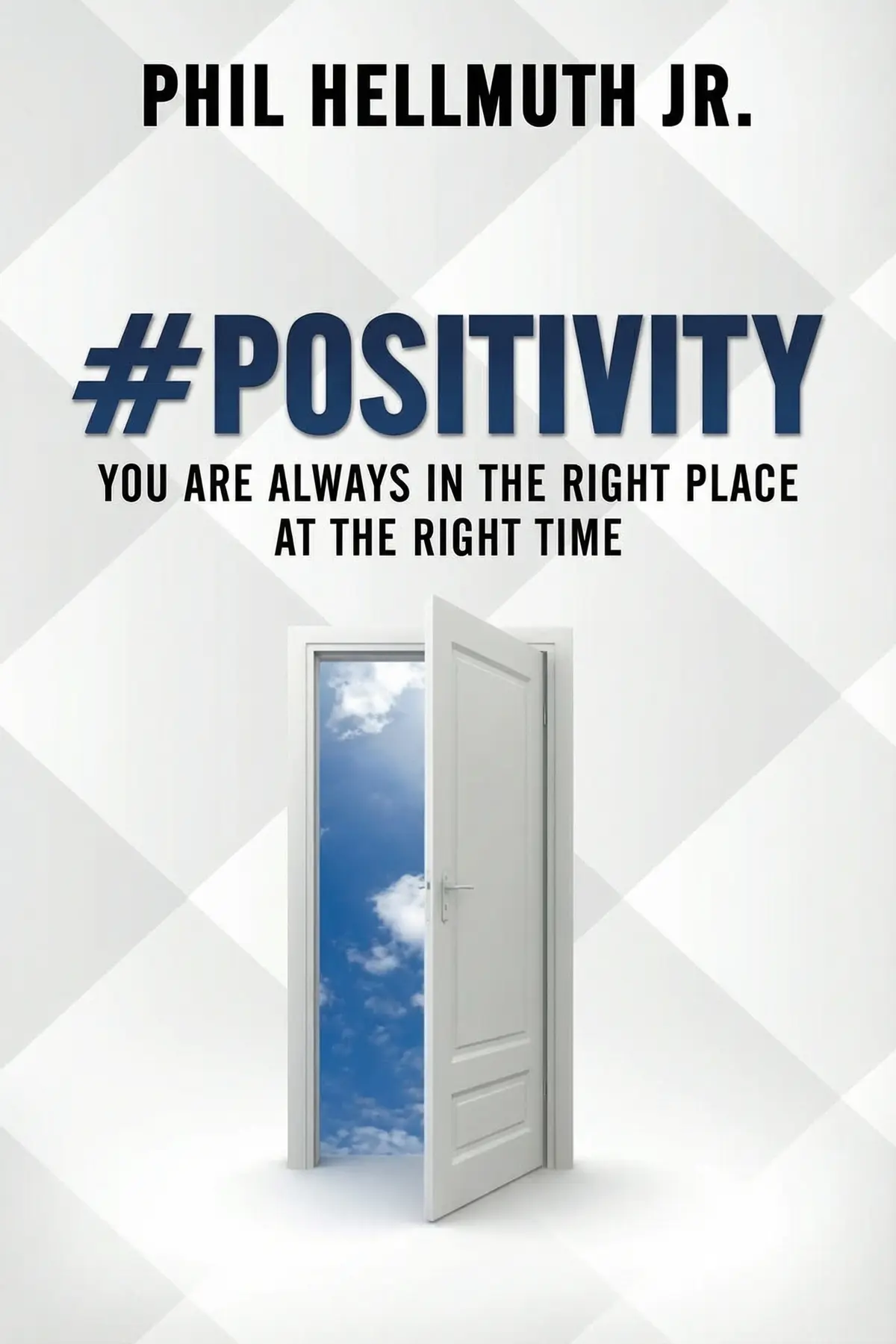
If your goals live only in your head, one busy week is usually enough to bury them. In #POSITIVITY, the poker champion Phil Hellmuth Jr., nicknamed the Poker Brat, argues that your thoughts begin to shape your life once they are on paper and in front of you every day. He found the idea early on in a note his mother taped to the bathroom mirror, which began “You are what you think.”
That belief carried him to a World Series of Poker title at a younger age than any winner before him, and later to work as a best-selling author and television host. In his book it becomes a set of daily practices: a lifetime list of goals, a yearly page on the mirror, a list of blessings, a pyramid of habits, a personal code, and ways to handle hate and praise. You can set up each of them with a pen in one evening, and each one turns a thought into something you do.
1 min 27 sec
One cold morning, a successful young poker player walked out of a game feeling something was missing. An unexpected door and a sheet of paper showed him what it was, and his wife later found proof that the paper worked.
1 min 24 sec
Most goal lists end up in a drawer and are forgotten by spring. Hellmuth keeps his in the one place he cannot avoid every morning, and he says it shapes his choices even when he isn’t thinking about it.
1 min 24 sec
A man with a dream of owning a sports bar does one modest thing the next morning. Hellmuth traces how that single conversation could lead in four different directions, and why staying still leads nowhere.
1 min 32 sec
Talent did not carry Hellmuth to the top of poker on its own. He drew a ten-block structure of habits, and the block at the very bottom is the one most ambitious people skip.
1 min 31 sec
Hellmuth lives with two chronic health conditions, yet health sits at the very top of his list of reasons to be thankful. The way he explains that choice changes how a goal list feels to read each day.
1 min 32 sec
Resentment feels like a way of punishing the person who hurt you, but Hellmuth points out who actually pays. His remedy includes a final step that many people will find strange, and he admits that it can feel unnatural at first.
1 min 36 sec
In 2001, Hellmuth was a few hands from tying a historic record, and nothing on the table beat him. The real opponent was a question in his own head, and he later found the answer in his personal values.
1 min 28 sec
A short meeting with a sports legend and a message from a president left Hellmuth feeling unbeatable for weeks. That feeling cost him something he had worked hard for, and it explains why success needs managing too.
1 min 19 sec
Hellmuth’s book, #POSITIVITY, grows out of a sentence his mother taped to a mirror, and his contribution is to make that sentence practical. In his telling, positive thinking is not a mood you wait for. It is a set of pages and habits you can see. There are goals you wrote, blessings you counted, a pyramid you are climbing and a code you have kept. Each one gives a thought a physical place in your day, and that is how thoughts start shaping what happens.
The subtitle promises that wherever you happen to be, and whenever, is exactly where you should be. His stories show what that means in practice. The bar in 1988, the lost hand in 2001 and Bill’s favorite sports bar each became useful because someone did something with the moment.
The simplest place to start is tonight. Write a one-page list of this year’s goals and a list of blessings, and tape both to your bathroom mirror. Then choose one goal and take its smallest next step this week. When a grudge or a burst of praise pulls you off course, go back to the mirror.
The door Hellmuth opened in that bar was an ordinary one. His life changed because he went home and picked up a pen.
Plenty of people believe in positive thinking and still drift from one year to the next. Their goals stay vague, old resentments keep coming back, and success can throw them off course just as easily as failure. Phil Hellmuth Jr. grew up with a note from his mother on the bathroom mirror saying that you become what you think. He built a poker career and a life around that idea. In #POSITIVITY he turns the belief into routines you can see and use. He keeps a lifetime list of goals and a one-page list for the current year, taped to the mirror beside a list of blessings. He climbs a ten-block pyramid of habits that starts with cutting out distractions and ends with managing money. He also has a short practice for letting go of hate, and a personal code that tells him he deserves to win. The lessons come from his own wins and losses: a moment of clarity in a bar in 1988, a record he missed in 2001 because he doubted himself, and an ego trip after meeting Michael Jordan. Readers get a set of simple daily tools, some drawn from his years at the poker table and others offered as general advice for everyday life.
Ambitious people whose goals stay vague and want a simple daily system to keep them in view.
Professionals who choke under pressure or lose focus after a big win.
Anyone carrying an old grudge who wants a short, practical way to let it go.
Phil Hellmuth Jr. is a professional poker player, a many-time World Series of Poker champion known as the Poker Brat, and the winner of more than $23 million in live tournaments. He wrote the bestseller Play Poker Like the Pros and the autobiography Poker Brat, and he has provided live ESPN commentary on the World Series of Poker. He has also supported charities including Heifer International and the Starkey Hearing Foundation.

Listeners believe this book provides a sophisticated look at the life-changing power of a positive mindset, filled with excellent tips that are straightforward to follow and use. They describe it as a required listen, with one listener calling it a "delightful journey through each page." Listeners value the author's status as the greatest poker player of all time and find the material worth their time.
This book is a delightful journey from start to finish! I've always admired Phil's expertise on the felt, but seeing his perspective on life's transformative potential was eye-opening. The way he simplifies complex psychological hurdles into easy-to-implement habits is just brilliant. Personally, I found the section on listing your daily blessings right next to your yearly goals to be the most impactful part of the whole text. It’s simple, it’s direct, and it’s effective. If you're looking for a must-read that will actually change your morning routine and your mindset, this is definitely the one. It’s worth your time regardless of whether you play cards or not.
Show moreAbsolutely worth your time! Phil Hellmuth Jr. manages to capture the essence of what it takes to win, not just in poker, but in every aspect of life. The exploration of how setting clear intentions leads to success is nuanced and incredibly motivating. I loved the emphasis on handling success with humility—something people might not expect from him! The book is laid out so well that you can pick it up, read a few pages, and walk away with a new technique to try. It’s a must-read for anyone who feels stuck or just needs a positivity boost. Truly transformative if you actually apply the techniques he shares.
Show moreWow, what an incredible read. This book really shows the transformative potential of maintaining a positive outlook even when things are tough. Phil’s expertise shines through, but he makes it accessible for everyone, not just poker players. The 'Winning Pyramid' is a fantastic tool that I’ve shared with several friends already. I especially loved the part about listing blessings on your bathroom mirror—it’s such a simple way to stay grounded. This book is a delightful journey through the mind of a champion, and I found every page to be genuinely inspiring. Highly recommended for anyone looking to open doors to new opportunities!
Show moreI honestly wasn't sure what to expect from the so-called 'Poker Brat,' but this book is surprisingly grounded. Hellmuth takes his legendary confidence and breaks it down into actionable steps, like the bathroom mirror goal-setting technique which I’ve actually started using. While some parts definitely feel like he’s patting himself on the back, the core message about focus and gratitude is genuinely helpful. It’s a very fast read, almost like a transcript of a high-energy seminar, but that makes it easy to digest in one sitting. I felt like the 'Winning Pyramid' gave me a solid framework to look at my own habits without getting bogged down in too much fluff. It’s a decent blueprint for anyone needing a mental reset.
Show moreA really nice blueprint for anyone trying to get their life on track. It’s not a deep philosophical treatise, but it’s full of great advice that is simple to implement immediately. I liked the concept of the 'Winning Pyramid' and how it emphasizes staying true to your values while opening doors to new opportunities. Some of the stories felt a bit repetitive, and the tone is definitely 'loud,' but the sentiment is pure. I’ve started putting my goals on the mirror like he suggested, and it really does help with focus. A solid four stars for the practical utility alone. It's a quick, nourishing read for a Sunday afternoon.
Show moreI was skeptical because of his table persona, but Phil's advice is actually quite grounded. The book focuses heavily on setting yearly goals and keeping them visible, which is a tactic I’ve always found useful. My only real gripe is that it feels a bit like a sales pitch at times, but the actual content regarding positive habits and letting go of hate is too good to ignore. It’s a very fast read, which I appreciated. Whether you like him or not, his results speak for themselves, and this book gives you a glimpse into that mindset. It’s simple to implement and surprisingly nourishing for the ego and the soul alike.
Show moreA simple, effective guide to success. While the author’s ego is definitely the engine driving the book, the advice is surprisingly practical and easy to implement in a busy life. I felt the focus on 'nourishing' habits was a high point, especially regarding how to handle success without letting it get to your head. It might not be for everyone, particularly those who prefer a more academic approach to self-improvement, but for a quick shot of motivation, it’s excellent. It’s a blueprint for a better mindset, delivered by someone who has clearly mastered the mental game of life. A very quick read with lasting impact if you take it seriously.
Show moreThe advice here is definitely nourishing, but I couldn't shake the feeling that I was reading a very long brochure for Phil's public speaking career. There's a lot of ego on display, which I guess is brand-appropriate for the world's greatest poker player, but it might be off-putting for some readers looking for more humility. That said, the specific tips on letting go of resentment and focusing on one's own values are solid. If you can get past the constant self-promotion, the blueprint for success he lays out is actually quite practical for daily life. It’s a decent quick-read if you need a little kickstart, but don't expect deep psychological insights. It's mostly just feel-good stories and familiar motivation.
Show moreIt's a quick read, maybe an hour or two at most. The feel-good stories are nice, but they often feel a bit superficial. Phil’s 'Winning Pyramid' is a decent enough framework, but it feels like it’s mostly there to support his image as the greatest ever. I personally didn’t find it life-changing, but the familiar advice about goal-setting is always a good reminder. It’s okay if you’re a fan of the author, but don’t expect a deep dive into the mechanics of positivity. It’s more of a motivational pep talk than a structured guide. Good for a boost, but lacks the nuance I was looking for.
Show moreHonestly, I found this pretty disappointing. It felt less like a self-help book and more like a massive ego trip disguised as 'inspirational' content. Most of the advice is stuff you've heard a thousand times before—write down goals, be positive, work hard—and it didn't feel like there was much original depth here. It reads incredibly fast, mostly because it's quite thin on actual substance and heavy on Phil talking about his own greatness. It might work for die-hard poker fans who want to be exactly like him, but for the average person, it feels like an advertisement for his brand. I was hoping for more nuance and less of a sales pitch for his speaking gigs.
Show moreHellmuth argues that what you think shapes the life you live, an idea he took from a note his mother taped to the bathroom mirror. He makes it practical with visible routines: a lifetime goal list, a one-page yearly list and a list of blessings on the mirror, a pyramid of habits, a personal code, and simple ways to let go of hate and handle praise.
The book suggests titling a page Yearly Goals with the current year and ranking the items so the most important come first. It also advises trimming the list to one page, taping a printed copy to the bathroom mirror, and keeping a second copy handy, such as on a desk or in a bag. One goal, for example, is three World Series of Poker titles a year, which moves him toward a lifetime total of 24 bracelets.
It is a ten-block map of the skills Hellmuth needed to reach the top of poker, ordered from easiest to hardest. The base removes distractions such as gambling and heavy drinking. Next comes health, with exercise, good food and rest. Above that is emotional control under pressure, and at the top is money management, so he can always take an opportunity when it appears.
He proposes three steps. First, imagine the situation from the other person’s side and ask why they might have hurt you. Second, find at least one good quality in them, such as humor, kindness or loyalty. Third, take a quiet moment to send them love. He sees forgiveness as a choice made for your own peace that does not need an apology.
Doubts took over when he was only a few hands from equaling the record for most World Series of Poker bracelets ever won. He wondered whether he deserved the win and whether he measured up to Doyle Brunson, and then he lost. He later decided he had not believed he deserved success. Looking at the loyalty, honesty and generosity he had lived by gave him that belief.
Richard Wiseman





William B. Irvine


Andrew D. Thompson


Deepak Chopra
AUDIO SUMMARY AVAILABLE
Get the key ideas from #POSITIVITY by Phil Hellmuth Jr., plus 5,000+ more nonfiction titles.









