

14 min 45 sec
Available in: English
Platonic: How the Science of Attachment Can Help You Make - and Keep - Friends
Shows adults how to make new friends and deepen the friendships they already have, from joining the right group to saying warm things out loud, raising hurt calmly and giving without burning out.
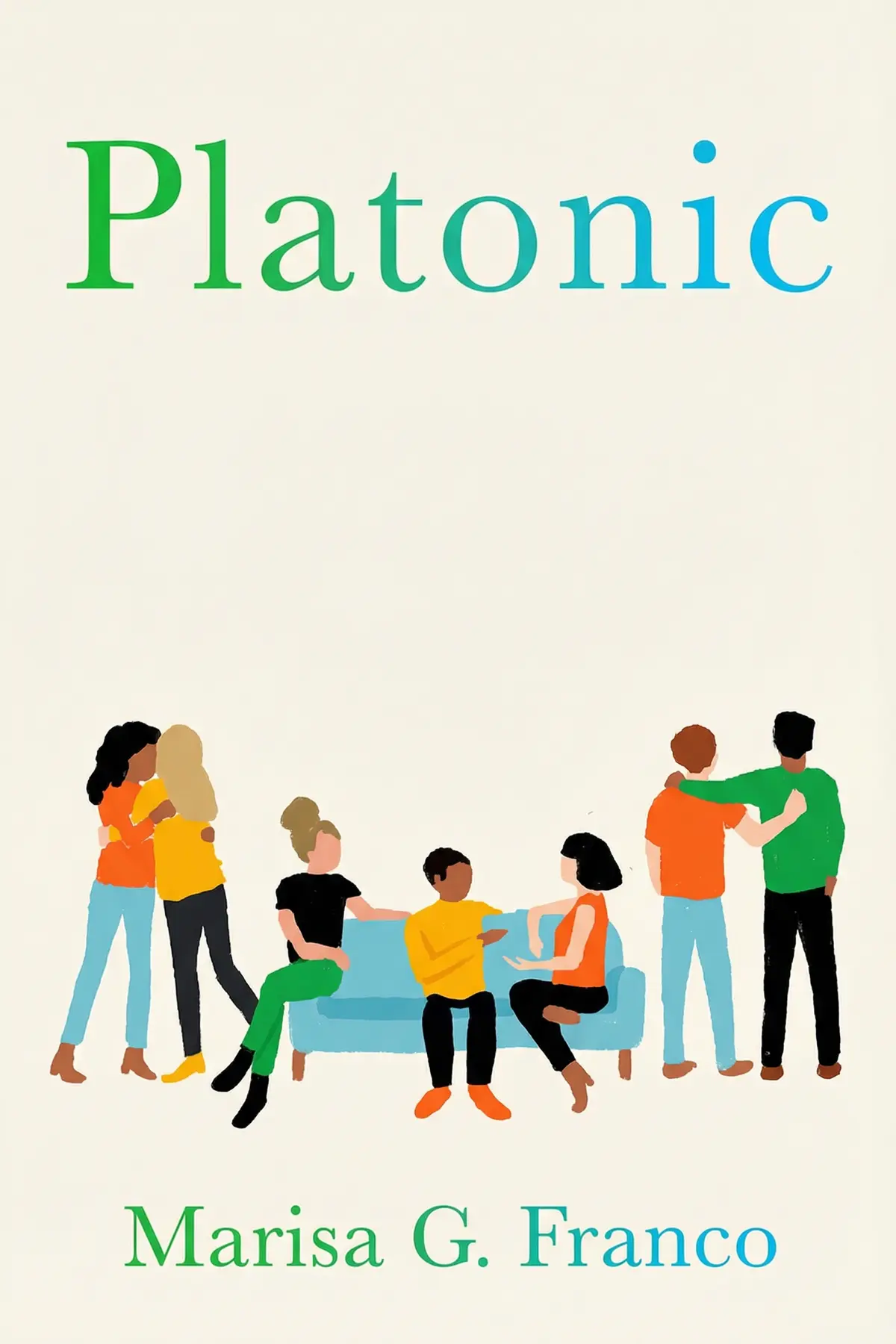
Table of Content
1. Introduction
1 min 04 sec
If your friendships have thinned out since school, or a move left you knowing nobody, the usual advice is to wait for things to happen naturally. In Platonic, counseling psychologist Marisa G. Franco argues the opposite: friendship is a set of skills you can practice, and it pays off more than most of us assume. One comparison she draws from meta-analyses makes the point. Exercise lowers the risk of death by 23 to 30 percent, while a big social network lowers it by 45 percent.
Franco’s case is that friends rarely arrive by luck. They come from a handful of habits: making the first move, showing warmth, opening up, staying honest, raising problems and giving within limits. Each one feels risky, and the research she gathers shows the risk is usually smaller than our fears suggest. What follows is a working plan for meeting people in a new place and for turning acquaintances into the friends who show up when life goes wrong.
2. Count your friends as part of your health
1 min 52 sec
A woman who spent decades searching for a husband reached a startling conclusion after losing him. The numbers Franco gathers suggest she was right, and that most of us rank our relationships in the wrong order.
3. Turn a group of strangers into real friends
1 min 45 sec
New in a city, sitting quietly at your desk and going straight home after work, you cannot expect friends to simply show up on their own. Franco lays out a simple sequence, and one study shows why the scariest part is safer than it feels.
4. Say the warm thing out loud
1 min 43 sec
Most adults rarely tell a friend what they mean to them, for fear of sounding strange. A twelve-week study of new acquaintances suggests that holding back may be exactly what stops a friendship from forming.
5. Go first with something personal
1 min 46 sec
Showing a friend your fragile side feels like handing them a weapon. Research on how others actually judge those moments tells a different story, with one important exception about whom you choose to trust.
6. Honesty with yourself makes you better company
1 min 53 sec
Telling a friend you dislike their partner may feel brave, but Franco says it misses the point. The honesty that wins friends starts somewhere less obvious, as a study of socially anxious people revealed.
7. Raise a grievance and keep the friend
1 min 53 sec
Couples have endless advice for fighting well, while friends mostly swallow their anger and drift. Franco offers a sequence for saying what hurt, and it begins well before the conversation itself.
8. Give freely, and ask back without guilt
1 min 40 sec
Generous people seem to collect friends effortlessly, yet giving can also drain you or bind you to the wrong people. Franco offers one blunt question that separates healthy generosity from the kind that backfires.
9. Conclusion
1 min 09 sec
Platonic adds up to a simple correction. Most adults treat friendship as something that happens to them, then wonder why it stopped happening. Franco treats it as something you do, and almost every step she describes asks you to accept a risk that turns out smaller than it feels. Strangers like us more than we think. Friends judge our weak spots less harshly than we fear. Warmth reads as safety.
Harriet’s story shows what is at stake. The people who carried her through her husband’s death were her friends, the relationships she had spent her life ranking second.
The practical path is short. If you are new somewhere, join one group that meets regularly, stay for three months and invite your favorite person out alone. With the friends you already have, say the appreciative thing out loud and share a little more than usual. When something hurts, raise it calmly and ask for their side. Give generously to the people who give back, and let them give to you.
Friends rarely appear by chance. They answer when someone goes first.
About this book
What is this book about?
Making friends at school takes little effort. Making them as an adult, after a move, a new job or a loss, often seems to depend on luck. Marisa G. Franco, a counseling psychologist, argues that it depends far more on skill, and that the payoff is bigger than most people believe. In the research she cites, a large social network does more to cut the risk of death than exercise does. Franco treats friendship as a set of habits anyone can practice. She shows how to turn a regular group into real friends, why warmth and vulnerability draw people closer instead of scaring them off, how honesty with yourself makes you better company, and how to raise a grievance without losing the friend. She also covers generosity and its limits. Again and again, the research she gathers points the same way. Strangers like us more than we think, and friends judge our weak spots less harshly than we fear. Readers come away with a practical plan for building friendships and for keeping them through conflict and hard times.
Book Information
Who it's for
Adults new in town
Adults who moved for work or study and know almost nobody where they live.
Wanting old friends back
People whose friendships have faded and who want them back without waiting for luck.
Avoiding conflict or overgiving
Anyone who avoids hard talks with friends or gives until they burn out.
About the Author
Marisa G. Franco
Dr. Marisa G. Franco teaches at the University of Maryland, where she also earned her doctorate in counseling psychology. She has researched friendship extensively and shares that work with organizations across the United States. She writes about friendship for Psychology Today and speaks about belonging at universities, companies, non-profits and government agencies. Platonic, her book on using attachment science to make and keep friends, became a New York Times bestseller.
Ratings & Reviews
Ratings at a glance

What people think
Listeners find this work to be a vital resource that blends thorough scientific study with actionable tips for developing significant connections. The prose is carefully developed, and one listener characterizes it as a masterclass in turning complex psychological research into captivating language. Listeners value the way the title encourages personal evolution and consider it a valuable purchase, with one highlighting its specific relevance to their own generation.
Top reviews
Bo
Ever wonder why it's so hard to make friends as an adult? Dr. Franco takes a deep dive into why we struggle, using attachment theory as a roadmap. I found the chapter on generosity particularly moving; it really challenged the 'me-first' boundaries that are so trendy on social media right now. The writing is accessible but feels grounded in actual psychological science rather than just empty platitudes. While some of the anecdotes felt a bit staged, the core message about prioritizing platonic bonds over romantic ones is life-changing. It’s a masterclass in translating complex science into prose that stirs the soul. Truly an essential read for anyone feeling isolated.
Show moreLily
The chapter on initiative alone is worth the price of admission. Dr. Franco dispels the myth that friendships should be effortless and instead provides a masterclass on how to build connection through vulnerability. I love how she translates complex psychological research into prose that feels like a conversation with a very smart friend. It’s refreshing to see someone tackle the loneliness epidemic without just telling everyone to 'get off their phones.' My only minor gripe is that some of the personal stories felt a bit 'Oprah-esque' and saccharine. Regardless, the spiritual resonance of this book is undeniable. It’s a necessary tool for building a more connected life.
Show moreBun
Finally got around to reading this and I’m honestly blown away by how much it shifted my perspective. The writing style is beautiful and the storytelling is top-notch. It’s not just a 'how-to' guide; it’s a deep reflection on what it means to belong. The chapter on generosity nearly moved me to tears with its insight into communal vs. individualistic boundaries. In a world that feels increasingly isolated, this book offers a path back to each other. It’s particularly important for my generation, where we’ve traded real intimacy for digital likes. This is a masterclass in human connection that I will be returning to for years to come.
Show moreRuangrat
Picked this up during a lonely stretch and it was exactly the gut check I needed. Most books focus on finding 'The One,' but Franco argues that our platonic relationships deserve just as much intentionality and effort. Her breakdown of secure, anxious, and avoidant attachment styles in a non-romantic context was a total lightbulb moment for me. I started using her advice on 'assuming people like you' and it has genuinely lowered my social anxiety in new groups. It’s a practical, heartwarming guide that moves beyond the typical fluff you find in the self-help section. I just wish there was more advice on how to end toxic friendships.
Show moreThitiwan
After hearing so much about this book on social media, I finally gave it a go. Dr. Franco’s focus on 'amatonormativity'—the societal obsession with romantic love—is a vital critique that I haven't seen explored this clearly before. The book provides a healthy balance of academic theory and personal storytelling, making it an engaging read for anyone in their 20s or 30s. I particularly liked the section on initiative; it’s a kick in the butt to stop waiting for things to happen 'organically.' The truth is, friendship takes work. While some chapters felt repetitive, the overall message is worth the investment of your time.
Show morePloy
As someone who struggles with social anxiety, I appreciated the practical scripts provided throughout the chapters. Franco doesn’t just tell you to 'be yourself,' she explains how to navigate conflict and express affection without it feeling forced or awkward. The research on how loneliness impacts physical health—comparing it to smoking a pack of cigarettes—was particularly startling. It motivated me to reach out to old contacts I’d let slip away. To be frank, the tone can be a bit 'woke' at times, which might pull some readers out of the flow. However, the core strategies for maintaining adult friendships are some of the best I've encountered.
Show moreSienna
Look, the way we view friendship in the West is fundamentally broken, and this book is a great first step toward fixing it. I loved the historical context Franco provides, especially regarding how male friendships used to be much more affectionate before the sexualization of everything. The book is incredibly thoughtful and the advice on navigating friendships across lines of privilege felt nuanced. It’s a wholesome guide that I’ll be recommending to my entire friend group. Some of the research felt a bit dated or narrow in scope, but the practical applications are solid. It really makes you think about the kind of friend you are being to others.
Show morePim
In my experience, self-help books are usually hit or miss, but this one lands firmly in the 'hit' category. The author is clearly knowledgeable about attachment theory, and applying those concepts to platonic bonds is brilliant. I wasn't entirely convinced by her 'authenticity' argument, which seemed to suggest everyone is deep-down a loving person, but I appreciate the optimism. The scripts for raising grievances were particularly helpful for me since I tend to avoid conflict at all costs. It’s a well-crafted book that bridges the gap between academic research and everyday life. Highly recommended for anyone looking to deepen their social circle in a meaningful way.
Show moreJong
This book felt like a missed opportunity. While the premise is noble, the execution is sometimes bogged down by examples that feel culturally specific or odd, like the references to settlers to illustrate social bonds. I found it difficult to fully engage with the advice when the 'science' cited felt a bit flimsy compared to the heavy reliance on personal anecdotes. It often reads like a collection of trendy buzzwords used in ways that felt more performative than practical. If you're looking for deep intellectual rigor regarding social dynamics, you might find this a bit lacking. That said, the emphasis on being the one to reach out first is a lesson everyone needs.
Show moreMint
Not what I expected from a book that claims to be 'data-driven.' While I agree that friendship is undervalued, I couldn't get past the heavy-handed ideological slant that colored almost every chapter. The author frequently relies on small-sample studies of white college students while ignoring broader economic factors like class or wage stagnation. It felt more like a collection of liberal Twitter zingers and 'therapy speak' than a rigorous exploration of social connection. Frankly, some of the scripts for conflict resolution were okay, but the author holds deep-seated biases that make the advice feel exclusionary. To be fair, the writing is polished, but the substance didn't live up to the hype for me.
Show moreQuestions about this book
What is the main idea of Platonic by Marisa G. Franco?
Franco argues that friendship matters far more than Western culture admits and that making and keeping friends is a skill. She cites findings that a big social network lowers mortality more than exercise does. Friendships grow through habits such as taking the first step, showing affection, being vulnerable, staying authentic, raising conflict and giving generously within limits.
How do you make friends as an adult according to Platonic?
Franco recommends joining a group that meets regularly, like a book club or improv class, so proximity can work for you. Talk to people, assuming they already like you, since a 2018 study by Erica J. Boothby found we underestimate how much others like us. Keep attending for at least three months, then invite your favorite person to meet one-on-one.
What does Franco say about conflict between friends?
She notes that people avoid disagreements with friends more than with partners, and that unspoken anger becomes resentment. Her approach is to calm down first and give the friend notice. Then describe how you were hurt without blaming, ask for their side and manage your triggers. De-escalate if they get defensive, and for recurring issues, politely say what change you would like.
Is it risky to be vulnerable or affectionate with friends?
Less than most people fear, according to the research Franco cites. Anna Bruk’s work suggests others see vulnerability as honesty, and Robert Hays found that pairs who became friends over twelve weeks showed each other lots of affection. Franco still advises choosing carefully whom you open up to, avoiding friends who dismissed you when you needed them.
Who should read Platonic?
It suits adults who have moved somewhere new, people whose friendships have faded, and anyone who struggles to open up, raise problems or set limits on giving. Its advice is concrete: when to invite someone one-on-one, how to start being vulnerable in small steps, and how to tell whether you give out of love or out of a wish to be loved.
Readers also enjoyed









AUDIO SUMMARY AVAILABLE
Listen to Platonic in 15 minutes
Get the key ideas from Platonic by Marisa G. Franco, plus 5,000+ more nonfiction titles.
- 5,000+ titles
- Listen as much as you want
- 7-day free trial
- Cancel anytime









