

13 min 34 sec
Available in: English
Pitch: How to Captivate and Convince Any Audience on the Planet
Shows how to win over boards, clients and investors by making them feel the problem you solve before you show the numbers. It also covers choosing which pitches to accept and steadying your nerves on the day.
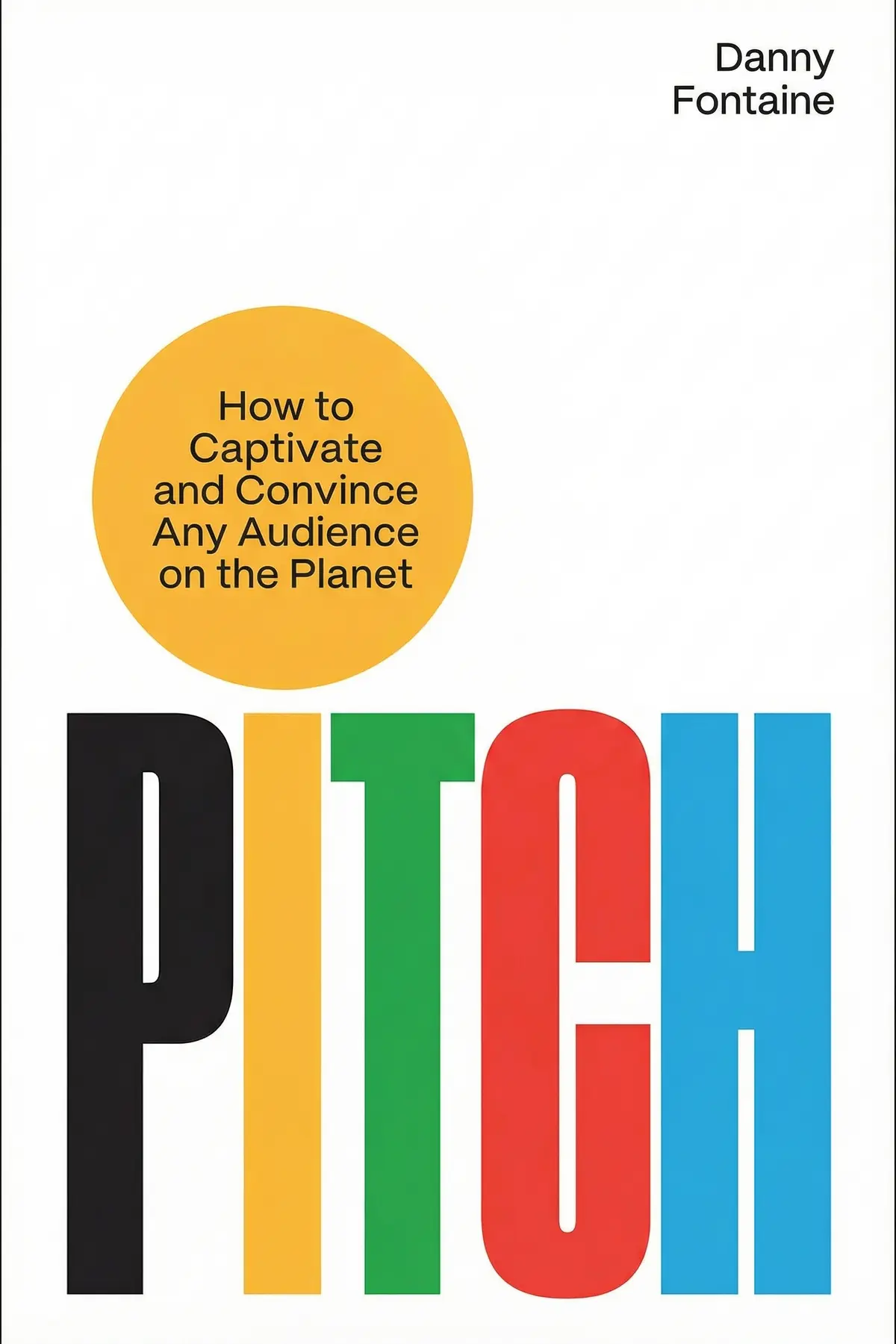
Table of Content
1. Introduction
59 sec
If your pitches earn polite nods and no decisions, the problem may have little to do with your content. In Pitch, coach and professional pitcher Danny Fontaine argues that audiences switch off when they meet a format they have seen a hundred times, and that the cure is to stop presenting and start creating an experience. One of his best examples is a teacher who won a unanimous budget vote without showing a single slide.
Fontaine’s throughline is simple: people are persuaded when they feel the problem first and the facts arrive to confirm what they already sense. That idea runs through every stage he covers, from breaking an audience’s autopilot and deciding which pitches deserve your effort to putting emotion before logic and steadying your own nerves on the day. What you get is a way to make a board, a client or an investor remember your case and act on it.
2. Break the autopilot that makes audiences tune out
2 min 01 sec
The presentation format that feels safest may be the one most likely to fail you. Fontaine explains what happens inside a listener’s head during slide twenty, and why a little risk can be cheaper than playing it safe.
3. Let the audience live the problem
1 min 54 sec
A teacher won a unanimous budget vote and a software firm closed a hospital contract in one meeting, and neither relied on slides. What they did instead made their audiences reach the decision on their own.
4. Win the heart before you show the numbers
2 min 03 sec
Two founders face investors with solid data. One loses the room slide by slide while the other wins it before her laptop is even open. The difference lies in the order of what they say.
5. Walk away from pitches that were never winnable
2 min 08 sec
An invitation to pitch for a giant company looks like the deal that could transform a small agency. A few small details suggest something else entirely, and spotting them early can save weeks of wasted work.
6. Turn pre-pitch nerves into usable energy
1 min 47 sec
Even celebrated performers feel their hearts race before they step out. Fontaine argues the goal is not to make that feeling vanish, and he offers a breathing pattern you can practice on the way to work.
7. Answer your inner critic before you walk in
1 min 38 sec
The fears that surface before a big pitch sound convincing because they arrive as vague feelings. Fontaine shows how to drag them into the open, and how your stance and memory can change the mood you bring.
8. Conclusion
1 min 04 sec
Fontaine’s book makes one move again and again, at every scale. A routine deck loses to a broken desk. A pile of charts loses to a 90-second story about a child who cannot breathe. A shaking presenter steadies once the shaking gets a new name. Each time, the winner treats feeling as the way in and facts as the proof once people are inside. And all of it depends on picking rooms where a decision is still open, which is why the agency invited to a contest that had already been settled was better off staying away.
Before your next pitch, ask plain questions about the client and about yourself, and be ready to say no. If you go ahead, design one moment in which the audience goes through the problem with you, through a demonstration, a test or a story, and bring out the numbers only after that. On the morning itself, try six seconds in, six held, six out, six held, and call what you feel excitement.
A pitch can take almost any form. What it must never do is leave the room exactly as it found it.
About this book
What is this book about?
Most presentations follow the same pattern: a deck of slides, a stack of data and an audience that stops listening long before the end. Danny Fontaine, a coach and professional pitcher, argues that the familiar format is the very thing that fails, because it puts the audience's brain on autopilot. His alternative is to treat a pitch as an experience. He describes a teacher who seated a school board at broken desks, a software firm that staged mock hospital emergencies, and a founder who began by telling, for 90 seconds, how her daughter had suffered an asthma attack, and only then presented her technical specs and market analysis. In each case the audience felt the problem first, and the facts then confirmed what they already sensed. Fontaine also covers the work around the pitch: checking whether a contest is real before you enter, judging honestly whether the job suits you, and handling nerves on the day with box breathing, reframed anxiety and better self-talk. Readers get a clear order of operations for any pitch, whether it is for funding, a contract or a budget.
Book Information
Who it's for
Founders and sales reps
Founders and salespeople whose pitches draw polite interest but no signed deals.
Tired of unwinnable pitches
Agency and consulting leads tired of pouring weeks into competitions they could never win.
Nervous presenters
Professionals who dread presenting and want concrete ways to steady their nerves on the day.
About the Author
Danny Fontaine
Danny Fontaine is a coach and professional pitcher whose clients include some of the world's best-known brands. He also produces and hosts the podcast Pitch Masters, where he interviews leading figures in advertising, sales and marketing about how they win new clients. That mix of pitching himself, coaching others and studying how top practitioners persuade sits behind the methods in Pitch.
Ratings & Reviews
Ratings at a glance

What people think
Listeners appreciate how this manual deconstructs the intricate skill of pitching into straightforward, easy-to-follow phases applicable to both professional settings and everyday life. They find the author's passion to be catching and observe that the emphasis on narrative and emotional rapport ensures any presentation becomes more compelling. Furthermore, they point out the useful guidance on managing anxiety and preparation, with one listener commenting that the work offers a "balance between empathy and precision." They also remark that the concepts are adaptable for everyone, from educators and performers to executives seeking to develop authentic impact.
Top reviews
Astrid
Danny Fontaine has a knack for deconstructing the intimidating world of public speaking into something that feels entirely achievable. This isn't just for corporate suits; it’s a manual for anyone who needs to be heard. I loved the emphasis on empathy. Too many books focus on the "power play" of a pitch, but Fontaine argues that true influence comes from understanding the person across the table. His writing style is punchy and energetic, making the pages fly by. If you struggle with nerves, his section on channeling that energy is worth the price of admission alone. It’s practical, modern, and genuinely helpful for navigating daily interactions where persuasion is key. Definitely a must-read if you want to connect better.
Show moreNook
Finally got around to reading Pitch and it’s a breath of fresh air for my career. Fontaine manages to take the "scary" out of presentation prep by focusing on human connection rather than just slide decks. As an educator, I found the insights into capturing audience attention incredibly relevant for my classroom, proving this isn't just a business book. The way he discusses how simplicity earns trust is a lesson I’ll be applying immediately. It's a short read, but every page is packed with value and actionable steps. Truth is, this is the guide I wish I had when I was first starting out. It makes the complex art of the pitch feel manageable.
Show moreSomrutai
Wow, this really changed my perspective on what it means to "pitch" an idea. I used to think it was about being the loudest person in the room, but Fontaine shows that it’s actually about being the most prepared and empathetic person. The book is jam-packed with information on building rapport and ensuring your message actually lands with your audience. I appreciated how he broke down complex psychological principles into simple, actionable steps that anyone can follow. Whether you're an actor, a teacher, or a CEO, there is a lot of wisdom to be found here. It’s a modern classic on communication that values substance over flash. I'll be recommending this to my entire team.
Show moreCooper
Picked this up on a whim and I’m so glad I did. Fontaine’s writing is dynamic and fun, which makes the learning process feel less like work and more like an inspiration session. The core idea that listening builds influence is something many leaders forget, and his reminders are timely and necessary. I loved the specific advice on how to structure a story so it mirrors the listener's world. This isn't just about selling a product; it's about selling yourself and your vision with confidence and clarity. The book is a quick read, but the insights on precision and intent will stay with me for a long time. It's genuinely helpful for anyone who wants to speak with more impact.
Show moreEnd
The chapter on mastering nerves is worth the entire price of the book. Danny Fontaine has created a masterpiece of simplicity that makes the daunting task of pitching feel like a manageable, and even enjoyable, process. I really valued the distinction between empathy and precision; it’s a balance that most books ignore. Since reading this, I’ve felt much more steady and focused during my client meetings. It provides a clear, practical guide that works for daily life just as well as it works for a boardroom. I love how he breaks down the complex into the simple. Highly recommended for anyone who wants to communicate with more power and significantly less stress.
Show moreOak
As a marketing lead who pitches daily, I often find business books a bit dry and repetitive. This was a refreshing change of pace. Fontaine’s enthusiasm for the subject matter is undeniably infectious, and it’s clear he’s lived these lessons in the real world. I particularly appreciated the focus on research being an act of respect; it’s a subtle shift in mindset that makes preparation feel less like a chore and more like a bridge to connection. While some of the tips felt like common sense, the way they were structured into a cohesive system gave me several "aha" moments. The book balances precision with a deep sense of purpose. It’s a solid addition to any professional’s shelf, even if you think you've heard it all before.
Show moreFinn
Ever wonder why some speakers just click while others fall flat despite having better data? This book dives deep into the "why" behind successful communication. Fontaine explains that stories resonate best when they mirror the listener’s own world, which is a game-changer for anyone trying to land a new client or lead a team meeting. The advice is simple, yet deep enough to make a lasting impact on how you carry yourself. I do wish there were a few more technical case studies to ground the theory, but the anecdotal evidence provided is engaging enough to keep you hooked. It’s a thoughtful read for anyone looking to build genuine influence through storytelling and emotional connection.
Show moreBig
To be fair, I went into this expecting a dry manual on corporate presentations. Instead, I found a deeply human guide to connecting with people. Fontaine makes the argument that every pitch is essentially an act of leadership, which changed how I view my weekly team updates. The section on mastering nerves was particularly helpful; he treats anxiety not as a flaw, but as a source of focus to be channeled. Some chapters felt a little short, leaving me wanting more detail on specific follow-up strategies. Overall, it’s a practical, well-researched book that provides the tools to make any interaction more impactful. It’s short enough to finish in a weekend but deep enough to keep you thinking.
Show moreMint
The advice here is solid, though I found some of the sections a bit light on brand-new information. If you've read several books on public speaking, you might find some of Fontaine's points—like the importance of listening—to be fairly basic. However, his delivery is excellent. He writes with a sense of precision that makes the concepts easy to digest, and his focus on empathy is a nice touch. I felt the book could have benefited from more advanced negotiation techniques to satisfy more experienced readers. That said, it’s a fantastic entry point for students or early-career professionals who need a clear, manageable roadmap to improve their confidence. Not groundbreaking, but definitely useful for the right audience.
Show moreViroj
Look, if you're looking for a 500-page academic tome on the psychology of persuasion, this isn't it. This is a punchy, fast-paced guide that prioritizes action over theory. While I enjoyed the author’s infectious enthusiasm, I occasionally felt the tone was a bit too optimistic for my personal taste. Some of the anecdotes were a bit long-winded compared to the actual advice given. Still, for a short read, it covers a lot of ground—especially regarding how to handle the pressure of a big presentation. It’s a good refresher for professionals who need a quick boost, even if it doesn't necessarily reinvent the wheel. Decent, but could use more grit.
Show moreQuestions about this book
What is the main idea of Pitch by Danny Fontaine?
Fontaine argues that standard slide presentations put audiences on autopilot, so the most persuasive pitches create an experience instead. He describes a teacher who seated a school board at broken desks and won a unanimous budget increase. His wider method is to let people feel the problem first, then support the case with facts, while choosing only pitches you can realistically win and managing your nerves on the day.
Should you lead with data or emotion when pitching to investors?
Fontaine says emotion should come first. He sets Bob, a founder whose 47 slides of data handed skeptical investors more grounds to object, against Diane, who started by telling a 90-second tale of her daughter suffering an asthma attack and displayed no charts until afterward. Once investors were emotionally engaged, they looked for reasons her product would work. Facts still matter, in his view, but they work best as confirmation.
How do you know if a pitch is worth doing?
Fontaine calls this qualifying. Check the client: whether the request came unexpectedly, whether you know the key executives, whether you will meet the budget holders and whether they can pay. Watch for warning signs such as a long-standing incumbent or a brief tailored to someone else. Then check yourself: your advantages beyond price, your record, the scope and whether you can profit. Sometimes declining is the strongest move.
How can I calm my nerves before a big pitch?
Fontaine suggests treating nerves as excitement, since the two feel almost the same in the body, as Olympic athletes describe. He recommends box breathing, six seconds each to inhale, hold, exhale and hold. Write down fearful thoughts and answer them with evidence from your preparation. He also mentions studies on power poses and recalling a moment of success before you walk in.
Who should read Pitch?
It suits anyone who has to win support for an idea: founders raising money, agencies and salespeople competing for contracts, and employees asking for budget or approval for a project. It is especially useful for people whose presentations rely on slide decks and data, and for those who feel anxious before speaking and want practical steps for the day itself.
Readers also enjoyed









AUDIO SUMMARY AVAILABLE
Listen to Pitch in 15 minutes
Get the key ideas from Pitch by Danny Fontaine, plus 5,000+ more nonfiction titles.
- 5,000+ titles
- Listen as much as you want
- 7-day free trial
- Cancel anytime









