

A History of the World in 6 Glasses
Tom Standage
 English
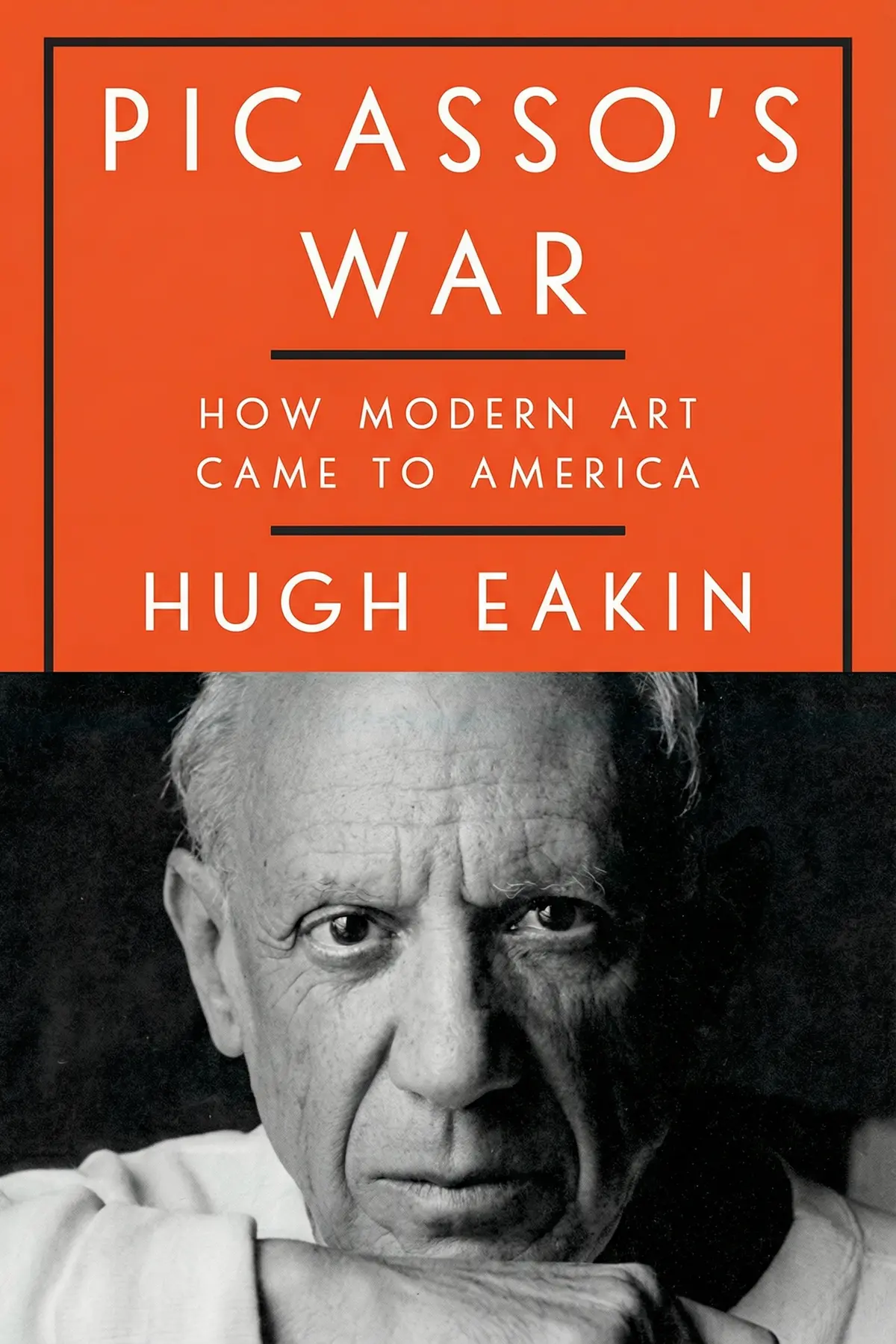
Follows how Picasso and modern art went from being mocked as the work of madmen in America to becoming a national craze. It shows the lawyers, dealers, patrons and curators who made that happen.
1 min 08 sec
Backing an idea that everyone around you mocks can feel hopeless, but the story of modern art in America shows how such ideas actually win. In Picasso’s War, Hugh Eakin, who has served as a senior editor at Foreign Affairs, shows that early twentieth-century Americans treated Picasso and Matisse as a menace. Critics, the press, the public and even mental health professionals described the work as the output of disturbed minds, while buyers still wanted Rembrandt and Velázquez.
Eakin follows the small group who refused to give up: a New York lawyer who spent every dollar on paintings, two rival dealers in Paris, three society women and a young museum director. His story makes one case. America’s taste turned not because the art changed but because a few champions cleared legal barriers, built an institution, explained the work and caught a moment that made it mean freedom. Along the way you get a map of the laws, gatekeepers, presentation and timing that turn ridicule into a national craze.
1 min 38 sec
A respected lawyer walks into a tiny, stove-heated loft and faces a drawing a critic compared to faulty building hardware. He is as baffled as everyone else, but he reacts very differently.
1 min 58 sec
The most famous art show in early American history drew thousands of visitors a day. So why did its organizer decide the real enemy was a line in the tax code rather than the critics?
2 min 01 sec
A young dealer with borrowed money finds a painter in his underwear in a filthy studio and signs him on the spot. A war later tears the partnership apart, and someone else picks up the pieces.
1 min 43 sec
The greatest modern art collection in America ended up scattered across the world, and not one museum in the country wanted it. Three women who watched it happen decided that failure would be the last of its kind.
1 min 39 sec
The paintings were not new and the crowds were not different, yet suddenly the line stretched around the block. A young director changed something so basic that every museum visitor still sees it today.
1 min 41 sec
The same insult American critics once threw at modern art was suddenly being shouted by a dictatorship across the ocean. That echo changed how Americans saw themselves, and it finally loosened the grip of a stubborn gatekeeper.
1 min 39 sec
Twenty-six years after crowds laughed at cubism, Americans flocked to see one of the artists who had pioneered it. The show did not stop at the museum doors, and its real reach showed up years later.
1 min 19 sec
Picasso’s War is finally a story about how the unacceptable becomes normal. The kind of painting a former president dismissed as lunatic in 1913 was decorating shop windows across America by the 1940s. The canvases did not change. Everything around them did: the laws, the institutions, the explanations and the meaning history gave them.
Eakin’s cast works as a guide for anyone championing something unpopular. Quinn shows that early belief matters, and that fighting a stubborn rule can achieve more than arguing with stubborn critics. His scattered estate warns that a private passion needs a lasting home if it is to outlive you. Barr shows that people accept the new once they can see how it grows out of what they already value. The war is a reminder that timing, which no one controls, can finally make the case for you, as long as someone has kept the work ready.
So the next time an idea you believe in gets laughed at, think of the critic who saw a poorly built fire escape in a Picasso drawing. Within a generation, America’s most ambitious young painters were treating that same artist as their starting point.
In the early twentieth century, Americans wanted Rembrandt and Velázquez. Critics, newspapers and even mental health professionals called the cubist canvases and swirling sunflowers coming out of Europe sick, dangerous and a threat to society. A few decades later, Picasso's imagery filled shop windows across the country, and young painters like Jackson Pollock treated him as their starting point. Hugh Eakin tells how that turnaround happened. His story follows the New York lawyer John Quinn, who spent his fortune on modern art and fought to repeal a punishing import tax. It moves to Paris, where two rival dealers, Daniel-Henry Kahnweiler and Paul Rosenberg, shaped Picasso's career and lost and won it in a world war. Then come the three society women who founded the Museum of Modern Art and the young director, Alfred Barr, who changed how museums show and explain art. Readers get a vivid history of how American taste was won, and a clear picture of how any unpopular idea gains acceptance. That picture includes changing the rules, building institutions that last, presenting the new in context, and the timing that finally gives it meaning.
Art lovers and museum-goers curious how Picasso went from scandal to celebrity in America.
History readers who enjoy stories of collectors, dealers and wartime Europe.
Founders and professionals pushing an unpopular idea who want to see how acceptance is really won.
Hugh Eakin has served as a senior editor at Foreign Affairs and has been a regular contributor to the New York Review of Books. He has written widely about art and museums, with pieces in The New Yorker and Vanity Fair. That long engagement with how institutions collect, display and argue over art shapes Picasso's War, his account of how modern art finally found an audience in the United States.
Listeners find the book remarkably educational and meticulously documented, with one review noting that it reveals obscure details. Furthermore, the prose receives high marks, and listeners describe the writing as being very accessible and captivating. The narrative quality is also praised, as one listener points out its fabulous story about the trials and tribulations of modern art.
Picked this up on a whim after a friend recommended it, and I was completely blown away by the narrative drive. It isn't just a dry account of brushstrokes; it’s a high-stakes drama featuring lawyers like John Quinn and visionaries like Alfred Barr. The way Eakin describes the uphill battle to get the American public to even look at modern art without laughing is fascinating. I was surprised to learn that Germany and Russia were actually ahead of us in the early 20th century. The prose is clean and remarkably accessible for such a dense topic. If you love the MoMA, this provides the essential backstory you never knew you needed. It’s easily one of the best non-fiction books I’ve tackled this year. The history of how these paintings survived the era is truly gripping.
Show moreHugh Eakin has written a masterclass in cultural history that reads like a thriller. The truth is, I had no idea that the 'degenerate art' label used by the Nazis was echoed by American critics years earlier. It’s a chilling reminder of how radical Picasso’s work once felt to a world accustomed to traditional salon-style displays. The author brilliantly weaves together the lives of collectors, dealers, and the artists themselves to show how MoMA rose from a fragile idea to a global powerhouse. I particularly appreciated the sections on the Spanish Civil War and the creation of Guernica. It’s informative without ever feeling like a textbook. Every chapter reveals a new layer of the struggle to redefine what beauty means in the modern age. Essential for any art lover.
Show moreFinally got around to this after seeing rave reviews, and it definitely lived up to the hype. The way it tracks the movement of art from war-torn Europe to the United States is nothing short of gripping. I was particularly moved by the account of Picasso’s political awakening during the Spanish Civil War. Watching Guernica evolve from a mural for a pavilion to a global symbol of resistance was a highlight of the book. Eakin has a gift for making the complex maneuvers of art dealers like Paul Rosenberg feel like high-stakes espionage. It’s a stunning achievement that bridges the gap between art history and political history. I couldn't put it down, which is rare for a four-hundred-page nonfiction tome.
Show moreThe level of detail here is staggering, yet the book never feels overwhelming. Eakin focuses on the 'war' for acceptance, highlighting how figures like John Quinn paved the way for the eventual triumph of modernism. I loved the insight into how museums changed their display styles—moving away from the cluttered 'salon style' to the eye-level, sequential storytelling we see today. It makes you realize that even the way we look at art was a hard-fought revolution. The book also doesn't shy away from the darker aspects of the era, including the rise of totalitarianism and its impact on creativity. It’s a dense, rewarding read that I’ll be thinking about every time I walk into a gallery. Truly a gem of historical writing.
Show moreWow, what a revelation this was. Eakin draws a fascinating parallel between Picasso’s cubism and the shifts in physics brought about by Einstein, which really helped me grasp the intellectual weight of the movement. This isn't just a book about paintings; it's a book about a total shift in human perception. The account of Alfred Barr’s nervous breakdown while trying to save modernism from the Nazis was heart-wrenching. It really puts the 'war' in the title into perspective. The writing is elegant, thoughtful, and incredibly well-informed. It’s rare to find a book that handles such complex cultural history with such a light, engaging touch. I learned more here than in a semester of art history classes. Highly recommended for any history buff.
Show moreAs a frequent visitor to the MoMA, I thought I knew the story of modern art, but I was wrong. This book sheds light on the sheer persistence required to bring works like Les Demoiselles d'Avignon to New York. Alfred Barr comes across as such a complex, dedicated figure, fighting against both a skeptical board and his own health issues. The book does a wonderful job connecting the aesthetic shifts in Europe to the political turmoil of the time. My only minor gripe is that it occasionally bogs down in the logistics of art dealing, which can get a bit technical. Still, the research is top-notch and the storytelling is vivid enough to keep you turning pages. It's a deep dive into how culture is curated, sold, and eventually canonized.
Show moreEver wonder how America became the center of the art world? Eakin provides the answer in this meticulously chronicled account of the early 20th-century art scene. He frames the struggle for modernism as a literal battle, pitting forward-thinking individuals against a philistine public. The descriptions of the 1913 Armory Show and its disastrous reception were eye-opening. It’s fascinating to see how long it took for Picasso to be recognized as a genius on this side of the Atlantic. The book manages to be both academic in its depth and cinematic in its execution. I finished it with a much deeper appreciation for the courage it takes to champion something truly new, even if the sheer number of names can be hard to track.
Show moreLook, I usually find art history a bit dry and stuffy, but this was surprisingly readable. It’s a fabulous story about the trials and tribulations of people who risked everything for paintings that most people thought were garbage at the time. The narrative flows smoothly, and the author does a great job of explaining why Picasso’s work was so revolutionary without using too much jargon. I did feel like some of the side characters got a bit more page time than necessary, making the book longer than it needed to be. However, the payoff at the end is worth it. It’s an engaging look at the intersection of money, power, and high art. Definitely worth the time if you're curious about the origins of the MoMA.
Show moreWhile the focus shifts away from Picasso himself at times, the exploration of the American art market is utterly compelling. I was particularly drawn to the tragic figure of John Quinn, whose massive collection was scattered to the winds because America wasn't ready for it. It’s a bittersweet story that makes the eventual success of the MoMA feel even more significant. Eakin’s writing is sharp and he has a great eye for the telling detail. My only complaint is that the title might lead some to expect more of a military history, but the metaphorical 'war' is just as intense. For anyone interested in how the 20th century was shaped, this is essential reading. It's a well-researched journey through the birth of modern taste.
Show moreNot what I expected based on the title, to be fair. I was looking for a straightforward biography of Picasso’s life and personal exploits, but this is much more about the infrastructure of the art world. It focuses heavily on the business side—dealers, lawyers, and museum directors—rather than the man behind the canvas. Also, for a book about visual art, the lack of high-quality illustrations throughout the text was a major letdown. I found myself constantly Googling the paintings being discussed just to follow the narrative. It’s well-researched, sure, but the pacing felt a bit slow in the middle sections. If you want a deep dive into 1920s art market logistics and the death of John Quinn, you’ll love it, but casual fans might find it a bit dry.
Show moreIt tells how modern art, long mocked in the United States as the work of deranged minds, finally won American audiences. Eakin follows lawyer and collector John Quinn, the Paris dealers Daniel-Henry Kahnweiler and Paul Rosenberg, the three women who founded the Museum of Modern Art, and its director Alfred Barr. The story builds to Barr’s 1939 Picasso exhibition, which broke attendance records and toured 22 cities.
Not in the way it is often remembered. Thousands of people came every day, but Eakin shows that many came to laugh. Theodore Roosevelt placed the artists on the lunatic fringe, critics called the work ridiculous and poisonous, and a New York Times opinion piece said the movement aimed to disrupt, degrade, if not destroy society. The show also failed to create a market for modern art.
Quinn was a respected New York lawyer and friend of writers like James Joyce who spent his earnings on modern art. In 1913 he helped organize the Armory Show and lobbied successfully to end a heavy tax on importing recent foreign art. When he died in 1924, his collection of more than 2,500 works was scattered, which pushed three of his friends to found the Museum of Modern Art.
Barr dropped the salon style of stacking paintings from floor to ceiling. Instead he hung each work at eye level on white walls with space around it. He also added texts and booklets explaining where the art fit in history, and the small labels beside paintings today began as his idea. His Van Gogh show used only quotations from the painter’s letters to his brother Theo.
The book shows that unpopular ideas rarely win on merit alone. Quinn changed a law that blocked the market, the museum’s founders gave a private passion a permanent home, Barr explained the new by linking it to the familiar, and the Second World War gave modern art a new meaning as a symbol of freedom. Anyone championing something new can look for the same levers.
Tom Standage

Ishmael Beah




William J. Bernstein

Ben Macintyre


Charles C. Mann
AUDIO SUMMARY AVAILABLE
Get the key ideas from Picasso’s War by Hugh Eakin, plus 5,000+ more nonfiction titles.









