
A Little History of Philosophy
Nigel Warburton
 English
Shows how Stoic, Epicurean, Pythagorean and Aristotelian exercises, the roots of Cognitive Behavioral Therapy, can help you handle setbacks, enjoy the present and build character through daily practice.
1 min 06 sec
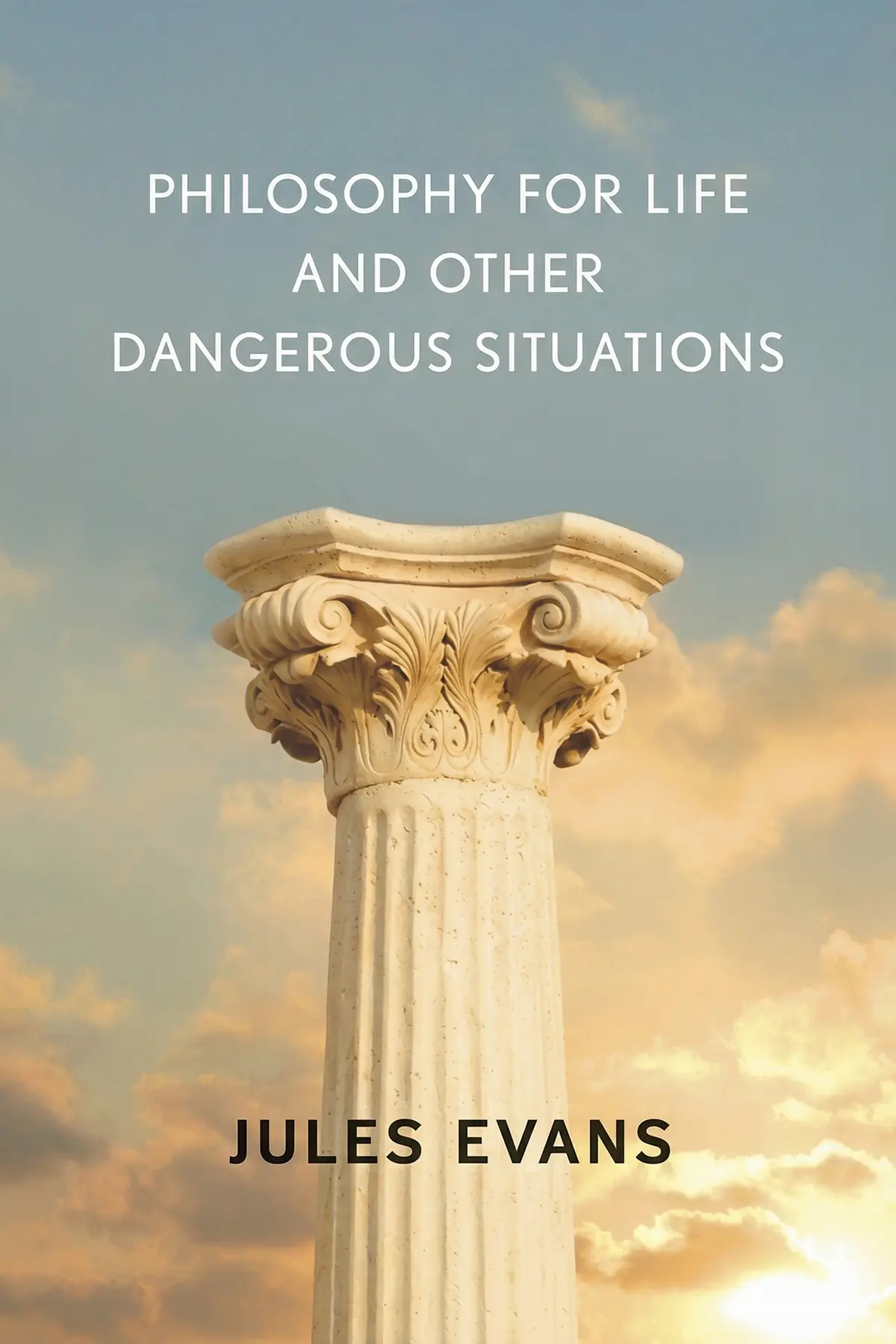
If a bad review or a failed exam can spoil your whole week, Jules Evans has some very old training to offer. In Philosophy for Life, he shows that Cognitive Behavioral Therapy, a modern and science-based treatment, grew out of the teachings of Greek and Roman philosophers, above all the Stoics. Both start from the same insight. Our feelings follow the beliefs we hold about events, so changing a belief can change a feeling.
Then Evans goes beyond therapy. The ancient schools saw philosophy as a discipline for a whole life, practiced every day. They had exercises for hard times, for enjoying ordinary moments and for living well with others. The Stoics kept evening journals and the Epicureans savored the present. The Pythagoreans pictured the Earth from far above, and Plutarch studied great lives. Still, Evans insists that the final choice of how to live belongs to each person. What follows is a set of practical exercises, several of which modern therapy draws on, that you can begin tonight.
1 min 49 sec
A failed driving test can leave one person shrugging and another feeling worthless. A Roman teacher and a modern therapist both found the cause in the same place, and it is somewhere we can actually reach.
1 min 47 sec
A course of modern therapy usually ends after a few months. The ancient schools never ended at all, and that single difference changed what they hoped philosophy could do for a person and for a whole society.
1 min 52 sec
Slaves and emperors alike turned to the same philosophy when life went badly. Its main rule sounds simple, but it asks you to look honestly at an expectation you may not know you hold.
1 min 45 sec
The thinker whose name now stands for luxury actually argued for something much plainer, and much harder to put off. His case for pleasure ends with a demand most of us keep ignoring.
1 min 49 sec
Long before anyone photographed the Earth from space, one ancient group practiced looking at their lives from that height. Modern therapists now use the same mental move, along with a habit of repeating a few chosen words.
1 min 42 sec
After watching a grown-up strike a doll, children tended to strike it too, and later versions of the experiment run on adults showed a similar pattern. A Roman writer saw a way to use that weakness, and a young prisoner proved him right.
2 min 00 sec
Governments now spend fortunes teaching citizens to be resilient and happy. Aristotle would have approved of the aim, yet Evans warns that one committee’s choice of members shows how easily the project can go too far.
1 min 10 sec
Evans’s case is that philosophy was never meant to stay in a library. The Greeks and Romans used it the way an athlete uses a training plan, and therapists rediscovered their exercises because they work on ordinary people with ordinary troubles. The ancients bring scope to modern therapy. CBT can help someone recover from a bad season; philosophy asks what a whole life is for and how a society should be built so that people can flourish in it.
You can start small, and you can start tonight. Write a few lines before bed about how you behaved today, and read them again in the morning. When something goes wrong, separate what you can control from what you cannot, and check the belief you attached to the event. When a setback looks enormous, picture it from far above. And spend more time with people, living or long dead, whose character you would like to share.
None of this can be handed over to a government, a therapist or a book. It is a choice you make again every day. Seen from far enough away, a life is a flash of light in the dark, and the ancients leave each of us to decide what ours will light up.
Self-help shelves promise happiness and success, but the Greeks and Romans were working on those same questions long ago. Jules Evans argues that their answers still work. Some of them now sit inside Cognitive Behavioral Therapy, whose founders drew on the Stoic idea that our feelings come from our beliefs about events, not from the events themselves. Evans goes school by school. The Stoics separate what we control from what we don't and review their behavior every night. The Epicureans choose lasting pleasures and live in the present. The Pythagoreans shrink their worries by picturing life from far above. Plutarch teaches through the lives of admirable people, and Aristotle shows how emotions become virtues through habit and a well-ordered society. The ancient schools asked more of philosophy than therapy does. They saw it as daily training for a whole life, with questions about society and the universe built in. Evans ends by asking how far governments should go in promoting well-being, and he argues that choosing a good life is finally each person's own job. Readers come away with a set of tested exercises they can start using right away.
People who get thrown by setbacks and want practical mental exercises with a long history.
Readers who are curious about CBT and want to know where its ideas came from.
Anyone drawn to Stoicism or Epicureanism who wants a clear tour of several schools at once.
Jules Evans held a research fellowship at the Centre for the History of the Emotions at Queen Mary University of London. Philosophy for Life, the first of four books he has written or co-written, was a Times book of the year in 2013. He was named a BBC New Generation Thinker for 2013 and has written for the New York Times, the Financial Times and The Spectator. He also founded an NGO that supports people who struggle after psychedelic experiences.

Listeners value how this work clarifies different philosophical theories and their practical use in daily routines, as one listener observes that it acts as a superior guide to identifying the right questions. The prose is straightforward and easy to digest, ensuring the narrative remains both interesting and delightful. Listeners feel the information is all-encompassing and works well as a memory-jogger, with one listener praising its thoughtful responses to life struggles. They respect the author's honesty, with one listener highlighting how he wears his erudition lightly, and several listeners emphasize that the book can change one's life.
Rarely does a book manage to balance high-level intellectual history with such gut-punching personal honesty. Jules Evans has created something truly life-changing here. Instead of hiding behind academic jargon, he demonstrates how the Socratic tradition saved him from his own psychological crisis. The way he connects ancient Stoic practices to modern CBT is brilliant and incredibly user-friendly. I found the 'morning roll call' section especially helpful for my own daily routine. It’s not just an engaging read; it’s a practical survival manual for the modern world. If you feel lost, this is an excellent guide to the right questions.
Show moreEver wonder how a Greek slave or a Roman politician could help you navigate 21st-century anxiety? This book provides the answer with incredible integrity and warmth. Jules Evans walks us through the 'School of Athens' with a focus on therapeutic application that I haven't seen elsewhere. The writing is punchy and entertaining. I was particularly moved by the stories of people using these techniques to overcome trauma, like the military personnel applying Stoic resilience. It’s a thoughtful response to life struggles that feels both ancient and remarkably fresh. This book didn't just teach me about philosophy; it changed how I view my own mind. Essential reading.
Show moreThis book is essentially a roadmap for anyone who feels like they’re just going through the motions without a compass. I loved how Evans integrated his own near-death experience into the narrative toward the end. It gave the whole project a sense of urgency and authenticity that most philosophy books lack. The connection between ancient wisdom and modern psychology is explored with such clarity. I’ve started using the evening journaling techniques mentioned in the Stoic chapters, and the difference in my mental clarity is night and day. It’s an excellent guide to flourishing in a world that often feels designed to make us miserable. Truly life-changing stuff.
Show moreWow. Just... wow. This is the first time I’ve felt like philosophy wasn’t just a puzzle for old men in ivory towers. Evans writes with such integrity. He doesn’t hide behind academic jargon. Instead, he tells stories about real people using these techniques to survive depression or battlefield trauma. The section on the Stoics alone is worth the price of admission. It changed my morning routine completely. I finally feel equipped to handle whatever the day throws at me. This book is a masterpiece of accessible wisdom. Everyone should read it.
Show morePicked this up after hitting a bit of a rough patch, and I wasn't disappointed by the practical focus. Evans offers a 'philosophy buffet' that lets you sample everything from Epicureanism to the Skeptics. Personally, I found the chapter on Seneca's approach to managing expectations to be a revelation. Truth is, some of the sections on the Cynics felt a bit rushed compared to the deep dive into Stoicism. However, the author wears his erudition lightly, making the whole experience feel like a conversation rather than a lecture. It’s a solid refresher for anyone who wants to actually live their philosophy rather than just talk about it.
Show moreAfter hearing so much about the modern Stoicism movement, I decided to give this a go. It’s a fantastic introduction. Evans does a great job of showing how the ABC model of emotions is rooted in the teachings of Epictetus. Not gonna lie, the section on 'macho' Stoicism and military training was a bit much for me at times, but the author does eventually address the need for compassion. It’s a very comprehensive guide. I appreciated the inclusion of the less famous schools, like the Pythagoreans and their use of mantras. While it's a bit fast-paced, it served as a perfect gateway for me to start reading the original philosophers.
Show moreFrankly, I was most impressed by how Evans connects the dots between the Stoics and modern Cognitive Behavioral Therapy. It’s a user-friendly manual for anyone dealing with stress or anger. The sentence lengths are short and the chapters move fast, making it a very entertaining read. I did think the critique of 'Positive Psychology' was a bit harsh, though he made some fair points about its lack of empirical depth. Overall, it’s a very thoughtful response to everyday struggles. It provides a great toolkit for anyone looking to build a more resilient character. Definitely worth your time.
Show moreAs a student of psychology, I found the exploration of the ABC model and its roots in Epictetus absolutely fascinating. Evans wears his erudition lightly, making complex ideas from Plutarch and Aristotle feel like common sense. In my experience, most books on the 'art of living' are either too dry or too fluffy, but this hits the sweet spot. I will admit, the shift toward more mystical themes near the end felt a bit jarring compared to the earlier rationalism. But overall, it is a comprehensive guide for anyone asking the right questions. It’s an engaging, life-affirming book that I’ve already recommended to several friends.
Show moreThe truth is, Jules Evans writes with an infectious enthusiasm that makes even the most obscure Cynic or Sceptic feel relevant today. However, I struggled with the structure of the 'Philosophy Buffet.' By trying to cover twelve different schools in one volume, some of the more complex ideas from Plato and Aristotle felt oversimplified. Got to say, the writing style is very accessible, which is a plus. But I often felt like the author was jumping to conclusions about how these ideas should be applied. It’s an engaging read, but I’d recommend taking some of the 'life advice' with a grain of salt. It’s a bit too self-help adjacent for my taste.
Show moreLook, I understand why this is popular, but if you're looking for deep, scholarly analysis, you might want to look elsewhere. Evans is clearly an enthusiast, but his 'populist' approach often feels like a series of blog posts stitched together. He leans heavily on military anecdotes, like James Stockdale's survival in Vietnam, which are inspiring but don't always translate to civilian life. To be fair, it's accessible. But the exploration of these ancient schools remains shallow and occasionally misinterprets the original texts in favor of modern psychological labels. It’s essentially 'Philosophy Lite' for the TED Talk generation. If you want the real Seneca, just read the original letters.
Show moreEvans argues that Greek and Roman philosophy is a practical, daily discipline for living well, and that its methods survive in Cognitive Behavioral Therapy. He goes through the Stoics, Epicureans, Pythagoreans, Plutarch and Aristotle, and draws a usable exercise from each. He also explores how governments apply well-being science, and argues that choosing a good life is finally each person’s own responsibility.
Evans explains that Albert Ellis, a founder of CBT, was inspired by Epictetus’s teaching that people are troubled by their opinions about events rather than by the events themselves. Ellis built his ABC model on it: an activating event, a belief that interprets it, and emotional consequences. In both CBT and Stoicism, changing the belief changes the emotion.
Keep a journal and write in it each evening about how you behaved, then review it the next morning. Focus on what you control and accept the rest. Savor the present as if each moment could be your last. Picture your troubles from far above the Earth. Spend time with admirable people and read biographies of great lives, so imitation works in your favor.
A course of CBT usually lasts around 16 weeks and avoids politics. Ancient philosophy was practiced every day for a lifetime and aimed at complete personal transformation. It also asked about the good society, the divine and our place in the universe. Plato proposed philosopher-kings, and Aristotle wanted everyone to think about what makes a society fair and prosperous.
Nigel Warburton

John Rawls


Richard Wiseman





William B. Irvine
AUDIO SUMMARY AVAILABLE
Get the key ideas from Philosophy for Life by Jules Evans, plus 5,000+ more nonfiction titles.









