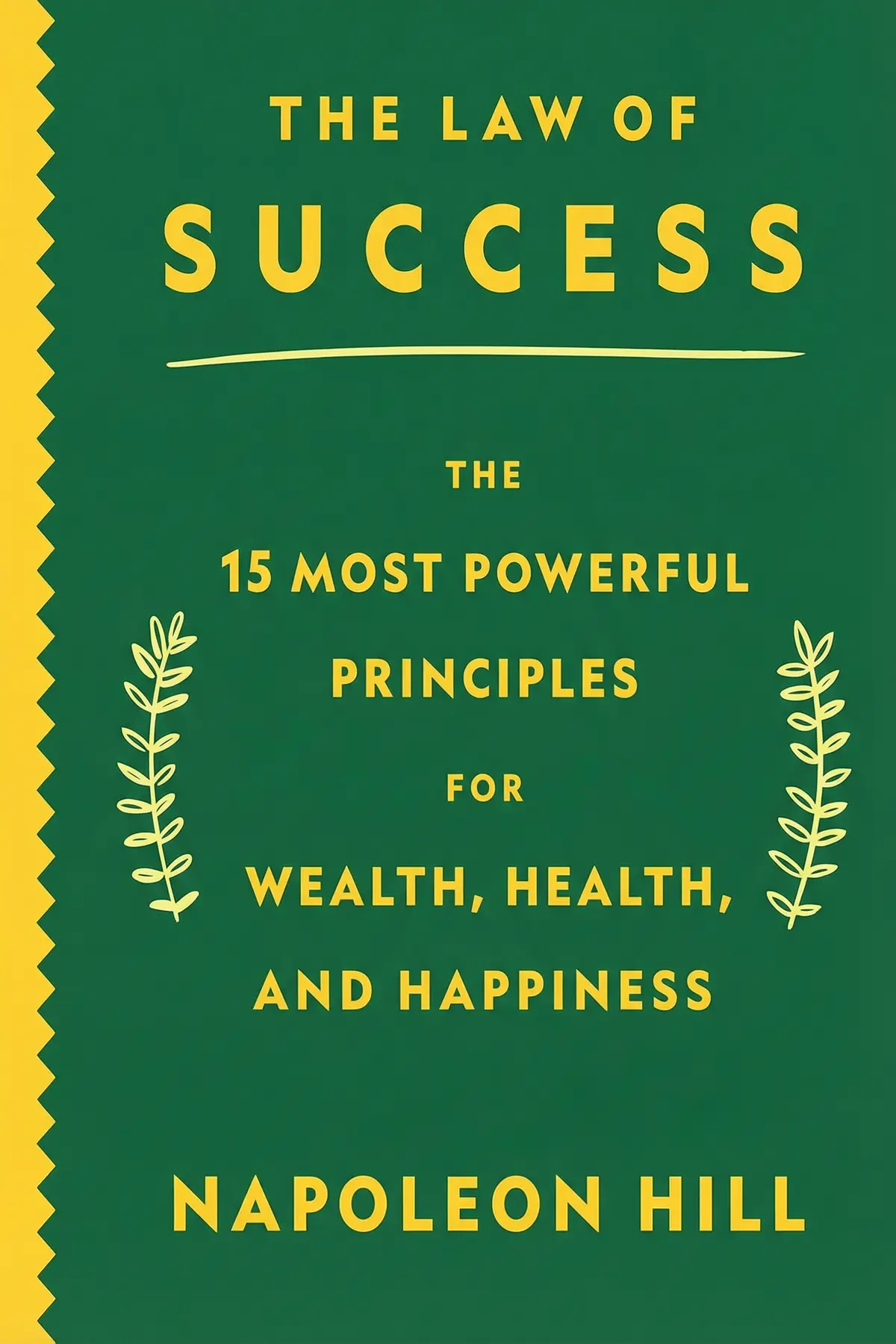
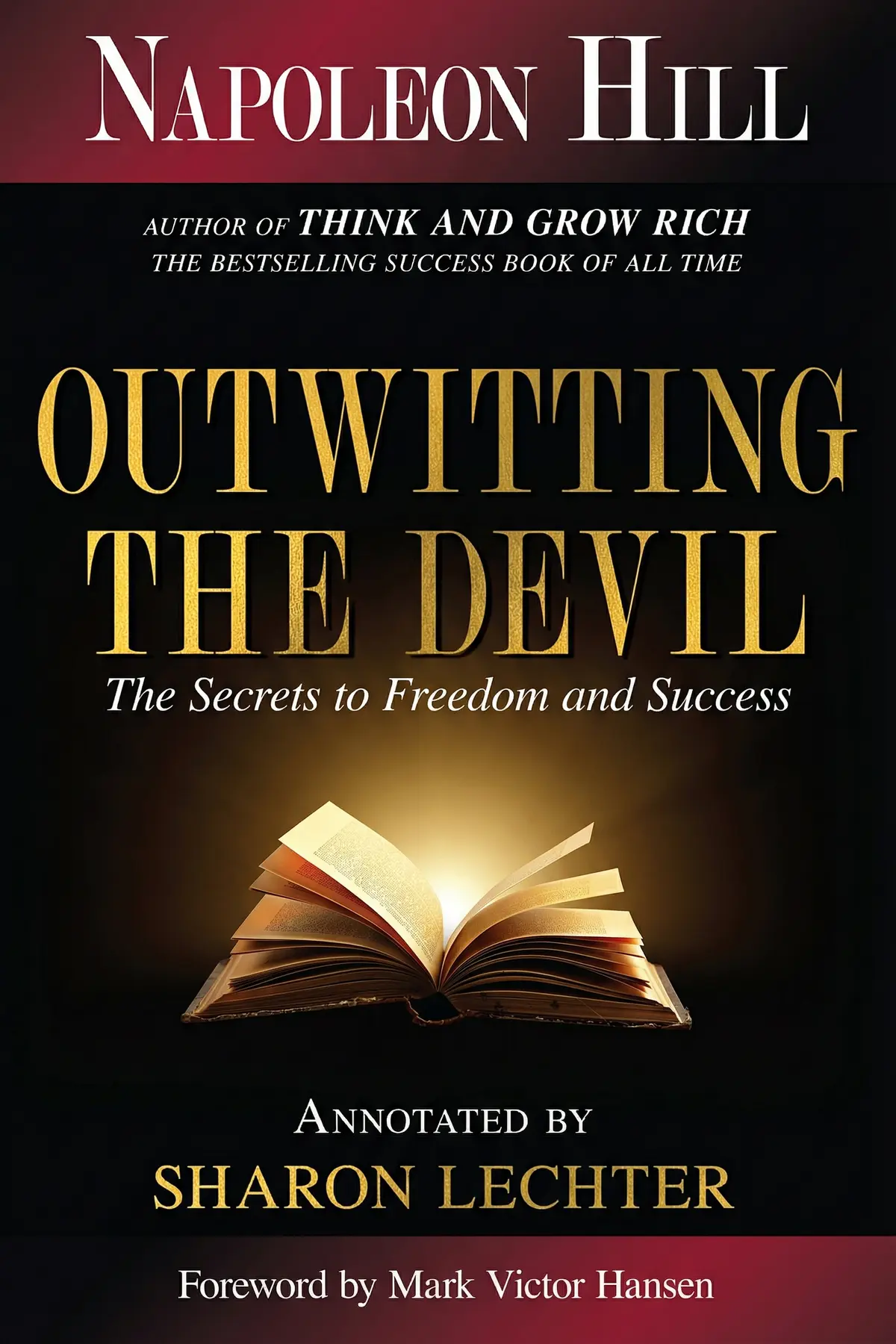
The Law of Success
Napoleon Hill
 English
 ไทย
Napoleon Hill argues that fear, absorbed in childhood, keeps most people drifting. He shows how a clear goal, positive thinking, better habits and company, and a new view of failure put you back in control.
1 min 01 sec
If a dream has sat on a shelf for years while you waited to feel ready, Napoleon Hill would say fear is holding it there, and talent has little to do with it. In Outwitting the Devil, written in 1938 and kept unpublished until 2011, Hill claims that 98 percent of people let fear run their minds and so drift through life without choosing a direction. The book waited seven decades partly because Hill accused churches and schools of teaching that fear and crushing individuality.
One argument runs through all of it. Success, Hill says, belongs to people who take control of their own thoughts. They replace fear with faith, fix on one clear goal, guard their habits and company, and treat every failure as temporary. Henry Ford, Franklin D. Roosevelt and Thomas Edison all appear as evidence. So does a jockey who refused to accept no from horse owners. Each of them gives you a check to run on your own thinking this week.
1 min 41 sec
A writer stalled for years on his life’s work, buried in notes that led nowhere. What finally moved him came from inside, and Hill believes everyone carries the same thing.
1 min 52 sec
The Great Depression flattened millions of hopes, yet a carmaker and a new president used the same gloom as a starting line. Hill says the difference came down to one decision each of them made.
1 min 38 sec
A drink once a month is harmless. A drink every day is something else, and Hill has a name for the moment one becomes the other. His defense starts with the people you spend time with.
1 min 41 sec
Horse owners turned one young rider away again and again, and the answer never seemed likely to change. Her reply was three words long, and it carried her further than anyone expected.
1 min 05 sec
Hill’s book is finally about who holds the controls. In his view, fear is planted early and does its best work when nobody notices it. That is why so many people drift for decades while believing they are simply being sensible. Every case he gives shows a person deciding which inner voice to obey, from Ford’s assembly line to Krone’s repeated return to the horse owners. Each of them then held that decision long enough for the results to show.
That gives you a short practice for the coming days. When you hesitate over something you want, name the fear plainly and ask whether it would survive a closer look. Put your main goal into one sentence and keep it where you will see it each morning. Look hard at one habit that has slipped from occasional to daily, and notice whose moods you are taking on. And when the next refusal comes, treat it as temporary, the way Krone did.
Hill’s answer to the fear that keeps most people drifting fits into Krone’s three words: keep showing up.
Many people carry a dream for years and never act on it. Napoleon Hill believed the reason was fear. He estimated that 98 percent of people let it steer their minds and so drift through life without choosing a direction. He wrote this book in 1938, but it stayed unpublished until 2011, partly because he blamed churches and schools for planting that fear and discouraging individuality. Hill's answer is to become a non-drifter, someone who masters their own mind. He tells how an inner voice pulled him out of his own fog of doubt. He then builds his case through Henry Ford and Franklin D. Roosevelt during the Great Depression, through Thomas Edison's long run of failures, and through jockey Julie Krone, who kept returning to horse owners who had turned her away. Readers get a simple frame for running their own lives on purpose. Hill asks you to choose positive thoughts, name one definite goal and watch for habits that lock in. He also asks you to pick your company with care and to treat every setback as a temporary state.
People who have put off a long-held dream and suspect fear is the reason.
Young professionals and career changers who want a simple frame for setting one clear goal.
Anyone worn down by bad habits or by negative friends and colleagues.
Napoleon Hill (1883 to 1970) was an American self-help author, born in Virginia, who began writing for small town newspapers at age 13. His best known book, Think and Grow Rich (1937), is widely ranked among the top sellers in the self-help genre, and he also wrote The Law of Success. Hill remains a controversial figure. Historians doubt some of his claims, including that he met Andrew Carnegie.
Napoleon Hill
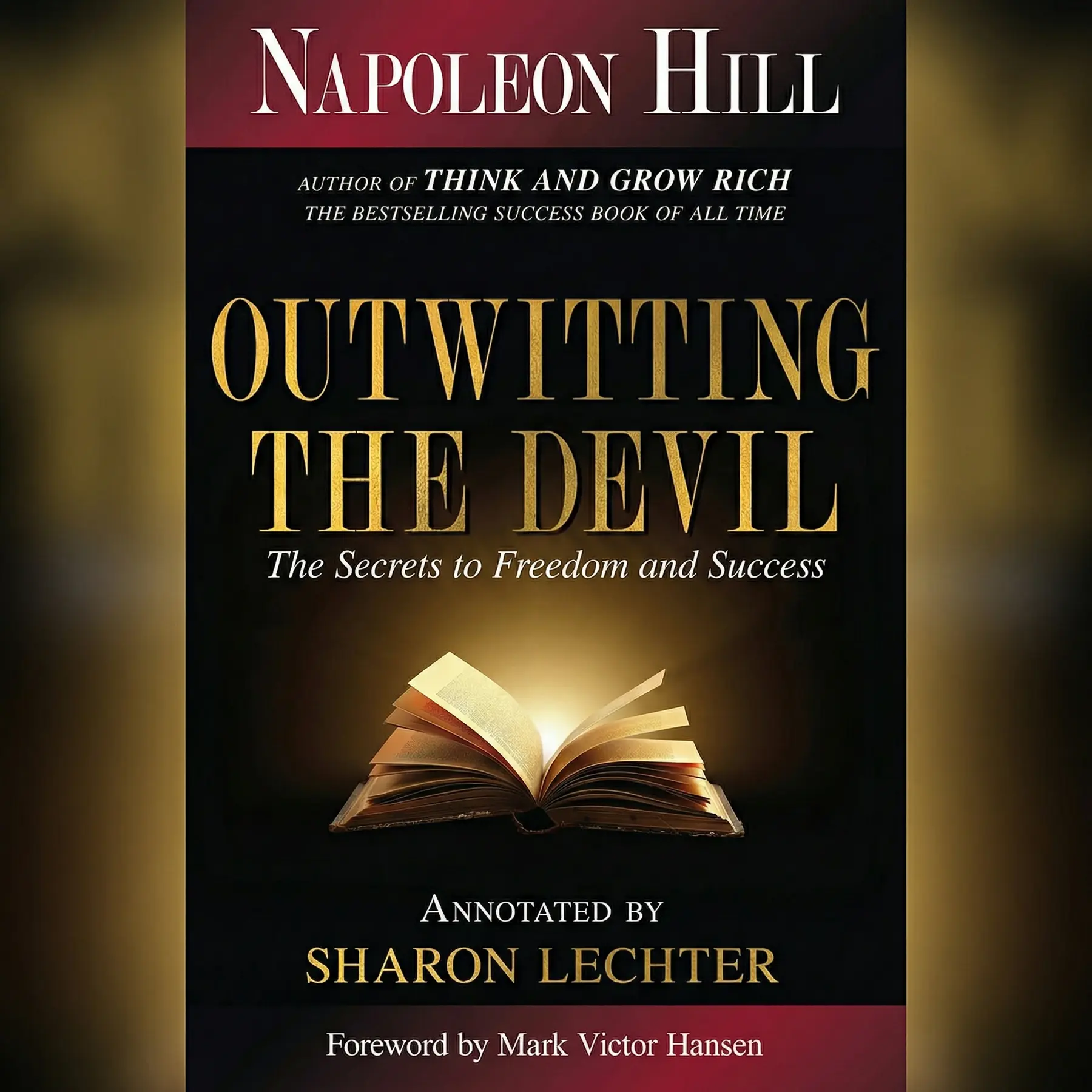
Listeners find this work to be an essential and accessible read, featuring stimulating material that explores the depths of thoughts and actions. They value the original 1938 writing style and view it as modernly relevant, with one listener noting how it changed their perspective on fear. The storytelling is highly regarded, with one review describing it as a psychological thriller about the hearts of mankind. Opinions on the annotations are split; some find the information good while others find them unhelpful.
Finally got around to reading this classic and it’s genuinely eerie how relevant it remains today. Hill’s 'interview' with the Devil dives deep into the psychology of fear and why so many of us feel stuck in a rut. I loved the distinction between 'drifters' and 'non-drifters,' as it forced me to confront my own lack of definiteness. The writing style reflects that 1938 era, but the advice on overcoming mental roadblocks is timeless. Some parts are a bit repetitive, yet the overall message about self-mastery is incredibly empowering. It’s more of a psychological thriller for your soul than a standard self-help guide.
Show moreWow, this was a wild ride from start to finish. I wasn't expecting a self-help book to read like a high-stakes interrogation, but Hill pulls it off perfectly. The way he breaks down the six major fears—especially the fear of criticism and poverty—really helped me identify why I’ve been holding myself back lately. It’s a dense read that requires you to slow down and reflect on your own choices. If you’re going through a period of adversity, this book offers a unique perspective on how to turn failure into a seed of success. Truly a must-read for anyone serious about personal growth.
Show moreAs someone who has struggled with procrastination, Hill's concept of 'drifting' hit home in a way I didn't expect. This book isn't just about making money; it's about the fundamental battle for control over your own thoughts and actions. The Devil explains how he uses simple things like bad habits and negative associations to keep people in a state of 'hypnotic rhythm' where they never reach their potential. It’s a chilling reminder of how easy it is to sleepwalk through life. I finished this feeling more alert and determined to take charge of my daily routine. A definite game-changer for my mindset.
Show moreThis book feels like a secret manual for life that was buried for decades for a reason. Hill is much more aggressive here than in Think and Grow Rich, and I think that’s why I liked it more. He doesn't sugarcoat the fact that most people are failing because they lack the courage to think independently. The section on how adversity contains the 'seed of an equivalent advantage' is something I will keep returning to. It changes the way you look at failure entirely. It's a bold, uncompromising work that challenges you to be part of the 2% who actually lead.
Show moreDon't let the title scare you off or make you think this is some weird religious text. It's essentially a masterclass in psychology and habit formation disguised as a dramatic dialogue. The Devil's 'confessions' about how he traps people through their own lack of caution and self-control are eye-opening. Personally, I found the advice on parenting and teaching kids to make firm decisions to be some of the most interesting parts. It's a quick read but one that sticks with you long after you close the cover. If you want to stop being a victim of circumstance, pick this up.
Show moreIt is absolutely mind-blowing how a manuscript from 1938 can feel more relevant to the 21st century than most modern self-help. Hill discusses how the world is designed to make us lose our individuality, and his solution is a ruthless dedication to self-discipline and faith. The 'hypnotic rhythm' concept is a brilliant metaphor for the momentum of our choices. While the tone is definitely egotistical at times, the wisdom is undeniable. This is the kind of book you read once, then immediately want to read again to catch all the nuances you missed the first time.
Show moreThe interview format is a genius way to explore the subconscious mind and the various ways we sabotage our own success. Napoleon Hill frames the Devil not as a red-horned beast, but as the negative force living within our own doubts and hesitations. I found the concept of 'hypnotic rhythm' to be a fascinating explanation for how habits become ingrained in our lives. My only real gripe is the heavy-handed annotations from Sharon Lechter; they often broke the immersion and felt unnecessary. Truth be told, the original text is strong enough to stand on its own without someone explaining it every few pages.
Show moreWhether you believe the Devil actually spoke to Hill or it’s just a clever literary device, the message holds up remarkably well in the modern era. The book identifies how societal structures, from schools to religions, often inadvertently teach people to stop thinking for themselves. Frankly, it’s a bit scary how accurate his descriptions of 'drifters' are when you look at social media today. I found the advice on definiteness of purpose and mastery over self to be very practical, though the middle sections drag a bit. It’s a deep dive into the human heart that requires an open mind to appreciate.
Show moreThe core content is quite provocative, but Sharon Lechter’s constant interjections really ruined the narrative flow for me. Every time I got sucked into Hill's dialogue with the 'Devil,' an annotation would pop up and state the obvious or repeat what I just read. Look, the 1938 manuscript is fascinating on its own; it doesn't need to be modernized to be understood. I found the 'laws of nature' and the discussion on public education to be very insightful, even if a bit cynical. It’s worth a read for Hill’s original thoughts, but be prepared for a choppy experience if you get the annotated version.
Show moreI'm probably in the minority here, but I couldn't stand this book's pseudo-scientific ramblings and egotistical tone. Hill claims to be revealing the secrets of the universe through a conversation with a literal or metaphorical devil, but it feels like he's just venting his personal biases. The 'hypnotic rhythm' stuff sounds like nonsense meant to sound profound without offering any scientific backing. To be fair, I know Hill has a huge following, but his claims about being a 'non-drifter' while the other 98% of the world are 'drifters' felt incredibly condescending. It's too dramatic and cheesy for my taste, and I think there are better ways to learn about discipline than this.
Show moreNapoleon Hill argues that most people, by his estimate 98 percent, let fear control their minds and drift through life without direction. He blames churches and schools for instilling that fear. His cure is to become a non-drifter, someone who masters their own thinking, by choosing positive thoughts, setting one definite goal, guarding their habits and company, and treating failure as temporary.
A drifter, in Hill’s terms, is someone who lets fear decide for them, so they never think for themselves or follow their own desires. A non-drifter knows that success depends on mastering your own mind. Hill says he was drifting himself, stuck on his manuscript, until an inner voice told him he could finish it if he stopped giving in to fear and doubt.
Hill uses the term for the point where a habit locks in and becomes a fixed way of life, such as drinking that moves from monthly to daily. The law applies to good and bad habits alike. Hill warns that bad ones can quickly derail your goals. He advises surrounding yourself with people whose habits are positive, because the habits of those around you tend to rub off.
Start by asking whether your hesitation over a goal rests on a fact or on fear. Write your main goal in a single sentence and measure your week against it. Watch for habits that have become routine without your choosing, and move away from people whose dark moods pull you down. When a setback comes, treat it as temporary, as jockey Julie Krone did.
Hill wrote the book in 1938, but it waited about 70 years for publication because of its controversial views on churches and schools. Hill believed both institutions discouraged individuality and kept people trapped in fear. In his account, churches teach children to dread the Devil, and schools focus on memorizing facts rather than preparing students to act as individuals.

Richard Wiseman





William B. Irvine


Andrew D. Thompson


Deepak Chopra
AUDIO SUMMARY AVAILABLE
Get the key ideas from Outwitting the Devil by Napoleon Hill, plus 5,000+ more nonfiction titles.