
14 min 21 sec
Available in: English
 ไทย
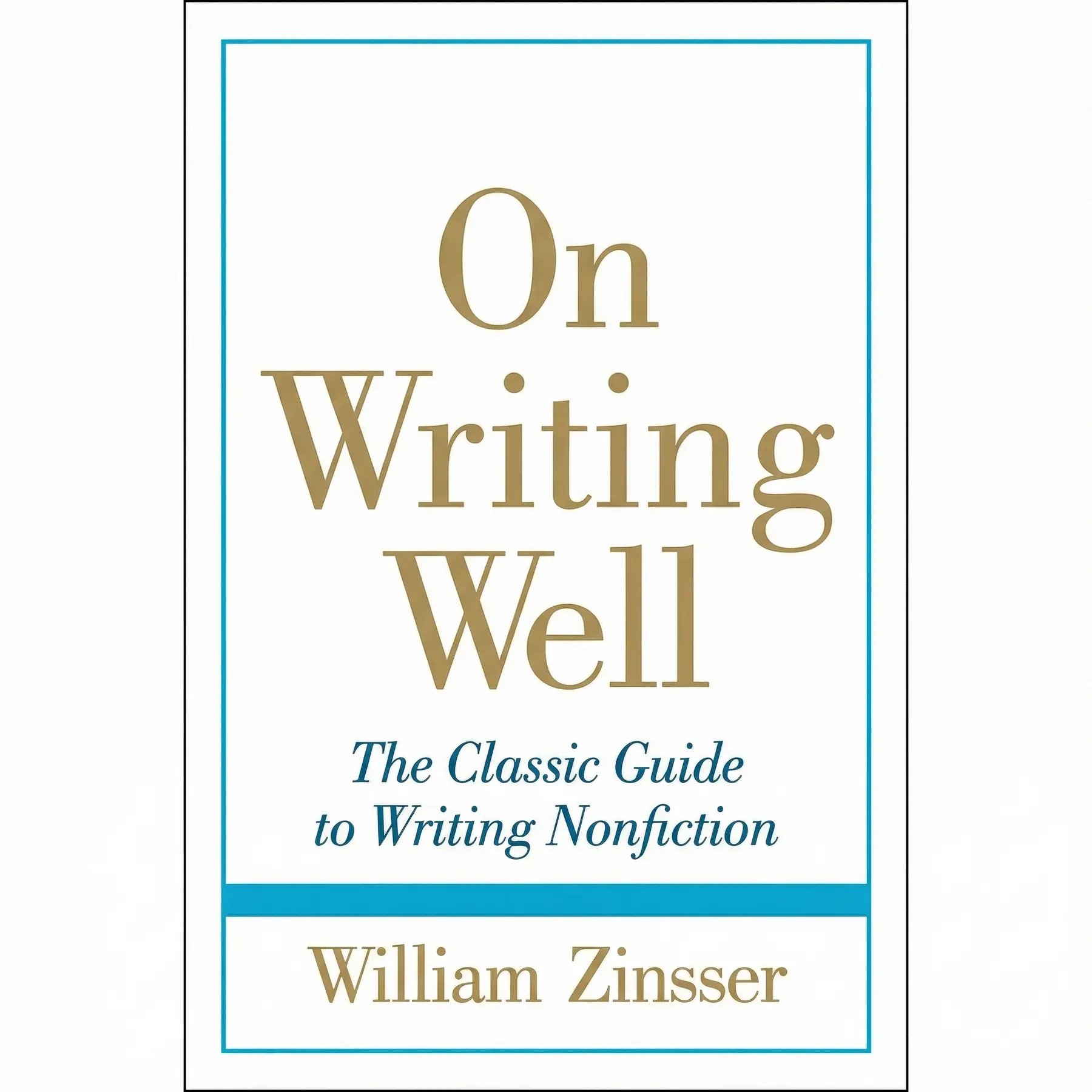
EnglishไทยOn Writing Well: The Classic Guide to Writing Nonfiction
Shows how to write clear, engaging nonfiction by thinking before you type, cutting clutter, choosing precise words, keeping one consistent voice, opening strongly and learning to enjoy the work instead of fearing the page.
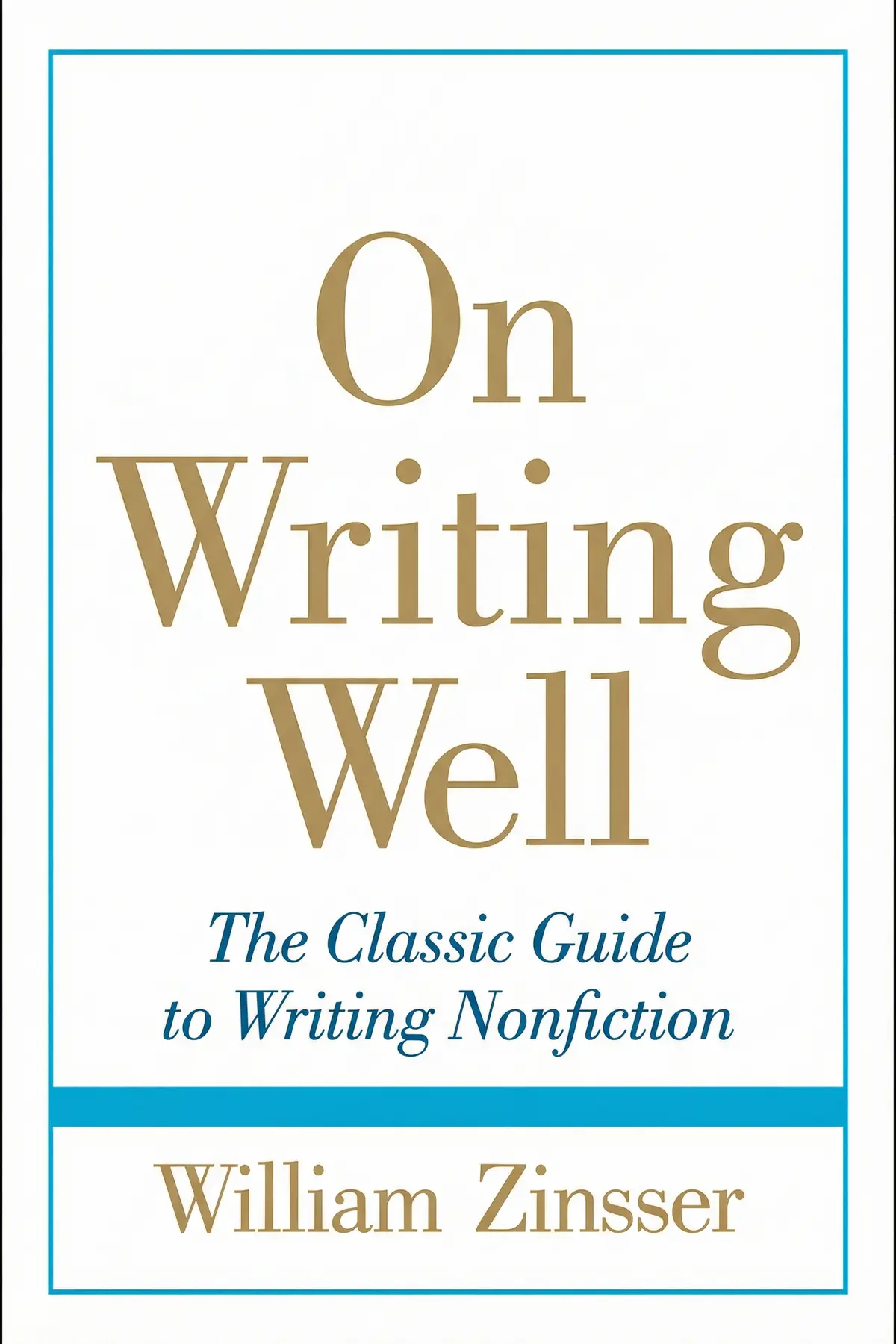
Table of Content
1. Introduction
51 sec
Most people who dread writing assume good prose needs a bigger vocabulary, when the opposite is true: the more you strip away, the better it reads. That is the opening claim of On Writing Well, the nonfiction guide by William Zinsser, a former newspaper writer and critic who taught writing at Yale. His case is that good writing is clear thinking with the clutter removed, delivered in your own voice and kept alive by learning to enjoy the work.
The ideas move outward from the single word to the sentence, then to the whole piece and finally to the writer’s own head. Along the way come words to delete on sight, verbs that carry a sentence alone, a lead that holds readers and a sense of when to stop. Each one can be tried on the next email, report or essay you write.
2. Cut the clutter that hides what you mean
1 min 37 sec
Most beginners try to sound impressive, and their sentences sink under the weight. The real fix starts before a single word is typed, and it leaves a writer with no place to hide a weak idea.
3. Choose words the way a craftsperson chooses tools
1 min 41 sec
A thesaurus can make your writing worse, and a newly coined word can make it better. One simple test separates the words that earn their place from the ones that just sound fashionable.
4. Give your sentences strong verbs and fewer adverbs
1 min 58 sec
The romantic image of the inspired writer in a Paris cafe hides what the work actually involves. A handful of small words, removed one by one, can change how forceful every sentence feels.
5. Find a voice that sounds like you
1 min 40 sec
Style tempts every writer, but it collapses without something solid underneath. The route to a voice that sounds like you runs through a few awkward paragraphs and one small grammatical choice.
6. Keep one reader, one tone and one point
1 min 44 sec
A travel piece about Italy with great material still falls apart, and the reason has nothing to do with the material. A few decisions made before writing keep a whole piece pointing one way.
7. Open and close strongly to keep readers going
1 min 50 sec
A dating profile can fail because of one purple hat, and an article can fail because of one limp sentence. Two lines about hot dogs show what an opening has to do.
8. Enjoy the work and your writing improves
1 min 52 sec
School taught many people to dread the blank page, and daydreams of the finished book keep the real one in a drawer. A Wyoming farm story shows what changes when the writer lets go.
9. Conclusion
1 min 08 sec
Zinsser’s advice, followed all the way down, comes to one habit of respect: never make readers work harder than the idea demands. Each deleted word, each precise verb, each consistent tone and each well-timed ending spares them effort. And once the clutter is gone, the voice left behind turns out to be the writer’s own.
The same test can overturn rules from school. Many people were taught never to start a sentence with but. Zinsser says to drop that rule, because a but or a yet signals that the direction is about to change, which helps readers follow.
The practice this supports can start with the next thing you write. Note in one line what you are trying to say and who it is for. Draft without stopping until your voice loosens, then rewrite with a single aim, removing adverbs, empty qualifiers and any phrase you have heard a hundred times. Make sure the opening offers the reader something, and stop once the work is done.
Anyone can write well, in Zinsser’s view, and the proof usually sits inside a cluttered first draft, waiting for someone to take things away.
About this book
What is this book about?
Many people freeze in front of a blank page. Others write sentences so padded with long words and qualifiers that readers give up. William Zinsser's classic guide argues that the cure is simplicity, and that simplicity starts in the head: you cannot write clearly about something you have not thought through. From there, Zinsser works outward. He shows how to strip clutter from a sentence and choose words as carefully as a craftsperson chooses tools. He favors strong verbs over adverbs and weak adjectives, and he wants tone, audience and point kept consistent across a whole piece. He explains what a good lead must do, using the opening of his own article about hot dogs, and why the best ending is often simply stopping. The book also takes on the writer's mind. Zinsser traces much of the fear of writing back to school. He argues that enjoyment, curiosity and a willingness to let a first idea change are what turn competent prose into work that moves readers. The result is a practical guide for anyone who writes emails, reports, articles or books.
Book Information
Who it's for
Writing stiff work emails
Professionals whose emails, memos and reports come out long, stiff and full of jargon.
Bloggers, students, new freelancers
Bloggers, students and new freelancers who freeze at the blank page or keep drafts in a drawer.
Wanting a clear voice
Anyone writing a first article or book who wants a clear voice and a strong opening.
About the Author
William Zinsser
William Zinsser (1922 to 2015) began his career in 1946 at the New York Herald Tribune as a writer, editor and critic. He left in 1959 to freelance for magazines and wrote a column for Life from 1968 to 1972. In the 1970s he taught nonfiction writing at Yale, and he went on to teach at The New School and Columbia. On Writing Well, first published in 1976, has sold an estimated 1.5 million copies. He also wrote about music, baseball and American travel, and he was a jazz pianist and songwriter.
Ratings & Reviews
Ratings at a glance
What people think
Listeners find this writing manual beautifully composed and a pleasure to experience, with clear prose that simplifies academic writing. The work is praised as an essential resource for writers of any ability, providing a wealth of helpful hints and solid fundamentals. Listeners appreciate the author's command of the English language and find the book entertaining, with one listener noting its detailed views on literature.
Top reviews
Sue
Finally sat down with this staple of the writing world, and I can see why it’s survived sixty-plus editions. Zinsser’s central thesis about eliminating "clutter" is a godsend for anyone drowning in academic jargon or corporate-speak. He makes a compelling case that writing isn’t some mystical art but a craft that rewards discipline and clarity. To be fair, his tone is a bit old-school, and some of the examples feel rooted in a specific mid-century Manhattan milieu, but the core principles remain unshakable. If you want to strip away the fat from your prose and find your authentic voice, this is the place to start. It’s essentially a more conversational, expansive version of Strunk and White. Every student should have a copy on their desk.
Show moreYaowaluk
“Clutter is the disease of American writing.” That one sentence changed my entire perspective on how I approach the blank page. Zinsser writes with a clarity that most of us can only dream of, proving that he actually practices what he preaches. I’ve read plenty of writing guides that are dry and clinical, but this felt more like a mentorship with a grumpy but brilliant uncle. He covers everything from sports writing to memoir with a level of mastery that is truly impressive. Some might call him a bit traditionalist regarding grammar, but I found his insistence on the 'King James Bible' standard of English to be refreshing in our era of 'impactful' and 'prioritizing' jargon. It’s an entertaining, indispensable tool for the serious writer.
Show morePornpimon
Ever wonder if your writing is actually reaching people? Zinsser’s classic is a masterclass in empathy for the reader. He reminds us that our job isn't to show off our vocabulary but to convey information as clearly as humanly possible. I’ve gone through three highlighters on this book already. The advice to read your work aloud is simple, yet it fundamentally changed how I hear the rhythm of my own sentences. Not gonna lie, his specific examples can feel like a bit of a 'Who's Who' of 20th-century journalism, but the underlying mechanics are universal. Whether you are writing a memoir or a technical manual, the rules for revision here are absolute gold. It’s rare to find a textbook that is actually a pleasure to read.
Show moreGin
After hearing about this for years, I finally got around to reading the 30th-anniversary edition. It lives up to the hype. Zinsser manages to take the intimidating world of professional journalism and make it accessible to the average person. He shows you how to take a complex subject and boil it down to its essence without losing the 'human' element. Personally, the chapter on 'Memoir' was the standout for me; it gave me the courage to use the first-person 'I' without feeling like I was being narcissistic. The book is witty, fast-paced, and genuinely helpful for anyone who wants their words to actually mean something. It’s more than just a style guide; it’s a philosophy on how to communicate with integrity and heart. A must-have for the shelf.
Show moreOmar
Picked this up for a college course and I ended up keeping it on my permanent shelf. Most academic writing is so dense and unreadable, so reading Zinsser felt like coming up for air. He hates 'jargon' and 'officialese' as much as I do, and he gives you the tools to kill it in your own work. I love how he breaks down specific genres like business writing and science—it shows that the rules of clarity apply everywhere. Granted, some of his 'humorous' examples haven't aged perfectly, and he leans heavily on male perspectives, but the technical advice is timeless. 'The essence of writing is rewriting.' I've pinned that quote to my monitor. This is easily the most useful book on my desk right now.
Show moreSupaporn
This is a straightforward, no-nonsense guide that every aspiring non-fiction writer should read at least once. Zinsser's focus on 'economy' in language is fantastic, and his examples of 'clutter' are eye-opening. You'll start seeing unnecessary words everywhere once you finish this! My only minor complaint is that the book is quite long for something preaching brevity; he definitely likes the sound of his own voice. But even with the repetitive bits and the slightly dated perspective on gendered language, the core 'how-to' is incredibly solid. It's a classic for a reason, even if it’s a bit of a 'bourgeois' classic. Definitely recommended for the practical tips on active verbs and sentence rhythm. It simplifies the craft beautifully.
Show moreAhmed
As someone who struggles with overcomplicating my emails and reports, I found this guide incredibly practical. Zinsser has a way of demystifying the process of non-fiction by treating it as a series of logical decisions rather than a burst of inspiration. I particularly loved the section on 'Travel Writing'—it taught me more about creating a sense of place than any creative writing workshop I’ve attended. My only real gripe is that he can be a bit repetitive; he repeats the 'simplify' mantra so often that the book itself could have probably been cut by a hundred pages. However, his passion for the English language is infectious. It’s a solid resource for anyone looking to build a professional, punchy style that respects the reader's time.
Show moreDylan
Wow, this really is the definitive expansion of Strunk and White’s 'Elements of Style.' While that book gives you the skeleton, Zinsser gives you the flesh and blood of non-fiction. I was especially drawn to his chapter on 'The Sound of Your Voice,' which encourages writers to stop trying to sound 'important' and just sound like humans. It's a pragmatic approach to prose—cut the fat, maximize the impact, and get out before you bore the reader. I did find his disdain for Latinate verbs a bit narrow-minded, as English owes so much of its poetry to those roots. Still, for anyone writing journalistic pieces or popular non-fiction, his rules for 're-writing' are among the best in the business. It makes the daunting task of writing feel manageable.
Show moreWanphen
The chapter on 'Humor' was where I completely lost interest. Zinsser includes his own piece, 'Haircurl,' as a primary example, yet it feels incredibly dated and frankly leans into some pretty tired stereotypes about women that made me cringe. While he offers solid fundamentals on simplifying sentences, it’s hard to ignore the eurocentric lens that colors his entire worldview. He speaks about 'ancient natives' and 'mystical' tribes in a way that feels dehumanizing rather than descriptive. Look, I appreciate the technical advice on verbs and nouns, but there’s an air of bourgeois elitism here that hasn't aged well at all. You can find better, more inclusive advice elsewhere without having to filter through his 'men-only' approach to the craft.
Show moreClaire
Not what I expected at all given the rave reviews. This book is a relic of a time when 'professional writer' was synonymous with 'white man in a suit.' Zinsser’s ego is present on every single page, especially when he’s praising his own work or exoticizing people in his travelogues. He literally argues against using 'they/them' pronouns and ignores the existence of female writers for the vast majority of the text. His style is punchy, sure, but it’s also incredibly arrogant and dismissive of anything that doesn't fit his narrow, Eurocentric definition of 'good' literature. I found the whole experience deeply alienating. If you want to learn to write well in the 21st century, look for a guide that actually acknowledges the diversity of the human experience rather than this bourgeois drivel.
Show moreQuestions about this book
What is the main idea of On Writing Well?
William Zinsser argues that good nonfiction is simple. Clear writing comes from clear thinking, so the writer must know what they are trying to say and then cut every word that does not help say it. On that foundation he builds advice on word choice, strong verbs, a natural voice, consistent tone, strong openings and clean endings, and he argues that enjoying the process shows in the finished work.
What does Zinsser mean by clutter in writing?
Clutter is any word or phrase the meaning does not need. Zinsser’s examples include facing up to a challenge when facing it is enough, a personal acquaintance when every acquaintance is personal, and at the present time when now will do. He also targets adverbs that repeat the verb, adjectives that repeat the noun, such as steep cliff, and qualifiers like quite or sort of, which he compares to water in vodka.
How do you write a good opening, according to Zinsser?
A lead must show readers what they gain by continuing, whether that is an argument, a fresh angle, humor, mystery or the beauty of the prose. Zinsser’s own article Block that Chickenfurter opens by admitting he always wondered what goes into a hot dog, and that he now knows and regrets it. After the lead, end each paragraph on something that pulls the reader into the next one.
How can I find my own writing voice?
Zinsser’s advice is to start writing before you feel ready and keep going. Early paragraphs often sound stiff, but by around the third a writer usually relaxes and starts choosing fitting words over impressive ones. Writing in the first person, with phrases like I think or I believe, helps where the format allows it, such as emails, blog posts, features and memos. Clear, simple sentences must come first, since style rests on them.
Who should read On Writing Well?
It suits anyone who writes nonfiction and wants it clearer: professionals drafting emails, reports and memos, students, bloggers and people planning an article or book. It is especially useful for writers who freeze at the blank page, a fear Zinsser traces partly to school, or who daydream about the finished book while the draft stays unfinished. The advice works on a single sentence and on a whole piece.
Readers also enjoyed




AUDIO SUMMARY AVAILABLE
Listen to On Writing Well in 15 minutes
Get the key ideas from On Writing Well by William Zinsser, plus 5,000+ more nonfiction titles.
- 5,000+ titles
- Listen as much as you want
- 7-day free trial
- Cancel anytime









