

14 min 50 sec
Available in: English
 ไทย
EnglishไทยOgilvy on Advertising
By David Ogilvy
Shows how to build advertising that sells. The method is to study the product and the buyer first, find one big idea and a believable promise, then tell the truth clearly instead of relying on slogans or tricks.
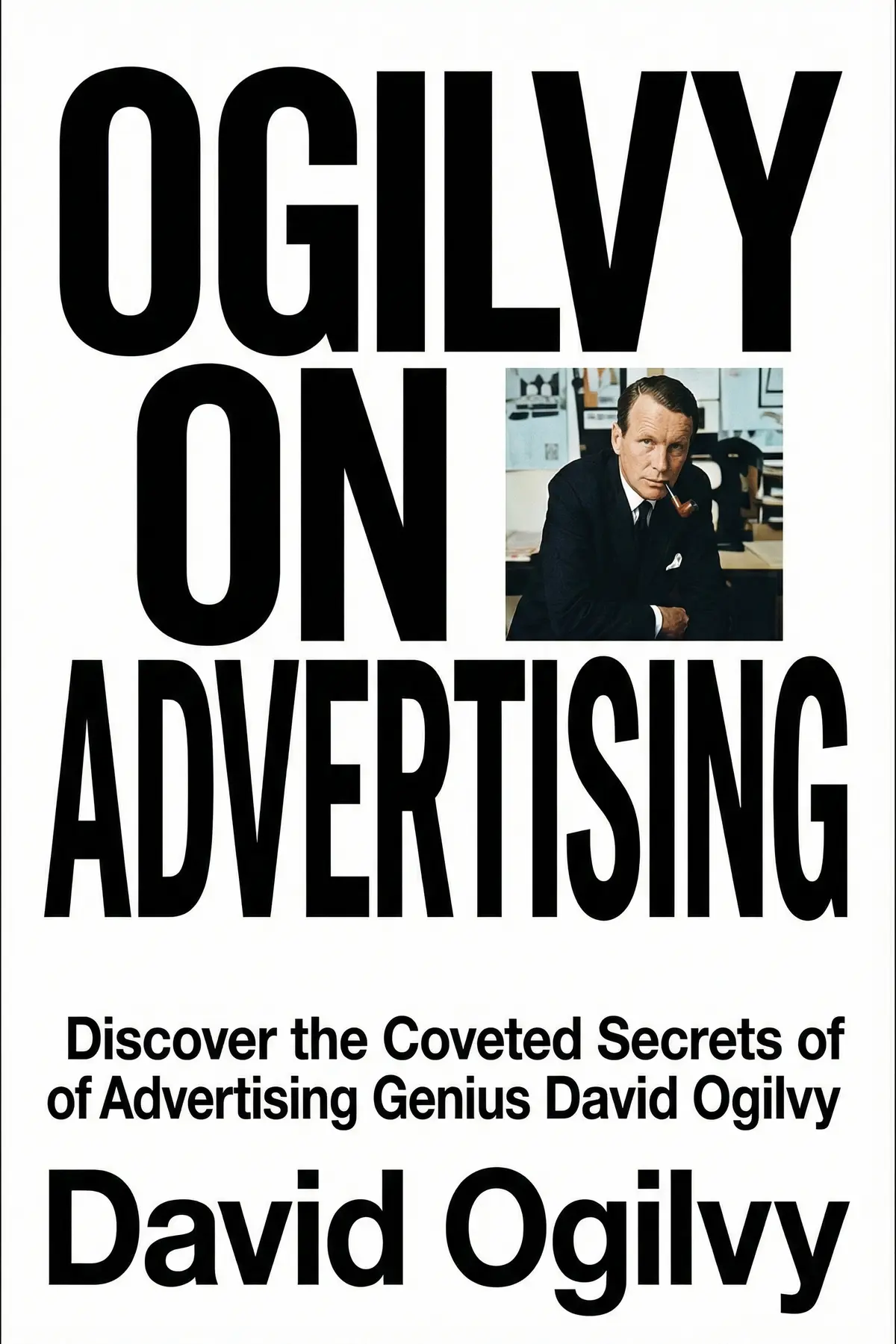
Table of Content
1. Introduction
1 min 02 sec
Most advertising money is spent on hope: a clever line, a famous face, a big budget. In Ogilvy on Advertising, David Ogilvy, who built the agency Ogilvy & Mather on campaigns for Rolls-Royce, Dove and Hathaway shirts, argues that hope is not enough, because an ad can actually lose you sales. In one test he describes, people who never saw a carmaker’s ads bought more of its cars than people who did.
Ogilvy’s remedy is homework. Before he wrote a word, he studied the product, researched the buyer and looked for a fact worth telling. His case, shaped by a career that began selling stoves door to door and passed through George Gallup’s research organization, is that selling works when it rests on research and honest facts about a good product.
Follow his method and you can judge any ad, pitch or product page by plain tests: does it name the brand, promise something real, and give the reader a reason to act?
2. Spot the ad that is losing you sales
1 min 34 sec
Two ads that look almost identical can produce wildly different results, and some expensive campaigns leave sales lower than before. Ogilvy explains why liking an ad tells you nothing about whether it works.
3. Find your best headline inside the product
1 min 44 sec
One of the most famous car ads ever written came from weeks of reading, not a flash of inspiration. Ogilvy shows where memorable lines hide, and what turns a good fact into a lasting idea.
4. Let research stop your most expensive mistakes
1 min 51 sec
A client had already spent $600,000 on a new food line when the research came back. Ogilvy explains why he would rather hear bad news early, and what else research reveals about your buyers.
5. Make one large promise and hold your image steady
1 min 44 sec
The same bar of soap could have been sold to men as a cleaning product. A single positioning choice decided its fate for decades, and a brewer’s auction shows what buyers are really paying for.
6. Put your brand name where viewers cannot miss it
1 min 48 sec
Viewers often remember a commercial they loved and forget what it was selling. Ogilvy’s tests for television, from the opening frame to the casting, explain why big production budgets so often buy so little.
7. Make even a bolt stand apart from rivals
1 min 55 sec
Insulation sounds like the dullest product imaginable, yet one maker became the favorite of its industry with a single visible detail. Ogilvy shows how to sell to businesses, and who in them really decides.
8. Honest facts outsell clever tricks every time
1 min 56 sec
Ogilvy once built an ad so persuasive it almost pulled viewers out of their chairs, then refused to use it. His reasons explain why manipulation fails and what buyers actually reward.
9. Conclusion
1 min 16 sec
Ogilvy’s advertising looks like art on the page, but underneath it runs a salesman’s discipline. He read for three weeks before writing about a car. He valued research that could end a client’s favorite project. He shelved a hypnotic ad because it pushed too hard. What ties these together is respect for the buyer: the belief that people respond to true, specific information about a good product, and stop responding the moment they feel tricked or confused.
That respect is also practical. A weak ad can lower sales, as the Ford and beer cases showed, and no campaign rescues a product people dislike. The safest money in marketing is spent learning before talking.
The habits that follow are modest. Before you write anything that sells, spend real time with the product until you find one fact a buyer would remember. Ask customers what they want, and use their words. Put your name where nobody can miss it and say one thing clearly. When people respond, track it, so the next campaign is smarter than this one.
A car that was quiet at 60 miles an hour needed no exaggeration. It needed someone willing to find out.
About this book
What is this book about?
Most companies treat advertising as a creative gamble: a clever line, a famous face, a large budget. David Ogilvy, who built Ogilvy & Mather on campaigns for Rolls-Royce, Dove and Hathaway shirts, saw it differently. In his experience a bad ad can do worse than waste money. It can push customers away. His answer is homework. Ogilvy spent weeks reading about a product before writing a headline, used research to learn who the buyer was and what words they used, and looked for one big idea and one large promise to build a brand around. He applies the same thinking to television commercials, to advertising aimed at other businesses, and to the temptation to manipulate. Readers get a set of plain tests for any ad, pitch or product page: is the brand named early, is the message impossible to misread, is the product shown working, and does every claim rest on a fact a buyer could check?
Book Information
Who it's for
Founders and business owners
Founders and small business owners writing their own ads, product pages or sales pitches.
Wanting to test campaigns
Marketers and copywriters who want plain tests for whether a campaign will actually sell.
Selling to other businesses
People selling to other businesses who struggle to make an ordinary product stand out.
About the Author
David Ogilvy
David Ogilvy (1911 to 1999) founded the agency Ogilvy & Mather and created celebrated advertising for Rolls-Royce, Dove soap and Hathaway shirts. Before advertising he sold Aga cooking stoves door to door, writing a sales guide that Fortune praised as possibly the finest ever produced. He later worked for George Gallup's research organization, a major influence on his belief that careful research into consumer habits drives successful advertising.
Ratings & Reviews
Ratings at a glance
What people think
Listeners find this title to be essential reading for those in the industry, full of enduring tenets and functional tips for developing advertising. The prose is clear and straightforward, making it an accessible resource that listeners feel provides great value. The visual presentation earns high marks, with one listener specifically enjoying the nostalgic exploration of 20th-century marketing. Although some listeners insist the content stays relevant, others believe it feels a little bit old-fashioned.
Top reviews
Niphon
After hearing so much about the 'Father of Advertising,' I finally cracked this open to see if the hype was real. David Ogilvy writes with a clarity that is refreshing in an age of corporate buzzwords and vague marketing speak. His insistence that advertising must sell or it simply isn't creative resonates deeply with my own professional experience. I particularly enjoyed the section on hiring people who are better than yourself, which is a philosophy every manager should adopt. The layout of the book is beautiful, even if some of the print ad examples feel like artifacts from a different era. To be fair, the principles regarding headlines and consumer benefits are as applicable to a Facebook ad as they were to a magazine spread in 1983. It is truly a masterclass in direct, honest communication.
Show moreKai
Gotta say, Ogilvy’s 'if it doesn't sell, it isn't creative' mantra is the cold shower every modern agency needs right now. We get so caught up in winning awards and being 'edgy' that we forget our primary job is to move product. This book is a relentless reminder that research and facts are the only real weapons an advertiser has. I loved his breakdown of the order of a print ad—picture, headline, then copy—because it respects how the human mind actually processes information. His prose is sharp, punchy, and completely devoid of any fluff, making it a very quick read despite the density of information. Even the sections on international advertising felt surprisingly relevant to how we handle global accounts today. It’s a foundational text that shouldn't be ignored by any serious practitioner.
Show morePrapaiwan
Wow. This isn't just a textbook; it's a direct conversation with a master of the craft who refuses to mince words. David Ogilvy treats advertising as a serious profession rooted in psychology and data, not just a playground for artists. His advice on doing your homework before writing a single word of copy is something I've started implementing in my own work immediately. I was particularly struck by the sentence stating that most campaigns contain no promise at all to the consumer. That realization alone changed how I look at every billboard and TV spot I see now. The book is beautifully designed and feels like a piece of history you can hold in your hands. It’s easily one of the most practical business books I have ever purchased.
Show moreLuke
Truth is, I bought this for the glossy photos and the legendary case studies but walked away with a new philosophy on work. Ogilvy emphasizes the importance of being a good psychologist and truly understanding the people you are trying to reach. His '道 of ethics' in advertising—being honest and informative rather than trying to imply your product is magically better—is a refreshing take. I spent hours pouring over the examples of his old advertisements, even the ones in black and white where the headlines were the main draw. It taught me that a strong promise is more powerful than any fancy graphic or high-tech gimmick. This book is a required read for any publicist because it focuses on the fundamental concepts that never go out of style. It's well worth the investment.
Show moreWorawit
The chapter on competing with Procter & Gamble alone justifies the price of admission for this classic industry staple. Ogilvy details their disciplined methods with a mix of respect and tactical curiosity that makes for an engrossing read. While some of his technical advice—like the absolute ban on sans-serif fonts—feels a bit like an old man shouting at clouds, his core logic remains sound. He understands the psychology of the consumer better than most modern gurus do today. The book is packed with glossy photos and specific case studies that provide a nostalgic yet educational look at 20th-century campaigns. It's a required reading for anyone in the trade, providing a solid foundation in research-based strategy. I only wish there was more content regarding his thoughts on the ethical decline of political messaging.
Show moreYaowaluk
Picked this up during my first year in a marketing role because it is basically the industry bible for everyone at Ogilvy & Mather. The book is essentially a handbook of best practices that have been tested through decades of trial and error. I was fascinated by his insistence on using black text on a white background, a rule I see broken every single day on the web. His disdain for 'creative' types who ignore the product's benefits is palpable and, frankly, quite hilarious at times. While his predictions about billboards and the future of political ads were way off the mark, his advice on headlines remains gold. The production value of the book itself is high, featuring excellent examples of copy that actually converts. It is a solid 4-star read that every copywriter needs to own.
Show moreAnawin
To be fair, some of the advice on billboards and political ads hasn't aged particularly well given the current polarized landscape. Ogilvy believed that deception would eventually become obsolete, which seems almost quaintly optimistic in hindsight. Regardless, the chapters on how to get clients and how to run an agency are timeless pieces of business wisdom. He advocates for a level of professionalism and research that seems to be disappearing in the rush for viral content. I found his thoughts on the 'parity product' especially insightful—just say what is good about your product more clearly than the next guy. It doesn't need to be complicated to be effective. The book is a visual treat and provides a wonderful sense of history for the profession. It definitely earned its spot on my permanent shelf.
Show moreLadawan
Look, you can tell this was written in the 80s, but the psychology of the consumer hasn't changed one bit since then. We still want to know what a product will do for us, and we still respond to headlines that promise a benefit. Ogilvy uses a lot of bullet points and short subheads, which makes the information very easy to digest and reference later. I especially appreciated his focus on long-form copy, backed by research showing that people who are actually interested will read more. It challenges the modern assumption that everyone has a three-second attention span and won't read past a caption. The book is a bit repetitive in places, but that only serves to hammer home his most vital points. It's a great blend of personal anecdote and hard-earned trade secrets.
Show moreBam
Ever wonder why modern marketing feels so disconnected from its roots in actual sales? Ogilvy provides the answer here by focusing on the 'promise' made to the consumer, which he claims is the most important part of any campaign. However, I found the book to be significantly dated in its specific media applications. He spends a vast amount of time on magazine layouts and television spots that don't translate perfectly to our current digital-first landscape. To be fair, his writing style is incredibly accessible and free of the usual academic jargon found in business books. It’s an interesting historical document, but I wouldn’t use it as my only guidebook for a contemporary agency role. It serves better as a supplement for understanding the fundamental 'why' behind the 'how' of selling products.
Show moreA
Not what I expected given the hype surrounding it in my business classes. Frankly, it feels like a relic of a bygone era that refuses to acknowledge the complexities of the digital age. Most of the advice centers around print magazines and 30-second television spots, which feels increasingly irrelevant to someone working in SEO or social media. He is incredibly dogmatic about his rules, many of which have been proven wrong or at least highly situational by modern split-testing. While his writing style is clear and the anecdotes are occasionally charming, I found the tone to be a bit arrogant. It might be a 'classic,' but I think there are much more contemporary books that cover these fundamentals without the heavy 1980s baggage. I struggled to finish it.
Show moreQuestions about this book
What is the main idea of Ogilvy on Advertising?
David Ogilvy argues that advertising works when it rests on research and honest facts about a good product. He shows that a weak ad can actually lower sales, as in a Ford test where readers who did not see the ads bought more cars. His method is to study the product deeply, learn who the buyer is, find a big idea and a large promise, and communicate it clearly.
How did Ogilvy write the famous Rolls-Royce ad?
Before writing anything, Ogilvy spent three weeks reading about Rolls-Royce. From that research came his famous headline about how quiet the car is at 60 miles an hour. He did similar homework for Mercedes, spending three weeks at its Stuttgart headquarters and using the facts he gathered in advertising that sharply raised the company’s sales in the United States.
What does Ogilvy say makes a good TV commercial?
Ogilvy wants the brand name established early, so viewers remember the product and not just the ad. He recommends opening with a visual surprise, avoiding clichéd images, keeping the message simple because many commercials are misunderstood, and demonstrating the product in use. He also notes that higher production costs often do not make a commercial more effective, and relatable characters can beat celebrities.
How can I apply Ogilvy's ideas to business-to-business marketing?
Ogilvy, citing Harvard’s Professor Levitt, holds that any product can be differentiated, as Owens-Corning did with the color of its insulation. Make responding easy with a toll-free number, reply card or coupon, and end every ad with your offer, address and phone number. Analyze inquiries to see what each ad produces, and consider separate campaigns for executives and technical specialists.
Does Ogilvy think advertising can manipulate people?
Largely no. He describes the 1950s idea of subliminal advertising, which never really took hold, and a hypnotic ad of his own that he shelved for ethical reasons. His view is that a flashy ad may win one sale, but a disappointing product never earns a second. Good products and plain, truthful facts are what build lasting sales.
Readers also enjoyed





AUDIO SUMMARY AVAILABLE
Listen to Ogilvy on Advertising in 15 minutes
Get the key ideas from Ogilvy on Advertising by David Ogilvy, plus 5,000+ more nonfiction titles.
- 5,000+ titles
- Listen as much as you want
- 7-day free trial
- Cancel anytime









