

59 Seconds: Change Your Life in Under a Minute
Richard Wiseman
 English
Shows how the Swedish practice of death cleaning, sorting your belongings while you still can, spares your family a painful job later and gives you a calmer home that fits the person you are now.
1 min 03 sec
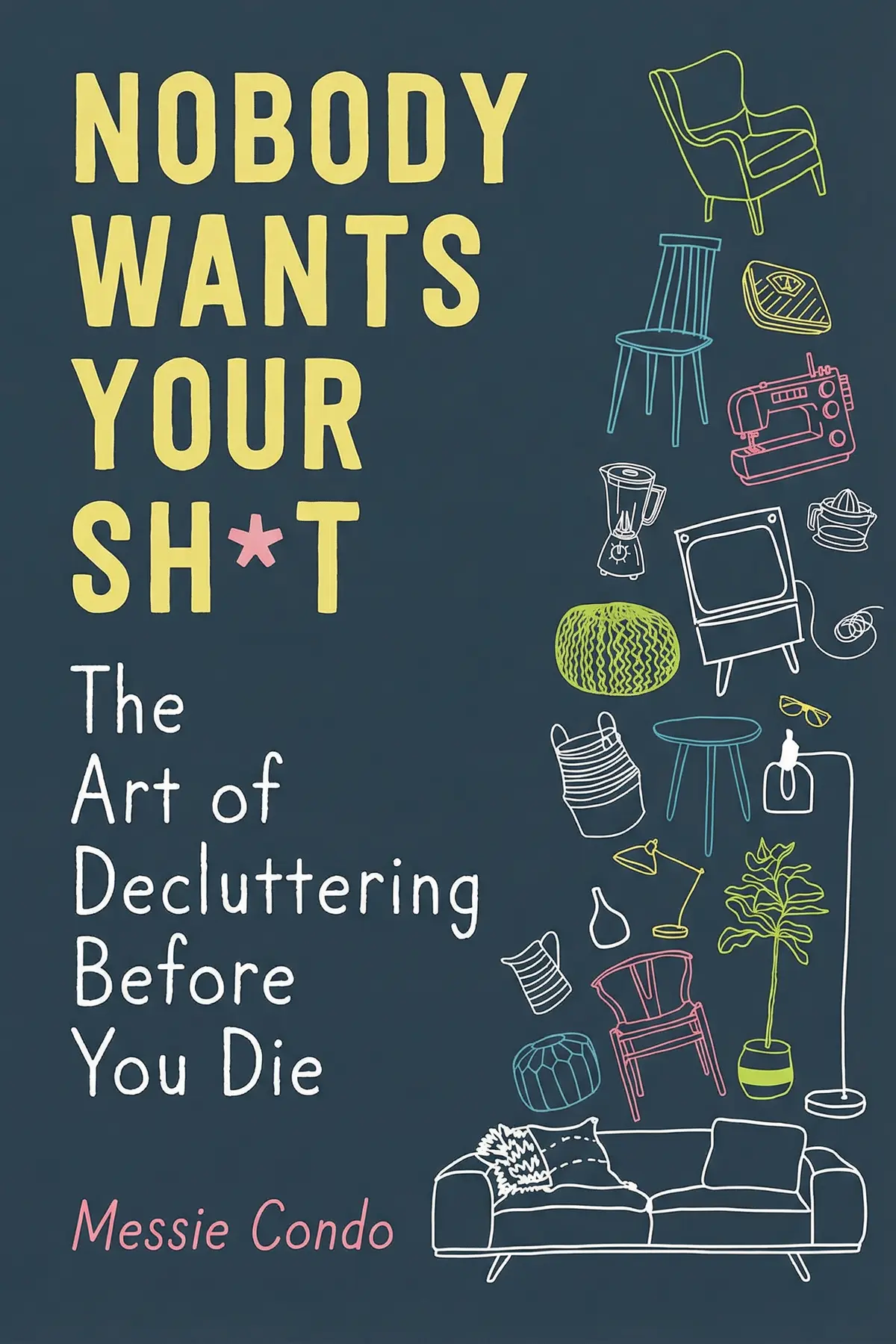
Most of us keep things for a future that never arrives, and one day a person we love will have to sort through all of it. In Nobody Wants Your Sh*t, decluttering specialist Messie Condo argues for doing that sorting yourself, now, through a Swedish practice called döstädning, or death cleaning. The name sounds grim, but the idea is practical: clear out your belongings gradually while you can still choose well, and judge each one by whether it earns its place in your life today, not by whether you might need it someday.
Condo’s case is that this single question, practiced like a skill, does two jobs at once. It spares your family a heavy burden, and it gives you a home built for the person you are now. Along the way there is a bread maker unused since 2019, a donation box that never left the hallway, and a man who keeps his home clear in fifteen minutes a week. What you get is a starting order, a firm rule for deciding, and a way to stop the piles from returning.
1 min 48 sec
A mother saves her old textbooks as a gift for her daughter. Condo explains why that gift will end in guilt, and what you gain by deciding about your things before anyone else has to.
1 min 44 sec
An unused bread maker and a closet of business suits have something in common. Condo names the hidden pattern behind them, and it explains why so many full homes feel strangely wrong to live in.
1 min 45 sec
Saving money, lacking time and protecting memories all sound like good reasons to hold on. Condo takes each one apart, starting with a spare vacuum cleaner that cost more to keep than to replace.
1 min 45 sec
A woman packs clothes to give away, then takes one quick look inside. A year later her closet is full again. Condo explains the trap she fell into, and why heirlooms often trigger the same one.
1 min 53 sec
Most people start decluttering in the wrong place and with the wrong rules, then stall. Condo lays out an order of work that builds confidence before you ever reach the boxes that hurt.
1 min 48 sec
One woman cleared her home office and started declining pointless meetings. Another man now spends minutes, not months, on his home. Condo shows what decluttering changes once the heavy work is done.
58 sec
Death cleaning sounds like it is about the end of a life. In Condo’s hands it is about the middle of one: the years when you can still choose what surrounds you, so the people you love never have to choose for you. Maria’s textbooks, Sarah’s bread maker and Lisa’s college sweater all fail the same test. None of them serves the person living in the house today.
The book makes that test usable. Begin with five minutes and something easy, like the expired medicine in your bathroom. Before you fill a donation bag, know where it is going, so it never waits by the door for you to reopen it. Ask your family before you save anything for them, and when a collection matters, keep its best pieces and thank the rest on their way out. Once the big clear-out is done, a short weekly look keeps it that way.
What you leave behind can be a lighter load. And the first person to feel the difference is you, this week, in a home that finally fits.
Most people spend decades buying, collecting, inheriting and storing things, and rarely ask what happens to it all when they are gone. Usually the answer is that someone they love inherits the job of sorting it. Messie Condo, a plain-speaking decluttering specialist, argues that this job is better done by you, now, while you can still decide well. Her method borrows from döstädning, the Swedish idea of death cleaning. Despite the name, it is about living: replacing the question of whether you might need something one day with whether it earns its place in your life today. Condo shows how homes turn into museums of past selves, why excuses about money, time and memories rarely hold up, and why reopening a donation box undoes good decisions. The book then gives a working method: research where things will go before you start, begin with easy wins, use firm rules like six months without use, watch the spots that attract piles, and save sentimental items for last. Readers get a home that is easier to run, a sharper habit of deciding, and the knowledge that their family will not inherit their indecision.
Adults with full garages and closets who worry about leaving a mess for their children.
People after a move, career change or breakup who want their home to match their new life.
Anyone who packs donation boxes that never leave the house.
Messie Condo helps people put their homes in order, and she is known for a plain-speaking, no-nonsense approach to decluttering. She is based in New Jersey. She is also the author of Tidy The F*ck Up, a parody of Marie Kondo's book on tidying up, and she takes a plain-speaking approach to decluttering.
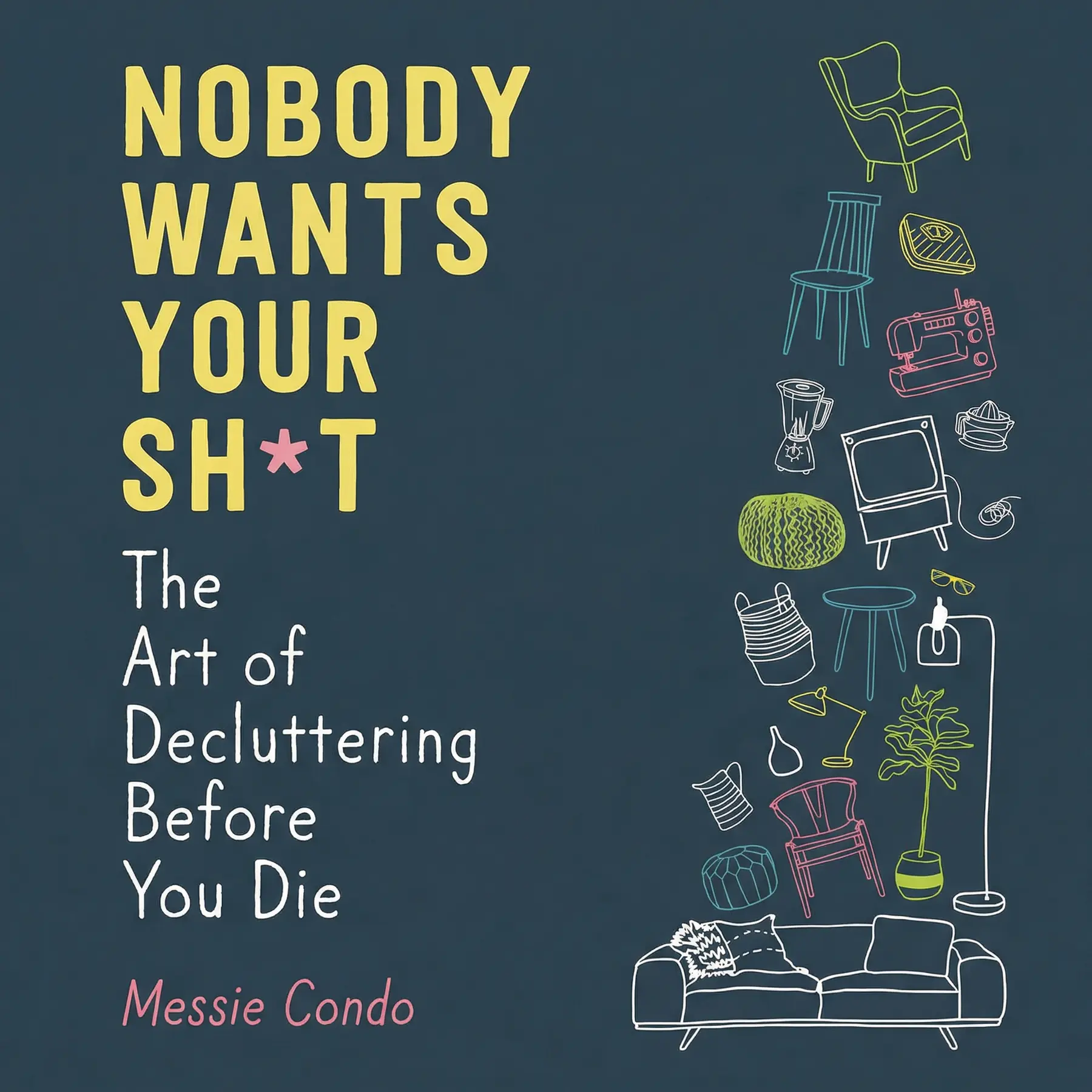
Listeners find this book to be quite humorous, with one person noting it moved them to both laugh and cry, and they value its useful tips for tidying up. Additionally, the writing is accessible and acts as an effective catalyst for getting organized. Nevertheless, the tone draws varied feedback, as some listeners enjoy the directness while others feel the frequent use of profanity is a distraction.
This book made me laugh out loud and then immediately start filling trash bags. I recently had to clean out my mother-in-law’s attic and the experience was a nightmare, so everything Messie Condo said hit home 100%. It’s sardonic, hilarious, and deeply honest about the stuff we hoard. Some people are complaining about the profanity, but it just made the author feel like a real person talking to me. It didn’t feel like a lecture; it felt like a wake-up call from a friend who actually cares about your future sanity. If you are a sentimental person who struggles to let go, you need this perspective. It’s a fun, quick read that gives you the exact tools to stop making excuses. Five stars for the entertainment value and the practical kick in the rear!
Show moreWhy didn't anyone tell me about death cleaning sooner? This book is a total game-changer for my household. I’m the kind of person who keeps every card, every gift, and every scrap of paper just in case it becomes important later. Messie Condo completely dismantled all my justifications for keeping junk. The writing is incredibly cheeky and the audiobook narrator, Hillary Huber, was the perfect choice to deliver this kind of 'straight talk.' I actually found myself crying a little at parts because it made me realize how much stress I was planning to dump on my kids. It’s not just about cleaning; it’s about being realistic about our legacy. This book is a must-read for anyone with a basement full of 'maybe one day' items that they know deep down are garbage.
Show moreEvery page felt like a personal attack in the best way possible. I’ve been stuck in a decluttering rut for years, and nothing else worked because I’m too emotional about my belongings. Messie Condo’s bluntness was exactly what I needed to snap out of it. To be fair, she uses a lot of four-letter words, but that’s the charm! It’s an in-your-face, funny, and incredibly practical guide to getting your life in order before you kick the bucket. I’ve already sold fifty dollars worth of stuff on a local page and cleared out my entire closet. If you’re sensitive to language, you’ll hate it. But if you want a hilarious kick in the rear that actually gets results, buy this book immediately. It’s worth every penny for the motivation alone.
Show moreAs someone who has literally kept my daughter’s baby teeth in a drawer for years, I really needed this brutal wake-up call. I’ve always been a sentimental hoarder, clinging to my grandmother’s old jackets and marriage certificates, but this book forced me to ask: will my daughter actually want this? The answer is a resounding no. Messie Condo’s style is definitely polarizing—she swears like a sailor—but for me, it worked. It felt like a direct intervention. Frankly, I’ve tried the 'spark joy' method and it just didn't stick because I find joy in everything. This 'death cleaning' mindset is much more practical. I've already started shredding old documents and deleting emails from 2019. It’s a solid, humorous guide for those who need a reality check and can tolerate the foul language.
Show moreFinally got around to reading this after staring at my overflowing 'junk drawer of drawers' for months. I’ve read a lot of these types of books, and while this one isn’t the most sophisticated, it’s definitely one of the most effective. The 'tough love' friend vibe really resonated with me. I found myself laughing out loud at the descriptions of the crap we all keep for no reason. Not everyone will appreciate the sardonic humor or the constant swearing, but it kept me engaged through the whole three-hour audiobook. It’s cheeky and straightforward. I’ve already made some progress clearing out my garage, though I’m still struggling to part with my grandfather’s flag. It’s a process, and this book provided the spark I needed to get moving. It's a fun one if you ignore the repetitive bits.
Show moreLook, if you're the type of person who needs a drill sergeant rather than a 'spark joy' fairy, this is your book. Personally, I found the brash, unapologetic tone quite refreshing compared to the more 'zen' decluttering guides. It’s a very Americanized take on the Swedish concept, focusing more on the burden we leave for our heirs. I’ll admit the swearing gets a little repetitive after the third chapter, and the book could have been tighter. But it’s hard to argue with the results. Since finishing, I’ve shredded a mountain of old bills and finally admitted that no one is ever going to use my 90s high school memorabilia. It’s a great motivator if you can handle the language. It’s practical, slightly rude, and very effective for people who just want the truth.
Show moreHillary Huber did a decent job with the narration, but even her talent couldn't mask the excessive profanity. I listened to the audiobook during my commute, and while I appreciated the 'tough love' approach, the swearing felt like it was there just for the sake of it. In my experience, decluttering is already stressful enough without being yelled at by a book. The concept of 'death cleaning' is a powerful one—considering how our junk affects our kids—and the book does a good job of making you realize that nobody wants your old college textbooks or 2007 landline bills. However, the author repeats the same three points over and over again. It’s a solid motivator for a weekend purge, but don't expect any groundbreaking psychological breakthroughs here or any sophisticated writing style.
Show moreIs this just a sweary remix of Magnusson’s work? It certainly feels that way. The structure is a bit odd, with large print callouts and summaries at the end of chapters that feel like they were generated just to hit a specific page count. To be fair, the 'death cleaning' perspective is the only thing that actually motivated me to start selling my old stuff on Facebook Marketplace. I managed to make twenty bucks off some old kitchen gadgets, which was nice! But the tone is very 'in-your-face,' which might turn off more sensitive readers who are struggling with sentimental items. It’s a quick read, maybe even too quick, but it serves its purpose as a blunt kick in the pants. It’s not a masterpiece, but it’s functional for a one-time read.
Show moreThe author's name is clever, but the content inside is less so. Messie Condo—get it? Hilarious. Unfortunately, that’s where the originality ends. The book is basically a swear-filled summary of other, better decluttering guides that have been on the market for years. Truth is, I found the tone to be incredibly grating; it’s that 'cool girl' brashness that feels forced rather than authentic. While there are a few practical nuggets buried in the chapters, you have to sift through so much filler and redundant profanity to find them. Not gonna lie, this could have been a blog post or a one-hour podcast episode rather than a full book. It’s okay if you’ve never read a single book on minimizing, but for anyone else, it’s a waste of time and money.
Show moreGive it a rest because this book is just exhausting. I picked this up hoping for some actual wisdom, but instead, I got a foul-mouthed rehashing of The Gentle Art of Swedish Death Cleaning which is basically a masterpiece compared to this mess. It’s essentially a poor imitation of Margareta Magnusson’s work, just littered with f-bombs to make it seem 'edgy' or 'Americanized.' To be fair, the title should have been a red flag, but the sheer amount of unnecessary swearing is distracting and adds zero value to the decluttering process. It felt like the author was trying way too hard to be funny, yet the jokes fell flat every single time. Honestly, the repetitiveness made a short book feel like a thousand-page slog. If you want real advice without the constant cursing, just stick to the original source material. I found the whole experience annoying and redundant.
Show moreDeath cleaning, taken from the Swedish word döstädning, means slowly sorting through and removing your belongings while you are alive and still able to decide well. Messie Condo presents it as a practice about living, not dying. Instead of asking whether you might need something someday, you ask whether it earns its place in your life today, which spares your family from making those decisions later.
It suits people whose homes are full of things kept for someday, parents saving items for children who may not want them, and anyone going through a move, a new job or a relationship change. It also helps people who keep packing donation boxes and then reopening them, since Condo explains that trap and how to avoid it.
Start before touching anything by finding out where donations, electronics and books can go. Then begin with easy decisions like expired medicine, broken items and clothes that no longer fit, which build confidence. Use clear rules such as six months without use. Leave sentimental items for last, and keep only the best pieces of a collection, like two favorite teacups from a set of dishes.
Condo argues the heavy work happens once and then turns into a short habit. Bob, one of her examples, needed months for his first overhaul but now spends about 15 minutes a week. Watch the spots that attract piles, like a bedroom chair or kitchen counter, and judge every new purchase by the space and attention it will take, not only its price.
Richard Wiseman





William B. Irvine


Andrew D. Thompson


Deepak Chopra
AUDIO SUMMARY AVAILABLE
Get the key ideas from Nobody Wants Your Sh*t by Messie Condo, plus 5,000+ more nonfiction titles.









