

A Promised Land
Barack Obama
 English
A former al-Qaeda bomb maker explains how grief and faith pulled him into jihad at 16, why his reading of scripture turned him against bin Laden, and what years as a British spy cost him.
57 sec
Most people see extremists only on the news and assume their minds are closed. Nine Lives, the memoir of Aimen Dean written with journalists Paul Cruickshank and Tim Lister, shows one from the inside, and its turning point is surprising: a sworn follower of Osama bin Laden left al-Qaeda because he knew the Koran better than its commanders did.
Born Ali al-Durrani in Bahrain in 1978, Dean went to war at 16, built poisons in Afghanistan, then spent years passing al-Qaeda’s secrets to MI6, the British Secret Intelligence Service. The conviction that drew him in is the same one that turned him against the group and kept him spying at great personal cost.
His story answers questions most people can only guess at: how a bright teenager is pulled toward extremism, why 9/11 surprised even al-Qaeda insiders, and what it really takes to walk away.
1 min 52 sec
An orphaned boy who knew the Koran by heart still watched cartoons his teachers called a Western plot. Within a few years he was standing in a minefield, disappointed to be alive.
1 min 40 sec
In Afghanistan’s most respected training camp, the young scholar expected to meet devoted believers. What he found among his fellow fighters, and later on a flight to Asia, was stranger than he imagined.
1 min 48 sec
He looked bin Laden in the eye and swore allegiance, then went to work on poisons that would haunt his sleep. Loyalty and unease grew side by side, until one new tactic forced a question.
1 min 39 sec
A bombing that killed mostly the wrong people convinced a 20-year-old insider that his leaders had betrayed the faith. Leaving was dangerous; choosing whom to trust next was harder still.
1 min 44 sec
British officers were startled by what their new informant knew. Then they asked him to go back to the camps he had fled, where a stray bullet and a strange dream were waiting.
1 min 53 sec
Months before September 2001, a senior commander handed Ali a cryptic order about something big. Neither he nor his British handlers could read it, and later a stash of poison simply vanished.
1 min 48 sec
A magazine article ended his career overnight and gave him a new name. Years later, news from Syria pulled him back toward the war he had left, and toward a grave he felt partly responsible for.
1 min 08 sec
Nine Lives is finally a story about where a strong conviction points. At sixteen, Ali’s sent him to Bosnia and left him crying for a death that never came. In his twenties, the same careful reading of scripture let him see that al-Qaeda’s leaders chose verses to fit their violence, and that only 12 of the 224 people killed in Nairobi were the Americans they meant to hit. That conviction then carried him through years of lying to dangerous men, a fatwa and a nephew’s grave in Syria.
The memoir leaves a few things worth keeping. Extremism recruits through grief, intelligence and the hunger for purpose, and its ranks hold many who know little of the faith they claim; noticing that gap was where Ali’s doubts began. Leaving tends to last when it rests on values a person still holds. And insiders who turn can see what outside analysts miss.
Richard called him the cat as a joke about luck. By the last page, his survival looks less like luck than like a choice he kept making again, one dangerous year at a time.
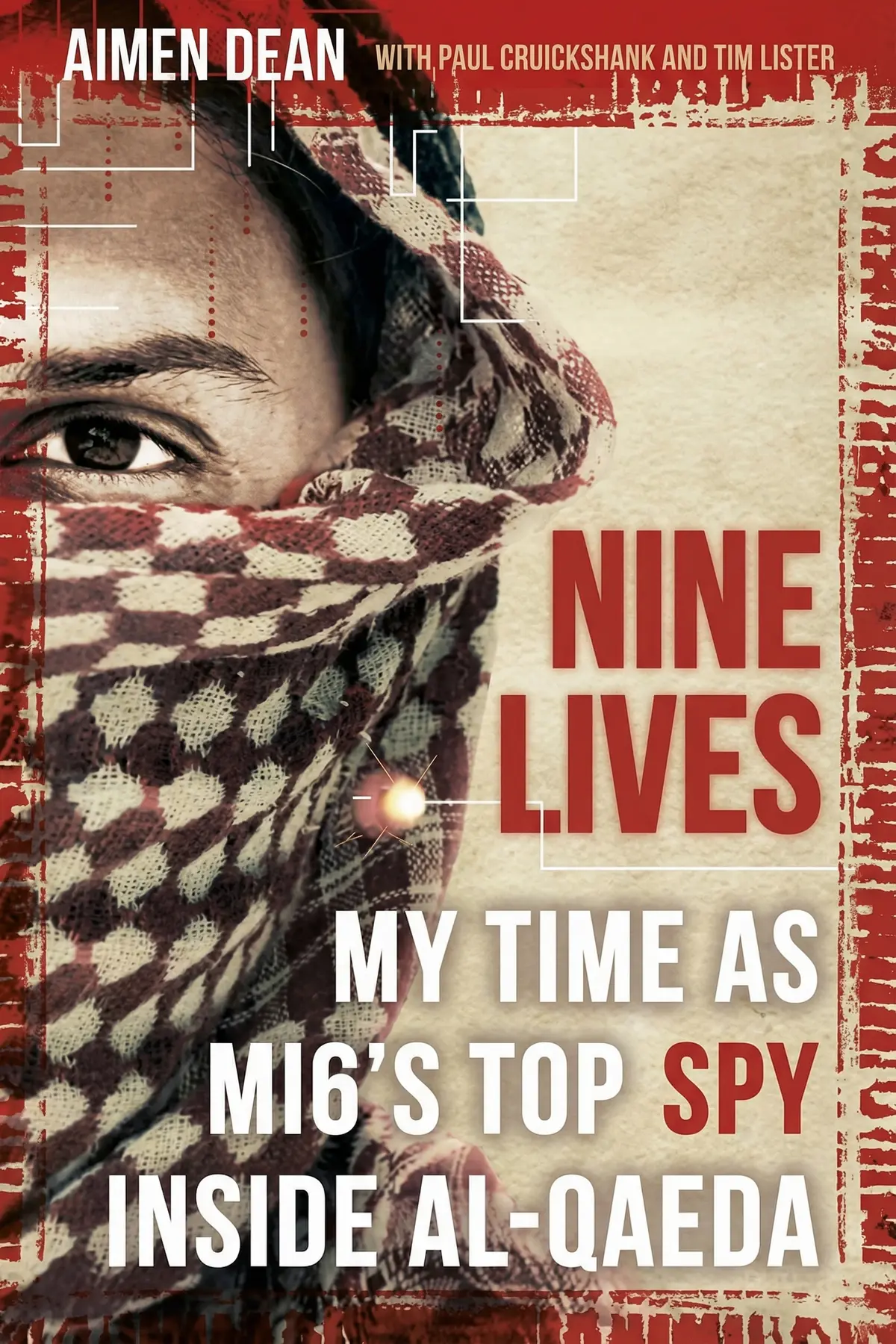
Most of what people know about al-Qaeda comes from outside: news footage, official reports, the attacks themselves. Nine Lives tells it from within. Aimen Dean, born Ali al-Durrani in Bahrain, went to fight in Bosnia at 16, trained in Afghan camps, swore allegiance to Osama bin Laden in person and helped develop chemical weapons. Then he changed sides. After al-Qaeda's 1998 embassy bombing in Nairobi killed hundreds of people who were never its targets, he decided its leaders were bending the Koran to excuse murder. He walked into the arms of Qatari security, and from there into years of work as an informant for British intelligence, moving between London, Afghanistan, Bahrain and a small English town. Written with terrorism analyst Paul Cruickshank and journalist Tim Lister, the memoir shows how extremism recruits bright, grieving young people, why even well-placed spies missed 9/11, and what it costs to leave: a blown cover, a death sentence from his former comrades and a nephew lost to the Islamic State. Readers get a rare inside view of how a mind is drawn into a violent movement and how the same mind finds its way out.
Readers who want to understand how bright young people are drawn into extremist groups, and how they get out.
Followers of security and world news curious about al-Qaeda, 9/11 and the rise of ISIS from an insider's view.
Fans of true spy stories who want a modern double agent's account.
Aimen Dean, born in 1978, is a former member of al-Qaeda who was recruited as an informant by Britain's Secret Intelligence Service in 1998 and now advises governments and companies on security and counter-terrorism. Paul Cruickshank has edited CTC Sentinel, published by the Combating Terrorism Center at West Point, since 2015, and has worked as a CNN terrorism analyst. Tim Lister is a British reporter and producer with more than thirty years in international news at the BBC and CNN, and co-wrote the bestseller Agent Storm.

Listeners find the book captivating and skillfully composed, with one review characterizing it as a gripping journey into the life of a jihadist. They also value its informative nature, as one listener mentions how it clarifies the development of Jihad in the modern era. Furthermore, the work earns praise for its depth, with one listener highlighting its unique viewpoint on our current world and times.
Aimen Dean’s journey from a teenage fighter in Bosnia to a high-level asset for British intelligence is nothing short of breathtaking. Most accounts of radicalization feel clinical, but this memoir provides a visceral look at the ideological traps that catch young men. I was particularly struck by the bizarre anecdote about instructors claiming 'The Smurfs' were a Western plot to destroy Muslim morality; it highlights the strange mix of paranoia and piety in those circles. The transition from a bomb-maker to an MI6 spy is handled with a level of detail that makes the danger feel immediate. To be fair, the writing style is very polished, likely thanks to the co-authors, but it never loses Dean's unique voice. Reading about his one-on-one meeting with Bin Laden while he was secretly working for the 'other side' kept me on the edge of my seat. This is an essential read for anyone wanting to understand the internal mechanics of Al-Qaeda.
Show moreWow, it is rare to find a memoir that genuinely feels like it could be the blueprint for a blockbuster spy thriller, yet carries such heavy moral weight. Dean’s courage in turning his back on his former comrades to save lives is truly admirable, especially considering the fatwa that still hangs over his head. The book moves at a breakneck pace, shifting from training camps in Afghanistan to the streets of 'Londonistan' around the turn of the millennium. I appreciated the deep dive into his theological disillusionment, specifically how the 1998 embassy bombings forced him to confront the reality of civilian casualties. The writing is punchy and direct, avoiding the dry, academic tone you find in many books about terrorism. It really puts our current world into perspective. Truth is, I haven't been this gripped by a non-fiction book in years. He really did use up every one of those nine lives.
Show moreThis book provides a masterclass in understanding the eschatological obsession within Al-Qaeda, particularly the focus on dreams and Islamic prophecies. Dean explains how the 'end of days' narrative wasn't just a side note; it was the foundation of their entire recruitment strategy. As a reader coming from a secular background, seeing how these fighters interpreted their world was eye-opening. The book does an excellent job of showing that these men aren't always acting 'rationally' in a Western sense, but are following a very specific religious logic. The author's internal struggle with the ethics of his work is palpable throughout the middle chapters. His descriptions of the serene expressions on the faces of dead comrades in Bosnia were haunting and beautiful in a strange way. It’s a deep, detailed, and incredibly insightful look at a topic that is usually shrouded in mystery. This is a must-read for anyone interested in global security.
Show moreAfter hearing about Dean’s exploits on a podcast, I expected a dry account of intelligence gathering, but this was a visceral, high-stakes ride through the heart of terror. The metaphor of the 'nine lives' is incredibly apt here. He survived everything from front-line combat with the Northern Alliance to the constant threat of exposure by his own handlers. What makes this book stand out is the moral clarity Dean eventually finds. He isn't a saint, and he admits to his part in developing horrific weapons, which makes his eventual defection feel more authentic. The writing is incredibly readable, and the pacing is perfect for a story this complex. It’s a rare look at the human element behind the headlines we’ve been reading for twenty years. I finished it in two sittings and immediately wanted to go back and re-read the sections on the Philippines. Absolutely fascinating.
Show morePicked this up after seeing a few interviews with the author, and it really sheds light on how radicalization actually functions from the inside. The way Dean describes the evolution of Jihad from the battlefields of Bosnia to the global terror of 9/11 is incredibly educational. I found the sections on the 'mubtakkar' chemical device particularly terrifying because it shows how close they came to a mass casualty event in New York. While the narrative is engaging, I did find some of his later exploits in the UK a bit hard to follow. At times, the coincidences that allow him to stay undercover feel like something out of a cheap thriller novel. Still, the insight into the significance of dreams and prophecies in Al-Qaeda’s ideology was a perspective I hadn’t encountered before. It’s a compelling walk through a life lived on the edge, even if a few questions remain unanswered.
Show moreThe narrative flow here is exceptionally smooth, which is probably thanks to the professional co-authors, but it does make you wonder where the facts end and the 'managed' story begins. Dean is an engaging narrator, but he often sounds incredibly superior to everyone else in the room. Despite this arrogance, the details about the inner workings of Al-Qaeda are fascinating and seemingly authentic. The way his cover was eventually blown by a leak from Dick Cheney’s office is a frustrating reminder of how political maneuvering can jeopardize real-world intelligence work. I liked the historical context provided for the Bosnian conflict, which is an era often overlooked in the history of modern extremism. Look, even if you take some of the more spectacular claims with a grain of salt, the book offers a unique window into a hidden world. It’s a solid, informative read that doesn't shy away from the darker aspects of the struggle.
Show moreEver wonder what it’s actually like to sit across from Osama bin Laden and swear allegiance while secretly planning to bring the whole house down? This book answers that question with chilling detail and a surprising amount of humor. The author doesn't hold back on the absurdity of his early days, like the mosque imams claiming Pepsi stands for 'Pay Every Penny to Save Israel.' It shows the level of indoctrination he had to overcome to eventually work with MI6. My only real gripe is that the final few chapters feel a bit rushed and the solutions he offers for the future seem a bit vague. However, the bulk of the book is a high-octane account of a man living a double life. The tension is real, and the stakes couldn't be higher. It’s a great piece of investigative memoir that clarifies a lot of the history of the early 2000s.
Show moreTo be fair, the first two-thirds of this book are incredibly gripping, offering a rare look at the logistics of jihadi training camps in Afghanistan. Dean’s transition from a naive youth in Saudi Arabia to a hardened fighter is well-documented and feels very real. I was especially interested in the 'Londonistan' period and how openly radicals operated in the UK back then. It’s a part of history that feels almost impossible to believe now. However, the last chapter left me feeling a bit depressed about the future of global extremism. His suggestions for undermining these movements felt like little more than hopes rather than concrete plans. Despite that, the insider knowledge he provides is second to none. The book is well-written, engaging, and provides a much-needed perspective on how these groups survive and replicate. It's definitely worth the time for anyone into geopolitics.
Show moreThe clarity with which Dean explains the evolution of modern Jihad is the book's greatest strength, stripping away the mystery of these groups. He provides a much-needed bridge between the two worlds he inhabited, explaining complex theological points in a way a Western audience can understand. I found his descriptions of the infighting and paranoia within Al-Qaeda to be some of the most interesting parts of the book. It reminds you that these organizations are made of fallible humans, not just faceless monsters. My only concern was the lack of independent verification for some of his more grandiose claims, but that’s the nature of spy memoirs. The writing is tight, the chapters are well-organized, and the overall narrative is very compelling. Frankly, it’s one of the better books on the subject I’ve come across lately. It really makes you rethink what you thought you knew about the War on Terror.
Show moreWhile the subject matter is undoubtedly significant, I struggled with the author’s tone and the sheer number of 'coincidences' that propelled his career. Dean claims to have been present at almost every major turning point in Al-Qaeda's history, yet he somehow remained semidetached from any actual planning. One minute he is a bomb-maker, and the next he is offering himself as an emissary to the Australian government despite having zero connections there. It feels a bit like a tall tale at times. The writing is fine, but I lost trust in the narrative when the plot points started feeling too much like a movie script. For example, a former associate just happens to have his phone number in a notebook in a Bahraini prison? It’s a bit much to swallow. I appreciate the educational value regarding the theology of Jihad, but as a biography, it left me with more questions than answers about the author's true role.
Show moreIt is the memoir of Aimen Dean, born Ali al-Durrani in Bahrain, who went to war at 16, swore allegiance to Osama bin Laden and helped develop chemical weapons in Afghanistan. After al-Qaeda’s 1998 Nairobi embassy bombing, he concluded its leaders were twisting the Koran to justify killing civilians, and he spent years as an informant for British intelligence until a magazine article exposed him.
His faith never broke; his trust in al-Qaeda’s reading of it did. He believed the Koran forbade suicide attacks, saw fighters who knew little about Islam, and watched the Nairobi bombing kill 224 people, only 12 of them the intended American targets. He decided the group was harming the Muslims it claimed to defend and offered his knowledge to Qatari security, then to the British.
No. In June 2001 a senior commander, Abu Hafs al-Masri, told him to get four members out of Britain before something big, and expected it to draw the Americans into Afghanistan. Neither Dean nor MI6 could work out what it meant. Khalid Sheikh Mohammed’s plan was shared only with those who needed to know, and Dean learned the truth from a shop window television in London.
Dean’s own path shows grief, intelligence and a hunger for purpose meeting a persuasive text: he lost both parents young and found comfort in Sayyid Qutb’s writing. He also describes second-generation British Muslims pushed toward extremism by racism and a sense of not belonging, exploited by preachers such as Abu Qatada and Abu Hamza. His nephew’s death in Syria shows the pull lasting into a new generation.
Dean told his story with Paul Cruickshank, editor of CTC Sentinel at West Point’s Combating Terrorism Center, who has also worked as a terrorism analyst for CNN, and Tim Lister, a British reporter and producer with more than thirty years at the BBC and CNN. The book was published in 2018. Cruickshank also co-founded an intelligence consultancy that carries both his name and Dean’s.
Barack Obama

Anthony Pratkanis


Masaji Ishikawa

Ben Macintyre

Yuval Noah Harari



James Shapiro

John Rawls
AUDIO SUMMARY AVAILABLE
Get the key ideas from Nine Lives by Aimen Dean, plus 5,000+ more nonfiction titles.









