

59 Seconds: Change Your Life in Under a Minute
Richard Wiseman
 English
Shows why chasing achievement, money and approval leaves so many people empty. It then offers practical tools for accepting yourself, choosing goals you truly own and finding happiness by using your gifts to help others.
1 min 04 sec
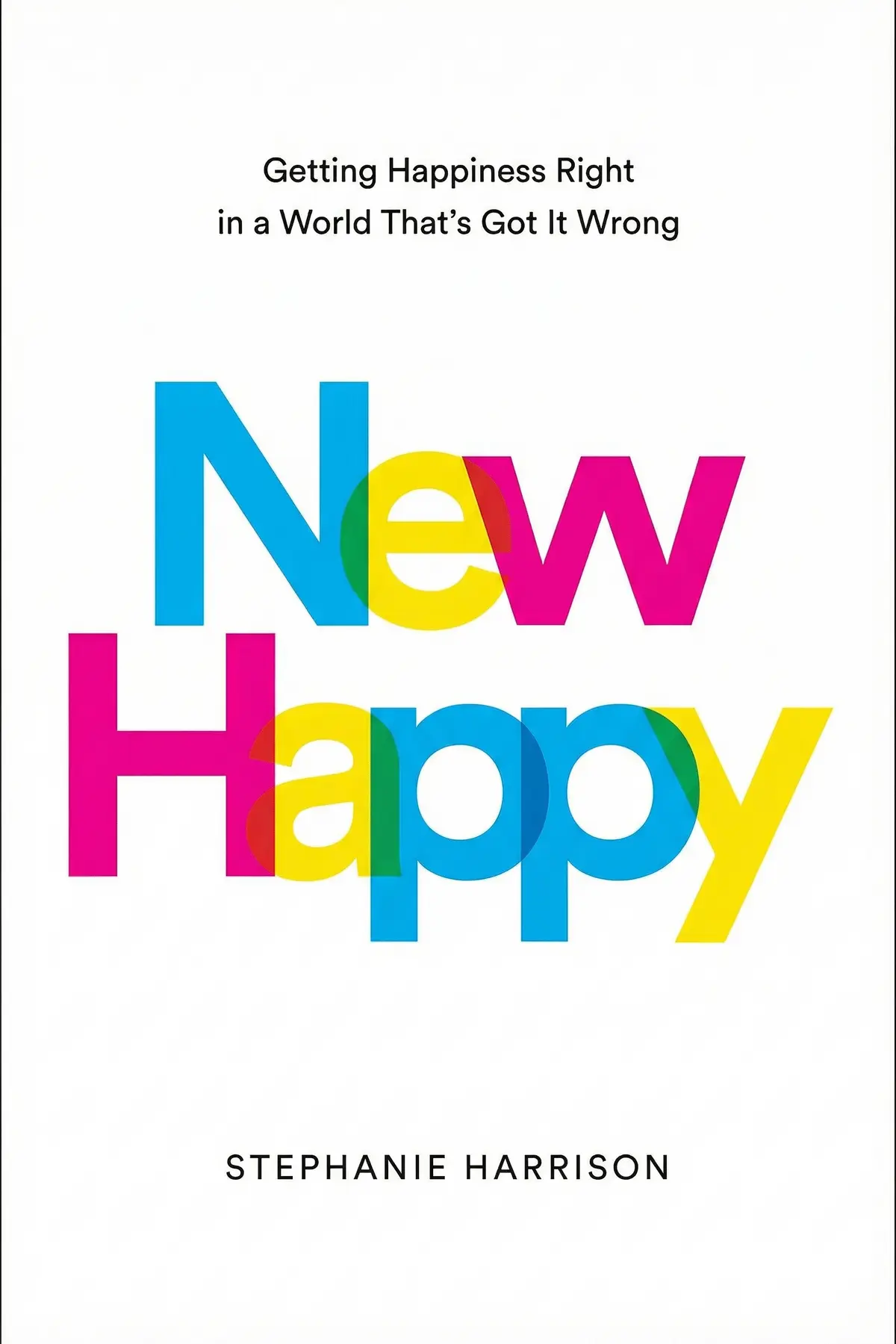
Maybe you have done everything you were told would make you happy and still feel hollow. If so, Stephanie Harrison’s New Happy suggests the fault lies in the definition of happiness itself. In 2013, Harrison had a prestigious job, a lovely apartment and bright prospects. She was also lonely and having panic attacks every day. Having studied the science of happiness, she argues that most of us absorbed a cultural recipe she calls Old Happy, built on individual success, wealth and competition, and that it gets happiness wrong.
Her throughline is that lasting happiness comes from knowing you are enough, using your own gifts and spending them on other people. She learned it the hard way. She moved to San Francisco and took up meaningful work, and then she became the full-time carer for Alex, a man full of life who fell mysteriously ill. What follows are her tools for catching the old story in your head, choosing better goals and finding where your gifts fit in the world.
1 min 58 sec
Every goal you set is a bet on what will make you happy. Many people never chose the definition they are betting on, and a wealth-chasing character from Dickens shows what that costs.
1 min 54 sec
One of the biggest film stars of the 1990s privately felt she was never good enough. Harrison explains where that feeling comes from and offers a simple mental move that stops a slip from turning into self-punishment.
1 min 37 sec
A tennis player reached the top of the world rankings and felt nothing at all. The reason has less to do with tennis than with who chose the goal, and it applies to most career plans.
2 min 02 sec
A famous pyramid of human needs is drawn in offices and classrooms everywhere, yet its author never drew it. Harrison argues the diagram left out the need that may matter most for happiness.
1 min 36 sec
A hugely successful Olympic swimmer found one simple request among the hardest things he ever faced. Harrison reframes that moment and adds three daily questions that change how the world looks.
1 min 54 sec
A civil servant made up a story in the car on the school run, it became a beloved book, and he found his gifts at 52. Harrison uses his case to show how anyone can find gifts they did not know they had.
2 min 02 sec
An astronaut looking back at Earth felt something so strong that it now has a name. Harrison uses that view from space to show how ordinary work and local groups become outlets for your gifts.
1 min 08 sec
Harrison’s book is, finally, an argument about where happiness lives. Old Happy puts it at the top of a ladder you climb alone, always one rung short. New Happy puts it in the space between you and other people, in what you give and what you allow yourself to receive. Her own turn came in an unlikely place. While caring full time for a man who had fallen ill, she found a happiness grounded in love, service and humanity.
The daily practice is modest. When a slip at work becomes a verdict on your character, split the thought and keep your worth out of it. Look at your goals and ask whose they are. Ask how you can help as the day begins, and who helped you as it ends. Pay attention to the moments when time disappears, because that is often where a talent is waiting.
None of this requires quitting your job. Harrison’s claim is that small acts, repeated, add up to social change, and that they improve the giver’s life as well as other people’s. You are already enough to begin.
Many people do everything they were told would make them happy and still feel lonely, anxious and never quite good enough. Stephanie Harrison was one of them. In 2013 she had an impressive job and a bright future, and she was having panic attacks every day. Harrison argues that the trouble lies in the definition of happiness most of us absorbed as children. She calls it Old Happy: the belief that individual success, wealth and competition lead to a good life. It rests on three lies. The first says you are lacking at your core. The second says happiness arrives when you reach certain goals. The third says you are separate from other people. With examples such as Demi Moore and Andre Agassi, she shows how each lie works and what can replace it. Readers get concrete tools. One splits a harsh thought about yourself in two. Others help you sort your goals by who set them, show how to ask for help without shame, and identify your gifts of humanity, talent and wisdom. Harrison closes by showing how to use those gifts in your job, your community and the wider world.
Professionals who reached the goals they were given and still feel empty or lonely.
Perfectionists whose inner critic turns every mistake into proof they are not good enough.
Anyone who wants work and community life to feel useful to others, without quitting everything to get there.
Stephanie Harrison is an entrepreneur, writer, designer and speaker who focuses on the science of well-being. She holds a master's degree in positive psychology from the University of Pennsylvania, where she later taught. At Thrive Global she built well-being programs for employees of Fortune 500 companies. She created the New Happy philosophy, and her company of the same name makes artwork, a newsletter, videos and a podcast. She writes for Harvard Business Review and CNBC and speaks to companies about employee well-being and workplace culture.

Listeners find this work deeply thought-provoking and rich with insights, appreciating the elegant infographics and the way it motivates them to rethink their definition of happiness. The content is thoroughly supported by evidence, with one listener highlighting that it is based on 10 years of research, and listeners consider the advice both useful and actionable, with one mentioning it provides simple applications in the real world. Additionally, listeners characterize the book as life-altering, with one review noting that it delivers a mindset change that's transformative.
This book is a visual masterpiece for anyone who struggles with dense, text-heavy self-help manuals. Stephanie Harrison has taken a decade of complex psychological research and distilled it into these incredibly punchy, minimalist infographics that just click. I’ve spent years chasing the "Old Happy" markers—promotion, bigger house, more followers—only to find myself exhausted and isolated. The truth is, Harrison’s philosophy about leveraging your unique gifts to help others isn't just fluffy advice; it’s a necessary pivot for our burnt-out society. My favorite part was the section on the three lies of individualism. It really hit home how much we’re taught that we have to do everything on our own to be successful. If you are a visual learner or someone looking for a mindset shift that feels both modern and grounded in science, this is a must-buy. It's a beautiful coffee table book that you'll actually read cover to cover.
Show moreEver wonder why hitting your milestones feels so hollow after the initial rush fades? Harrison addresses this head-on by deconstructing the cultural myths she calls "Old Happy." While many of these concepts aren't entirely revolutionary if you’ve read a lot of behavioral science, the presentation here is what makes it stand out. The writing is accessible and engaging. I went in expecting quick daily hacks but found a deeper exploration of purpose instead. I did feel some of the "big" examples were a bit unrelatable, but the core message about community as the true driver of well-being is something I really needed to hear. It’s a solid, thought-provoking read that encourages you to redefine what a successful life looks like. It changed how I view my daily interactions and helped me find simple applications for these ideas in the real world.
Show moreWow. I didn’t realize how much the "do it alone" culture was weighing me down until I sat with this book for a weekend. Stephanie Harrison has a way of making you feel seen without being patronizing. She takes on the idea that we aren't "good enough" and systematically dismantles it using both science and heart. I especially appreciated the emphasis on how our happiness is inextricably linked to the well-being of our community. It’s a bold departure from the typical "self-care is a bubble bath" narrative we see everywhere. The visuals are fantastic reminders of the text, making it easy to flip back and find a specific insight when you’re feeling overwhelmed. I've already bought two extra copies for friends who are struggling with the post-grad "what now?" blues. It’s rare to find a book that feels both life-changing and scientifically rigorous at the same time.
Show moreThe chapter on the "Old Happy" lies—wealth, fame, and independence—completely reframed my last decade of work-life balance. It’s rare to find a book that is this deeply grounded in research (ten years of it!) but still feels like a warm conversation with a friend. Stephanie Harrison manages to explain why our modern pursuit of happiness is failing us without being cynical. The visuals are a stroke of genius; they simplify the data so that it sticks in your brain long after you close the cover. Personally, I found the practical applications for building connection and gratitude to be the highlight. It isn't just about feeling better in the moment; it’s about a total mindset change that feels sustainable for the long haul. I finished it feeling lighter and more focused on what actually matters. This is the kind of book that should be required reading in high schools.
Show moreFinally got around to finishing this after a friend recommended it for my transition into a new career path. What sets this apart from the sea of self-help books is its sheer heart and visual clarity. It doesn't just tell you that you're enough; it shows you the research that explains why the society we live in is designed to make you feel like you aren't. I found the journaling prompts to be surprisingly helpful, especially for someone who usually finds that kind of thing cheesy. The book strikes a perfect balance between being thought-provoking and being a simple, practical guide for daily life. It’s a fresh reminder of things we know deep down but often forget in the chaos of modern life. I’ve already started recommending it to my colleagues as a way to think differently about productivity. It really is a transformative read if you're willing to do the work.
Show morePicked this up after following the New Happy Instagram for months, and I have to say, the book is a different beast entirely. While the social media posts are quick tips, this is a deep dive into why we are so collectively miserable despite having more "stuff" than ever. The logic is sound: we've been sold a lie that success equals happiness. Harrison’s writing is fluid and engaging, though some of the chapters felt like they were stating the obvious. Not gonna lie, I missed some of the "how-to" practicalities from her online content, as the book stays at a pretty high level of abstraction. But the section on "Old Happy" vs. "New Happy" is a fantastic framework that I’ve already started using to evaluate my own career choices. It’s a very encouraging read that pushes you to look outward rather than inward. Definitely a great gift for anyone feeling stuck in the corporate rat race.
Show moreAfter hearing so much buzz about this on social media, I finally dived in. The truth is, I usually find books about "finding your purpose" to be incredibly annoying and elitist. But Harrison approaches it differently by linking purpose to service and community rather than just personal achievement. I liked the focus on how we can use our unique talents to help others, which felt much more attainable than the usual "change the world" rhetoric. However, I do agree with other reviewers that some of the case studies felt a bit "too big" for the average person to relate to. I would have loved to see more examples of regular people making small, meaningful changes in their neighborhoods. Still, the research is top-notch and the tone is incredibly hopeful. It’s a solid 4-star read that I’ll likely revisit when I need a reminder to slow down and reconnect with the people around me.
Show moreAs someone who devours books by Gretchen Rubin and Oliver Burkeman, I had high hopes for this one. Harrison is clearly brilliant, and her background in behavioral design shines through in the way she structures her arguments. There are definitely some "nuggets" of wisdom here that I’m still mulling over, particularly her critique of how we view individualism. However, to be fair, a lot of the material felt like things I had already encountered in other positive psychology texts. It didn't quite offer the "new" perspective the title promised for someone well-versed in the genre. I found myself skimming the middle sections where the research felt a bit dry compared to the vibrant illustrations. It's a 3.5-star read for me—good, well-researched, and definitely worth a look if you’re new to the topic, but perhaps a bit redundant for seasoned readers. I wish there was more about daily application and less about the grand philosophy of purpose.
Show moreLook, the research is impeccable and the citations are well-earned, but the thesis felt slightly contradictory at points. Harrison argues against "Old Happy" traits like striving for success, but then uses highly successful people as examples of "New Happy." It felt a little bit like the same old self-help advice dressed up in new, admittedly very pretty, clothes. I think my expectations were skewed because of how practical her Instagram is; the book is much more philosophical and "big picture." To be fair, her zest for life is infectious and the book is undeniably beautiful. I just didn't find the "life-changing" spark that others seem to be experiencing. It’s a good primer on why we need more community in our lives, but it didn't provide enough "how-to" for my liking. If you’re looking for a deep dive into the why of happiness, you’ll love it, but if you want a workbook, this isn't it.
Show moreThe core message of this book is undeniably noble, but the execution left me feeling more discouraged than inspired. I was a huge fan of the author’s social media content, which usually offers very practical, bite-sized strategies for managing emotions. Unfortunately, this book leans way too heavily into the "find your purpose" narrative, which feels like just another high-pressure goal to achieve. She cites world-shapers like Martin Luther King Jr. and Mother Teresa as examples of people living their purpose, but where are the stories of the average Joe? It’s hard to feel "New Happy" when the bar for success is still set at historical-figure levels. Frankly, the research is well-cited, but the content felt like a collection of platitudes I’ve read in a dozen other self-help books over the last decade. It’s a beautiful book to look at, but I found the actual advice to be quite repetitive and ultimately unconvincing for my daily life.
Show moreHarrison argues that the happiness most of us were taught, which she calls Old Happy, rests on individual success, wealth and competition, and that it leaves people stressed and lonely. Her alternative, New Happy, holds that you are already enough, that you grow by acting from your true self, and that you are connected to others. Lasting happiness, in her view, comes from finding your gifts and using them to help people.
The first lie is that you are lacking at your core, so no achievement is ever enough. The second is that happiness arrives once you reach goals such as wealth, popularity or approval, which left tennis champion Andre Agassi feeling nothing at number one. The third is that you are separate from others, even though, Harrison notes, studies find the happiest people are the most connected.
The Breakup is a tool grounded in cognitive behavioral therapy for separating your worth from your actions. When a thought fuses the two, you split it. If you forget a friend’s birthday and think you are a bad person, you keep the fact that you forgot and replace the judgment with a reminder that you are still worthy. Harrison says this builds unconditional self-acceptance.
Harrison suggests three questions to ask regularly: how can I help, who helped me, and where are others helping. She also recommends sorting your goals by whether they come from your own values or from other people’s expectations. You can make asking for help easier by listing your personal warning signs, and you can shape your current job so your talents show up in everyday tasks.
She points out that Maslow described five core needs in 1943 but never drew the famous pyramid. In her view, the pyramid distorted his ideas. It made self-actualization look like fame, power and wealth, when Maslow meant acting from your authentic inner motives. It also left out other people. Harrison adds that helping others is a real need that lowers stress and makes you feel good.
Richard Wiseman





William B. Irvine


Andrew D. Thompson


Deepak Chopra
AUDIO SUMMARY AVAILABLE
Get the key ideas from New Happy by Stephanie Harrison, plus 5,000+ more nonfiction titles.









