


60 Seconds & You’re Hired!
Robin Ryan
 English
Shows how to run a job search with a small council of peers, treat networking as market research, target roles you can realistically win now, and negotiate offers that include the resources you need.
1 min 00 sec
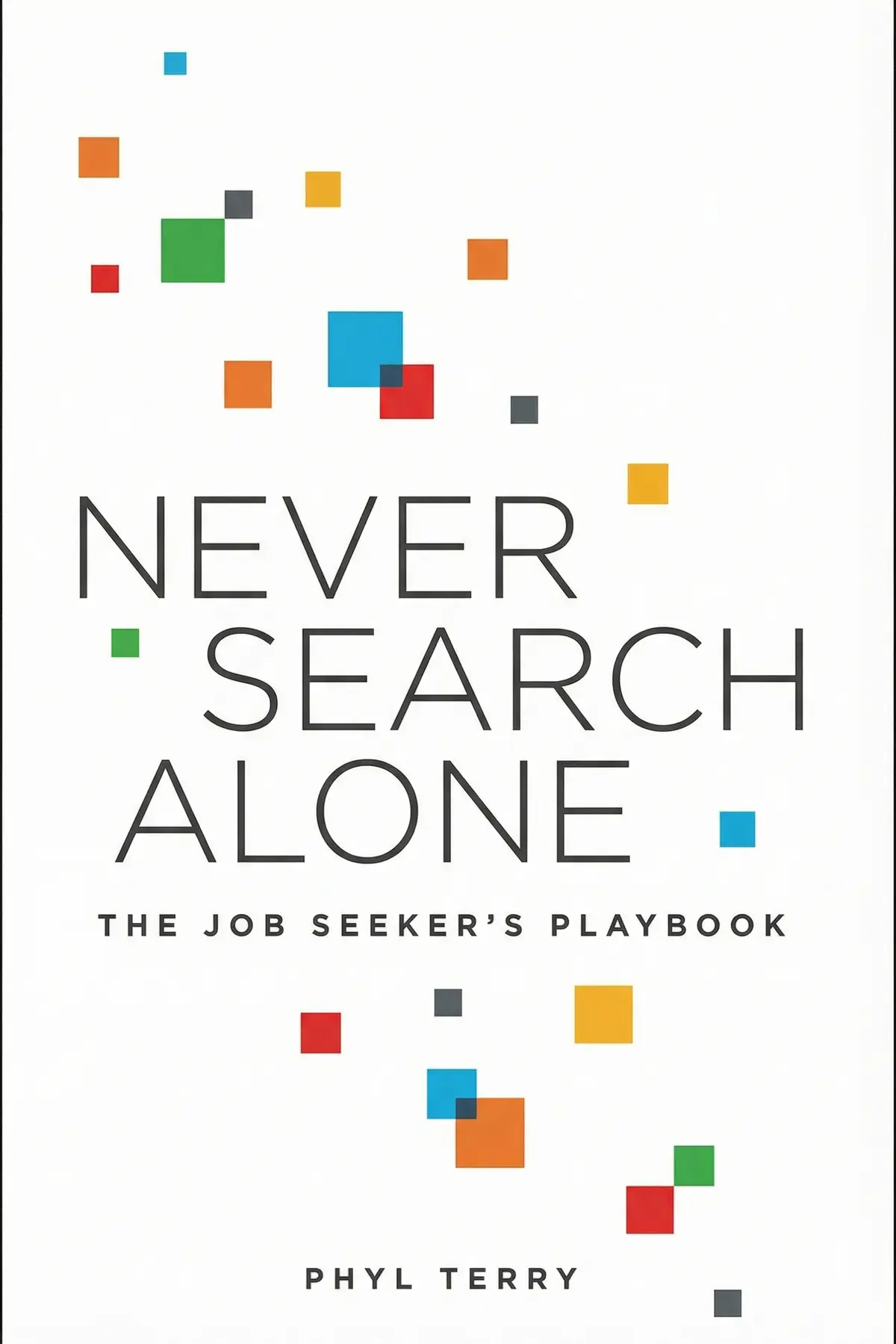
A job search tends to feel like a private ordeal: applications vanish into silence, each rejection lands personally, and skills you trusted a month ago start to look doubtful. In Never Search Alone, Phyl Terry, founder of the leadership community Collaborative Gain, argues that the isolation is the part you can fix. His tool is the Job Search Council, a small group of four to six seekers at similar career levels who meet regularly and help one another through every stage.
From there, Terry treats the search as research instead of pleading. Work out what you want, test it against what employers will actually hire you for, then interview and negotiate from knowledge. Run with peers and grounded in honest information, he argues, a search moves faster and ends somewhere better. The path here runs from the first lonely week to the signed offer, with scripts for networking calls, a way to name your must-haves, and the numbers behind asking for more money.
1 min 40 sec
Strong credentials do not protect anyone from the self-doubt that builds with each rejection. A marketing professional and five pandemic job seekers show what changes when the search stops being something you carry by yourself.
1 min 45 sec
Inviting strangers to talk about career struggles sounds like the last thing anyone wants to do. One carefully chosen phrase in the invitation, and one firm rule about who joins, make the whole thing far easier.
1 min 44 sec
Describing a dream job is surprisingly hard, and vague goals lead to scattered applications and painful rejections. A software executive found her way by starting from the opposite end of the question.
1 min 43 sec
Most networking feels awkward because it puts the other person on the spot. Three different conversations, with old bosses, wider contacts and recruiters, turn the same calls into something both sides actually enjoy.
1 min 51 sec
A senior media executive spent months chasing jobs at Silicon Valley tech firms and kept hearing no. The move that finally got him there looked, at the time, like a step backward.
1 min 47 sec
Candidates work so hard to impress that they forget to check whether the company is worth joining. A detective’s habits, a 90-day plan and one deliberate pause change who is really doing the choosing.
1 min 43 sec
Many candidates accept the first offer because they fear it might disappear. Terry’s figures suggest that fear is costing people a fortune, and that the most valuable things to ask for may not be money at all.
1 min 05 sec
Terry’s playbook turns job hunting from a test you sit alone into a project you run with others, steered by evidence. The council brings courage, contacts and a second pair of eyes. The research brings the truth about where you stand, even when it stings, as it did for Robert before his junior detour paid off. With both in place, interviews become two-way assessments and an offer becomes the opening of a real discussion about what you need.
The first move is modest. Find one other person at your level who is searching and agree to meet. Write down your nightmare job and turn it into a few firm must-nots. Before your next networking call, choose whether you will ask about your past performance, about how the other person would make your move, or about what the market will offer you. When an offer arrives, ask for more, including the budget and support that will let you do the work well.
Sophia got her confidence back, and two members of a pandemic council found jobs through a third member’s contacts, for the same reason. None of them was searching alone.
Looking for work is lonely and draining, even for people with strong credentials. Rejections pile up, money worries grow, and confidence slips. Phyl Terry argues that much of this pain comes from searching alone, and that it can be fixed. His central tool is the Job Search Council, a group of four to six seekers at similar career levels who meet regularly to support one another. Around it, Terry builds a step-by-step process that treats the search as research. Seekers name what they never want in a job, ask contacts for advice and market insight instead of favors, and test their goals against what employers will actually hire them for. They interview companies as closely as companies interview them, and they negotiate with the group's help. The result is a practical playbook for graduates, mid-career professionals and senior leaders alike. It covers how to recruit and run a council, what to ask former bosses and recruiters, how to rework a resume for the jobs you want, how a 90-day plan strengthens an interview, and why asking for more money and resources almost never costs you the offer.
Professionals who have lost a job or want out of one and feel worn down by searching alone.
Career switchers whose applications keep stalling because their goals and the market do not yet match.
Graduates and senior leaders alike who want help with networking, interviews and negotiating an offer.
Phyl Terry founded Collaborative Gain, a community of senior leaders who help one another build products, companies and careers. He was long-time CEO of Creative Good, a customer experience firm whose clients included Apple, Facebook and Microsoft, and he works as an advisor, coach and speaker. His job search process draws on work with thousands of leaders. He co-wrote Customers Included, started Slow Art Day and Reading Odyssey, and is a Harvard Business School graduate.

Listeners find this job search manual practically beneficial, as it provides excellent resources for each phase and makes the entire experience less complex. The work offers significant advice and self-reflection, encouraging individuals to consider their unique talents and assets while fostering a life-changing support network. Listeners value the emotional backing provided during stressful periods, its straightforward prose, and its success in delivering superior results. This highly structured approach leads users through the employment hunt in a clear, sequential manner.
In my experience, job hunting is usually a soul-crushing solo endeavor that leaves you feeling invisible. Phyl Terry completely flips that script by introducing the Job Search Council (JSC) concept. Instead of shouting into the void of LinkedIn, I found myself part of a small, dedicated team that acted as my own personal advisory board. It provides a methodical framework that replaces anxiety with actual structure. While the book leans a bit heavily on anecdotes from high-powered executives, the core message about community-driven search is transformative. It’s not just about resumes; it’s about having people who hold you accountable while you do the hard work of self-reflection. Truth is, I wouldn't have had the guts to negotiate for my current salary without my council's backing. Highly recommend for the mental support alone.
Show moreFinally got around to finishing this, and the 90-day action plan strategy is a total game-changer. I used it in my last two interviews and the recruiters were visibly impressed by the proactive approach. The book teaches you how to stop being a passive applicant and start acting like a consultant who solves problems. My favorite part was the shift in perspective regarding networking. Instead of feeling like a pest, I started seeing conversations as data-gathering missions. It takes a lot of the 'sting' out of rejection when you realize you're just testing for fit. It’s a bit repetitive in places, especially with the 'use the website' calls to action, but the results speak for themselves. This methodology actually works if you commit to it.
Show moreAfter hearing so much about the JSC movement, I decided to dive in during my recent layoff. Wow. The emotional lift this book provides is hard to overstate. It’s easy to spiral when you’re facing endless rejections, but Terry’s framework gives you a reason to get out of bed. The focus on gratitude and reaching out to former colleagues helped me rebuild a sense of professional value that I had completely lost. It’s a supportive, methodical journey that transforms the loneliness of the hunt into a collaborative victory. Yes, it mentions the website often, but the resources provided there for free are actually helpful. This is more than a book; it’s a blueprint for a healthier way to work and find meaning.
Show moreWow. This is the first career book I've read that actually addresses the psychological toll of being 'in-between' jobs. Phyl Terry captures that isolating feeling perfectly and offers a tangible solution through the social search model. The writing style is punchy and direct, though it does get a bit bogged down in repetitive case studies toward the middle. I particularly loved the concept of 'Candidate-Market Fit'—it changed how I describe my value proposition to potential employers. By treating the search as a team effort, you gain access to insights you’d never find alone. It’s an empowering read that makes the daunting process of career transition feel manageable. If you’re tired of the 'lonely struggle,' buy this book immediately.
Show moreLook, I’ll be direct: this isn't a quick read, but the 'Candidate-Market Fit' section is pure gold. Most career guides tell you to just 'follow your passion,' which is useless in a recession. Terry actually forces you to treat your skills like a product and conduct real market research. I found the emphasis on asking for help quite refreshing, though some of the advice feels tailored toward people already in the six-figure bracket. If you aren't a VP or Director, you might find the constant Harvard references a bit grating. However, the step-by-step logic behind mapping out your 'must-haves' versus 'must-nots' saved me from taking a dead-end job. It’s a solid playbook that requires significant effort, but it simplifies a chaotic process.
Show moreThis book provides a pragmatic roadmap for anyone feeling lost in today's brutal hiring landscape. It’s less about 'finding yourself' and more about the grit of building a supportive community that changes lives. I appreciated the methodical breakdown of how to approach recruiters as peers rather than gatekeepers. Frankly, the constant stories about C-suite successes got a bit boring after the first hundred pages, and I ended up skimming the latter half. But the exercises on 'inversion thinking' to identify deal-breakers were eye-opening for me. It’s a useful tool for high-level white-collar workers, though perhaps less relatable for entry-level roles. Still, the logic is sound and the results are measurable.
Show moreFrankly, I was skeptical about the whole 'Job Search Council' idea at first. It sounded like another corporate buzzword, but once you start the exercises, the logic becomes undeniable. The book excels at helping you reflect on your personal skills and strengths without the usual fluff. I do think the author's tendency to mention Harvard every few pages is a bit much, and the examples are definitely slanted toward the 'elite' professional. However, the section on negotiation and OKRs is some of the best career advice I’ve encountered in years. It forces you to treat your career with the same rigor you'd apply to a major project at work. A very solid 4-star read for the serious, high-level job seeker.
Show moreAs someone who has always struggled with the 'transactional' feel of networking, Terry’s approach was a breath of fresh air. He reframes the entire process as an exchange of knowledge and research, which feels much more authentic. The book is essentially a step-by-step manual on how to build your own advisory board. To be fair, some of the steps feel like a 'draw the rest of the owl' situation where you need a lot of pre-existing resources to succeed. It’s clearly aimed at middle to senior management, but the core principles of community and accountability are universal. I’m currently organizing my first council and already feel more confident. It’s a great framework, even if the delivery is a bit self-promotional at times.
Show moreTo be fair, the author spends a significant amount of time self-promoting, and the 'draw the rest of the owl' problem mentioned in other reviews is real. You get a solid foundation, but then you're occasionally left to figure out the complex execution on your own. That said, the central idea of never searching in isolation is something every professional needs to hear. I’ve been in a Job Search Council for three months now, and the peer feedback on my 'Job Mission' statement was invaluable. It’s a practical guide that focuses heavily on the mental game of transition. Even if you find the examples a bit elitist, the strategies for interviewing and negotiating are grounded in reality. It’s definitely more of a companion text for the website’s tools than a standalone narrative, which is why I'm landing in the middle.
Show moreNot what I expected, and frankly, quite a disappointment for anyone not in the C-suite. The book feels more like a 200-page advertisement for the author’s website and personal brand than a universal playbook. I was looking for tactical advice, but instead, I got a collection of cherry-picked stories about Ivy League executives who already had massive networks and huge savings. For the average worker, the advice to 'just reject offers' that aren't perfect assumes a level of financial privilege that most people simply don't have. It’s preachy and repetitive in its delivery. If you don't fit into the narrow category of senior management with a six-figure cushion, you'll likely feel alienated. I wish there was a version of this aimed at a wider range of jobs.
Show morePhyl Terry argues that a job search is easier, faster and more successful when you do it with other people. His core tool is the Job Search Council, a group of four to six seekers at similar career levels who meet regularly to share updates, ask for help and work through exercises. Around it he builds a research-led process: clarify what you want, test it against market demand, evaluate employers carefully and negotiate with support.
Terry suggests starting with one partner found through contacts, former coworkers, professional platforms or alumni groups. Describe the group as a place to ask for help, which attracts cooperative people. Keep employed and unemployed seekers in separate groups, since they want different paces. Agree on meeting frequency, privacy and attendance, then each recruit one more member until you reach four to six. Meetings cover progress updates, short requests for help and a longer discussion.
Terry recommends asking contacts for insight instead of favors. Ask former bosses and colleagues for honest feedback on your past work. Ask your wider network how they would handle your transition in your place. Ask recruiters which jobs you could win easily, which would be a stretch and which are out of reach. End every conversation by asking who else to talk to, then send thanks and updates.
Candidate-Market Fit is Terry’s term for an honest assessment of which jobs you can realistically get now, as opposed to the roles you hope to reach eventually. A media executive named Robert struggled to win senior tech roles, took a junior product job at a Silicon Valley firm, and years later used it to land the senior role he wanted. Your resume and profile should then target those realistic roles.
Yes. Terry reports that 83 percent of people who negotiate get more than the first offer, and that withdrawn offers are rare because companies expect a counter. Not asking can cost over $560,000 in lifetime earnings. He recommends preparing with your council, researching pay benchmarks, rehearsing, and asking for resources such as team budget, technology, mentors and development, which can matter more than salary.
Robin Ryan






Marianne Cantwell
AUDIO SUMMARY AVAILABLE
Get the key ideas from Never Search Alone by Phyl Terry, plus 5,000+ more nonfiction titles.









