



59 Seconds: Change Your Life in Under a Minute
Richard Wiseman
 English
Shows people who hide their needs to stay liked how to treat rest, nourishment, self-trust, values and joy as real needs, and how to ask for what they need without apology.
1 min 00 sec
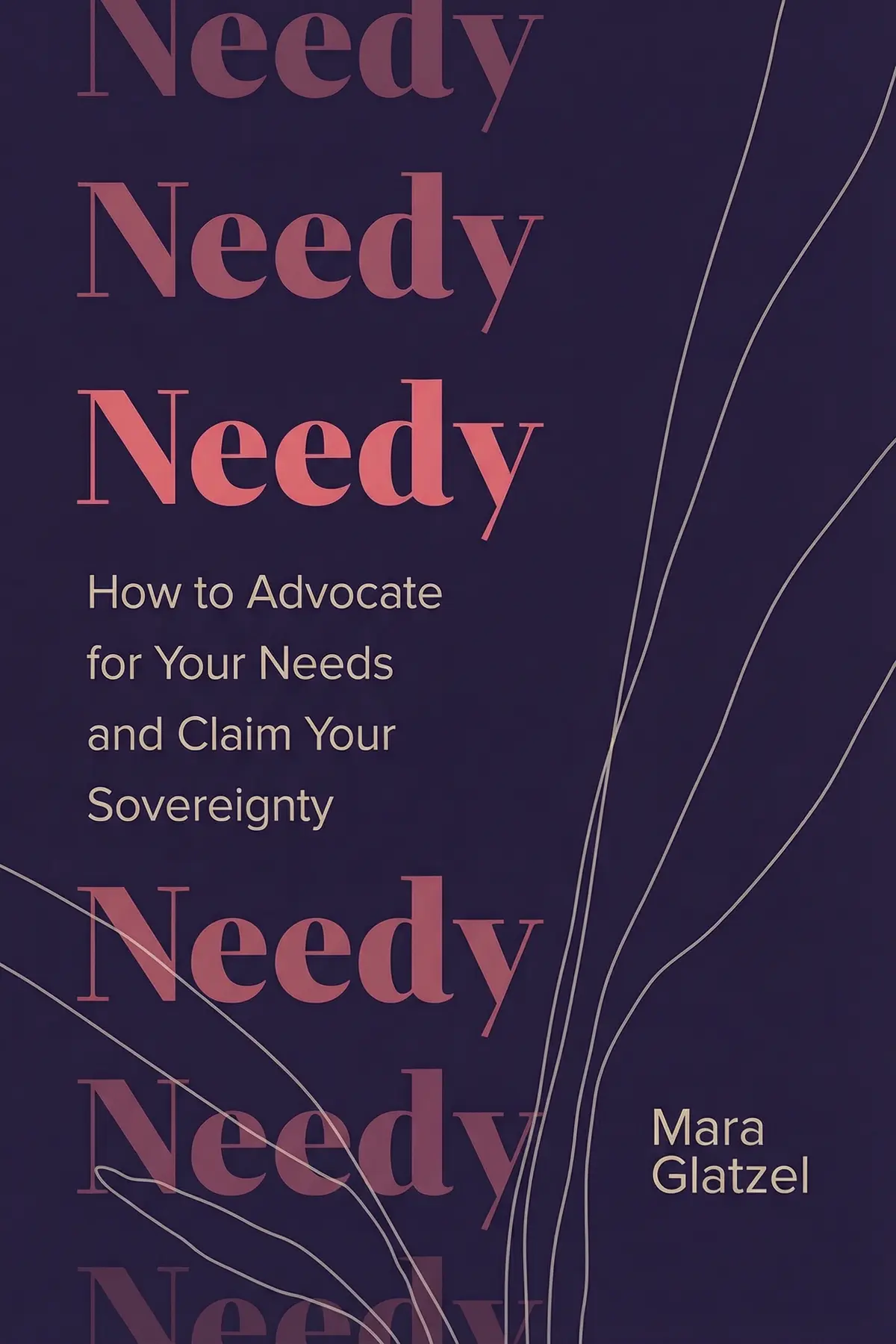
If you have spent years shrinking what you want so nobody calls you too much, Mara Glatzel’s first idea may sting. In Needy, the social worker and coach argues that your exhaustion and resentment are signals of needs left unmet, and that needing care is simply part of being human. You do not have to earn that care through hard work or by keeping everyone pleased. You deserve it as you are.
Her name for the alternative is self-partnership: staying on your own side, especially when things get hard. That idea runs through everything that follows. Glatzel treats safety, rest, nourishment, trust, integrity, love and celebration as real needs, and for each she offers small practices you can start this week. Along the way come a question to ask yourself each day, a three-task limit for a workday, a way to put down other people’s burdens and a habit for finding joy in an ordinary breakfast.
1 min 51 sec
Locked doors and savings accounts are what most people picture when they think of feeling safe. Glatzel locates a deeper kind of security much closer to home, and the everyday habits that wear it down are easy to miss.
1 min 52 sec
A coach who overrides your instincts and a parent who never asks how you feel can leave a lasting mark. A question small enough to start with your sock drawer begins to undo it.
2 min 12 sec
The to-do list never ends, yet many people refuse themselves a break until it does. Glatzel describes the crash-and-recover cycle this creates, and the early signals that let you step off it before you fall.
1 min 52 sec
Feeling behind on everything can look like a discipline problem. Glatzel suggests it is often a sign that your effort is split between goals you chose and goals you only feel you should want.
1 min 53 sec
Many people work hard to be loved and hope the people close to them will notice what they need. Glatzel explains why that hope keeps backfiring and what to do with resentment instead.
1 min 42 sec
Many people hold joy back until they have earned it with a big milestone. Glatzel finds celebration in a lunch conversation and a candlelit bathroom, and shows why a closed restaurant can be part of the point.
1 min 00 sec
Needy is, in the end, an argument about loyalty. The people Glatzel writes for tend to be loyal to everyone but themselves, and the bill arrives as burnout, resentment and a life that looks right from outside while feeling wrong from within. Her answer, self-partnership, is a daily decision to treat your own needs as real without first proving you deserve them.
What makes the idea usable is how small she keeps it. Tomorrow morning you could ask what is true for you before anyone else weighs in, then keep one tiny promise, a glass of water or a pause when you are tired. At work, cap the day at three tasks, set a time to stop and hand back one hot potato that was never yours. At home, say a single need out loud and let the other person handle their own reaction.
None of this waits for a calmer season or a better version of you. The first person who has to stop calling you too needy is you.
Many people learned early that being too loud, too emotional or too demanding would cost them approval. So they shrank their needs, kept a polished version of themselves on display and ended up exhausted, resentful and living at the edges of their own lives. Mara Glatzel, a social worker and intuitive coach, argues that neediness is a normal part of being human, and that care does not have to be earned through productivity or people-pleasing. Her answer is self-partnership: a steady commitment to stay on your own side. She builds it need by need, covering safety, rest, nourishment, self-trust, integrity, unconditional self-love and everyday celebration. Readers get small, specific practices: a daily question for hearing their own voice, a three-task limit with a firm end to the workday, a way to commit to one real priority in short sessions, a picture for refusing other people's burdens, two personal care menus and a habit of writing down what they value about themselves.
People-pleasers who are exhausted from hiding what they need to stay liked.
Professionals with no energy left who keep postponing rest until the work is done.
Adults rebuilding self-trust after years of letting coaches, parents or partners decide for them.
Mara Glatzel is an intuitive coach, writer and podcaster who holds a Master of Social Work. She studied English at the College of Wooster, graduating in 2007, and in 2012 earned a master's degree in clinical social work from Simmons College, where she specialized in trauma and interpersonal violence. Her work centers on helping people quit abandoning themselves, take their own needs seriously and live by their natural energy rhythms, along with self-care, boundaries and self-trust.

Listeners find the content packed with ideal pieces of wisdom, with one individual highlighting how it aids in developing self-advocacy skills. The prose is considered highly illuminating and strikes a deep chord with the audience, as one listener explains how it refines their connection to both themselves and others. Additionally, listeners value the book’s empathetic tone and view it as one of the most essential volumes they have ever encountered.
Mara Glatzel’s writing feels like a warm hug from a friend who isn't afraid to tell you the hard truth. I’ve spent my entire life trying to be 'low maintenance,' but this book completely dismantled the idea that having needs makes me a burden. The way Glatzel reclaims the word 'needy' is nothing short of revolutionary for anyone who struggles with self-abandonment. Her insights on internal safety being the foundation for creativity and connection really hit home for me. This isn't just another self-help book filled with platitudes; it’s a practical guide for building a sustainable relationship with yourself. I found myself highlighting nearly every page, especially the sections on distinguishing between immediate cravings and deeper, spiritual hungers. If you are tired of living for everyone else and want to finally claim your sovereignty, you need this on your nightstand. It is enlightening, compassionate, and deeply grounding.
Show moreAs a chronic people-pleaser, reading 'Needy' felt like being given permission to take up space in my own life for the very first time. I’ve lived for so long according to the 'shoulds' of society, constantly seeking external validation while my own internal voice grew quieter. Mara Glatzel offers a path back to self-trust that feels both idealistic and deeply realistic. She acknowledges the structural limitations we face but insists that prioritizing our own well-being is the only way to cultivate a meaningful life. The chapter on unconditional self-regard was particularly moving, reminding me that I deserve care even when I’m not being productive or 'successful.' This book has improved my relationship with myself and, by extension, how I show up for the people I love. It’s easily one of the most important books I’ve read this year.
Show moreGlatzel challenges the toxic cultural conditioning that labels vulnerability as a flaw or a weakness to be hidden. This book is an invitation to enter into a genuine partnership with yourself, based on curiosity rather than judgment. I loved the distinction she makes between sleep and true rest; it’s helped me identify what actually replenishes my energy versus what just passes the time. By focusing on tiny rituals and daily acts of self-partnership, she makes the daunting task of 'self-love' feel achievable and grounded. I particularly enjoyed the section on celebration—the idea that joy isn't a frivolous extra but a necessity for a nourished life. It’s one of those rare books that makes you feel seen and understood on every single page. It’s an essential guide for anyone who has been taught to minimize their own desires for the sake of others.
Show morePicked this up during a particularly hard month, and it felt like the first time I could actually breathe. Mara Glatzel understands the societal pressures that make us feel like we have to earn our right to exist. Her concept of 'unconditional self-love' isn't about ignoring your faults, but about staying in a relationship with yourself even when things are messy. The practical advice on creating a 'care menu' for different emotional states has been incredibly helpful for my anxiety. I no longer feel like I have to wait for a crisis to take care of myself. This book is a profound reminder that our needs are signals, not liabilities. It is easily one of the top five well-being books I have ever read. I'll be returning to my highlighted passages for a long time to come.
Show moreWow. I didn't realize how much I was abandoning myself until I read the first few chapters of 'Needy'. Glatzel’s voice is so compassionate and grounded that you feel safe exploring the parts of yourself you’ve hidden away. This book teaches you how to advocate for your needs without apology or explanation. It’s an empowering guide for anyone who is tired of being the 'reliable one' at the expense of their own health. The focus on small, daily decisions building up to big self-trust is a genius approach. I feel more aligned with my values than I have in years. Truly a must-read for 2024.
Show moreFinally, someone had the courage to tell me that my rest doesn't need to be earned through a finished to-do list. To be fair, some of the concepts felt a bit repetitive toward the middle, but the core message is so vital that I didn't mind the reinforcement. The idea of 'emergency self-care' versus daily sustenance was a total lightbulb moment for my burnout-prone brain. I’ve always waited until I was completely depleted before allowed myself a break, which only kept the cycle of exhaustion going. Glatzel’s tools for identifying early signs of depletion are incredibly helpful for preventing those total crashes. While the structure got a little muddy for me at one point, the specific prompts like 'What’s true for me today?' have already changed how I start my mornings. It’s a solid resource for anyone looking to improve their self-advocacy skills and stop managing everyone else’s feelings.
Show moreThe chapter on emotional safety was a complete game-changer for how I view my internal dialogue. Mara Glatzel argues that when we criticize ourselves harshly, we destroy our own sense of safety, which limits our ability to be present or creative. This connection between self-kindness and actual functionality was a new perspective for me. I appreciate how she weaves practical tools throughout the text, like learning to communicate needs without managing the other person's response. Not gonna lie, the practice of asking 'What's true for me?' felt awkward at first, but it's helping me rebuild a sense of integrity. The book is full of these little nuggets of wisdom that stay with you long after you close the cover. My only minor complaint is that it can feel a bit dense, so it's better to read it in small chunks rather than all at once.
Show moreAfter hearing the author on a podcast, I knew I needed a physical copy of this book to highlight and annotate. The way she discusses 'energy leaks' like unresolved tasks and boundary issues really resonated with my current state of overwhelm. Frankly, I’ve been living in a state of 'emergency care' for years, and this book provided the framework I needed to shift toward consistent sustenance. The focus on living in alignment with your own values—rather than what you think you 'should' want—is powerful. I did find some of the exercises a bit repetitive, and the prose can be a little wordy at times, but the emotional payoff is worth it. It’s helped me start setting boundaries that actually support my well-being without the crushing guilt I used to feel. This is a gem for anyone seeking emotional sovereignty.
Show moreLook, I really wanted to love this, but I think I just picked it up at the wrong time. I was already in a bit of a funk, and some of the deep emotional work Glatzel suggests actually made me feel a bit more overwhelmed than empowered. It is clearly a good book with a lot of compassionate wisdom, but it didn't provide the immediate relief I was hoping for. The writing is beautiful and Mara's voice is very soothing, yet I found the focus on constant self-monitoring a bit exhausting when I’m already at my limit. I can see how building these skills for self-advocacy would be life-changing in the long run, but right now, it felt like just another thing on my plate. I might return to it when I have more mental bandwidth to actually implement the 'personal care menus' she describes.
Show moreIs it just me, or was the organization of these chapters a little bit confusing to navigate? I found myself getting lost in the structure and having to flip back to see how the different sections connected. That being said, the content itself is excellent and very needed in our productivity-obsessed culture. Glatzel is right that we treat ourselves like machines rather than human beings with fluctuating needs. Her advice on responding to fatigue with rest instead of caffeine or 'powering through' is something I'm still trying to master. While I didn't love the flow of the book, I can't deny that it’s full of perfect nuggets of wisdom. It’s a decent read for those looking to build self-advocacy skills, even if the delivery felt a bit disjointed in places.
Show moreGlatzel argues that having needs is a normal part of being human and that you deserve care without earning it through productivity or pleasing others. She calls the alternative to self-abandonment self-partnership, a commitment to stay on your own side, and builds it through needs she treats as essential: safety, rest, nourishment, self-trust, integrity, unconditional self-love and celebration of everyday moments.
Self-trust is the ability to rely on your own judgment after years of deferring to others. Glatzel says it erodes through experiences like a coach who overrides your instincts or a parent who never asks how you feel. She rebuilds it with a daily question about what is true for you today, small decisions made without polling anyone, and curiosity in place of criticism after a slip.
Glatzel treats rest as a basic need. She suggests learning the early signals that you need care, closing one energy leak such as an avoided conversation, and limiting each day to three achievable tasks with a clear stopping time and a plan to recover. Small moments of care spread through the day add up, she argues, like pennies in a jar.
Glatzel’s practice is to say what you mean. Identify a situation causing stress or resentment, work out what you need, and state it clearly without managing the other person’s reaction or compromising in advance. She also warns against overdelivering to earn love while hoping others will guess your needs, and suggests picturing a ring of light that separates your responsibilities from other people’s hot potatoes.
It suits people-pleasers, the chronically tired and anyone who learned that being too much would cost them approval. Readers who keep postponing rest, carry other people’s problems, or feel their life looks right but fits poorly will find small daily practices, from choosing one real priority to writing down three things they value about themselves.
Richard Wiseman





William B. Irvine


Andrew D. Thompson


Deepak Chopra
AUDIO SUMMARY AVAILABLE
Get the key ideas from Needy by Mara Glatzel, plus 5,000+ more nonfiction titles.









