

A History of Iran: Empire of the Mind
Michael Axworthy
 English
 ไทย
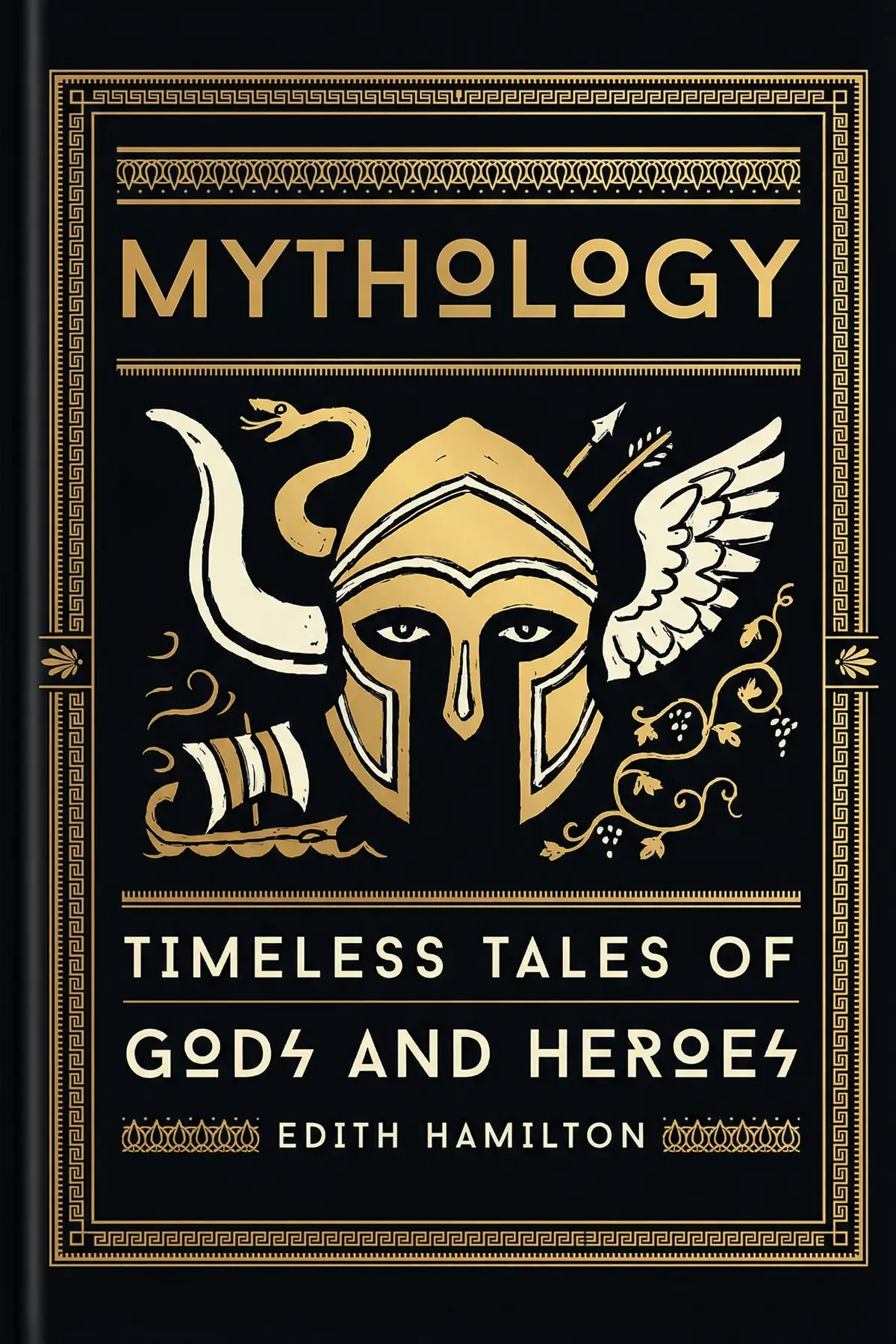
A guided tour of the Greek and Roman myths, from the birth of the world to the fall of Troy and Odysseus's return, showing how gods shaped like people explained nature, love and war.
1 min 04 sec
Standing before a classical statue or a painted Greek vase can feel like arriving late to a conversation everyone else follows. Edith Hamilton’s Mythology, published in 1942, closes that gap by retelling the Greek and Roman tales of gods and heroes, and its first surprise comes at the very beginning: for the Greeks, the world existed before any god did. Nobody designed it. It simply happened.
That detail points to the idea under every story that follows. The Greeks put human beings at the center of their thinking, so they imagined gods who looked and behaved like people, and they used them to explain thunder, winter, wine, love and war in human terms. That is why these myths still fill museums, operas and paintings. Follow them through and you will be able to name the figures on a vase, tell Zeus from Jupiter, and see why a hero’s heel or a musician’s backward glance still carries meaning.
1 min 35 sec
Most traditions start the world with a maker who has a plan. The Greeks started with an empty void, a strange egg and a family so violent that the first ruler of everything was overthrown by his own son.
1 min 34 sec
Egypt carved its gods as giants with animal bodies, visible from miles away. Greece did something very different with its gods, and that choice explains why the Romans could borrow them almost whole.
1 min 52 sec
One goddess gave her name to the most famous temple in Athens. One god was the ugliest on the mountain and still the favorite of craftsmen. Meet the family whose quarrels run through every myth.
1 min 38 sec
A few pomegranate seeds decided why fields freeze every year. And the god of wine had two faces, which says something surprisingly clear-eyed about how the Greeks saw drink and its effects.
1 min 49 sec
The mightiest hero in Greece could clean a filthy stable in a single afternoon and fetch a monster from the Underworld. His real enemy was much closer to home, and it nearly destroyed everything he loved.
1 min 46 sec
A nymph who can only repeat other people’s words, a youth who cannot stop staring at himself, and a musician who walks out of the land of the dead. Each story turns on one small, fatal moment.
2 min 15 sec
Ten years of siege came down to one warrior’s sulk, a grieving friend and a wooden gift. Then the winners forgot something simple, and one of them paid for it with another decade at sea.
1 min 07 sec
What Hamilton’s collection adds up to is a portrait of people who looked at a frightening world and gave it faces they could recognize. A void became a family. Thunder became Zeus. Winter became a mother waiting for her daughter. Even the greatest war in their memory came down to a sulking warrior and a wooden trick. Beside the towering, half-animal gods of Egypt, the Greek gods stand at human height, and that is why the stories still land.
The habit worth keeping is to look for the human core. In front of a statue or a vase painted with red figures, ask what person or feeling it shows: a grieving mother, a lover who could not keep from looking back, a hero whose strength outran his judgment. Keep the Roman names in mind, so that Venus, Mars and Jupiter stop being strangers. And when Orpheus or Odysseus turns up in a novel or an opera, you will already know the story behind the name.
The Greeks made their gods look like us, and their myths still work because they show us ourselves.
Classical myths are everywhere in Western culture: in opera, tragedy, painting and the statues of every major museum. For centuries these stories were part of a standard education. Today many people stand in front of a Greek vase or a sculpture of a god and sense they are missing the story behind it. Edith Hamilton's Mythology fills that gap. It begins with a world that comes into being before any god exists, follows Zeus's rise over his father Cronos, and introduces the family on Olympus along with the Roman names they later took. It then turns to the great tales: Demeter's grief and the seasons, the rages and labors of Hercules, Echo and Narcissus, Orpheus and Eurydice, Jason and the Golden Fleece, the siege of Troy and Odysseus's long voyage home. The thread running through it all is the Greek habit of putting people at the center. Their gods look and act like humans, and their myths turn thunder, winter and wine into stories with human faces. Readers come away able to recognize the figures in classical art and literature and to retell the stories that shaped them.
Museum visitors and art lovers who want to know the stories behind classical paintings and sculpture.
Students and lifelong learners who need a clear map of Greek and Roman gods and heroes.
Readers of novels, plays and opera who keep meeting Orpheus, Troy or Odysseus without the background.
Edith Hamilton was born in Dresden, Germany, in 1867 to American parents and raised in Fort Wayne, Indiana. Her father taught her Latin from age seven, then Greek, French and German. After graduating from Bryn Mawr College in 1894, she and her sister Alice became the first women to enroll at the universities of Munich and Leipzig. She led the Bryn Mawr School in Baltimore from 1896 to 1922, then wrote The Greek Way, The Roman Way and Mythology. Athens made her an honorary citizen in 1957.
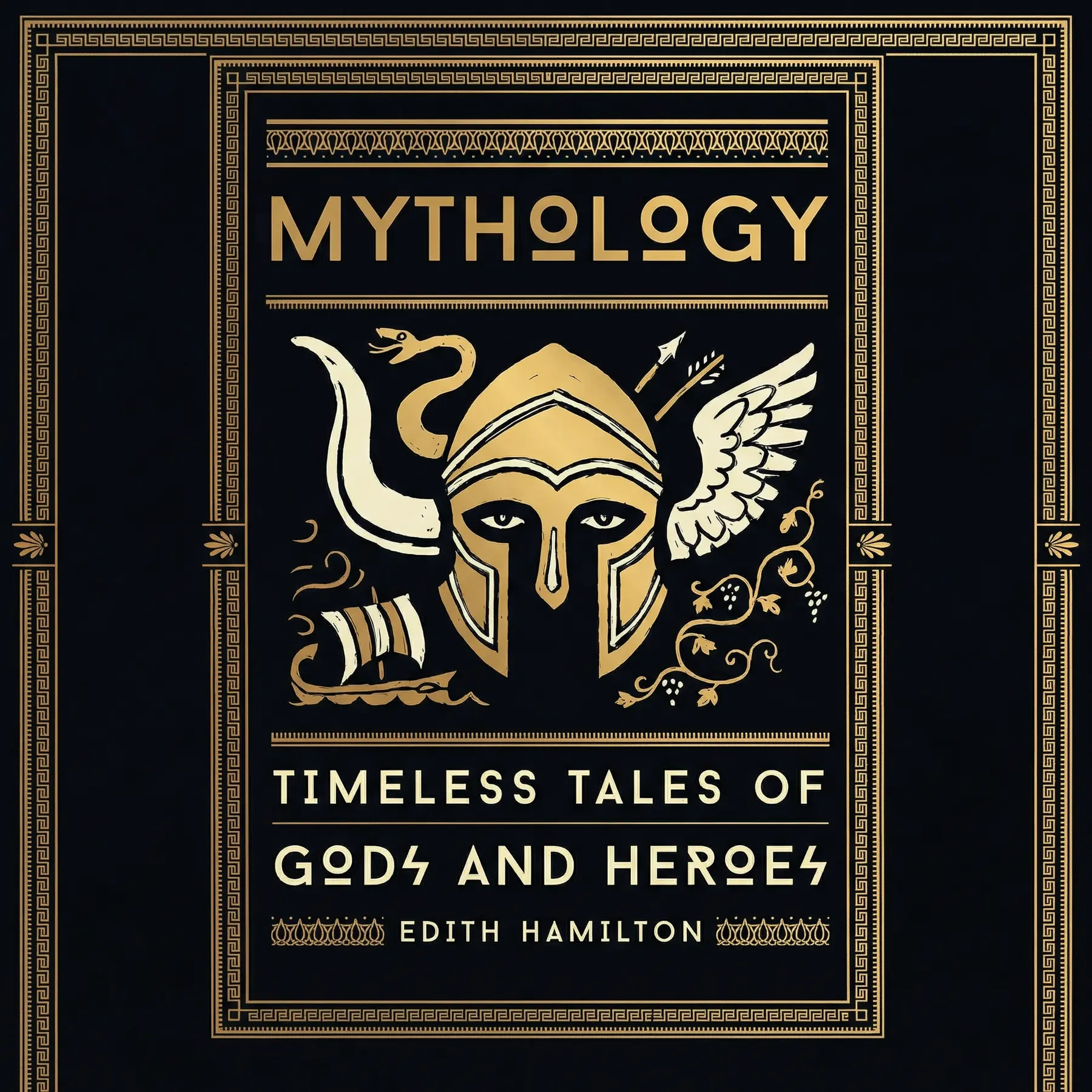
Listeners find this illustrated volume impressive due to its striking gold hardcover and remarkable artwork, which help create a thorough exploration of Greek and Norse myths. The content is accessible and clear, featuring extensive information and elegant writing that gives a fresh perspective to classic narratives. However, several listeners have mentioned that their editions arrived with smudges and odd fingerprint stains on the front cover.
Finally got around to picking up the 75th-anniversary edition, and it is a total showstopper on my coffee table. The gold hardcover is absolutely gorgeous, although I must admit it picks up fingerprints and smudges way too easily. Hamilton's writing strikes a perfect balance between scholarly authority and accessible storytelling, making it feel less like a textbook and more like a collection of epic tales. I especially appreciated how she identifies her sources like Ovid or Hesiod right at the start of each section. It gives the whole book a sense of historical weight that you just don't get from modern retellings. The family trees are an absolute lifesaver when the Greek lineages start getting messy and incestuous. If you're coming from Percy Jackson, be prepared for a much darker and more violent reality, but one that is well worth exploring.
Show moreWow. I spent nearly a year slowly savoring this book and I don’t regret a single second of that time. The 75th-anniversary edition is a work of art, featuring stunning illustrations that really capture the epic, terrifying scale of the gods. I found the chapter on the "Great Families of Mythology" to be the most compelling part, especially the tragic and bloody arc of the House of Atreus. Hamilton has this incredible ability to distill complex oral traditions into coherent, beautiful narratives that still feel fresh today. It is the kind of book you keep forever and eventually pass down to your kids. It makes the ancient world feel vibrant, dangerous, and very much alive.
Show moreHonestly, I didn't expect to be so moved by the story of Orpheus and Eurydice, but Hamilton’s retelling is hauntingly beautiful. She manages to breathe fresh life into these ancient characters, making their grief and triumphs feel incredibly immediate to a modern reader. I love the physical feel of the 75th-anniversary book; the gold accents make it feel like an ancient treasure you've discovered in a library. While some people find the Steele Savage illustrations a bit weird, I think they add a unique, atmospheric charm to the text that fits the period it was written. This isn't just a reference book; it's a journey into the foundations of all Western storytelling. Every home library needs a copy.
Show moreEver wonder why Greek mythology remains so popular when almost every single god belongs to the streets? Zeus is basically a walking red flag, and Hera’s vengeful streaks against his mistresses are absolutely legendary. Hamilton doesn't shy away from the sheer, unhinged chaos of these ancient families, covering everything from cannibalism to the most bizarre affairs imaginable. I particularly enjoyed her take on Dionysus, who is portrayed as a complex figure of both mindless joy and terrifying madness. The book is well-organized, making it easy to jump between the Trojan War and the stories of individual heroes like Perseus. My only real complaint is that the Norse section feels like a rushed afterthought tagged onto the very end of a Greek-heavy book.
Show moreAs someone who grew up watching the Disney version of Hercules, reading the actual myths here was a massive reality check. Hamilton’s description of him as a hero whose intelligence was "conspicuously absent" made me laugh out loud because it's so bluntly honest. The writing style is definitely a product of its time—slightly formal and dated—but it remains very approachable for a modern audience. I listened to a portion on audio and found the episodic nature of the chapters perfect for short commutes. It’s a great way to brush up on the classics without feeling like you're drowning in academic jargon or dry archaeological data. Just keep an eye on the physical cover quality if you buy the hardcover; mine arrived with some weird oily smears.
Show moreThe chapter on the Norsemen was a nice change of pace, even if it was a bit too brief compared to the Greek sections. I’ve always been fascinated by the concept of Ragnarok, and Hamilton captures that grim, heroic spirit quite well in her summary. Her prose is clear and disciplined, which helps when you’re trying to keep track of the dozen different names for the same Roman/Greek deity. I did notice some minor printing issues on the gold hardcover version, specifically some fingerprint marks that wouldn't wipe off. However, the internal layout and the helpful family trees make this the best version of the text to own. It’s an essential classic for a reason, even with its small flaws.
Show moreAfter hearing so much about this book in my literature classes, I finally decided to give it a go. I was surprised by how much I actually liked the section on the "Less Important Myths" because those stories are so rarely adapted into big-budget movies. Hamilton’s dedication to her sources is really what sets this apart from other collections you might find. She tells you exactly where she’s getting her information, which makes the stories feel more like history than just random fairy tales. The prose is dignified without being stuffy, though it does require some concentration to follow the tangled family lines of the gods. It is a definite win for any mythology lover's shelf.
Show moreThis book is frequently cited as the gold standard for mythology, but frankly, it feels a bit like a glorified textbook for high schoolers. While Hamilton is clearly a superior scholar compared to Bulfinch, her prose never truly takes flight for me. It lacks the lyrical magic I expected from such legendary stories. The "Reader’s Digest" condensation style makes the pacing move quickly, yet I often felt like I was missing the emotional core of these ancient figures. Also, the Steele Savage illustrations are definitely an acquired taste, featuring lots of dramatic clouds and frantic-looking characters with double-jointed limbs. It is a solid, reliable resource for academic study, but it didn't ignite my imagination the way I hoped it would.
Show morePicked this up to find a better alternative to Bulfinch, and while it is certainly more scholarly, I still found the tone a bit dry. Truth is, Hamilton’s background as a headmistress really shines through in her writing; she can be quite opinionated about which versions of myths are "correct" and which writers are inferior. I missed the raw, earthy violence and sexual tension that some more modern translators manage to capture. It feels a bit sanitized, likely for a 1940s classroom setting. It’s a perfect introductory text for a student, but seasoned mythology buffs might find it a little too basic for their needs. The illustrations also felt a bit dated and cheesy for my personal taste.
Show moreNot what I expected given the rave reviews this classic usually receives from everyone. To be fair, Hamilton’s knowledge is impressive, but the scope of this book is frustratingly narrow and eurocentric. The title suggests a broad look at world mythology, yet it is about 95% Greek and Roman with a tiny, rushed section on Norse myths at the finish. Where are the Egyptian, Celtic, or Eastern stories? Additionally, the author's dismissal of Ovid and her total lack of interest in the psychological or anthropological aspects of these tales felt incredibly dated to me. It is a collection of plot summaries rather than a deep dive into what these myths actually meant to the culture. It feels more like a study guide than a piece of literature.
Show moreIt retells the major Greek and Roman myths, from the creation of the world out of Chaos and Zeus’s victory over Cronos to the gods of Olympus, Hercules, Orpheus and Eurydice, Jason and the Golden Fleece, the Trojan War and Odysseus’s return. The thread running through it is that the Greeks put humans at the center, so their gods look and act like people and their myths explain nature in human terms.
The Romans had native gods of their own, such as the Lar, a family spirit of the hearth, and household powers called the Numina. They then adopted the Greek gods, merging them with their own. Saturn merged with Cronos and Jupiter with Zeus. The merged gods kept roughly the same domains and characters, which is why Aphrodite is also Venus, Ares is Mars, Artemis is Diana and Hades is Pluto.
Through Demeter, goddess of the harvest, and her daughter Persephone. Hades kidnapped Persephone and tricked her into eating pomegranate seeds, which bound her to the Underworld. Demeter’s grief froze the land until a compromise was reached: Persephone spends four months a year with Hades and eight with her mother. Winter is Demeter’s mourning, and spring returns with her daughter.
They have inspired opera, tragedy, sculpture and painting for centuries and still run through Western culture. Because the Greek gods and heroes behave like people, with jealousy, grief, rage and love, their stories remain easy to feel. Knowing them lets you recognize what you see in museums, from Greek vases to statues of the gods, and understand the many references to Troy, Orpheus or Odysseus in later art.
It suits anyone who has stood before classical art and felt they were missing the story, and students who want a clear guide to the gods and heroes. Readers of literature and lovers of opera will find the background to figures like Hercules, Achilles and Penelope. No prior knowledge is needed, since the book introduces each god and myth from the beginning.
Michael Axworthy
Tom Standage

Ishmael Beah




William J. Bernstein

Ben Macintyre


AUDIO SUMMARY AVAILABLE
Get the key ideas from Mythology by Edith Hamilton, plus 5,000+ more nonfiction titles.









