

15 min 04 sec
Available in: English
Moody Bitches: The Truth About the Drugs You’re Taking, the Sleep You’re Missing, the Sex You’re Not Having, and What’s Really Making You Crazy
Explains how estrogen, the menstrual cycle, love chemistry, motherhood and stress shape women's moods, and why expressing feelings and caring for sleep, food, sex and movement can work better than a quick prescription.
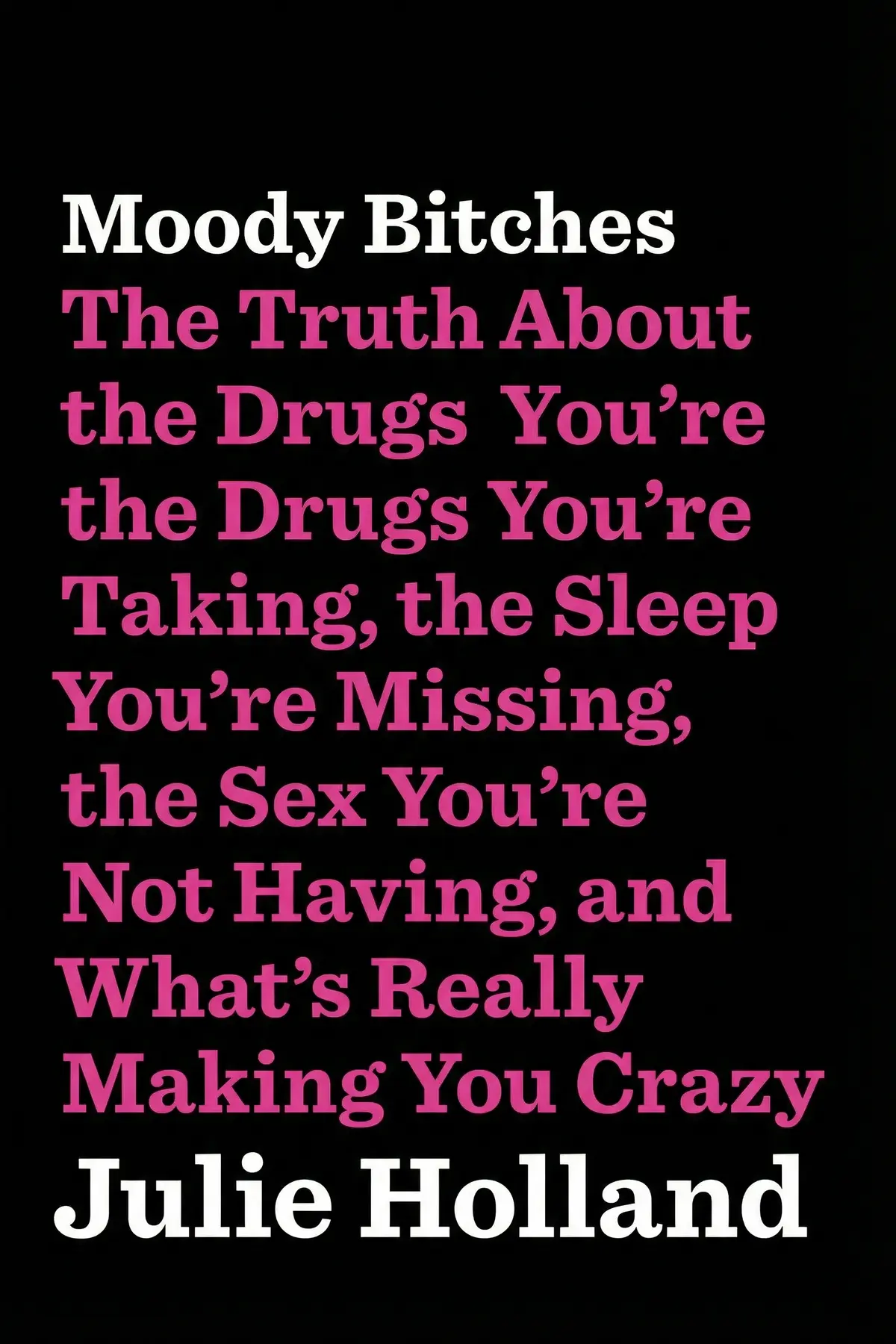
Table of Content
1. Introduction
1 min 00 sec
Many women spend years apologizing for their moods, and some are handed a prescription to make the feelings stop. In Moody Bitches, psychiatrist Julie Holland argues that those swings come from hormones, mainly estrogen, that keep women alert, protective and responsive to what is happening around them. Holland, who specializes in psychiatric medication, believes women are pushed toward antidepressants far too quickly, often after a few rushed minutes with a doctor.
Her case is that a woman who understands how her hormones, her cycle and her stress work can treat her feelings as information, and look after them with honest expression, sleep, food, sex and movement before reaching for a pill. Along the way you will learn what changes between the two halves of the menstrual cycle, why new love behaves like a drug, why bottled anger is a health problem, and why Holland wants the last coffee of the day finished by early afternoon.
2. Read your moods as signals worth hearing
1 min 54 sec
Women are told to calm down so often that many start believing their feelings are a defect. A psychiatrist who prescribes medication for a living argues that the problem may lie with the people doing the telling.
3. Use your cycle to understand your feelings
1 min 40 sec
The same woman can feel radiant one week and furious two weeks later, with nothing in her life having changed. Holland explains why the darker days may be the more honest ones.
4. Understand how love chemistry shapes your partner choices
2 min 03 sec
New love can turn a sensible woman into someone checking her phone like an addict. A year or so later, the same partner’s habits start to grate, and Holland traces both to choices made long before.
5. Protect mother, baby and couple after birth
1 min 59 sec
Pregnancy and the first months with a baby bring a flood of advice and plenty of pressure to medicate. Holland’s guidance is cautious about pills and surprisingly firm about the parents’ love life.
6. Let anger out before stress turns inward
1 min 45 sec
Being the nice one who never raises her voice looks like good behavior. Holland argues it can feed a chain inside the body that ends in exhaustion and depression.
7. Calmer moods from food, sleep and sex
1 min 50 sec
A latte after lunch, a late show and a bag of chips feel like small comforts. Holland links them to cravings, sleepless nights and low moods, and offers simple swaps.
8. Move, step outside and breathe your way back
1 min 50 sec
A day at the computer can leave anyone feeling terrible. Holland names inactivity as the biggest threat to a woman’s health and points to a shopping mall study that favors the open sky.
9. Conclusion
1 min 03 sec
Holland’s book turns an insult into a user manual. The word moody, so often used to dismiss women, describes a body doing what it was built to do: rising and falling with estrogen, sharpening attention, and bringing hidden grievances to the surface when the hormonal cover thins. The trouble, in her account, starts when those signals are silenced, whether by a rushed prescription, swallowed anger or a life spent indoors on caffeine and screens.
What she asks for is mostly attention. Know where you are in your cycle before deciding what a bad week means. When anger rises, say it, or carry it somewhere private and let it out instead of storing it. Protect your sleep with an early last coffee and a quieter evening, and choose exercise you enjoy, ideally under open sky. When a pill is offered for a feeling, ask first what the feeling is telling you.
A woman who understands how her body works no longer has to apologize for it. She can start listening to it.
About this book
What is this book about?
Women hear it constantly: they are too emotional, too moody, too much. Psychiatrist Julie Holland argues that the swings are real and biological, and that they serve a purpose. Hormones, especially estrogen, make women watchful, tender or fierce as the moment requires. The trouble begins when society, and rushed doctors, treat those feelings as a fault to be medicated away. Holland walks through the forces behind a woman's moods: the two halves of the menstrual cycle, the dopamine and oxytocin of falling in love, the friction that follows when attraction fades, the changes of pregnancy and breastfeeding, and the way chronic stress feeds inflammation and depression. Throughout, she argues that feelings, including anger, need an outlet rather than a lid. Readers get a working map of their own hormones and a set of everyday tools Holland recommends: tracking the cycle, letting anger out safely, no coffee after 2 p.m., less evening screen time, natural foods, enjoyable exercise, time in nature and simple attention to the breath.
Book Information
Who it's for
Women curious about hormones
Women tired of being called moody who want to understand what their hormones are doing.
Women weighing antidepressants
Women offered antidepressants after a short appointment who want more to weigh before deciding.
Busy professionals wanting steadiness
Busy professionals running on coffee, screens and swallowed anger who want simpler ways to feel steadier.
About the Author
Julie Holland
Julie Holland is a psychiatrist specializing in psychopharmacology, the study of psychiatric medication, with a private practice in New York City. For nine years she ran the psychiatric emergency room at Bellevue Hospital on weekends, an experience she recounted in her bestselling memoir Weekends at Bellevue, and she taught psychiatry as an assistant professor at New York University School of Medicine. Moody Bitches, her fourth book, has appeared in eleven languages. She has also served as a medical monitor for studies developing psychedelics into prescription medicines.
Ratings & Reviews
Ratings at a glance

What people think
Listeners view this title as an essential read for women, particularly those on regular medication, and value the well-researched insights into the female experience. The book also draws praise for its actionable advice, with one listener characterizing it as a "wonderful field guide for our hormones." Furthermore, listeners find the material empowering, as one noted it clarified their hormonal shifts and another mentioned a boost in energy levels. Nevertheless, the pacing gets a mixed reception, with some finding it difficult to track in certain sections.
Top reviews
Amara
After years of feeling like my emotions were a problem to be solved with a pill bottle, Dr. Holland’s perspective was a massive breath of fresh air. She dives deep into how SSRIs and other mood-regulators can sometimes dull our intuition, making it harder to identify when something in our environment actually needs to change. The truth is, I’ve noticed a significant shift in my energy levels since applying her suggestions regarding sleep hygiene and nutrition. It isn't just a book about being 'moody'; it’s a comprehensive look at the pharmaceutical industry’s influence on women’s health. I found the drug appendix at the end to be an invaluable resource for understanding exactly what I was putting into my body. If you feel like you've lost touch with your natural self, this is an essential read for reclaiming your vitality and emotional range.
Show moreDylan
Finally, a psychiatrist who isn't just looking to write another script the second you mention you're feeling a little irritable or overwhelmed. This book is a radical call to return to our natural rhythms and stop trying to act like 'linear' men in a world that demands we be 'on' all the time. Dr. Holland’s holistic suggestions regarding nature, sex, and diet are simple yet transformative when actually put into practice. I especially appreciated the section on how we use medication to mask real problems in our marriages or careers instead of facing the discomfort head-on. It’s a wake-up call to start trusting our guts again. Since reading this, I’ve felt much more at peace with my 'bitchy' days, seeing them as a signal to slow down rather than a defect to be fixed. It's empowering, well-researched, and incredibly timely.
Show moreKru
This book feels like the missing manual for the female body that nobody bothered to give us in health class. Dr. Holland manages to strip away the stigma of being 'emotional' and instead presents our hormonal fluctuations as a vital internal navigation system. I particularly appreciated the focus on how we are often over-medicated to fit into a rigid, 24/7 corporate culture that wasn't built for the female cycle. The 'Moody Bitches Survival Guide' section is a wonderful field guide for our hormones, offering practical advice that goes beyond just 'take a pill.' While some of the sections on evolutionary biology felt a bit like over-generalizations, the core message is deeply empowering. It encourages you to stop apologizing for your natural moods and start listening to what they are trying to tell you about your life and health.
Show moreOoi
Every woman I know who is currently navigating the maze of birth control or antidepressants needs to pick this up immediately. Holland provides a necessary counter-narrative to the heavy pharmaceutical marketing that targets women the moment we show any sign of 'instability.' The chapter on perimenopause was particularly helpful for me, as it explained the physical shifts I was feeling in a way my own GP never did. It’s a bit of a dense read at times because she covers so much ground—from mating habits to the benefits of cannabis—but the information is vital. I loved the emphasis on being your own best advocate in a medical system that often dismisses female pain or frustration. Even if you don't agree with every single point she makes, the book sparks a much-needed conversation about what is actually 'normal' for our bodies.
Show moreSam
Ever wonder why you feel like a different person depending on the week of the month? Moody Bitches does a fantastic job of explaining the 'why' behind those shifts without making you feel like you’re losing your mind. The writing style is a mix of clinical expertise and girlfriend-to-girlfriend realness, which makes the complex science much more accessible. I did feel like she leaned a bit too hard into her personal pro-cannabis stance, which might not be for everyone, but her overall message of self-acceptance is beautiful. The advice on navigating the male-dominated workplace while honoring your biological needs was a highlight for me. It’s a thick book with a lot of data, so take your time with it. It serves best as a guide you return to during different transitions in your life, like pregnancy or menopause.
Show morePlernpiriya
Picked this up during a particularly rough transition into my late thirties and found the clinical breakdown of perimenopause to be incredibly grounding. It’s easy to feel like you’re failing when you can’t maintain a perfect, sunny disposition 24/7, but Holland reminds us that our moods have an evolutionary purpose. The book is essentially a guide to moving away from 'shoulds' and moving toward a better understanding of our biology. I found the section on naming drugs and their side effects to be the most practical part of the text, giving me the tools to have a real conversation with my doctor. Though it gets a bit dry in the technical sections, the overall impact is one of clarity and confidence. Knowledge really is power when it comes to managing your own health and energy levels.
Show moreTod
As someone who has always struggled with the 'unstable' label in professional settings, I appreciated how this book reframes emotional depth as a strength rather than a liability. Dr. Holland explains how women’s ability to feel more deeply and express emotions is actually a biological advantage that we’ve been taught to suppress. The research into how pharmaceutical companies target women specifically was eye-opening and honestly a bit disturbing. While I found the 'Men are from Mars' tropes a bit dated and unnecessary, the rest of the medical information was top-notch. It’s a must-read for anyone who feels like they’re stuck in a cycle of medicating away their 'bad' days. This book gave me the permission I didn't know I needed to just be myself, mood swings and all. It’s a messy, complicated, and ultimately very helpful guide.
Show moreTim
The title certainly grabs your attention, but the actual experience of reading this was a bit of a rollercoaster for me. On one hand, the scientific breakdown of how estrogen and progesterone impact our brain chemistry throughout the month was genuinely enlightening and helped me make sense of my own cycles. However, the pacing is quite uneven, and I found the middle sections to be a bit of a slog with some repetitive clinical anecdotes. Look, I agree with her holistic approach, but the way she rails against medications felt a bit dismissive of those who truly rely on them for daily functioning. It’s a great resource to keep on your shelf for specific life stages like perimenopause, but it didn't quite work for me as a cover-to-cover leisure read. It's informative but could have used a much tighter edit to keep the momentum going.
Show moreMingkwan
Personally, I found the core message about embracing our natural cycles to be very empowering, even if some of the delivery felt a bit contradictory at times. The author encourages us to go 'all natural' but then mentions her own use of various aids, which felt a little like 'do as I say, not as I do.' That said, the information on how hormones interact with our moods throughout our entire life cycle—from puberty to the golden years—is something every woman should understand. The book is definitely comprehensive, but the tone can get a little preachy when she discusses lifestyle choices. I would have liked to see more acknowledgement of the socioeconomic factors that make her 'holistic' advice difficult for many women to actually follow. It’s a solid 3-star read that provides good information if you can get past the occasional condescension.
Show moreOn
To be fair, I really wanted to find something revolutionary here, but I mostly found a collection of anecdotal rants disguised as medical advice. The author makes some massive assumptions about gender differences, falling into that tired 'Men are from Mars' trope that ignores how much our behavior is shaped by culture rather than just biology. It also bothered me that she seems to discourage SSRIs for her patients while admitting to her own struggles with the same symptoms she tells others to just 'embrace.' Some of the science felt very thin, with few citations to back up her more controversial claims about the dangers of modern medicine. While I support the idea of eating better and sleeping more, I don't need a 400-page book to tell me that. This felt more like a long, sanctimonious magazine article than a groundbreaking medical text.
Show moreQuestions about this book
What is the main idea of Moody Bitches by Julie Holland?
Holland argues that women are biologically wired to be more emotional than men because of hormones, mainly estrogen, and that this moodiness is often a strength. It keeps women alert and adaptable. The problem, she says, is that society and rushed doctors treat these feelings as something to medicate, when women would often do better by understanding their cycle, expressing emotions and caring for their bodies.
Is Julie Holland against antidepressants?
Not entirely. Holland, a psychiatrist who specializes in medication, says antidepressants may be indispensable for someone who has suffered from depression for years. Her objection is to prescribing them to women who simply do not need them, often after only a few minutes with a doctor. She is especially cautious about antidepressants during pregnancy, citing a Canadian study led by Anick Bérard.
What does Moody Bitches say about the menstrual cycle and mood?
Holland splits the cycle in two. In the follicular phase estrogen is high and women feel drawn to attract a partner. In the luteal phase progesterone dominates, estrogen and serotonin fall, and many women feel irritable or low. She argues that falling estrogen removes a cover that hides sadness and anger, so premenstrual feelings are real and worth exploring.
How can I apply the advice in Moody Bitches?
Holland suggests tracking your cycle to spot mood patterns, expressing anger as it arises or letting it out later by hitting a pillow or shouting in private, and drinking no coffee after 2 p.m. She also recommends natural foods over processed ones, swapping evening television for a bath and herbal tea, exercise you enjoy, time outdoors and a few moments of following your breath.
Readers also enjoyed





Alcoholics Anonymous
Alcoholics Anonymous World Services


A Liberated Mind: How to Pivot Toward What Matters
Steven C. Hayes

AUDIO SUMMARY AVAILABLE
Listen to Moody Bitches in 15 minutes
Get the key ideas from Moody Bitches by Julie Holland, plus 5,000+ more nonfiction titles.
- 5,000+ titles
- Listen as much as you want
- 7-day free trial
- Cancel anytime









