

14 min 04 sec
Available in: English
Mind Your Body: A Revolutionary Program to Release Chronic Pain and Anxiety
Shows how buried emotions can drive real chronic pain through an overprotective nervous system, and gives you a 30-minute daily routine of targeted writing and meditation, tested over 28 days, to ease it.
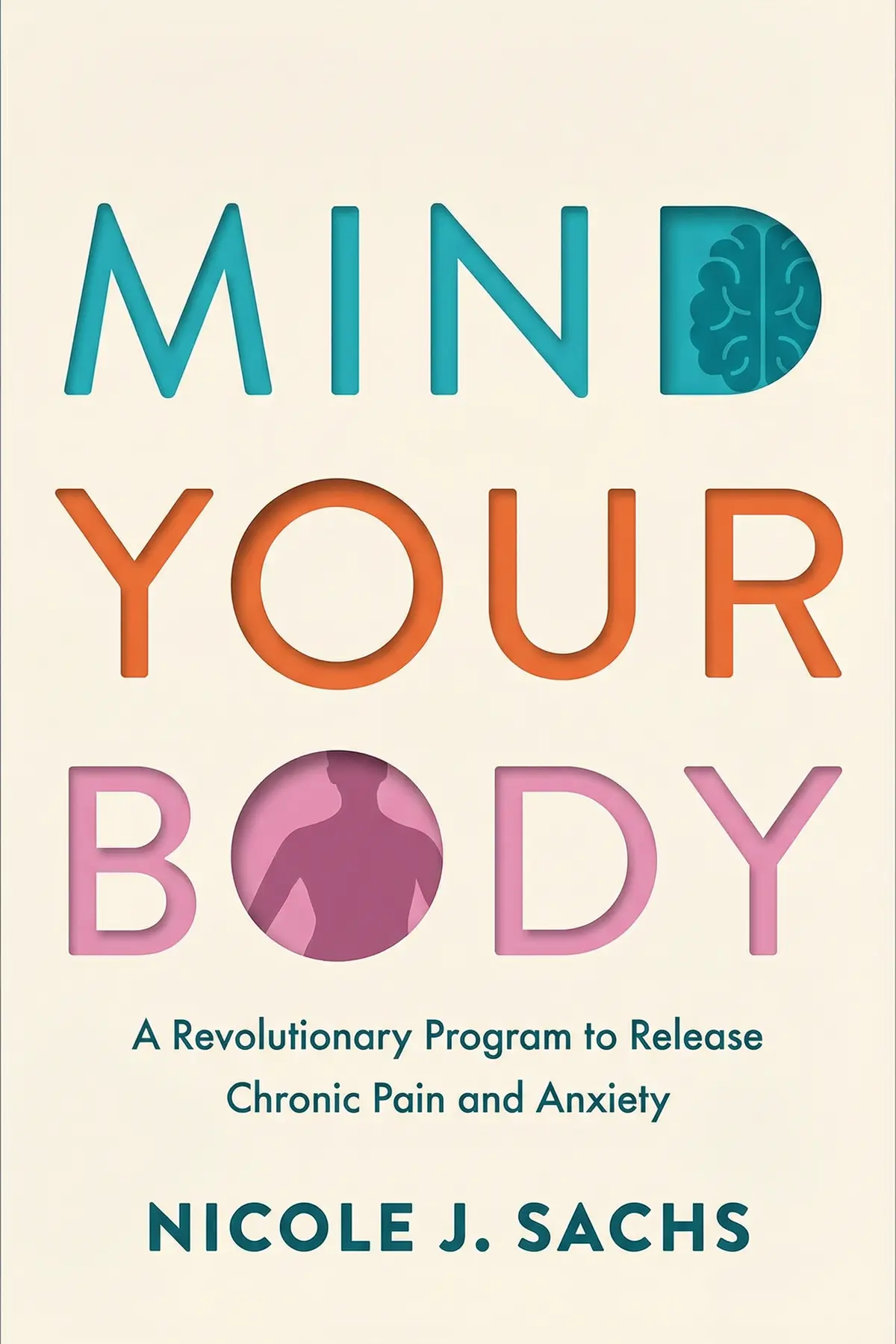
Table of Content
1. Introduction
1 min 02 sec
Living with chronic pain often means collecting diagnoses that explain everything except how to feel better. In Mind Your Body, psychotherapist Nicole J. Sachs argues that much of that pain comes from the nervous system reacting to emotions we have pushed out of sight, and that it can ease once those emotions are given room. Her case starts with a fact doctors tend to skip: millions of people have bulging discs in their spines and feel no pain at all.
Sachs once helped treat patients of Dr. John E. Sarno, the physician whose Mindbody approach she builds on. She also overcame her own disabling back pain without surgery. Her claim is simple to state and hard to practice: pain that is real but emotionally driven can calm down when buried feelings are safely let out, day after day. What follows is the model behind that claim, a 30-minute daily routine of writing and meditation, and a 28-day test you can run on your own symptoms.
2. Look beyond the diagnosis that explains your pain
2 min 05 sec
A nineteen-year-old was told to give up on pregnancy and consider surgery that might not even work. What she found instead raises a hard question about how often a scan truly explains the pain it names.
3. Understand how stress becomes real physical pain
1 min 49 sec
Your nervous system was built to watch for predators and poison. Sachs argues it now watches something far closer to home, and that its well-meant alarm may be the very pain you are trying to stop.
4. Notice where you run when life gets hard
2 min 04 sec
Before any healing practice can work, something in you will push back, sometimes disguised as a perfectly healthy habit. Learning to recognize that move, without scolding yourself, turns out to be the real starting line.
5. A daily half hour that gives feelings a voice
2 min 04 sec
Sachs doubted that writing could change anything. Then a furious line about motherhood led her to a discovery about what she actually resented, and it showed why the ugliest sentence on the page matters most.
6. Write it out, breathe, then throw it away
2 min 02 sec
The session has four steps, and the one most people would skip is the one Sachs considers cleansing. What you do with the page after twenty minutes of raw honesty is part of the treatment.
7. Run a 28-day test on your own symptoms
1 min 56 sec
Four weeks, half an hour a day, and a before-and-after record of your symptoms. Sachs also warns about a strange twist along the way that many would mistake for failure.
8. Conclusion
1 min 02 sec
Mind Your Body asks people in pain to stop treating the body as the only place to look. Sachs pictures a guard doing its job too well: a nervous system that once watched for predators now reads a buried grudge, a money worry or an old childhood hurt as danger, and answers with pain that is fully real. Her own life is the argument she leads with. The teenager told to avoid long car rides and give up on pregnancy became, decades later, an active mother of three who never had the fusion surgery.
What she offers is a practice you carry out yourself. Notice where you escape when life gets hard, and meet that habit without judgment. Protect 30 minutes a day: 20 minutes of JournalSpeak on one stressor, written as harshly as the feeling demands, then 10 minutes of meditation, then the page in the shredder. Keep a Day One inventory so that four weeks later you can compare honestly.
Each bucket carried out of the reservoir gives the alarm one less reason to ring.
About this book
What is this book about?
Hundreds of millions of people around the world live with chronic pain they have been told cannot be cured, and the lack of answers can lead to depression, suicidal thoughts and substance abuse. Psychotherapist Nicole J. Sachs argues that many of them are looking in the wrong place. She builds on the Mindbody approach of Dr. John E. Sarno, whose patients she once helped treat. Her claim is that repressed emotions and stored trauma can push the nervous system into a protective fight-or-flight state that produces genuine pain. Sarno called this condition tension myoneural syndrome. Sachs knows the problem from the inside. At nineteen she was diagnosed with a degenerative spinal condition and advised to have fusion surgery. She recovered without it and went on to have three children. The book turns that model into a routine. Readers learn to spot their avoidance habits and to practice JournalSpeak, a targeted 20-minute writing method for releasing buried feelings, followed by 10 minutes of meditation. They then track their symptoms through a 28-day challenge, with prompts for the days when the words will not come.
Book Information
Who it's for
Patients with unresolved symptoms
People with back pain, headaches, IBS or other chronic symptoms that scans and treatments have not resolved.
Pain sufferers suspecting stress
Readers who suspect stress and buried emotions play a part in their pain and want a structured daily practice.
Practitioners exploring Sarno's approach
Therapists and coaches curious about Dr. John E. Sarno's Mindbody approach.
About the Author
Nicole J. Sachs
Nicole J. Sachs is a psychotherapist and licensed clinical social worker (LCSW) who specializes in the mind-body connection. Her work combines traditional psychotherapy with somatic, body-based approaches and looks at both the psychological and the physical sides of health. She once helped treat patients of Dr. John E. Sarno, and she recovered from her own disabling back pain without surgery.
Ratings & Reviews
Ratings at a glance

What people think
Listeners find this book to be a groundbreaking method for addressing chronic pain and anxiety, offering practical exercises and a solid foundation in neuroscience. The material is accessible and clear, fostering emotional wellness and self-acceptance, with one listener sharing that it resolved 43 years of migraines. They value the book’s empathetic perspective and the way it assists in lowering anxiety levels.
Top reviews
Ava
Finally, a resource that doesn't just tell me the pain is 'all in my head' while simultaneously offering no solutions. For years, I felt like a prisoner to my own body, trapped by diagnoses that offered zero hope for actual recovery. Nicole Sachs changed that by teaching me about the 'emotional reservoir' and how our nervous system perceives repressed feelings as a direct threat. This book is a revolutionary program for chronic pain relief that focuses on radical self-acceptance rather than just treating superficial symptoms. Yes, her style is passionate and at times a bit intense, but when you've been in hell for a decade, that's the kind of warrior you want in your corner. Her compassionate approach to JournalSpeak has helped me find a sense of safety I didn't know was possible. It’s an essential read for anyone who feels stuck in a cycle of chronic illness and fear.
Show morePhimwan
Picked this up after hearing Nicole on a podcast, and the paradigm shift has been absolutely real. I’ve struggled with migraines for nearly half my life, and this is the first time I’ve felt like I have actionable steps that don't involve another round of expensive medication. The concept of 'JournalSpeak' is simple but incredibly difficult—it’s about facing the raw, ugly emotions we usually bury. I appreciate how Sachs doesn't patronize the reader with 'positive thinking' nonsense; she wants you to get messy. To be fair, the book can be repetitive, and she spends a lot of time defending her credibility against Western medical models, but the results speak for themselves. My symptom-free days are increasing every week. If you’re tired of the 'wait and see' approach from doctors, give this a chance. It’s a lot cheaper than another MRI and far more effective.
Show moreSoontorn
After years of being bounced between specialists who couldn't explain my symptoms, this book felt like a warm embrace. It offers a clear, compassionate path out of the 'epidemic of fear' that characterizes modern chronic illness. Sachs is a world-renowned expert for a reason; she understands the deep connection between trauma and the nervous system. The instructions for meditation and journaling are easy to follow and ground the more abstract theories in daily practice. I particularly loved the sections on 'inner child' work, which helped me identify stressors I’ve been carrying since childhood. Not gonna lie, the emotional work is exhausting, but it’s the only thing that has actually lowered my pain levels. This isn't just about 'healing'—it's about reclaiming your life from the grip of a dysregulated nervous system. I cannot recommend it highly enough for those in the thick of it.
Show moreTanyaporn
This isn't just a book you read; it’s a practice you inhabit. I’ve been following the Nicole Sachs method for about six months now, and I’m living almost entirely symptom-free after 20 years of chronic fatigue and dizziness. This book serves as the perfect handbook for that journey. It provides the 'why' behind the pain—the brain science and the nervous system’s role—and then gives you the 'how' through JournalSpeak. It’s wild to think that something as simple as dedicated emotional expression could fix what years of physical therapy couldn't, but here I am. Sachs writes with such confidence that you can't help but feel buoyed by her words. She calls us an 'army of warriors,' and honestly, that’s exactly how it feels. If you are struggling with fibromyalgia or 'inexplicable' symptoms, please buy this book. It is the roadmap to the paradigm shift you've been looking for.
Show moreRod
Ever wonder why your physical symptoms flare up right when life gets most chaotic? Nicole Sachs answers that question with more clarity than any doctor I’ve ever visited. 'Mind Your Body' is a masterclass in understanding the psychosomatic root of chronic pain without making the sufferer feel blamed. The book is easy to digest, with short chapters and clear, actionable steps that make the 'work' feel manageable. I found the sections on the 'sentinel role' of the nervous system particularly eye-opening. It completely changed how I view my anxiety. While the author's tone is definitely 'rah-rah,' her compassion is palpable on every page. This book is a beacon of hope in a medical system that often leaves chronic pain patients behind. It’s not a quick fix, but it is a real fix. Go take your life back.
Show moreMia
As a scientist by training, I approached Nicole Sachs' work with a healthy dose of side-eye. The 'rah-rah' tone and some of the more hyperbolic testimonials about miracle cures for rare conditions initially pushed the boundaries of my believability. However, once you peel back the used-car-salesman layers, the core logic regarding nervous system dysregulation is actually quite sound. Sachs explains the brain science of chronic conditions in a way that makes sense of why 'mysterious' symptoms flare up during high-stress seasons. Her methodology isn't about ignoring physical pain, but about addressing the brain’s sentinel role in protecting us from repressed emotions. Frankly, I’m not totally sold on journaling being a total cure-all, but I’ve seen enough progress in my own anxiety levels to keep at it. A solid 4 stars, even if the prose is a bit too 'Goop-adjacent' for my liking.
Show moreMonthon
Not what I expected, but exactly what I needed. I’ll admit the 'Gwenyth Paltrow' vibes in the first three chapters almost made me DNF this book, as the tone felt a bit too 'woo-woo' for my comfort zone. But I stuck with it because the science of tension myoneural syndrome (TMS) fascinated me. Sachs does a great job of building on Sarno’s work while making it more accessible for a modern audience. The book is structured well, moving from personal anecdotes to the 'how-to' of her program. While some of the testimonials feel a bit too good to be true, the underlying message of safety and emotional health is undeniable. My only gripe is that the writing can be a bit 'cringey' and over-the-top with the sales pitch. However, if you can get past the stylistic choices, there is some genuinely life-altering wisdom buried in these pages.
Show moreTang
If you’ve already read Dr. John Sarno, some of this will feel very familiar, yet Sachs adds a necessary layer of modern application. She takes the foundational ideas of mind-body medicine and turns them into a daily practice that feels sustainable. The way she describes the 'emotional reservoir' helped me understand why my back pain always peaks when I'm trying to be 'the strong one' for my family. In my experience, the book is at its best when it's giving direct instructions on how to 'do the work' rather than when it's trying to convince the reader that the work is real. The defensiveness is a bit much. Still, the focus on self-compassion and reducing the 'danger signal' to the brain is a game-changer. It’s a 4-star read because the content is 5-star, but the repetitive writing style drags it down just a bit.
Show moreCholada
Look, I’m not usually one for things that feel like 'faith healing,' but the science of nervous system safety explained here is hard to ignore. Sachs has a gift for making complex psychological concepts feel relatable. She doesn't lecture or patronize; instead, she shares her own 'trip into the fire' to show that she’s been there too. The journaling prompts are incredibly effective, even if they make you feel 'squicked out' or uncomfortable at first. That discomfort is actually part of the process, which she explains beautifully. I do agree with other reviewers that the language can feel a bit like an MLM pitch at times, which might turn off some readers. But if you can suspend your disbelief for a few weeks and actually do the exercises, you might be surprised by what happens to your physical symptoms. It worked for me.
Show moreTippawan
The truth is, while I believe in the mind-body connection, the presentation here feels a bit too 'late-night infomercial' for my taste. Nicole Sachs clearly knows her stuff, and her history with Dr. John Sarno adds weight, but the constant defensiveness in the early chapters made me feel like I was being sold a bridge. Personally, I think her 'JournalSpeak' technique is a solid tool for anyone dealing with an overflowing emotional reservoir, but you could easily find most of this on her website without the repetitive, almost cult-like language. I also struggled with the way she leans on controversial figures like Bessel van der Kolk to bolster her credibility. It’s a polarizing read—one part life-saving medical paradigm shift, one part 'shaking something sparkly' to distract from the lack of clinical trials. It’s worth a look for chronic pain sufferers, but bring a discerning eye.
Show moreQuestions about this book
What is the main idea of Mind Your Body by Nicole Sachs?
Sachs argues that a great deal of chronic pain comes from the nervous system reacting to repressed emotions and stored trauma. When an inner emotional reservoir overflows, the body triggers a fight-or-flight response and may produce pain and anxiety as a form of protection. Drawing on Dr. John E. Sarno’s work on tension myoneural syndrome, she holds that the pain is real and can ease when those emotions are safely released.
What is JournalSpeak?
JournalSpeak is the writing method Sachs developed. You list stressors from childhood, daily life and personality, pick one, and write freely about it for 20 minutes, using as much strong language as you want, since no one else will read it. You follow it with 10 minutes of meditation and then destroy the page by shredding, burning or deleting it. The aim is to surface buried emotions before they overwhelm you.
What is the 28-day challenge in Mind Your Body?
Sachs asks readers to spend 30 minutes a day for 28 straight days on JournalSpeak and meditation. On Day One you record your symptoms, their severity and your stressors. On Day 28 you repeat the inventory and compare. For stuck days she offers prompts, including Tara Brach’s question about what you are unwilling to feel. She also warns that pain may move around the body, which she sees as part of the process.
Who should read Mind Your Body?
It suits people with chronic back pain, headaches, migraines, IBS or digestive problems who were given a structural diagnosis that never brought relief. Sachs notes that many people have bulging discs and feel no pain. Readers who are open to the idea that stress and buried feelings affect the body, and who can commit to a daily half hour, will get the most from it.
Featured in
Readers also enjoyed


ADHD an A-Z: Figuring It Out Step by Step
Leanne Maskell






Alcoholics Anonymous
Alcoholics Anonymous World Services

AUDIO SUMMARY AVAILABLE
Listen to Mind Your Body in 15 minutes
Get the key ideas from Mind Your Body by Nicole J. Sachs, plus 5,000+ more nonfiction titles.
- 5,000+ titles
- Listen as much as you want
- 7-day free trial
- Cancel anytime









