

59 Seconds: Change Your Life in Under a Minute
Richard Wiseman
 English
McManus shows how beliefs you were never forced to hold limit what you attempt. He makes the case for going first without approval, choosing purpose over balance, and practicing a few virtues without limit.
58 sec
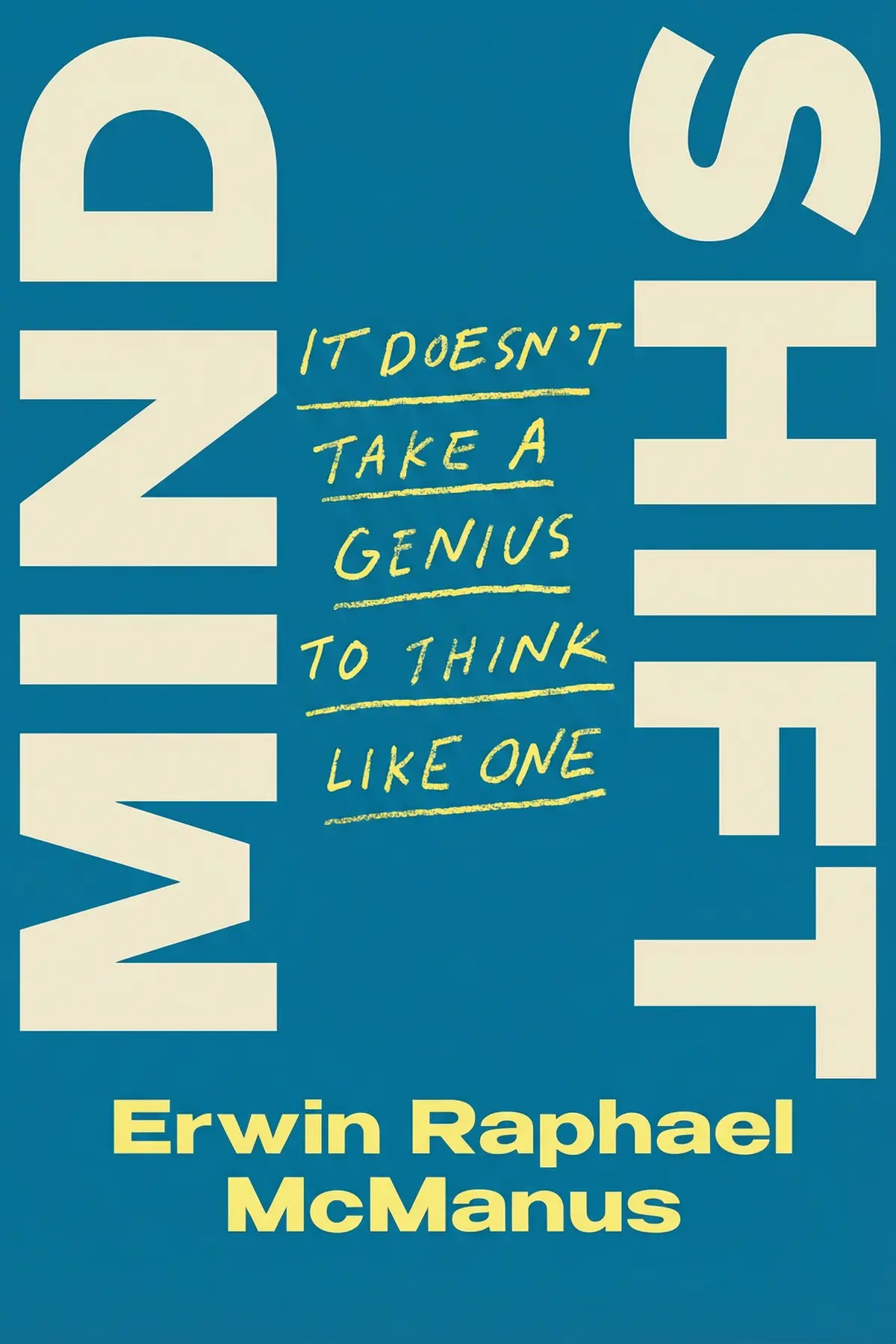
If you keep putting off the thing you most want to do, the obstacle is probably not your talent or your timing. In Mind Shift, pastor and leadership coach Erwin Raphael McManus argues that most of the limits people live with are built inside their own heads. They come from beliefs about what we can learn, whose approval we need and how carefully life should be measured out. Those structures can be taken apart and rebuilt on purpose.
His throughline is simple: change the mental framework and you change what you can achieve. He makes the case through a backstage argument about mushrooms, a billionaire who admitted he was wrong, Michelangelo forgetting to eat while carving David, and Gandhi being thrown off a train. Along the way you get a test for spotting limits you set yourself, a reason to stop waiting for permission, a better aim than balance, and a short list of qualities you never need to ration.
1 min 46 sec
Good people with good values still end up working against themselves for years. McManus has watched it happen again and again, and the cause is rarely what they think it is.
1 min 50 sec
A respected leadership expert gave young leaders some advice about foraging that sounds like plain common sense. McManus heard it backstage and challenged it when his own television interview began.
1 min 49 sec
An investor turned down McManus’s business idea, yet remembered one thing about the pitch for twenty years. When they met again, the investor had something surprising to admit.
2 min 15 sec
Michelangelo carved his masterpiece while living in a way any wellness expert would warn against. McManus uses him to question an ideal almost everyone accepts without a second look.
1 min 45 sec
You can be too polite, too cautious or too modest. McManus names a handful of qualities he believes have no ceiling at all, and one of them is a trait most people are taught to hide.
1 min 08 sec
McManus’s book comes down to a claim about ownership. The beliefs that fence in a life feel like facts about talent, timing or what other people will allow. Yet most of them were put up from the inside, and what was built can be rebuilt.
The backstage argument about mushrooms, Michelangelo at the marble and Gandhi on that train share one picture. In each, someone stopped waiting for permission and let a larger purpose set the direction. The investor who said no twenty years ago is the reminder that early doubt is not a final verdict.
You can start small. Name one dream you have parked while waiting for approval, and take the first step anyway. The next time you feel worn out, check whether your days serve what you care about before you ask for more balance. And keep in mind the few things McManus says you never need to ration: kindness, hope, forgiveness, integrity, and ambition aimed at other people’s good.
Someone always has to taste the mushroom first. McManus wants that someone to be you.
Many capable people keep a dream on hold for years. They wait for approval from family, for a perfect moment, or for someone else to prove the idea safe first. Erwin Raphael McManus argues that the barrier is rarely talent or circumstance. It is the mental structure people carry: their beliefs, habits of thought and assumptions about what is possible. McManus builds his case through stories. He hears a leadership expert advise against eating the mushrooms first, then challenges that advice in his own interview. A billionaire investor admits, twenty years on, that he was wrong to reject McManus's pitch. Michelangelo goes days without food while carving David. Gandhi is thrown off a train and finds his life's fight. From these, McManus draws a challenge to two comfortable ideas: that waiting for proof is always wise, and that balance is the goal of a good life. Readers get a way to spot self-made limits and a reason to act before everyone agrees. They also get a better question than balance for times of exhaustion, and a short list of qualities McManus believes no one can have too much of: kindness, hope, forgiveness, integrity and ambition aimed at the good of others.
Professionals who have kept a dream or venture on hold for years, waiting for approval.
Career switchers whose family and friends doubt the new direction.
Leaders who keep a broken status quo in place rather than risk upsetting people.
Erwin Raphael McManus was born in El Salvador. He founded Mosaic, a community in Los Angeles, and serves as its lead pastor. He writes and speaks on culture, creativity, change and leadership, and his other books include Soul Cravings, Chasing Daylight and The Artisan Soul. He studied psychology at UNC Chapel Hill and holds a Master of Divinity from Southwestern Theological Seminary. Through McManus Mastermind he coaches leaders, entrepreneurs and communicators, and with his wife, Kim, he leads humanitarian work around the world.
Listeners consider this work a concise yet influential experience that fosters a mental transformation, containing various valuable insights and practical guidance throughout. The author's prose earns favorable reviews, and one listener characterizes the book as a masterpiece concerning leadership and entrepreneurship. Listeners value the sincere tone of the writing, with one listener remarking that it reaches into the soul, while another points out the useful instructions and guidance offered.
Erwin Raphael McManus has a way of cutting through the mental noise that keeps us stagnant. This isn't your typical leadership book filled with dry charts; it’s a soulful exploration of the internal structures that dictate our external reality. I loved the emphasis on alignment over balance, particularly the Michelangelo example which resonated deeply with my current career path. The writing is conversational yet carries a weight that forces you to pause and reflect on every page. It’s a short read, but the "golden nuggets" of wisdom regarding internal drive and discipline are immense. Truth is, I walked away feeling like I finally had permission to stop people-pleasing and start leading. It’s an essential tract for anyone ready to stop waiting for permission.
Show moreThe concept of being a "mushroom eater" completely changed how I view risk and leadership. McManus argues that progress requires someone to go first into the unknown, and that shift in perspective is worth the price of the book alone. I’ve read my fair share of personal development books, but this one feels different because it focuses on the internal blueprint rather than external hacks. The way he discusses "You Are Your Own Ceiling" really challenged my own self-imposed limitations regarding my background and expertise. It’s a masterclass in entrepreneurship that focuses on the person behind the business. Not gonna lie, I finished it in one sitting and immediately started highlighting sections to revisit.
Show moreFinally got around to reading this, and the timing could not have been better for my current transition. McManus has this incredible ability to penetrate the soul with simple, profound truths about human nature and potential. The distinction between balance and alignment was a total lightbulb moment for me; it’s okay to be obsessed with a vision. I loved how he integrated his Latino heritage and the obstacles he faced, proving that talent isn't the only metric for success. This book is a series of "golden nuggets" that focus on the drive and discipline required to actually change your life. It’s heartfelt, practical, and honestly, a bit of a masterpiece on leadership.
Show moreMcManus writes with a vulnerability that is rare in the self-help genre, sharing both his failures and his unexpected successes. He doesn't offer a "get rich quick" scheme but instead invites you to dismantle the beliefs that keep you playing small. The 12 mind shifts are presented as vital conversations, making the reading experience feel very intimate and personal. I was particularly moved by the discussion on forgiveness and how bitterness acts as a structural flaw in our potential. It’s a powerful read for anyone who feels they are on the verge of a breakthrough but can’t quite cross the line. Personally, I think this should be required reading for every aspiring creative or leader.
Show moreThis book feels less like a lecture and more like a series of vital conversations with a wise mentor. McManus dismantles the "myth of balance" and replaces it with a call to intentionality and alignment that feels much more attainable. The stories are the star here—from his childhood in El Salvador to the risks taken at Mosaic—and they serve as proof that your past doesn't define your ceiling. It is short, impactful, and filled with practical wisdom that sticks with you long after you close the cover. It’s the perfect primer for someone who is ready to take responsibility for their own growth. This is a must-read for anyone who values progress over comfort.
Show moreIf you're looking for a step-by-step manual with checkboxes, look elsewhere because this book is all about the narrative. McManus uses his gift for storytelling to illustrate 12 crucial shifts, making the concepts feel lived-in rather than theoretical. I found the section on "almost dreams" particularly haunting because it mirrored my own hesitations. While I appreciated the encouraging tone, I do think the lack of concrete exercises might leave some readers wondering how to map out their next moves. Nevertheless, the insight into his own journey as an immigrant from El Salvador adds a layer of authenticity that many "thought leaders" lack. It’s a quick, punchy read that serves as a mental reset.
Show moreAs an entrepreneur, I found the chapter on "You are Your Own Ceiling" particularly convicting and necessary. McManus challenges the idea that we need a perfect vision before we start, arguing instead that we just need to move. I appreciated the conversational style, though at times I wished there were a few more bullet points to summarize the main takeaways. The stories about moving the church to Hollywood Boulevard perfectly illustrated the cost of growth and why you can’t take everyone with you. It’s a bit short, feeling more like a tract in some places, but the impact is undeniable. Frankly, it’s the kind of book you keep on your desk to flip through when you feel your ambition starting to wane.
Show moreEver wonder why you feel stuck even when you have the talent and the resources? This book suggests the problem isn't your skill set, but the invisible mental structures you've built over a lifetime. McManus writes with a passion that is infectious, particularly when he talks about the "almost" lives we settle for when we are afraid. I particularly liked the section on not being a people-pleaser, as that has always been my personal ceiling. My only gripe is that the book is quite short and moves very fast through some complex ideas. But for a quick dose of inspiration and a push toward courage, it's hard to beat.
Show moreTo be fair, I expected something a bit more structured and tactical based on the title. McManus is clearly a brilliant mind and a captivating speaker, but the book felt more like a collection of inspirational transcripts than a cohesive strategy. I struggled with the "mushroom eater" analogy; while I get the point about risk-taking, it felt a bit repetitive by the end. There are definitely some brilliant observations about forgiveness and avoiding bitterness that hit home for me. However, the heavy focus on his personal faith might be a turn-off for readers looking for a purely secular business book. It's a decent motivational read, but you’ll have to do the heavy lifting of figuring out the "how-to" on your own.
Show moreNot what I expected from a book titled "Mind Shift," as it relies far too heavily on personal anecdotes rather than psychological insights. While McManus is undoubtedly successful, the book feels more like a memoir of his triumphs than a guide for the reader's own transformation. There is a total lack of strategic steps or reflective questions, which made it hard for me to apply the 12 shifts to my own life. I found the conversational tone a bit too breezy for such a heavy topic. If you love stories of others' success, you'll enjoy this, but if you want a roadmap, you'll be disappointed. In my experience, a "mind shift" requires more than just hearing about someone else's bravery.
Show moreMcManus argues that your mental structure, meaning the beliefs, thinking patterns and assumptions you carry, largely decides what you can achieve. Most limits people face are self-imposed. Believing talent is fixed leads people to avoid challenges and give up early, while believing effort leads to growth helps them persist. Because these frameworks were built from the inside, he says, they can be taken apart and replaced with better ones.
A leadership expert once advised young leaders never to be the first to eat the mushrooms, meaning let others take the risk. McManus disagreed on air. If no one ever went first, he argued, humanity would stop making progress. Mushroom eaters are people who step into the unknown knowing the danger, because they value the possible good above their own safety. In his view, those who go first and survive gain the most.
McManus says the pursuit of balance can mislead you when it smooths away passion and makes life flat. He points to Michelangelo, who went days without eating or sleeping while carving David, and to Gandhi’s lifelong drive after he was thrown off a train. He suggests aiming for alignment between your actions and a larger purpose. When you are exhausted, he says, you may need to find your purpose again more than you need time off.
He names five. Kindness, which heals and connects. Hope, which carries people through dark times. Forgiveness, which marriages and societies depend on. Integrity, meaning being the same person in every setting. And ambition directed at the good of others. He argues that ambition’s opposite, apathy, does far more harm than misplaced ambition, and he calls it what evil feeds on.
Pick a dream you have postponed and ask whose approval or which perfect moment you are waiting for. Then take the first step anyway. When loved ones doubt you, value their care without letting their fear decide for you. When you feel drained, look at whether your week serves your deepest purpose. And choose one virtue, such as forgiveness or kindness, to stop rationing.
Richard Wiseman





William B. Irvine


Andrew D. Thompson


Deepak Chopra
AUDIO SUMMARY AVAILABLE
Get the key ideas from Mind Shift by Erwin Raphael McManus, plus 5,000+ more nonfiction titles.









