
14 min 26 sec
Available in: English
Mind Magic: The Neuroscience of Manifestation and How It Changes Everything
A neurosurgeon's six-step method for turning goals into daily practice. It covers calming the nervous system, taking back your attention, quieting self-criticism and embedding intentions through visualization, then acting with purpose and letting go of fixed outcomes.
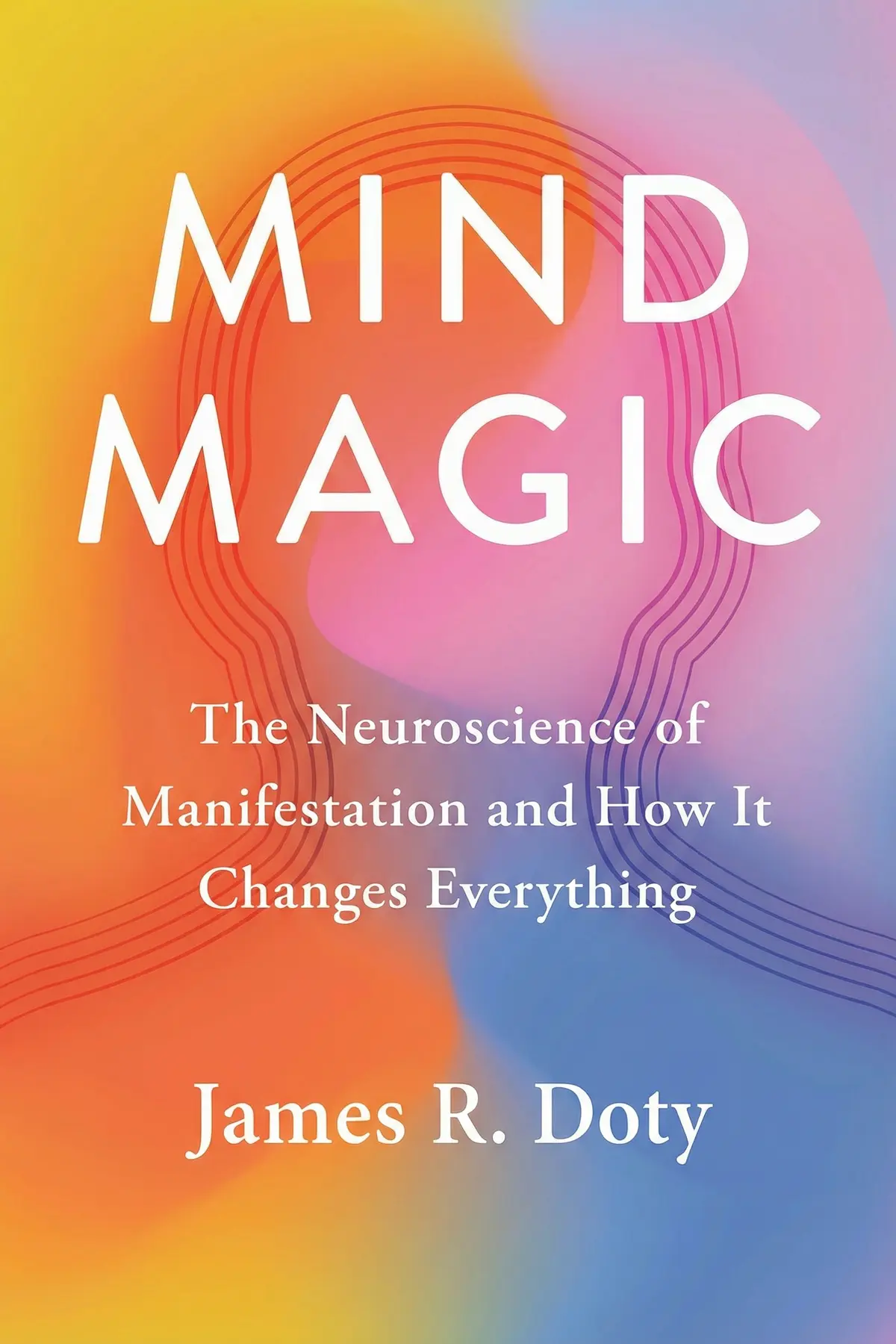
Table of Content
1. Introduction
1 min 05 sec
Most goal setters know how it goes. The phone wins the evening, the inner critic wins the argument, and the goal fades. In Mind Magic, the late Stanford neurosurgeon James R. Doty argues that manifestation, often dismissed as wishful thinking, is really a brain skill: lodging an intention so deeply in the subconscious that the brain starts working toward it. The brain rewires itself through experience, repetition and intention, so a goal you rehearse vividly becomes something your attention hunts for.
Doty first learned this as a poor 12-year-old, from a woman named Ruth in a magic shop. Decades later he set it out as a six-step process. You reclaim your focus, get honest about what you want, quiet the inner critic, embed the goal, pursue it for a purpose beyond yourself, and loosen your grip on how it turns out. Under all six sits one habit: calming the body first. What you take away is a set of short practices built on breathing, picturing and writing.
2. Calm your body before you set goals
1 min 43 sec
A frightened boy in a magic shop was taught three things before he was ever asked what he wanted. The order of those lessons explains why most goal setting starts in the wrong place.
3. Take back the attention your phone keeps stealing
1 min 36 sec
The average American spends the equivalent of 91 waking days a year on one small device. Doty argues that the real damage goes beyond lost time: a scattered mind starts to believe it cannot change anything.
4. Aim higher than the luxury car
1 min 47 sec
A neurosurgeon and investor reached almost everything he had pictured as a boy, then watched it fall apart. What he learned from the wreckage changes which goals are worth the effort of manifesting.
5. Quiet the voice that says you're not enough
1 min 46 sec
Doty compares negative self-talk to a prison you build around yourself, one brick at a time. He also insists you are holding the key, and the way out he offers begins with self-compassion.
6. Make your goal stick in the subconscious mind
1 min 46 sec
A struggling comedian carried a fake check in his wallet for years before he became famous. Doty explains why repeating an imagined future can make the brain start working on it while you sleep, shop or argue.
7. Tie every goal to someone beyond yourself
1 min 50 sec
Doty says plainly that the universe does not care about you. That blunt line leads to an unexpected claim about which goals the brain pursues most efficiently, and why helping others might speed up your own.
8. Loosen your grip and let new doors open
1 min 42 sec
After weeks of vivid, focused visualizing, the last instruction sounds like it undoes everything. Doty argues that the people who cling hardest to their picture of success are often the ones who miss it arriving.
9. Conclusion
1 min 11 sec
Mind Magic goes back to where Doty started, in a magic shop where a woman taught a poor boy to relax and breathe deeply. The magic Ruth offered was calm, attention and a refusal to believe the inner critic. A career in neurosurgery later gave Doty the language of nervous systems and brain networks to describe it. A skeptical reviewer called the book more sciencey than scientific, saying it fits manifestation into a framework borrowed from science and does not study it directly. Even on that reading, the practices are modest, and you can test them in your own week.
Begin with the body: a few slow breaths and a muscle scan before you think about any goal. Write one intention by hand, read it silently and aloud each morning, and note every time you act on it. Connect it to someone other than yourself, and help at least one person each day, as Doty did. When things turn out differently than you pictured, treat the gap as information and look at what arrived.
The universe, Doty admits, does not care about you. That leaves the caring, and the work, with you.
About this book
What is this book about?
Most people know what they want. Following through is the hard part when the phone takes every spare minute, the inner critic argues against every risk and old goals fade before they start. In Mind Magic, Stanford neurosurgeon James R. Doty takes manifestation, long dismissed as self-involved wishful thinking, and recasts it as a skill the brain can learn. The skill is placing an intention so deeply in the subconscious that attention starts working toward it. Doty learned the basics as a poor 12-year-old from a woman named Ruth in a magic shop. Decades later, after his own success fell apart, he rebuilt those lessons using what he knows about the brain: fear mode against heart mode, neuroplasticity and the networks that decide what deserves attention. The result is six steps. Focus, clarify, silence the inner critic, embed the intention, chase it with purpose and release your grip on the outcome. Each step comes with a short practice built on relaxation, visualization and writing. Doty insists that hard work is still required and that goals grow stronger when they serve other people. Even Stephen Fry, who had written manifesting off as New Age nonsense, wrote that the book made him reconsider.
Book Information
Who it's for
Professionals with slipping goals
Professionals whose goals keep slipping away to phone time, stress and self-doubt.
Drawn to manifestation
People drawn to manifestation who want a version grounded in brain science and real effort.
Tired of chasing status
Anyone burned out by chasing status who wants goals tied to purpose and other people.
About the Author
James R. Doty
James R. Doty (1955 to 2025) was a neurosurgeon at Stanford University. There he founded CCARE, the Center for Compassion and Altruism Research and Education, inside the medical school, to study how compassion and altruism relate to the brain. The Dalai Lama is the center's founding benefactor. Doty trained at Tulane University's medical school and did his neurosurgery residency at Walter Reed Army Medical Center, then served nine years on active duty in the US Army Medical Corps. He was also an inventor, entrepreneur and philanthropist, and he wrote Into the Magic Shop.
Ratings & Reviews
Ratings at a glance
What people think
Listeners find the combination of brain science and actionable tools valuable, as it makes the concepts simple to grasp and use. They also describe the experience as profoundly inspiring, and one listener highlights how it clarifies the inner workings of the brain. Additionally, the work is praised for its substance, clarity, and effective exercises, with listeners noting that the techniques really work. They cherish the sincere focus on increasing self-compassion, and one listener mentions that it infuses life with more significance and happiness.
Top reviews
Fang
This book completely shifted my perspective on what manifestation actually is. Unlike the usual fluff you find in the self-help aisle, Doty grounds the concept of 'Mind Magic' in actual neuroscience and the mechanics of the brain. I found the sections on value tagging and how the brain filters information through our emotional lenses to be particularly illuminating. It makes the idea of setting intentions feel like a practical biological upgrade rather than just wishful thinking. The 6-step program is easy to follow, and even though some might find the personal anecdotes about his success a bit much, I felt they served as proof of concept. The focus on moving from hedonic pleasure to eudaimonic well-being—essentially finding joy through purpose and service—is a heartfelt message that resonated deeply with me. It’s empowering to realize that we can rewire our neural pathways to foster self-compassion and achieve our truest desires.
Show moreSamuel
Doty has a remarkable gift for making complex brain science feel incredibly accessible to the average person. I’ve read a lot of manifestation books, but most of them lack the 'why'—they just tell you to believe. Here, we get the neuroscience behind why visualization and commitment actually impact the physical structure of our brains. The story of Ruth and the magic shop is back, and whether you find it hard to believe or not, the lessons she taught him are timeless. I especially appreciated the additive approach to handling social and biological limitations like ADHD; the book acknowledges these hurdles instead of pretending they don't exist. It’s deeply empowering to see manifestation framed as a way to align our preconscious acts with our conscious goals. It filled my week with a sense of meaning and renewed focus. Highly recommend for anyone skeptical of 'The Secret' but curious about the power of the mind.
Show moreFort
Finally got around to reading this, and I’m so glad I did. It’s one of those rare books that manages to be both intellectually stimulating and emotionally resonant. The way Doty connects self-compassion to neural function is brilliant—it makes the 'soft' parts of self-help feel much more concrete. I loved the exercise where you 'zoom out' from your intention to see how it affects the broader community. It moves the practice of manifestation away from just wanting a new car and toward creating positive ripples in the world. The writing is beautiful, and I found myself highlighting sentences just for the way they were phrased. It’s a heartfelt guide to living with more intention and joy. If you’re looking for a book that bridges the gap between spirituality and the lab, this is it.
Show moreChatchai
Wow. Just wow. This is a life-changing read if you go into it with an open mind. Doty manages to deconstruct the 'bullshit' often associated with manifestation while still preserving the magic of the practice. He doesn't just tell you to think positive; he explains how to harness your brain's natural ability to reorganize neural pathways. I found the sections on eudaimonic happiness especially moving—realizing that true manifestation isn't about status symbols, but about service and meaningful connection. The book is filled with such depth and heartfelt advice that it’s hard not to feel empowered after finishing it. It helped me understand my own mental blocks and gave me the tools to build a more compassionate relationship with myself. A truly valuable read that I know I will return to many times.
Show moreOrathai
Picked this up because I enjoyed 'Into the Magic Shop,' and I wasn't disappointed. While this feels more like a 'how-to' guide for the reader's journey, it retains that same readable, engaging tone. Doty breaks down the manifestation process into six clear steps, with a heavy emphasis on silencing the inner critic. Gotta say, the meditations on removing obstacles by focusing on their opposites really helped me tackle some long-standing limiting beliefs. My only minor gripe is that the book can feel a bit repetitive at times, especially when revisiting the same visualization techniques. However, the explanation of the parasympathetic nervous system (PNS) and how it relates to our 'fight-or-flight' response to perceived threats was top-notch. It’s a solid blend of science and strategy that actually feels applicable to daily life. If you're looking for a way to build self-efficacy and clarify your intentions, this is a great resource.
Show moreArjun
Ever wonder why you can't seem to stick to your goals? This book offers a fascinating look at the 'factory settings' of our brains and how they often work against our intentional minds. Doty’s explanation of 'cognitive ease'—training the brain to recognize a desired future as a reality—gave me a new way to approach my daily visualization practice. I've been following the six steps for a few weeks now, and I've noticed a definite shift in my self-efficacy. I’m much more aware of my inner critic now, and instead of letting it spiral, I use the self-compassion techniques mentioned in chapter three. It isn't a magic wand, and the author is clear about 'doing the work,' but it provides a very logical framework for personal transformation. It’s a more 'sciencey' take on the Law of Attraction that I found quite refreshing.
Show moreGiulia
The chapter on value tagging really clicked for me and made the whole concept of 'Mind Magic' worth the read. It’s all about how we assign emotional value to stimuli, and how being mindful of that can help us 'remind' our brains of what is attainable. I've been using the visualization exercises every morning, and while I haven't manifested a mansion (nor do I want one), I do feel more aligned and less stressed. I appreciate that Doty mentions the importance of focusing on goals rather than specific methods, allowing for 'synchronicities' to happen. It’s a very readable book, and the summary of the 6-step process at the end is super helpful for quick reference. A few parts felt a bit 'suck it up buttercup,' but overall, it’s a very practical and encouraging guide.
Show moreElan
After hearing the buzz about a neurosurgeon writing on manifestation, I expected a bit more 'hard' science and fewer stories about luxury real estate. Look, there are some cool ideas sprinkled throughout, particularly the bits on neuroplasticity and how our intentions can guide our mental resources. But I found it hard to stay engaged during the long-winded descriptions of his second mansion, complete with the orchard and zip line course. It felt a bit like 'humble bragging' about immense wealth while trying to teach us how to detach from material outcomes. The 6-week program essentially boils down to visualizing your goal and letting go, which is fine, but it’s nothing I haven't seen in dozen other self-help books. To be fair, the writing style is very polished and the quotes are great, but I found myself skimming through the anecdotes to get to the actual exercises.
Show moreManop
Frankly, the 'humble bragging' in this book was a major turn-off for me. We start with the author describing a mansion he manifested but ended up hating, only for the book to conclude with an even more lavish description of his current estate. It felt incredibly out of touch. I also struggled with the 'science' presented here; it felt more like taking adjacent studies with small sample sizes and forcing them to fit a manifestation narrative. The story of Ruth, the woman who supposedly taught a 12-year-old a complex series of advanced meditations, just doesn't ring true to me. The whole thing felt like a mix of half-cooked research and repetitive meditations that oversimplify ancient practices. There are some okay insights on mindfulness, but honestly, there are much better ways to learn about neuroscience or meditation without the distractingly wealthy anecdotes.
Show moreTanyaporn
Not what I expected from a neurosurgeon at all. I was hoping for deep dives into brain mapping and clinical data, but instead, I got a lot of 'moralist self-help' and stories about Jim Carrey writing himself checks. The author presents a framework for manifestation that feels a bit like a bait-and-switch for basic mindfulness and meditation techniques. While there’s nothing harmful about the advice—visualize, be kind to yourself, work hard—it lacks the trenchancy I want from a scientific text. The 'six steps' are basically what every other guru is selling, just with the word 'neuroscience' slapped on top. Plus, the constant references to his worldly success felt less like inspiration and more like a Gatsby-esque performance. Zzzzzzz, I've heard this all before.
Show moreQuestions about this book
What is the main idea of Mind Magic by James Doty?
Doty argues that manifestation is a trainable brain skill, not wishful thinking. You place an intention deeply in the subconscious through calm, focus and vivid repetition, so the brain becomes primed to notice openings and act on them. He sets this out as six steps: focus, clarify, silence the inner critic, embed the intention, pursue it passionately and release expectations about the outcome.
Does Mind Magic support the law of attraction?
No. In an interview, Doty explicitly rejected the law of attraction and said manifestation rests on neuroscience. The book even states that the universe does not care about you, meaning no outside force will act for you. Hard work is still required, and manifesting is only a first step in an ongoing process of action, feedback and adjustment.
How do you embed an intention according to Doty?
Start from a relaxed state. Sit upright with eyes closed and spend several minutes picturing the goal in rich detail: the place, the people, your feelings. When your mind drifts, return to the image. Then write the experience by hand, read it silently and read it aloud. Doting on the principle that what fires together wires together, he recommends doing this daily.
Why does Doty link manifestation to compassion?
He argues that excessive self-focus harms brain and body, while attention to others activates the calming parasympathetic system, where he says the brain’s networks work best. He describes compassion as sensitivity to suffering plus a commitment to relieve it. Practically, he suggests tying each goal to a benefit beyond yourself and helping at least one person every day.
Who should read Mind Magic?
It suits people who feel scattered by their phones, held back by self-criticism or empty after chasing money and status. It also fits readers curious about manifestation who want it explained through the nervous system and neuroplasticity. Each step comes with a short practice built on relaxation, visualization and writing, and the book includes a six-week program.
Readers also enjoyed

59 Seconds: Change Your Life in Under a Minute
Richard Wiseman





A Guide to the Good Life: The Ancient Art of Stoic Joy
William B. Irvine


A High-Performing Mind: Strengthen Your Mind and Live Your Best Life
Andrew D. Thompson


Abundance: The Inner Path to Wealth
Deepak Chopra
AUDIO SUMMARY AVAILABLE
Listen to Mind Magic in 15 minutes
Get the key ideas from Mind Magic by James R. Doty, plus 5,000+ more nonfiction titles.
- 5,000+ titles
- Listen as much as you want
- 7-day free trial
- Cancel anytime









