

15 min 16 sec
Available in: English
Mastery: The Keys to Success and Long-Term Fulfillment
Shows why real skill grows in short spurts separated by long plateaus, and how to keep practicing through them with the right motives, teachers, rituals and energy instead of chasing quick results.
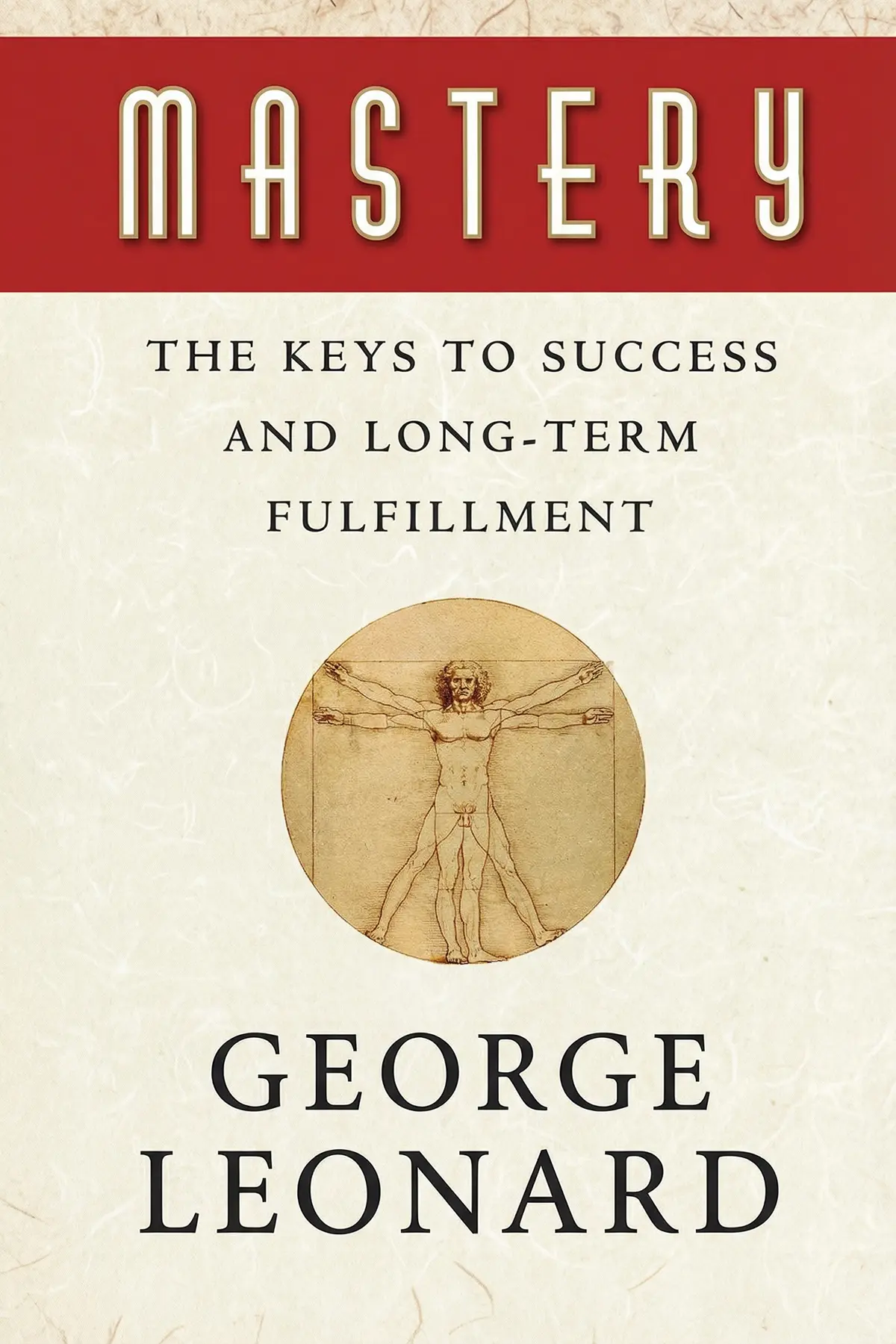
Table of Content
1. Introduction
59 sec
Most people quit a new skill at the same moment: when the early gains stop and their limits start to show. In Mastery, educator and aikido teacher George Leonard argues that this flat stretch is where mastery actually happens. Progress, he says, comes in short spurts separated by long plateaus, and the people who become excellent are the ones who learn to enjoy the plateau itself.
That one shift runs through everything Leonard teaches. It explains why praise makes weak fuel, why learners drop out in three predictable ways, and what a good teacher, a trusted ritual and a steady supply of energy add to the work. His case is that mastery is a path you keep walking, open to anyone willing to practice for its own sake.
The next time your tennis game, your new job or your language course stalls, you will know what kind of ground you are standing on, and what to do there.
2. Find a motive that outlasts the applause
1 min 54 sec
The fastest learner in the first lessons is often not the one still improving a year later. Leonard traces the difference to a choice most people make without noticing, the moment they begin.
3. Learn to enjoy the long flat stretches
1 min 53 sec
Advertising promises results in two weeks, and real skill almost never behaves that way. Seeing how progress actually moves changes what a stalled month means, and whether you stay for the next one.
4. Spot which of three quitters you are
1 min 44 sec
One learner buys the expensive racket, another demands results in a single lesson, a third is happy never to improve. Each type stalls for a different reason, and most of us carry at least one.
5. Choose a teacher who builds on your strengths
1 min 52 sec
A legendary basketball coach divided every practice in a way most managers and teachers never would. That split offers a simple test for any mentor, and a new way to think about what practice is.
6. Trust your teacher, picture success, use your edges
1 min 53 sec
A strange balancing drill, a golfer’s claim that the swing barely matters, and the moment a task feels impossible. Three less familiar habits decide whether practice turns into growth or into frustration.
7. A practice that survives the hard mornings
1 min 53 sec
Most resolutions collapse a few days in, and the cause is often physical rather than a lack of will. Leonard explains what is happening inside you, and borrows a habit from surgeons to keep going.
8. Recover the energy you had as a child
1 min 50 sec
Small children seem to run on endless energy, and somewhere along the way most adults lose it. Leonard thinks it can be reclaimed, and the methods are surprisingly ordinary.
9. Conclusion
1 min 18 sec
Leonard’s book turns success into a way of living with a skill. The goals, prizes and praise most people chase are, in his view, the weakest reasons to continue, because they stop working exactly when the work gets hard. What lasts is the plateau, accepted and even enjoyed, with a good teacher beside you, a ritual to return to and enough energy to show up again tomorrow.
He suggests an unlikely place to begin: the kitchen sink. Next time you wash the dishes, pause before starting and consider the most effective way to do them. Then pay attention to each movement and do it well instead of rushing. It will feel slower at first. Leonard expects the careful way to prove faster and cleaner before long.
The same attention carries over to tennis, aikido or a new job. When progress stalls, notice which of the three quitters shows up in you. Choose teachers who spend as much time on what you do well as on what you get wrong. When a backslide comes, find someone who has already been through it.
The black belt was never the end of training. It was permission to keep practicing, and the plateau is where that practice lives.
About this book
What is this book about?
Most people start a new skill with excitement and drop it the moment progress stalls. Tennis, a language, a new job: the pattern repeats. George Leonard, an educator who held a fifth-degree black belt in aikido and co-founded a dojo, argues that the stall is the normal shape of learning. Skill grows in brief bursts between long flat stretches, and the people who become excellent are the ones who come to enjoy those stretches. Leonard shows why praise and quick fixes make poor fuel, and he describes three common ways learners fail: the dabbler, the obsessive and the hacker. He then sets out five elements that carry a learner forward: instruction, practice, surrender, intentionality and edge control. Examples range from basketball coach John Wooden to golfer Jack Nicklaus and surgeons who wash their hands the same way before every operation. Readers get a way to recognize their own quitting pattern, a test for choosing a good teacher, defenses against the backslides that wreck resolutions, and practical ways to recover the energy that long practice demands.
Book Information
Who it's for
Quitting hobbies at plateaus
Learners who start hobbies with enthusiasm and quit as soon as progress stalls.
Stuck after early gains
Professionals in a new job or field who feel stuck after the first quick gains.
Athletes, musicians, martial artists
Athletes, musicians and martial artists looking for a steadier way to train for years.
About the Author
George Leonard
George Leonard (1923 to 2010) was an American writer, editor and educator whose work focused on education and human potential. He wrote and edited for Look Magazine and served as president of the Esalen Institute and of the Association for Humanistic Psychology. A former pilot in the United States Army Air Corps, he held a fifth-degree black belt in aikido, co-founded the Aikido of Tamalpais dojo in California and created Leonard Energy Training.
Ratings & Reviews
Ratings at a glance

What people think
Listeners find this book to be a brief and accessible roadmap to attaining mastery, filled with functional advice that aids in self-drive and life outlook. They admire its direct prose and consider it a mandatory read, with one listener characterizing it as a page-turner. The book receives acclaim for its flow, with one review noting how it expertly navigates contradictions, and listeners find it both pleasant and useful for their personal paths.
Top reviews
Bun
As someone who has spent years hopping from one hobby to another, this book felt like a direct confrontation with my own restlessness. George Leonard’s breakdown of the 'Dabbler,' 'Obsessive,' and 'Hacker' is painfully accurate, and I finally realized why I always stall out right when things get difficult. The truth is, we live in a culture that treats the plateau like a failure rather than the very place where growth happens. This book offers a much-needed life perspective that shifts the focus from climactic goals to the beauty of the daily grind. It’s a concise, easy-to-read guide that I will likely revisit every time I feel the itch to quit a new project. Frankly, the lesson about being willing to look like a fool—to 'wear the white belt'—is something I wish I’d learned a decade ago. It is a genuine page-turner that forces you to re-evaluate your entire approach to success and long-term fulfillment.
Show moreManop
Wow, this is a profound meditation on what it actually means to live a life of purpose and dedication. Leonard explains that mastery is not a destination you eventually reach, but a journey that continues for as long as you live. This perspective shift changed how I view my professional development and my hobbies; I no longer fear the long stretches where I do not seem to be improving. The book is incredibly concise, yet it manages to cover everything from physical fitness to the importance of telling the truth. I particularly loved the section on 'loving the plateau'—it is such a counter-intuitive idea in a world obsessed with constant upward movement. In my experience, most self-help books are three hundred pages of fluff, but this is a rare exception that delivers high value in every single chapter. It is a truly riveting read that I have already recommended to three different friends this week.
Show morePatcharaporn
Picked this up on a whim after seeing it mentioned in a podcast and I ended up finishing it in just two sittings. It is rare to find a book that is both this short and this packed with actionable wisdom. Leonard argues that we are all 'learning animals,' and that our potential is virtually infinite if we can just learn to endure the plateaus. The way he describes the 'Mastery Curve' helped me realize that my recent lack of progress was not a sign to quit, but a necessary stage of the process. I found the sections on visualization and the mental game to be particularly illuminating, reminding me of how top athletes like Jack Nicklaus prepare. This is not just a book about getting better at a skill; it is about a way of being in the world. It is an enjoyable, straightforward read that provides a much-needed antidote to our fast-paced, distracted culture.
Show moreKan
Is it possible to find deep fulfillment in the mundane act of washing the dishes or driving a car? Leonard suggests that if we approach these tasks with the heart of a master, the answer is a resounding yes. This book is a masterclass in staying present and finding joy in the practice itself, rather than just the final results. I was struck by the idea that we must be willing to fail and try again for as long as we live to truly excel. The writing is incredibly engaging and the pacing is perfect, making it a very easy book to get through in a single weekend. It navigates the contradictions of ambition and peace in a way that feels authentic and earned. For me, this was more than just a self-help book; it was a required read for anyone trying to build a meaningful life. It is practical, honest, and deeply encouraging.
Show moreSureerat
After hearing various high-performance coaches rave about this book, I finally sat down with Leonard’s guide to excellence. What I found was a refreshingly straightforward manual that cuts through the noise of modern 'hustle culture' and instant gratification. The author expertly navigates contradictions, showing how extreme discipline can actually lead to a sense of freedom and spontaneity. Personally, I found the breakdown of the different learner types—especially the Obsessive who burns out quickly—to be the most helpful part of the text. It is a short, punchy book that does not waste time with flowery prose, yet it manages to offer deep insights into human potential. My only minor gripe is that some of the sports examples felt a bit dated, but the core principles remain timeless. If you are looking for a realistic approach to self-motivation, this is a required read that will stay on my shelf for a long time.
Show moreLena
The chapter on the five keys to mastery provided exactly the kind of structured guidance I was looking for to improve my craft. Leonard’s writing is clear and unpretentious, making complex psychological states feel accessible to the average reader. Not gonna lie, I was a bit skeptical of how much I could learn from a martial artist, but his insights on 'the path' apply to everything from corporate leadership to parenting. He emphasizes that being a master requires a willingness to look foolish and make mistakes, which is a hard pill to swallow for perfectionists. The pacing is excellent, and the book avoids the trap of being overly academic while still feeling deeply intellectual. While I felt some of the household analogies, like the one about washing the dishes, were a bit long-winded, they eventually drove home the point of mindfulness. This is a solid, practical tool for anyone who wants to stop dabbling and start achieving results.
Show moreGiulia
Frankly, I was surprised by how much this slim volume impacted my daily routine and my general outlook on long-term goals. Picked this up because I wanted to understand the 'mastery mindset,' and Leonard delivers a no-nonsense roadmap for staying committed. He talks about how our society is addicted to the 'quick fix,' which makes the slow, deliberate process of mastery feel alien and frustrating to most of us. By identifying the common pitfalls, like the 'Hacker' who settles for mediocrity, he gives you the tools to diagnose your own behavior. The book is an easy-to-understand guide that does not sugarcoat the hard work required to reach the top. I enjoyed the personal anecdotes from his dojo, as they grounded the philosophical concepts in real-world experience. It is a page-turner for anyone interested in personal growth, even if you have no interest in martial arts specifically. This book definitely helps with self-motivation.
Show moreSofia
Ever wonder why some people seem to excel at everything they touch while others just bounce from one failed attempt to the next? Mastery explains that the difference is not just talent, but a fundamental relationship with the process of learning. Leonard provides a great guide to achieving your goals by teaching you how to embrace the inevitable slumps in progress. The distinction between the 'Obsessive' who wants immediate results and the 'Master' who loves the practice was a huge 'aha' moment for me. While the book is quite short, it is a page-turner that provides a lot of practical wisdom for self-motivation. Truth is, I did find some of the analogies a bit repetitive, but the overall message is so important that it is easy to overlook the minor flaws. It is a solid read that offers a realistic and helpful life perspective for anyone serious about their passions.
Show moreTaw
To be fair, I appreciate the central philosophy here, but I found the writing style a bit dry and repetitive at times. Leonard draws heavily from his background in Aikido, which is fascinating in small doses, but it occasionally felt like he was stretching a few good ideas to fill the page count. I struggled with the sections on mundane tasks, like the detailed explanation of how an air conditioner works to illustrate feedback loops. While the logic holds up, the pacing slowed down significantly during those long-winded metaphors. That said, the 'Mastery Curve' is a brilliant framework that helps you navigate the contradictions of long-term improvement. It is not a life-changing masterpiece for me, but there is enough practical wisdom to make it a worthwhile read for anyone stuck in a rut. I would recommend it as a supplemental text rather than a primary source of inspiration for your personal development journey.
Show morePrayoon
Look, I really wanted to like this given all the five-star reviews, but I found the vast majority of the content to be total filler. There are a few interesting points about the 'plateau' that I have spent some time thinking about, but they could have been summarized in a blog post. Instead, we get pages and pages of 'dribble' about checking tire pressure or how an air conditioning system works. I do not see how spending four pages on the mechanics of an indicator light helps me with personal development or professional success. Compared to classics like 'Think and Grow Rich,' this just feels like it is in a much lower league of utility. The writing style is a bit dull and it failed to keep my attention for long stretches. I am considering just giving this away, as I do not think it is a valuable addition to my permanent library.
Show moreQuestions about this book
What is the main idea of Mastery by George Leonard?
Leonard argues that mastery is an ongoing path, not a goal you reach and leave. Real skill grows in short bursts of improvement separated by long plateaus where nothing seems to change. Most people quit on the plateau because they want quick results or praise. The people who become excellent learn to enjoy practice for its own sake, supported by good instruction, surrender, intentionality and attention to their edges.
What are the dabbler, the obsessive and the hacker in Mastery?
They are Leonard’s three types of learners who struggle with plateaus. The dabbler starts with great enthusiasm and drops out at the first flat stretch. The obsessive wants instant results, such as mastering a tennis forehand in one lesson, and quits when progress slows. The hacker is content to stay on the plateau indefinitely without trying to improve. Recognizing your own type is the first step to changing it.
What are the five keys to mastery according to George Leonard?
Leonard names instruction, practice, surrender, intentionality and edge control. Instruction means finding a good teacher, ideally in person. Practice means treating practice as a path rather than mere repetition. Surrender means trusting your teacher even when an exercise seems odd. Intentionality is visualizing success, as golfer Jack Nicklaus does. Edge control means treating hard challenges as chances to exceed your own expectations.
How do you keep practicing when motivation drops?
Leonard explains that early backslides often come from homeostasis, the body’s resistance to sudden change, as when a new five-kilometer morning run leaves you breathless. He recommends spending time with people who have already been through the same struggle, focusing on the joy of practice instead of quick success, and turning routines into rituals, much as master surgeons wash their hands the same way before every operation.
How can I apply Mastery in everyday life?
Leonard suggests starting with an ordinary chore like washing dishes. Before you begin, think about the most effective way to do it, then pay attention to each movement and do it well instead of rushing. He also recommends walking or cycling instead of driving to rebuild energy, setting one main priority, and choosing teachers who balance correcting weaknesses with reinforcing strengths, as coach John Wooden did.
Readers also enjoyed




A Guide to the Good Life: The Ancient Art of Stoic Joy
William B. Irvine


A High-Performing Mind: Strengthen Your Mind and Live Your Best Life
Andrew D. Thompson


Abundance: The Inner Path to Wealth
Deepak Chopra

AUDIO SUMMARY AVAILABLE
Listen to Mastery in 15 minutes
Get the key ideas from Mastery by George Leonard, plus 5,000+ more nonfiction titles.
- 5,000+ titles
- Listen as much as you want
- 7-day free trial
- Cancel anytime









