


12 min 02 sec
Available in: English
Mastering Executive Transitions: The Definitive Guide
Shows newly appointed senior leaders why so many role changes at the top go wrong, and how coaching, early onboarding and the right allies turn a risky move into a lasting one.
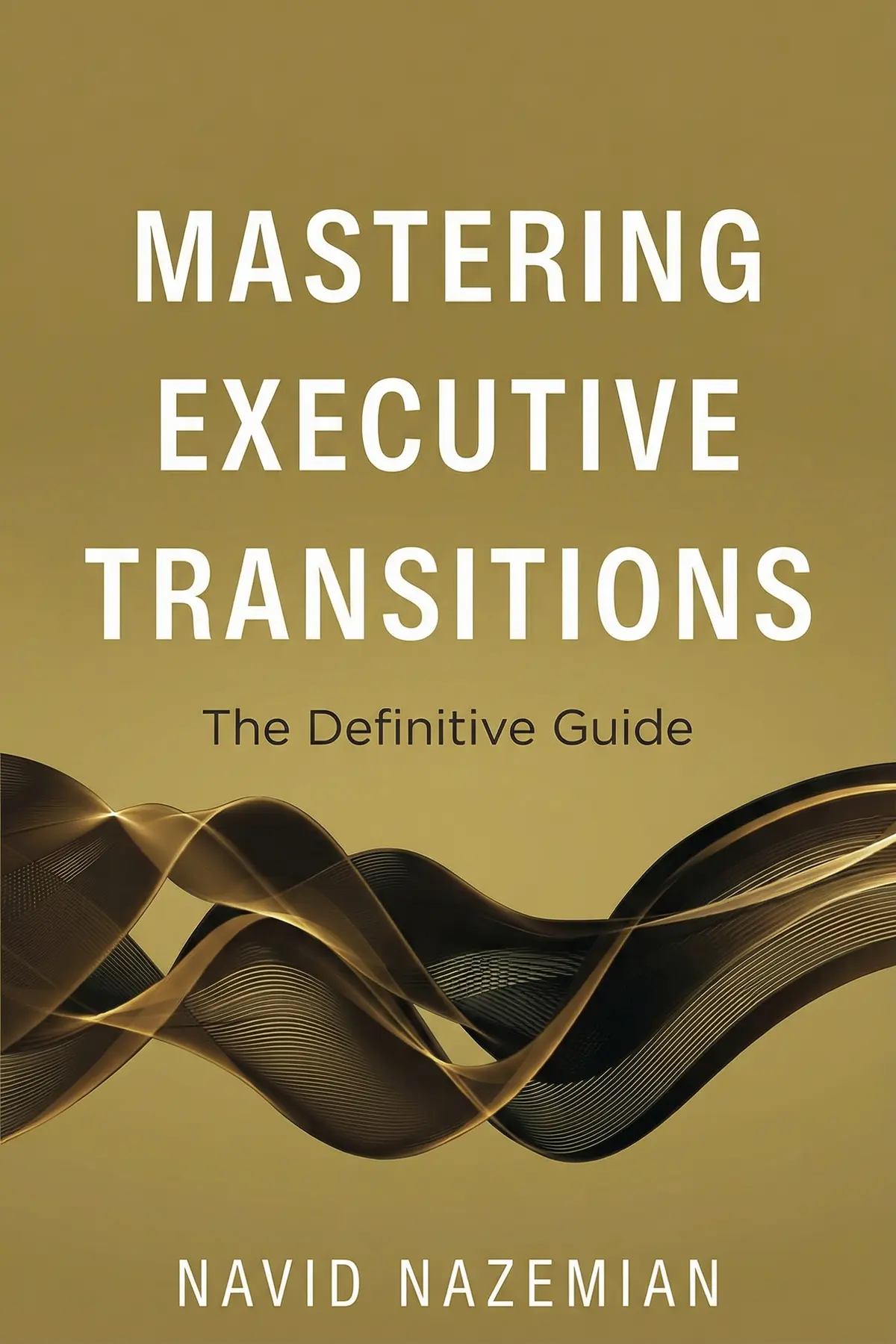
Table of Content
1. Introduction
59 sec
You have just won the senior role you worked years for, and the hardest part is about to begin. In Mastering Executive Transitions, executive coach Navid Nazemian reports that roughly four in ten moves into executive roles are said to fail. Most of them, he argues, break on things no job description mentions: an unfamiliar culture, its politics, the people who wanted the same job, and an organization far more complex than it looked from outside.
His answer is to treat a transition as a long, supported process that begins before the first day and keeps going well past the first weeks. Drawing on his coaching work with more than 100 C-level clients, he maps the human traps, the business situations a new leader can inherit and the kinds of support that shorten the climb. What you gain is a clear way to read your own move, name its risks early and plan its first months on purpose.
2. Avoid the pitfalls behind four in ten failed executive moves
1 min 40 sec
A strong record wins the promotion, yet a large share of new executives still stumble. The causes Nazemian finds sit in two places most leaders never prepare for, and the damage spreads well beyond the person who failed.
3. Read a new culture like a new relationship
1 min 36 sec
Every organization runs on rules nobody writes down, and the people with real influence are not always the ones with the biggest titles. Nazemian explains how a new leader finds both before making a costly misstep.
4. Lead former peers and outgrow self-doubt
1 min 42 sec
Moving up can make a capable person feel like a fraud, and the team may include colleagues who wanted the same job. Both problems are common, and both get worse when a new leader ignores them.
5. Diagnose the business situation you inherit
1 min 38 sec
A failing unit, a team that denies it needs to change and a role that never existed before all call for different first moves. Treating them the same way is one of the quieter routes to a failed start.
6. Start before day one and keep support going
1 min 36 sec
Tidy plans for a leader’s first weeks are popular, but the evidence on how long adaptation really takes points elsewhere. Nazemian argues that when onboarding begins and ends matters as much as what it contains.
7. Borrow the interim executive's speed and focus
1 min 42 sec
Some leaders, like interim executives, are known for stepping into a new role and acting decisively in a remarkably short time. Their working habits, paired with a simple written tool, give any new executive direction during the most chaotic months.
8. Conclusion
1 min 09 sec
Nazemian’s book reframes a promotion to the top as the opening of a long adaptation. The talent that won the role is taken for granted. What decides the outcome is how well a leader reads an unfamiliar culture, handles people who were peers or rivals, recognizes the business situation inherited and accepts help early. The failures he describes come mostly from missing preparation and missing support, and their cost lands on the whole organization.
The practical response is plain. Before the start date, find out who really holds influence and which kind of situation the role is, whether a unit in distress, a merger or a post nobody has held before. Put a coach and a written transition checklist in place so the first months have direction. Then keep the support running long after the early excitement fades, beginning with your direct reports, your manager and your HR partner.
The leaders who thrive in a new role are seldom the ones who arrived knowing everything. They are the ones who planned to keep arriving.
About this book
What is this book about?
Stepping into an executive role looks like the reward for years of work, yet Navid Nazemian reports that around four in ten such transitions are said to fail. The cause, in his view, often lies in underestimating the organization's complexity and the strategic execution the role demands. New leaders underestimate how complex their organization is, struggle with the stress, culture and politics of the move, and too often receive little support from the company that hired them. Nazemian, an executive coach to more than 100 C-level clients, maps the human side of a transition: reading an unfamiliar culture, finding influencers who sit outside the organization chart, handling imposter syndrome and leading people who used to be peers. He then sorts the business situations a leader may inherit, from a unit in distress or a team in denial to a merger, a cross-functional move or a role nobody has held before. The practical core is a longer, supported view of onboarding. Readers get the case for starting before the official start date, for transition coaching aimed at culture, people and politics, for borrowing the speed of interim executives, and for a written transition checklist that ranks the relationships that matter most.
Book Information
Who it's for
Soon-to-be executives
Managers and directors about to step into their first executive or C-level role.
Leaders changing contexts
Leaders promoted over former peers, moving abroad or switching between corporate and startup worlds.
HR and talent teams
HR and talent professionals who design onboarding and coaching for senior hires.
About the Author
Navid Nazemian
Navid Nazemian is an executive coach who has worked with more than 100 C-level clients around the world. He trained through a three-year coaching program accredited by the International Coaching Federation, which took him across Europe, Africa and America. He speaks and writes internationally on executive coaching. In 2022, HR Magazine named him HR's Most Influential Practitioner and CEO Today named him Coach of the Year, and he received an Outstanding Leadership Award from Education 2.0.
Ratings & Reviews
Ratings at a glance
What people think
Listeners find this book to be an authoritative manual that offers practical guidance for career shifts and leadership roles, utilizing a systematic method for navigating transitions effectively. It features thorough research and clear, accessible language while providing useful techniques for overseeing organizational shifts and cultivating professional connections. Listeners value it as a vital resource for experts, with one listener highlighting the depth of its case studies regarding succession planning.
Top reviews
Bae
Navid Nazemian has crafted what I’d call the gold standard for leadership onboarding. Stepping into a high-level executive role is often a lonely journey, but this book provides the support and structure needed to survive those first 100 days. The way he breaks down the science behind transitions is both enlightening and thought-provoking, offering a strategic approach that goes beyond simple experience. Personally, I found the emphasis on structured processes and extended coaching to be the highlight. It highlights the importance of emotional intelligence and trust when engaging with key stakeholders. The book is well-researched and straightforward, providing a roadmap that is both clear and logical. If you want to accelerate your adaptation period and drive early success, this is the definitive guide you've been looking for. It’s a transformative resource for today’s fast-paced business world.
Show moreNatchaya
Wow, this was exactly the roadmap I needed for my move into a C-suite role next month. The level of detail Nazemian goes into regarding rapid assimilation into an organization is impressive. He doesn't just tell you what to do; he provides a disciplined and seamless manner to actually execute it. I was worried about the emotional aspects of shifting roles, but the book addresses these human elements with great empathy and foresight. Mastering Executive Transitions offers an exploration of the challenges that most people are too afraid to talk about in the boardroom. The graphics and drawings included are helpful for better interpreting the information without missing any detail. Not gonna lie, I was skeptical about another business self-help book, but this feels like a genuine mentorship in print. It is educational, practical, and truly a must-read for modern leaders.
Show moreAva
Gotta say, the chapter on 'gracious exits' alone is worth the price of admission for any departing executive. We often focus so much on the first 100 days of the new role that we forget how to leave the old one without burning bridges. Nazemian’s research-backed approach shows that your exit strategy is just as important as your entry. The graphics and drawings are a nice touch, helping to break up the dense information and making the frameworks easier to visualize. I found the step-by-step action plan for building credibility within a new team to be incredibly practical. It isn't just theory; it's a roadmap for real-world leadership challenges. This is a must-read for anyone who wants to ensure their career transitions are handled with discipline and grace. Highly recommended for HR professionals too!
Show moreJune
Finally got around to reading this guide, and the structured processes for building credibility were eye-opening. Navid Nazemian has a way of presenting information that feels both natural and incredibly authoritative. The book highlights how success or failure in those initial months predicts your entire future at a company, which really raises the stakes. I loved the focus on the business and technical challenges of realigning struggling units. It’s not just about 'fitting in'; it’s about driving organizational success from day one. The writing is very organized and easy to follow, even when dealing with dense topics like change management tactics. This is a definitive guide that provides actionable advice for any professional looking to level up. It’s catchy, interesting, and full of sage advice. I highly recommend it to anyone who takes their career growth seriously.
Show moreAmara
After hearing a lot of buzz about this title in my HR circles, I finally dove into the strategies for succession planning. The book is an indispensable tool for professionals trying to strengthen their organization’s leadership pipeline. Nazemian’s insights into developing trust and managing the delicate balance of leading former peers are widely applicable. The step-by-step action plan helps demystify the complexities of career changes, making the process feel less overwhelming. I particularly liked the rich case studies that illustrate what happens when these transitions go wrong. Truth is, the first few months in a new position usually predict your long-term success, so having this guide is a major advantage. It’s a very clear, practical, and open-minded read that I would recommend to any aspiring manager or senior executive. The narrative is fast-flowing and provides a proven framework for success.
Show moreLuke
Few business books manage to balance high-level research with the nitty-gritty of daily operations quite like this one. Nazemian provides a comprehensive overview of the transition process, focusing heavily on the technical challenges of realigning units and managing post-merger integrations. The narrative is natural, which makes the complex theories on change management much easier to digest. Look, the transition period is the most volatile time in a leader's career, and having a proven framework to avoid common pitfalls is essential. I particularly appreciated the sections on managing interpersonal dynamics and acclimating to a new organizational culture. While some parts felt a bit repetitive, the actionable advice on building a CEO transition checklist made the read worthwhile. It’s a very practical guide that should be on the desk of every leader navigating today's dynamic business landscape.
Show moreOoi
Is it possible to actually 'master' a transition that usually feels like drowning in a sea of new faces and policies? Nazemian argues yes, provided you have the right tools and a strategic approach. This book enlightens us on how to build credibility quickly, which is often the biggest hurdle for any new executive. I found the discussion on why transitions fail—like underestimating organizational complexity—to be very sobering. It forced me to reevaluate my own approach to my upcoming role change. To be fair, the book can be quite dense at times, and the focus on executive coaching might feel a bit excessive for some readers. However, the practical strategies for managing team dynamics and the first 100 days are gold. It’s a well-researched guide that offers a clear path through the chaos of corporate transformation.
Show moreFort
Transitioning between roles with varying demands requires a strategic foresight that experience alone doesn't always provide. This book fills that gap by offering a proven framework for making transitions more successfully. Nazemian’s knowledge on the matter is evident throughout the narrative, and he has a real gift for transmitting complex ideas simply. I appreciated the specific methods for managing post-merger integrations and the focus on cultural acclimation. Sometimes the book feels like it's pushing the 'executive coach' angle a bit hard, but the actual advice is too good to ignore. The inclusion of the 'CEO transition checklist' is a particularly valuable resource for anyone in a high-stakes position. It’s an appropriate and accurate approach for today’s leaders who face constant change. Overall, it’s a very practical and snappy guide that I enjoyed a lot.
Show moreSamroeng
The framework presented here is undoubtedly solid, yet the execution left me wanting a bit more focus. While Nazemian is clearly a master of his craft, the book suffers from significant repetition that occasionally makes the reading experience feel like a chore. I even noticed an image that was inserted twice, which suggests the editing could have been tighter for a 'definitive guide.' In my experience, the core message—how to navigate those first critical months—is vital, but it often feels like an extended advertisement for executive coaching services. Frankly, this could have been a very impactful long-form article rather than a full-length book. If you can get past the fluff, there are some decent nuggets about building trust and managing team dynamics. It serves as an okay first step for those new to the industry, but seasoned leaders might find themselves skimming.
Show moreVipawan
To be fair, the research data Nazemian provides is top-notch, showing exactly why many high-level leaders stumble early on. I appreciate that he outlined ways to grow your network as you're entering and leaving jobs. However, the book feels like it could have been condensed significantly. There's always more that needs to be written, but sometimes less is more in the world of business literature. I found myself flipping through pages of repetitive business cases that all seemed to make the same point about the importance of onboarding. That being said, the sections on gracious exits and leaving past jobs on good terms were quite useful. It's a decent first step for someone who has never navigated a high-level transition before. It provides a helpful framework, but it just needs a more concise delivery to be truly great.
Show moreQuestions about this book
What is the main idea of Mastering Executive Transitions?
Navid Nazemian argues that moves into executive roles fail often, around four in ten by the figure he cites, and mainly because leaders underestimate organizational complexity and struggle with culture, people and politics. His remedy is to treat a transition as a long, supported adaptation: start onboarding before the official start date, involve many stakeholders, use executive coaching and keep support going well beyond the first days.
Why do executive transitions fail, according to Nazemian?
He gives two main causes. Strategically, many new executives underestimate how complex the organization is and arrive unprepared for its challenges, which leads to poor execution. Emotionally, they struggle with stress, an unfamiliar culture and organizational politics. A lack of coaching and organizational support makes both worse, and the cost reaches performance, engagement, staff turnover and shareholder value.
How can a new executive apply the ideas in the book?
Begin before your start date by learning who holds real influence, including people outside the formal organization chart. Identify the situation you are inheriting, such as a distressed unit, a merger or a newly created role. Write a transition checklist covering stakeholder expectations, personal goals and relationship priorities, then seek support first from your direct reports, line manager and HR partner.
What does the book say about leading former peers?
Nazemian notes that moving from colleague to boss changes the whole dynamic of a team, so new boundaries and expectations must be set clearly. The situation is especially delicate with people who competed for the same role and lost, since their ambitions and disappointment remain. He also links promotion to imposter syndrome and recommends mentors and coaches to help close the competence gap.
Who should read Mastering Executive Transitions?
It suits leaders stepping into senior or C-level roles, especially those promoted internally, moving to another country, changing function or shifting between corporate and startup settings. HR and talent teams in charge of onboarding executives will also benefit from its argument for early onboarding, transition coaching and organizational support, including formal assessments, leadership training and mentorship.
Featured in
Readers also enjoyed


A Year with Peter Drucker: 52 Weeks of Coaching for Leadership Effectiveness
Joseph A. Maciariello



60 Seconds & You’re Hired!
Robin Ryan

Acting with Power: Why We Are More Powerful Than We Believe
Deborah Gruenfeld


All In: How Great Leaders Build Unstoppable Teams
Mike Michalowicz

AUDIO SUMMARY AVAILABLE
Listen to Mastering Executive Transitions in 15 minutes
Get the key ideas from Mastering Executive Transitions by Navid Nazemian, plus 5,000+ more nonfiction titles.
- 5,000+ titles
- Listen as much as you want
- 7-day free trial
- Cancel anytime









