
15 min 47 sec
Available in: English
Marketing 5.0: Technology for Humanity
Shows how to pair artificial intelligence, sensors and real-time data with human judgment, so you can sell across generations, move reluctant customers online, tailor offers to the moment and adapt as fast as tastes change.
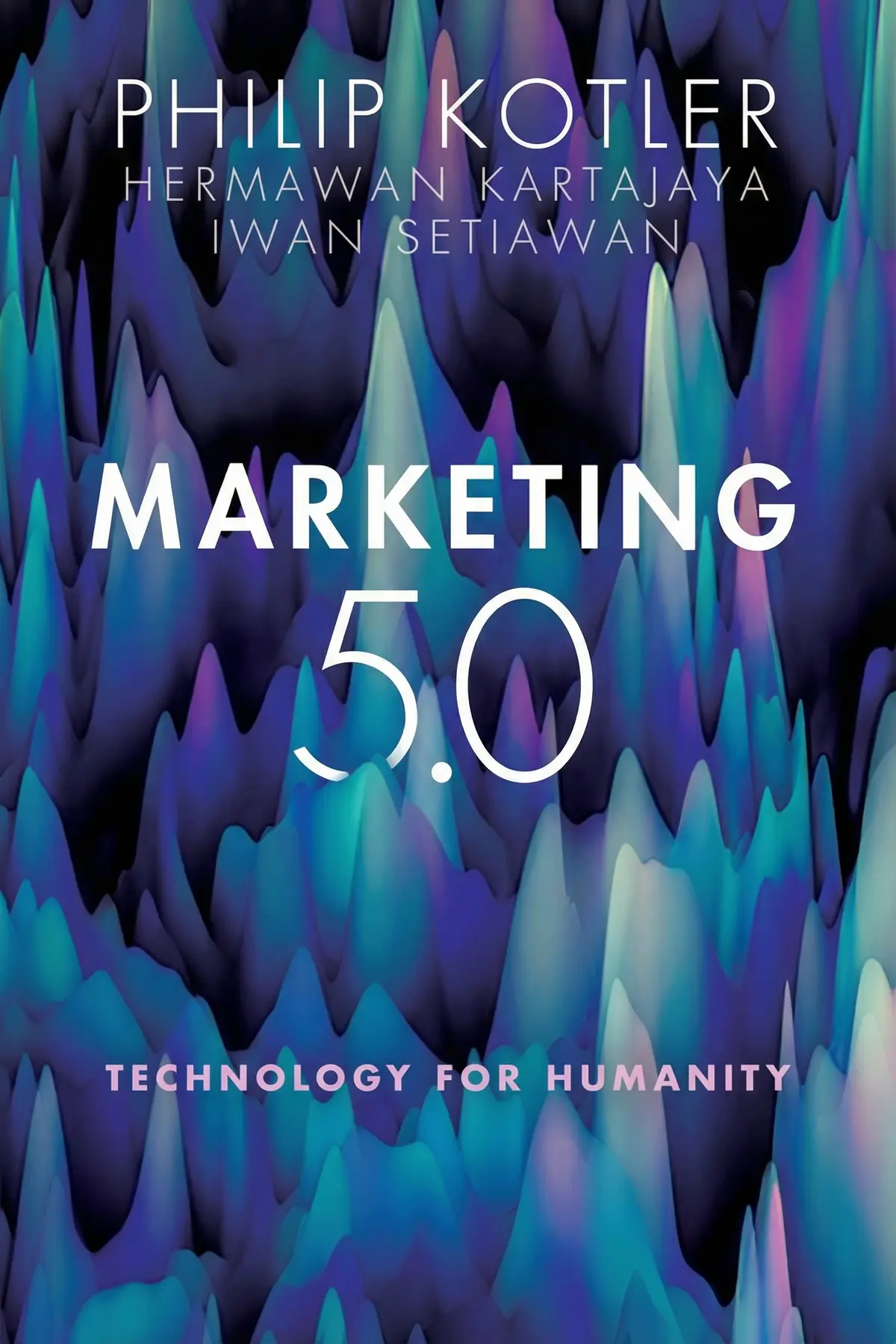
Table of Content
1. Introduction
1 min 04 sec
Most marketers now have more customer data than they can read, and they still guess at what people will want next. In Marketing 5.0, Philip Kotler, Hermawan Kartajaya and Iwan Setiawan argue that much of the guessing can go: artificial intelligence can already predict whether a product with certain features will succeed, often better than slow concept tests run by human researchers. But the authors insist that prediction is only half the work. Machines can see what customers do. People are still needed to understand why.
That pairing runs through the whole book. Technology gives marketing reach and speed, human judgment gives it meaning, and companies win when they combine the two wherever they meet a customer. The case moves from the forces splitting today’s markets to a drugstore fridge that reads its shoppers and a fashion chain that gets runway styles into stores within weeks. Each idea ends with a move a marketer or business owner can make right away.
2. Read the three forces splitting your market
1 min 59 sec
Your customers no longer share an age, an income level or even an opinion about technology. The authors name three fault lines running through almost every market, and the middle of one of them is disappearing.
3. Let machines spot patterns and people explain them
2 min 08 sec
Algorithms now forecast which products will sell, sometimes better than trained researchers. So why do the authors insist that marketers will stay indispensable? The answer lies in something no data set contains.
4. Sell to today's buyers while courting tomorrow's
2 min 25 sec
A young designer and her older manager looked at the same ad and saw opposite failures. Their clash shows why age shapes what customers want, and why the people with money and the people with influence differ.
5. Move reluctant customers online by fixing their frustrations
2 min 21 sec
Companies build apps and websites, then watch customers keep queuing at the counter out of habit. The authors argue that waiting for people to switch on their own is a mistake, and they explain how to speed it up.
6. Give every shopper the right offer at the right moment
2 min 13 sec
A drugstore fridge that estimates who is standing in front of it sounds like science fiction. Walgreens tested one, and what it learned shows how stores can copy the instincts of their best salespeople.
7. Test in small batches and adapt within weeks
2 min 19 sec
Most clothing brands plan a season ahead. Zara puts fresh runway styles on its racks within weeks and produces more than ten thousand designs a year. The habits behind that speed apply far beyond fashion.
8. Conclusion
1 min 18 sec
What the book adds up to is a division of labor. Machines are good at seeing: a fridge that estimates a shopper’s age, an algorithm that listens to what people say about drinks on social media, RFID tags that count every sale in every store. People are good at understanding: why a millennial wants a minimal ad, why a manager wants a list of features, why a customer still stands in line when the app would be faster. Kotler, Kartajaya and Setiawan argue that marketing now depends on joining the two, across generations, across a market splitting into luxury and value, and across the gap between people who trust technology and people who fear it.
The book supports a few concrete moves. Treat any AI forecast as a question until someone can explain the motive behind it. Find the offline moment your customers dislike most, then make the digital version easier and better rewarded. And when you are unsure what will sell, borrow Zara’s habit of small batches and let real demand decide what grows.
The young designer and her manager were each reading half of the customer. Marketing 5.0 makes the case for reading the whole person.
About this book
What is this book about?
Customers now change their minds faster than most companies can plan. Several generations buy side by side, the middle-income market is shrinking, and a large group of people distrusts the digital tools businesses rely on. Philip Kotler, Hermawan Kartajaya and Iwan Setiawan argue that no single average customer exists anymore. Companies have to move upmarket or downmarket to survive. Their answer is Marketing 5.0, which applies AI, sensors, robots and virtual reality to perform the tasks of skilled marketers at scale, while humans remain responsible for meaning. Machines find the patterns. People explain the motives behind them. The authors show the idea at work in PepsiCo drinks built from social media conversations, Walgreens fridges that pick an ad for whoever is standing in front of them, and Zara turning catwalk looks into store stock within weeks. Readers get a clear frame for the forces splitting their market and practical ways to move customers online. They also learn how to use sensors and data for well-timed offers, and how decentralized, quick-response teams and small production batches let a company test before it commits.
Book Information
Who it's for
Marketers and brand managers
Marketers and brand managers trying to reach young digital buyers without losing older, wealthier ones.
Founders and retailers
Founders and retailers who want customers to use their digital channels and need data to guide timely offers.
Team leads
Team leads who want AI forecasts their people can actually explain and act on.
About the Author
Philip Kotler
Philip Kotler held a distinguished professorship in international marketing at Northwestern University's Kellogg School of Management from 1962 to 2018. He has advised IBM, General Electric and Bank of America and lectured in more than 60 countries. Hermawan Kartajaya, who is from Indonesia, founded MCorp (MarkPlus) in 1990, and in 2003 the UK's Chartered Institute of Marketing named him one of 50 gurus shaping marketing's future. Iwan Setiawan has spent about 20 years helping clients shape their marketing strategies. The three also co-wrote Marketing 3.0, 4.0 and 6.0.
Ratings & Reviews
Ratings at a glance
What people think
Listeners find this book offers an extensive look at the "Marketing 5.0" period, specifically focusing on how AI and new tech can bolster human-led strategies. Additionally, they value the in-depth explanation of generational transitions as a helpful model for interpreting current consumer trends, and one listener mentions that the deep dive into Gen Z and Alpha is "fascinating." Even though perspectives differ on how applicable the suggestions are for smaller-budget operations, many listeners consider the book a sensible and required resource for keeping pace with the industry. Furthermore, they point out the worth in seeing how old-school marketing roots have shifted toward data-centric practices like agile and predictive marketing.
Top reviews
Laddawan
Finally got around to reading the latest installment from Kotler and his team, and it feels like a mandatory masterclass for the current decade. The way they bridge the gap between high-tech tools like AI and the deeply human elements of branding is nothing short of masterful. I particularly enjoyed the breakdown of the 'Next Tech' stack; it makes complex concepts like the Internet of Things and Big Data feel accessible rather than intimidating. While some might argue the concepts are theoretical, I found the shift toward 'Technology for Humanity' to be a necessary ethical compass. It’s a refreshing perspective that reminds us that machines should augment us, not replace us. For anyone trying to navigate the move from traditional structures to a data-driven, agile marketing culture, this is the blueprint you need.
Show moreValentina
The chapter on generational shifts is easily the highlight of the entire book. It is truly eye-opening to see how the purchasing power of Gen X and Boomers contrasts with the cultural influence of Gen Z and Alpha. Kotler manages to make sense of the chaos of the modern marketplace by showing how these groups interact within a single ecosystem. I was also intrigued by the mention of the Lexus ad written by AI, which serves as a perfect example of how fast machine learning is moving. This book doesn't just talk about the future; it provides a logical progression from Marketing 3.0 and 4.0 into this new era. It is a highly educational read that I would recommend to any student or professional looking to stay current.
Show moreChloe
Not what I expected, but in the best way possible. Instead of a boring textbook, I found a visionary look at how 'Next Tech' is reshaping our society. The concept that machines are cool but humans are warm is a perfect summary of the book's core philosophy. I was particularly impressed by the sections on augmented marketing and how it can improve the overall customer experience through automation. It feels like the authors have taken all the disparate trends of the last five years and woven them into a single, cohesive narrative. Even if you don't agree with every prediction, you can't deny the depth of research involved. This is a refreshing and highly educational read that made me feel like I was back in a top-tier university seminar.
Show moreGung
Wow. This book really nails the convergence of geographic, demographic, and psychographic segmentation into the construction of modern personas. I’ve been looking for a resource that explains how GDPR and data privacy fit into the broader world of AI-driven marketing, and this delivered. The authors provide a clear-eyed view of both the potential benefits and the risks of our current technological trajectory. It’s rare to find a marketing book that is both this comprehensive and this forward-thinking. The transition from the 4Ps to data-driven applications is explained with such clarity that even someone new to the field could follow along. If you want to understand where the industry is heading in the next five years, start here.
Show moreWilliam
As someone who works in a fast-paced agency, I found the sections on predictive and contextual marketing incredibly relevant to our daily operations. The authors do a great job of explaining how the 4Ps have evolved into highly personalized segments of one. However, to be fair, the book leans heavily into the B2C world and often ignores the nuances of the B2B sector. I was also a bit skeptical about the 'phygital' concept, which feels a bit like another buzzword in an already crowded space. Despite these minor gripes, the insights into customer lifetime value and facial recognition technology are eye-opening. It is a solid 4-star read that will definitely spark some interesting conversations in our next strategy meeting.
Show moreRung
Ever wonder how we are supposed to maintain a human touch in an age of automation? Marketing 5.0 attempts to answer that by positioning technology as a servant to strategy, not the other way around. I loved the discussion on agile marketing and how companies must pivot quickly to survive today’s volatility. The authors' take on the 'segments of one' is a compelling vision of the future, even if it feels a bit out of reach for smaller businesses right now. My only real complaint is that the examples can feel a bit repetitive if you’ve been following tech news closely. Still, the way they synthesize data analytics with behavioral psychology is brilliant. It’s a very strong, well-researched guide that offers a clear path forward for digital transformation.
Show moreNew
Picked this up after a colleague mentioned the focus on the 'phygital' experience, and I must say it lives up to most of the hype. The book provides a comprehensive overview of how AI and machines can augment human marketers to create a seamless omnichannel journey. I appreciated the honesty regarding the digital divide and the growing inequality caused by algorithmic bias; it’s a topic many business books choose to ignore. While the prose can be a bit dry and academic at times, the logic behind the framework is undeniably sound. Truth is, we are already living in a Marketing 5.0 world, whether we realize it or not. This book just gives you the vocabulary to understand it. It is a necessary addition to any marketer's bookshelf.
Show moreLandon
Look, I have a love-hate relationship with this book. On one hand, the analysis of the five generations—from Baby Boomers to Gen Alpha—is absolutely fascinating and provides a clear framework for targeting diverse demographics. On the other hand, the writing is occasionally marred by an over-reliance on industry jargon and overly optimistic assumptions about technology adoption. I kept waiting for more actionable advice for mid-sized companies that don't have the multi-million dollar budgets of a company like Sephora or Lowe’s. Not everyone can afford a complete data infrastructure on day one. It’s a sweeping overview that is intellectually stimulating but lacks the 'how-to' depth I was hoping for. It feels a bit like a high-level corporate manifesto rather than a practical guide for the average marketer.
Show moreSom
In my experience, books by these authors are always hit or miss, and this one sits right in the middle. The insights into the generational gap and the polarization of the market between luxury and discount brands are spot on. However, the section on 'Employee Experience' (EX) felt a bit tacked on and underdeveloped compared to the rest of the content. I also felt like I was being hit over the head with the word 'agile' every other page. Is it a good overview of trends? Yes. Does it provide a revolutionary new way to do business? I’m not so sure. It’s a quick read, which is a plus, but I left feeling like I had consumed a lot of information without gaining many new tools for my actual job.
Show moreGrace
Frankly, I found this quite disappointing compared to Kotler’s earlier works. Why do I keep expecting these books to provide something other than a collection of trending buzzwords? The authors seem infatuated with what is possible through technology, but the 'human-centric' claim feels thin when you're talking about facial recognition and mood detection to drive consumption. At times, the strategies described felt borderline dystopian, focusing more on how to exploit consumer data than how to actually serve people. Furthermore, the praise for companies like Carvana hasn't aged particularly well given recent market shifts. If you are looking for a deep dive into strategy, you might find this a bit too focused on the 'cool' factor of AI rather than the gritty reality of marketing.
Show moreQuestions about this book
What is Marketing 5.0 by Philip Kotler about?
Kotler, Kartajaya and Setiawan define Marketing 5.0 as the use of technologies like AI, sensors, robotics and virtual reality that imitate what skilled human marketers do, with the customer’s experience kept at the center. It answers three challenges: several generations buying side by side, markets polarizing into luxury and value segments, and a divide between people who welcome technology and people who fear it.
Will AI replace marketers according to Marketing 5.0?
No. The authors argue that AI excels at spotting behavioral patterns and that its product forecasts often beat human concept tests; PepsiCo, for one, now launches drinks based on AI analysis of social media conversations. But AI lacks contextual understanding. People are still needed to work out the motives behind the data, so the task is to find the right balance of human and machine at each stage.
How can a company get customers to switch to digital channels?
The book suggests giving perks only online, such as instant discounts or cashback, and in some cases adding fees to offline options. Companies should target offline frustrations like long lines and confusing processes. They should also recreate valuable human contact through video calls, use chatbots for simple questions, build data systems and consider models like subscriptions and on-demand services.
What is contextual marketing in Marketing 5.0?
It means offering the right product or message at the right moment and place, as a good salesperson does by reading faces and tone. Walgreens tested smart coolers that estimated shoppers’ age and gender and chose ads accordingly, which lifted sales and traffic. Stores can begin with beacons, Bluetooth transmitters that send personal offers to nearby phones running the retailer’s app.
What does Zara teach about agile marketing?
Zara gets new catwalk styles into stores within weeks and produces more than 10,000 designs a year. It tracks store sales with RFID tags and watches celebrities and fashion shows. Decentralized design teams act on those signals, and materials are sourced during design. Small production batches let it test demand first. The authors suggest running agile teams like these alongside a company’s stable core.
Readers also enjoyed









AUDIO SUMMARY AVAILABLE
Listen to Marketing 5.0 in 15 minutes
Get the key ideas from Marketing 5.0 by Philip Kotler, plus 5,000+ more nonfiction titles.
- 5,000+ titles
- Listen as much as you want
- 7-day free trial
- Cancel anytime









