


10 min 02 sec
Available in: English
 ไทย
EnglishไทยLoving What Is: Four Questions That Can Change Your Life
By Byron Katie
Shows how to ease stress by catching the thoughts behind it, testing them with four simple questions and reversing them. The result is a calmer way through relationship worries, work conflicts and problems beyond your control.
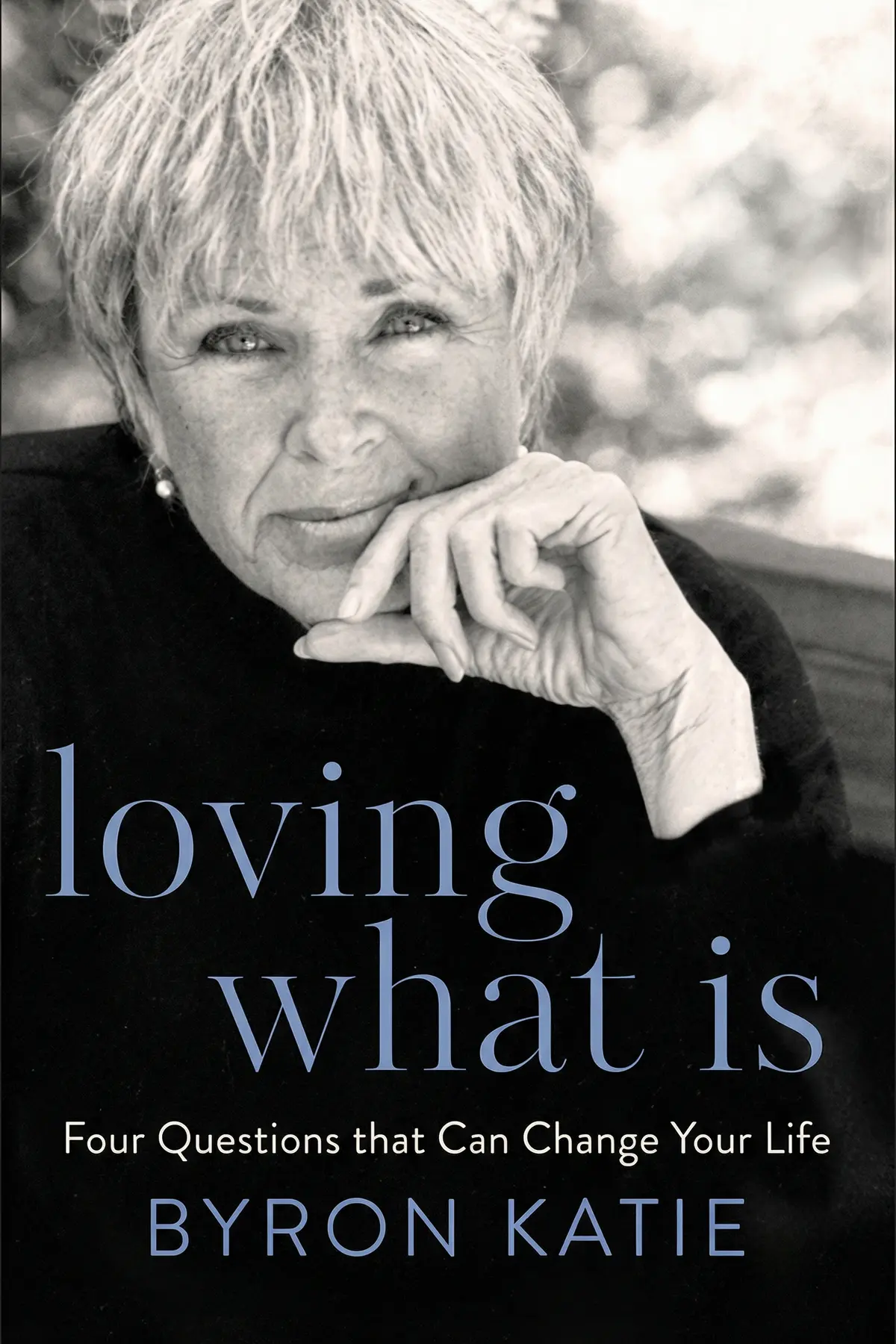
Table of Content
1. Introduction
1 min 00 sec
If stress feels like the unavoidable cost of a busy life, Byron Katie offers a different diagnosis: what hurts is rarely the event itself, but the meaning you attach to it. In Loving What Is, written with her husband Stephen Mitchell, Katie turns that idea into a practice she calls The Work. You write down a thought that is upsetting you, test it with four questions, then flip it around to see what else might be true.
Katie arrived here after years of severe depression, when she noticed in 1986 that she suffered while she believed her thoughts and felt free when she questioned them. The claim running through the book is plain. Change how you relate to a stressful thought, and the situation that seemed to cause it loosens its grip.
Along the way come a partner who forgets a goodbye kiss, a rained-out birthday party and a business owner fed up with his colleague. Each one is a place to practice on your own worries tonight.
2. Find the thought behind your stress
1 min 27 sec
A partner leaves for work without the usual goodbye kiss, and by lunchtime the whole relationship feels like it is ending. Katie points to the real culprit, and it is not the missing kiss.
3. Question a painful belief in four steps
1 min 32 sec
Four short questions sound too simple to touch a worry that has run for weeks. Yet the second one asks whether you can be absolutely certain, and the fourth asks who you would be without the thought.
4. A reversed thought can reveal a truer one
1 min 42 sec
After the questions comes a step that asks you to argue against yourself. The reversals it produces can be uncomfortable, and one of them may point at the person you least expected.
5. Put your energy where it changes something
1 min 35 sec
Cursing the rain on the day of a party feels natural, and it achieves nothing. The same trap waits inside every large cause you care about, from pollution to hunger.
6. Calmer work partnerships and clearer career goals
1 min 40 sec
A business owner is sure his partner is hopeless with the accounts, and the tension is spreading. Questioning that one judgment could change how he sees the partner, and how well the company runs.
7. Conclusion
1 min 06 sec
What Katie offers is a change in where to look. A missing kiss, a rained-out party and a partner who fumbles the accounts all seem to be the source of the pain. In each case the book points instead to a sentence the mind wrote and then believed. Change your relationship to that sentence, and the outside world, still exactly as it was, stops pressing so hard.
The practice is small enough to begin tonight. Take the one thought that has been circling all week and put it on paper in its bluntest form. Ask the four questions slowly, paying special attention to how you behave while you believe it. Then write its opposite, and a few other reversals, and keep the one that feels true.
When the worry concerns something you cannot touch, like the weather or a distant company, look for the small act that is yours to do and let the rest go.
Katie’s claim is modest and easy to check: a stressful thought, once questioned, loosens its hold. All the proof requires is a pen and a quiet minute.
About this book
What is this book about?
Most people treat stress as the price of a full life: a partner who seems distant, a colleague who disappoints, a plan ruined by rain. Byron Katie argues that the real source of the pain is usually somewhere else. It is the interpretation we give to those events, the quick sentence the mind writes and then believes. Katie built a practice around that idea and calls it The Work. You write the troubling thought on paper, then ask four questions: whether it is true, whether you can be absolutely sure, how you react when you believe it, and who you would be without it. A final step, the Turnaround, reverses the thought and tests each reversal the same way. The book applies the method well beyond private fears, to business partnerships, career goals and the large problems no one person can solve. Readers get a short, repeatable routine for questioning the thoughts that keep them awake, and a clearer sense of where their energy can actually make a difference.
Book Information
Who it's for
Worrying about loved ones
People caught in a loop of worry about a partner, a parent or a friend who want a simple routine to break it.
Bosses clashing with colleagues
Managers and business owners stuck in friction with a colleague they have quietly written off.
Stressed over the uncontrollable
Anyone exhausted by stress over things they cannot control, from bad luck to world problems.
About the Author
Byron Katie
Byron Katie spent years in severe depression until a realization in 1986 changed how she saw her own thoughts: she suffered when she believed them and did not suffer when she questioned them. From that insight she developed The Work, which she has taught at public events and in prisons, hospitals, schools and businesses. Her organization, Byron Katie International, includes the School for the Work and Turnaround House in Ojai, California. She wrote Loving What Is with her husband, the writer and translator Stephen Mitchell.
Ratings & Reviews
Ratings at a glance
What people think
Listeners describe the book as life-altering, assisting them in challenging their own thoughts and fundamentally shifting their worldviews. Moreover, the material is highly educational, with listeners finding it applicable across various life scenarios. It is also noted for being accessible and functioning as a solid resource for healing. Conversely, listeners express conflicting views on its readability, and some consider it potentially damaging.
Top reviews
Felix
This book completely shifted the way I process my anxiety and internal stress. Byron Katie introduces "The Work," which consists of four simple questions that challenge the validity of our stressful thoughts. I found the concept of staying in "my own business" rather than worrying about God’s or yours to be a total revelation. It sounds simplistic on the surface, but when you actually sit down with a worksheet, the results are profound and immediate. To be fair, some of the case studies in the book feel a bit extreme or dated, yet the core methodology remains incredibly effective for daily stressors. I used to spend hours ruminating on what people thought of me, but now I just ask, "Is it true?" Usually, the answer is a resounding no. It’s a tool for healing that I’ll keep in my mental health toolkit forever. If you are willing to look at your own projections, this will change everything.
Show moreWillow
After hearing so many people rave about Byron Katie, I finally picked this up. It is easily one of the most transformative books I have ever encountered. The simplicity of the four questions allows you to dismantle years of resentment in just a few minutes of inquiry. Truth is, I was skeptical of the "loving what is" mantra because it sounded like passive resignation. Instead, I discovered it’s about ending the internal war so you can actually act with clarity. The examples of "The Work" being done in real-time helped me understand how to apply the turnarounds to my own life. It’s incredibly easy to follow and doesn’t require any prior knowledge of philosophy or meditation. My view of my relationships has completely changed for the better. This is a must-read for anyone who feels stuck in their own head and wants a clear path toward emotional freedom.
Show morePawinee
Wow. This is the fast-track to mental peace. Katie explains that we are the projectors of our own world; if the movie we’re watching is scary, we need to check the lens. I’ve spent years in traditional talk therapy, but these four questions got to the root of my issues faster than anything else. Can you absolutely know it’s true? That question alone has saved me from dozens of unnecessary arguments this week. The writing is clear and the exercises are straightforward enough for anyone to try. Not gonna lie, the turnarounds are difficult at first because they challenge your ego's desire to be "right." But if you want to be happy instead of right, buy this book. It is a life-changing resource for healing that requires nothing but a pen, paper, and an open mind. I am honestly shocked at how much better I feel after just one week of practice.
Show moreWichai
Finally got around to reading this classic self-help title, and it lives up to the hype. Byron Katie has a very unique way of cutting through the noise of the human mind. The core message is that we don't need the world to change to be happy; we just need to change our thoughts about it. This isn't just "positive thinking"—it's a deep inquiry into the nature of truth and our attachment to suffering. The book is very easy to follow, and the live dialogues provide a great template for how to do the work yourself. Truth is, I feel much more equipped to handle life's curveballs now. It completely changed my view of what it means to be "in control." I've already recommended it to several friends who struggle with overthinking and chronic worry. Truly a masterclass in psychological freedom and personal accountability.
Show moreViroj
Ever wonder why you’re so angry at people who probably aren’t even thinking about you? Loving What Is explains that our suffering comes from our thoughts about reality, not reality itself. The "turnaround" exercises are particularly eye-opening because they force you to see how you are often guilty of the very things you criticize in others. Look, the writing style is a bit repetitive and the dialogue transcripts can be a chore to get through after a while. However, the underlying message about radical acceptance is something I really needed to hear. It’s a very informative guide for anyone stuck in a cycle of blame or victimhood. While I don’t agree that this applies to every single tragedy in human history, it works wonders for interpersonal conflicts and self-esteem. It’s definitely a solid addition to the self-help genre and serves as a great starting point for those new to inquiry.
Show moreNannapat
Picked this up during a particularly rough patch in my marriage. I was constantly making lists of things my husband "should" do, and it was making me miserable. The concept that "arguing with reality" is what causes our pain hit me like a ton of bricks. Once I started doing The Work on my judgments, I realized how much of my stress was self-imposed by my own expectations. It's not a light read—not because the language is hard, but because the self-reflection required is quite intense. Gotta say, some of the transcripts in the book felt a bit repetitive, and I skipped a few toward the end. Still, the impact on my daily happiness has been undeniable. It’s a very practical guide that provides a structured way to handle conflict without feeling like a doormat. I feel much lighter now and less prone to reacting to every perceived slight.
Show moreErn
The chapter on "The Three Kinds of Business" alone is worth the price of admission. It’s such a simple way to categorize the world: my business, your business, and God’s (reality's) business. I realized I was spending about 90% of my time in everyone else’s business, which explains why I was so exhausted! This book is extremely informative and offers a very useful framework for setting emotional boundaries. While I found the author’s stance on physical illness a bit questionable—she implies we cause our own suffering even when sick—the mental shifts are still valuable. It’s a tool for healing that requires a lot of honesty and a willingness to be wrong about your own stories. The formatting makes it easy to dip in and out of. Definitely a solid 4-star read for the self-improvement crowd who wants actionable steps rather than just theory.
Show moreCharlotte
Honestly, I was ready to hate this book within the first ten pages. It felt a bit "woo-woo" and the author's personal story seemed almost too good to be true. But as I actually tried the exercises on some of my recurring grievances, I couldn't deny that it worked. Asking "Who would you be without that thought?" is a powerful way to visualize a life without resentment. It’s a very practical tool for anyone who feels victimized by their circumstances or their past. My only gripe is that the book is a bit long-winded; the same points are made repeatedly through different examples, which can feel like a bit of a slog if you've already grasped the primary concept. To be fair, maybe that repetition is necessary for the concepts to really sink in. It’s a healing tool that I'll definitely revisit whenever I find myself spiraling into negativity.
Show moreNutnicha
As someone who has studied a lot of Buddhism, I found this to be a mixed bag. On one hand, the emphasis on radical acceptance and questioning the ego is very much in line with ancient wisdom. Byron Katie has a knack for making these complex psychological concepts accessible to a general audience. However, I found her tone to be somewhat arrogant at times, as if these four questions are the only path to salvation. Life is infinitely complex, and a one-size-fits-all solution often falls short when dealing with deep-seated clinical depression or systemic injustice. Personally, I think the book works best as a supplement to other forms of therapy rather than a total replacement. It’s a useful tool for clearing up "mental lint," but don't expect it to solve every nuance of the human experience. It’s worth a read, but keep your critical thinking cap on while navigating her more absolute claims.
Show moreRung
Not what I expected, and frankly, some of it was quite disturbing. While the initial idea of questioning your thoughts seems helpful for minor annoyances, the way Katie applies it to trauma is irresponsible. The chapter regarding sexual abuse and the "turnaround" suggested for a victim made me feel physically ill. Telling someone who was abused as a child to find "their part" in the situation is victim-blaming at its worst. I understand the goal is total mental liberation, but this approach ignores clinical reality and the power dynamics of trauma. In my experience, suggesting that "there is no such thing as verbal abuse" is a dangerous message to send to vulnerable readers. There are better ways to find peace that don’t involve gaslighting yourself about your own history. I gave it two stars because the "three types of business" concept is actually a decent boundary-setting tool, but the rest is problematic.
Show moreQuestions about this book
What is the main idea of Loving What Is by Byron Katie?
Katie argues that stress does not come from events or other people but from how we interpret them. A partner forgets a goodbye kiss, and the pain comes from the thought that she no longer cares. Her method, The Work, has you write such a thought down, question it with four questions and then reverse it, so the belief loses its hold and you can respond more calmly.
What are the four questions of The Work?
The first asks whether the stressful thought is true. The second asks whether you can be absolutely sure it is true. The third asks how you react when you believe it, which often reveals how the thought makes things worse. The fourth asks who you would be without it. Katie recommends answering them on paper, one written thought at a time.
What is the Turnaround in Byron Katie's method?
In The Work, the final stage is called the Turnaround. You reverse the original thought, for example from my partner doesn’t love me to my partner does love me, and test the reversal with the same four questions. Katie encourages several reversals, such as I don’t love my partner or I struggle to love myself, then following whichever feels true to you.
Does The Work help with career and business problems?
Katie says it applies to every area of life. Her example is Joe, who believes his business partner is incompetent with the accounts. Turning that thought around helps Joe see his partner’s strengths, which eases the tension and could improve the business. She also suggests questioning career goals, asking whether financial success is really what you need to feel satisfied.
How do I start using Loving What Is in daily life?
Begin by writing down the thought that troubles you most, exactly as your mind phrases it, since Katie insists on paper over doing it in your head. Then ask the four questions and write a few reversals. When the problem is beyond your control, like the weather or a large company’s actions, focus on the small step you can take, such as no longer buying its products.
Readers also enjoyed


ADHD an A-Z: Figuring It Out Step by Step
Leanne Maskell







A Guide to the Good Life: The Ancient Art of Stoic Joy
William B. Irvine
AUDIO SUMMARY AVAILABLE
Listen to Loving What Is in 15 minutes
Get the key ideas from Loving What Is by Byron Katie, plus 5,000+ more nonfiction titles.
- 5,000+ titles
- Listen as much as you want
- 7-day free trial
- Cancel anytime









