


14 min 56 sec
Available in: English
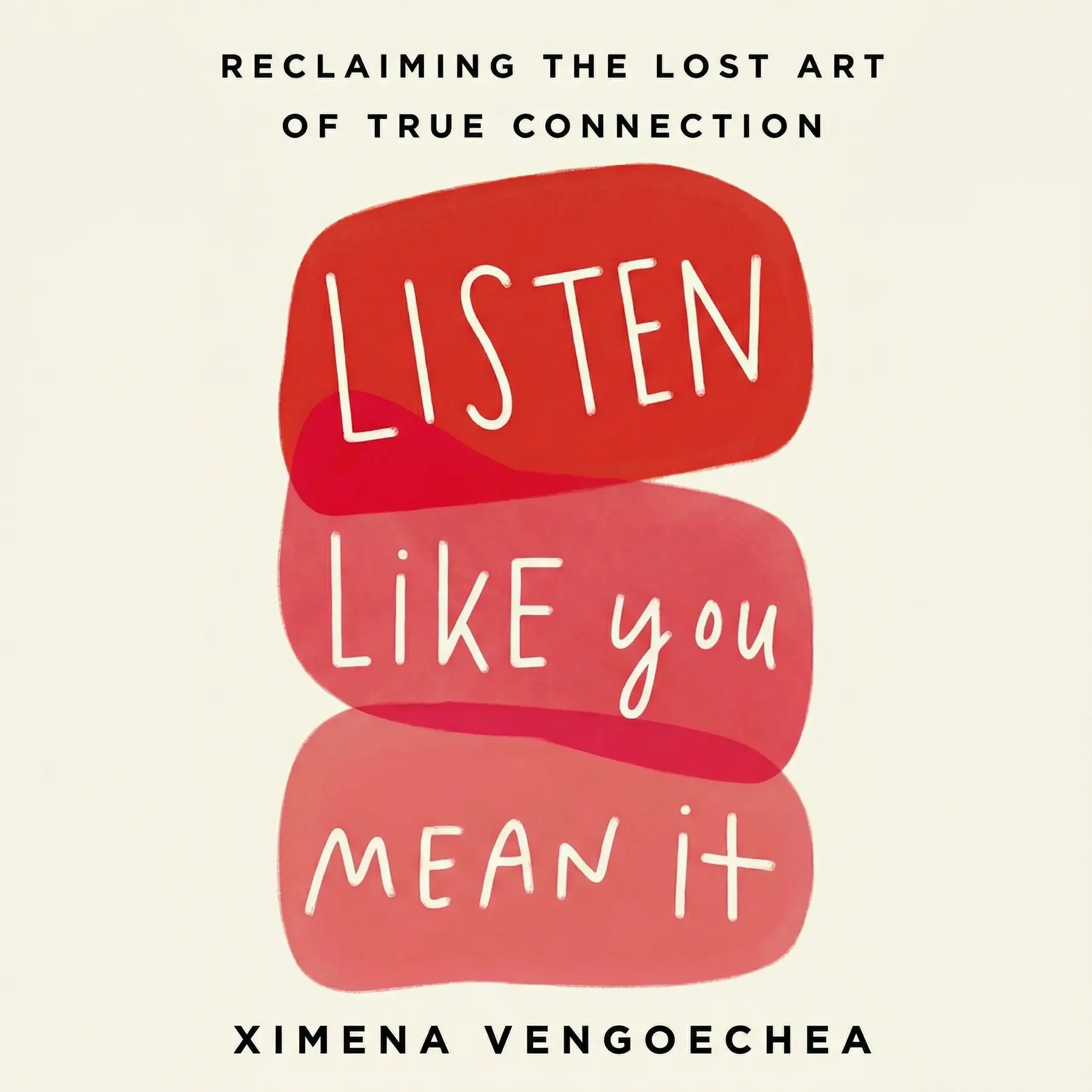
Listen Like You Mean It: Reclaiming the Lost Art of True Connection
Shows how to move past hearing words to understanding what people mean: reading unspoken signals, asking open questions, using silence, steering drifting talks and leaving draining ones before resentment builds.
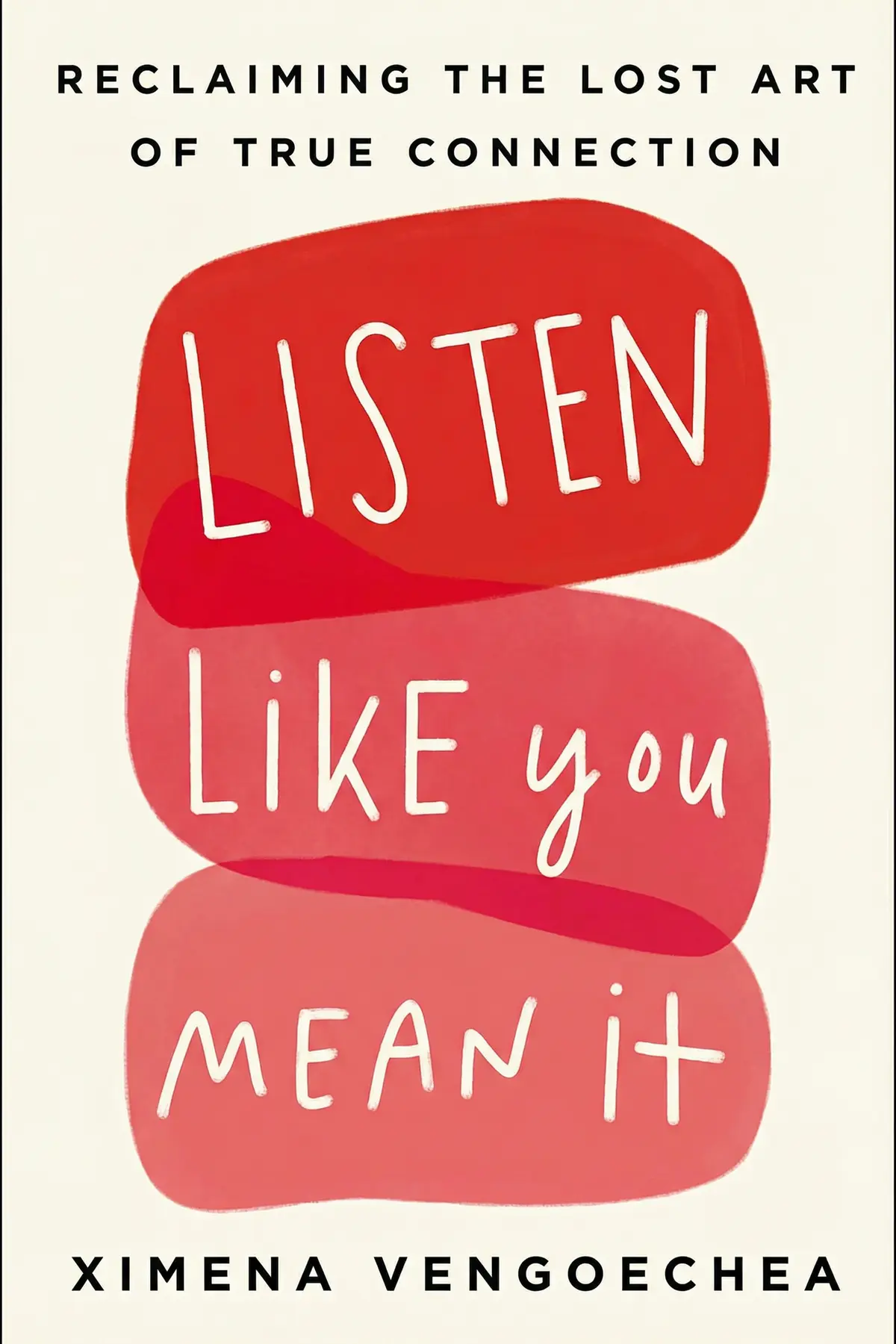
Table of Content
1. Introduction
1 min 01 sec
Plenty of decent listeners still walk away from a conversation with only part of the story, or having turned a friend’s problem into a story about themselves. In Listen Like You Mean It, user researcher Ximena Vengoechea gives that failure a name: surface listening, taking in the literal words while the meaning slips past. Her alternative is empathetic listening, a deliberate effort to understand what the other person actually means.
Her case is that this is a set of moves anyone can learn. You set an intention, watch closely, ask open questions, stay flexible, steer when the talk drifts and protect your own energy. Along the way there is a ten-second silence that draws out honesty, a rule borrowed from improv comedy, and a way to sense a resignation before anyone says the word. The goal is conversations where people feel heard, and where you catch what they did not quite say.
2. Hear what people mean, beyond their words
1 min 41 sec
A young researcher asked a simple question about online abuse and got an honest answer. Then she repeated it back wrong. Her slip shows the most common listening habit, and the three qualities that break it.
3. Read the signals people leave unspoken
1 min 46 sec
People say one glass of wine when they mean three, and they say it with a straight face. The clues to the real story are in their eyes and voice, and in your own energy too.
4. Give each person the listener they need
1 min 38 sec
Some listeners analyze, some relate everything to themselves, some interrogate. Each style helps in one moment and hurts in the next, and small phrases people use reveal which one they want from you.
5. Open questions that get real answers
1 min 30 sec
A busy journalist gave nothing but clipped replies until the right follow-ups broke through. Learn which questions draw people out, and the one-line check that stops two people from misunderstanding each other.
6. Let a pause draw out the honest answer
1 min 39 sec
A research participant called a confusing app cool, and he meant it to end the matter. What changed his answer took no clever question at all, just a few seconds he could not bear.
7. Steer a drifting conversation back on track
1 min 30 sec
A chatty interviewee kept chasing free ad credits, and a team member kept circling news she did not want to say. The same careful move brought both talks back to what mattered.
8. Talk across differences without misreading people
1 min 28 sec
The same small sound can mean I hear you to one person and I agree to another. Power, culture and touchy topics all bend what we hear, and each has its own fix.
9. Leave draining talks and protect your energy
1 min 38 sec
The friend who only calls to complain, the meeting that always makes you miss your train: generous listeners pay for both. There are graceful ways out, and a cost to skipping the recovery afterward.
10. Conclusion
1 min 05 sec
What Vengoechea changes is the picture of the listener. Many people treat listening as the passive half of a conversation, the part where you wait your turn. In her account it is active work: setting an intention, reading a face and a voice, asking without leading, holding a silence, steering back when needed and stepping away before resentment builds. Eve’s slip in the cyberbullying interview was one small assumption, and it closed a door the participant was trying to open.
Small corrections reopen it. In your next real conversation, notice the other person’s usual pitch and energy, so a change stands out. Swap one yes-or-no question for one that starts with how or what. Before answering something important, say back what you heard and ask whether you got it right. And once, when an answer sounds too easy, stay quiet and count.
Edmarc broke the silence at seven. Often the honest answer is waiting just past a pause like that.
About this book
What is this book about?
Most of us are not terrible listeners, yet we often leave a conversation with only half the story, misread a friend's feelings or turn someone else's problem into a story about ourselves. Ximena Vengoechea, a user researcher, calls this surface listening: we take in the literal words and miss what lies under them. Her alternative is empathetic listening, and she breaks it into skills anyone can practice. It begins with an intention built on empathy, humility and curiosity. Then come staying present, reading body language and tone, spotting the hidden needs in everyday phrases, and asking neutral how and what questions that you confirm with a short spoken summary. She also covers borrowing yes, and from improv comedy, letting a pause draw out the truth, and steering a conversation that has drifted or is avoiding something hard. The book also takes on the harder cases: talks across cultural, gender and power divides, taboo topics and personal hot spots, and conversations that drain you. Readers get specific phrases, tests and exits to use in meetings, interviews and close relationships, plus permission to recover when listening has worn them out.
Book Information
Who it's for
Managers and team leads
Managers and team leads who suspect their people are not telling them the whole story.
Needing honest answers
Researchers, interviewers and salespeople who need honest answers, not polite ones.
Wanting closer conversations
Anyone whose friendships or family talks feel distant, or who leaves conversations drained.
About the Author
Ximena Vengoechea
Ximena Vengoechea trained as a user researcher and has worked at Pinterest, LinkedIn and Twitter, and she also writes about personal and professional development. Her writing on personal and professional development has appeared in Inc., The Washington Post, Newsweek and Forbes. Listen Like You Mean It, her first book, was a Next Big Idea Club finalist in 2021. She has since written Rest Easy and The Life Audit, writes the newsletter Letters from Ximena and speaks on inclusive listening, difficult conversations and preventing burnout.
Ratings & Reviews
Ratings at a glance
What people think
Listeners find the book to be a superb introductory guide for sharpening listening abilities, with one listener mentioning it provided personal benefit. Additionally, the content is deeply perceptive, and one listener highlighted the fascinating real-world scenarios featured. Listeners also value the visual elements, as one person described the illustrations as amazing.
Top reviews
Fah
Ximena Vengoechea has crafted something special here that feels like a master class in human connection. We live in such a loud, distracted world that actually hearing what someone is meaning rather than just what they are saying is a superpower. I loved the little drawings throughout; they add a layer of warmth and make the dense psychological concepts much easier to digest. One of my favorite takeaways was the section on how to respectfully exit a conversation, which is something I’ve always struggled with. To be fair, some of the techniques take real practice to feel natural, but the shift toward empathetic listening has already improved my relationships on a personal level. It's an excellent primer for anyone looking to bridge the gap between surface-level small talk and genuine, deep intimacy.
Show moreAey
As someone who works in a people-facing role, I found this book incredibly insightful. The book is definitely a deep dive, but it never feels dry because of the author’s professional background. I found the 'connecting questions' useful, and I think the techniques are brilliant for building rapport quickly. In my experience, real conversations are messier than the examples provided here, but having these frameworks helps navigate the chaos. That said, the illustrations are fantastic and the overall message about the importance of being present is vital. It’s a great read that helped me on a personal level by making me realize how often I am actually 'over threshold' and unable to listen properly. Highly recommended for those who want to deepen their social ties.
Show moreMonthon
The chapter on being over threshold was a total game-changer for me. It’s so easy to forget that our physical and mental state dictates how well we can show up for others. This book is more than just a guide on how to talk; it’s about how to be a better human in an era of digital disconnect. I loved the emphasis on curiosity and the reminder that we often stop listening because we think we know what the other person will say. The illustrations are truly amazing and make the reading experience feel very personal and warm. Truth is, I think everyone should read this. It provides a much-needed way forward for building authentic connections in a culture that often feels very divided and loud.
Show moreSiriphen
Picked this up on a whim after realizing I'm a chronic interrupter. It’s been a bit of a wake-up call for my ego. The section on surface listening hit home—I realized how often I project my own experiences onto others instead of just letting them speak their truth. Vengoechea’s writing is accessible, though she sometimes gets a bit deep into the UX weeds. The book is incredibly insightful when it discusses how our devices and current culture of self-promotion have eroded our ability to connect. Not gonna lie, some of the exercises felt a little awkward to try out in real time, but the mindset shift is valuable. The amazing illustrations really do help keep the tone light when the subject matter gets a bit heavy on self-reflection.
Show morePranee
Finally got around to reading this, and it’s a solid 4-star experience. The core idea of training your ear to detect shifts in a person's baseline is fascinating, though it requires a lot of mental bandwidth. I’ve started paying more attention to pitch and expressiveness in my meetings at work, and it really does reveal a lot about what isn't being said. My only gripe is that some of the advice feels a bit too clinical for a night out with friends. However, the author’s emphasis on empathy and vulnerability is exactly what we need in this divided age. Look, it’s not a perfect manual, but it’s an excellent primer for anyone who wants to stop just waiting for their turn to speak and start actually connecting.
Show moreJiraporn
Ever wonder why you feel lonely even after a long lunch with a friend? This book explains that disconnect perfectly. We are often just hearing words without understanding the underlying emotion. Vengoechea encourages us to be 'neutral Switzerland,' which is a tough but rewarding way to approach dialogue. The real-life examples she shares are relatable and help illustrate how easily we fall into the trap of surface-level listening. I particularly liked the focus on non-verbal cues, even if some of the pitch stuff felt a bit rigid. It’s an amazing opportunity for self-reflection. If you’re looking to deepen your ties with family or coworkers, there is plenty of wisdom to be found in these pages. It is a very thoughtful guide.
Show moreRyan
After hearing a lot of buzz about this one, I dived in expecting a general communication guide. It mostly delivered, but be warned: the author’s UX research roots are very visible. Personally, I enjoyed the professional anecdotes, but I can see why some might find it a bit too technical. The advice on asking connecting questions and staying flexible during a conversation is gold. To be fair, I felt it dragged a bit in the middle and could have been tightened up by about fifty pages. Still, the visual aids are great and the focus on empathetic listening is handled with a lot of grace. It’s a helpful guide for those of us who want to improve our social ties and make others feel truly seen.
Show moreWararat
Is this a business book or a self-help guide? I found myself asking that question frequently because the balance felt off. While the author provides some incredibly insightful real-life examples from her career, the transition to everyday application wasn't always seamless. The truth is, about seventy percent of the content feels geared toward professional interviewing techniques. I enjoyed the concept of 'neutral Switzerland' and staying curious, but I fret that the sheer number of frameworks will be hard to recall in the heat of a real conversation. It’s a helpful guide, certainly, but it overstays its welcome by about a hundred pages. I did appreciate the focus on non-verbal cues and establishing a baseline for your conversation partner, though it’s a lot to keep track of for a casual chat.
Show morePim
I really wanted to love this because I struggle with staying present in conversations, but it missed the mark for me. The author’s background as a UX researcher dominates the narrative far too much, making it feel like a professional manual rather than a guide for daily life. Frankly, I found the charts about voice pitch being 'submissive' or 'authoritative' to be quite problematic and even a bit sexist. It suggests a rigid way of interpreting people that doesn’t account for neurodiversity or cultural differences. While the illustrations are cute and help break up the text, the advice often feels impractical for a casual coffee date with a friend. If I started analyzing my mom's baseline pitch during Sunday dinner, she’d think I’d lost my mind. It could have been much shorter without losing its core message.
Show moreWitthaya
Not what I expected based on the title. I was looking for ways to have better conversations with my kids and spouse, but a lot of this felt like I was being trained to conduct a professional user interview. Some of the techniques suggested would definitely make my friends ask why I’m talking so weirdly. For example, the hyper-focus on monitoring someone's eye contact and fidgeting as a baseline feels a bit clinical and potentially ableist. While there are a few helpful reminders about not interrupting and staying curious, the book is far too long for what it actually offers. It’s an interesting look into the mind of a researcher, but as a practical tool for ordinary life, it mostly falls short.
Show moreQuestions about this book
What is the main idea of Listen Like You Mean It?
Ximena Vengoechea argues that most of us practice surface listening: we hear someone’s literal words but miss what they mean. She offers empathetic listening instead, a deliberate effort built on empathy, humility and curiosity. It works through specific skills: staying present, reading body language and tone, spotting hidden needs, asking neutral questions, staying flexible, redirecting when talks drift and protecting your own energy afterward.
What are connecting questions?
Connecting questions are open, neutrally framed questions that deepen a conversation instead of pushing for a particular reply. They usually begin with how or what, such as asking what someone thinks of a prototype overall instead of which of two screens they prefer. Vengoechea pairs them with a check: summarize aloud what you heard, then ask whether that sounds right, so the other person can correct you.
How can silence help you listen better?
Most people are so uncomfortable with silence that they fill it within seconds. When a research participant named Edmarc called a confusing prototype cool, Vengoechea repeated his words back, got a one-word reply, then silently counted to ten. He spoke again at seven, this time more honestly. Reflecting someone’s words and then waiting can draw out what they really think.
How do you end a draining conversation politely?
Vengoechea suggests time-boxing, which means setting a limit before the talk begins or choosing a place with a natural end. With someone close, ask for a time-out because the topic feels charged for you. With someone you know less well, say you would love to keep talking but are running late. Afterward, schedule recovery to avoid what she calls listener’s drain.
Who should read Listen Like You Mean It?
It suits managers who want honest updates from their teams, interviewers and researchers who need real answers, and anyone whose conversations feel polite but distant. It also helps people who listen so generously that they end up resentful or exhausted, since it covers how to set limits, exit toxic conversations and recover after demanding ones.
Readers also enjoyed





AUDIO SUMMARY AVAILABLE
Listen to Listen Like You Mean It in 15 minutes
Get the key ideas from Listen Like You Mean It by Ximena Vengoechea, plus 5,000+ more nonfiction titles.
- 5,000+ titles
- Listen as much as you want
- 7-day free trial
- Cancel anytime









