

A Year in the Life of William Shakespeare: 1599
James Shapiro
 English
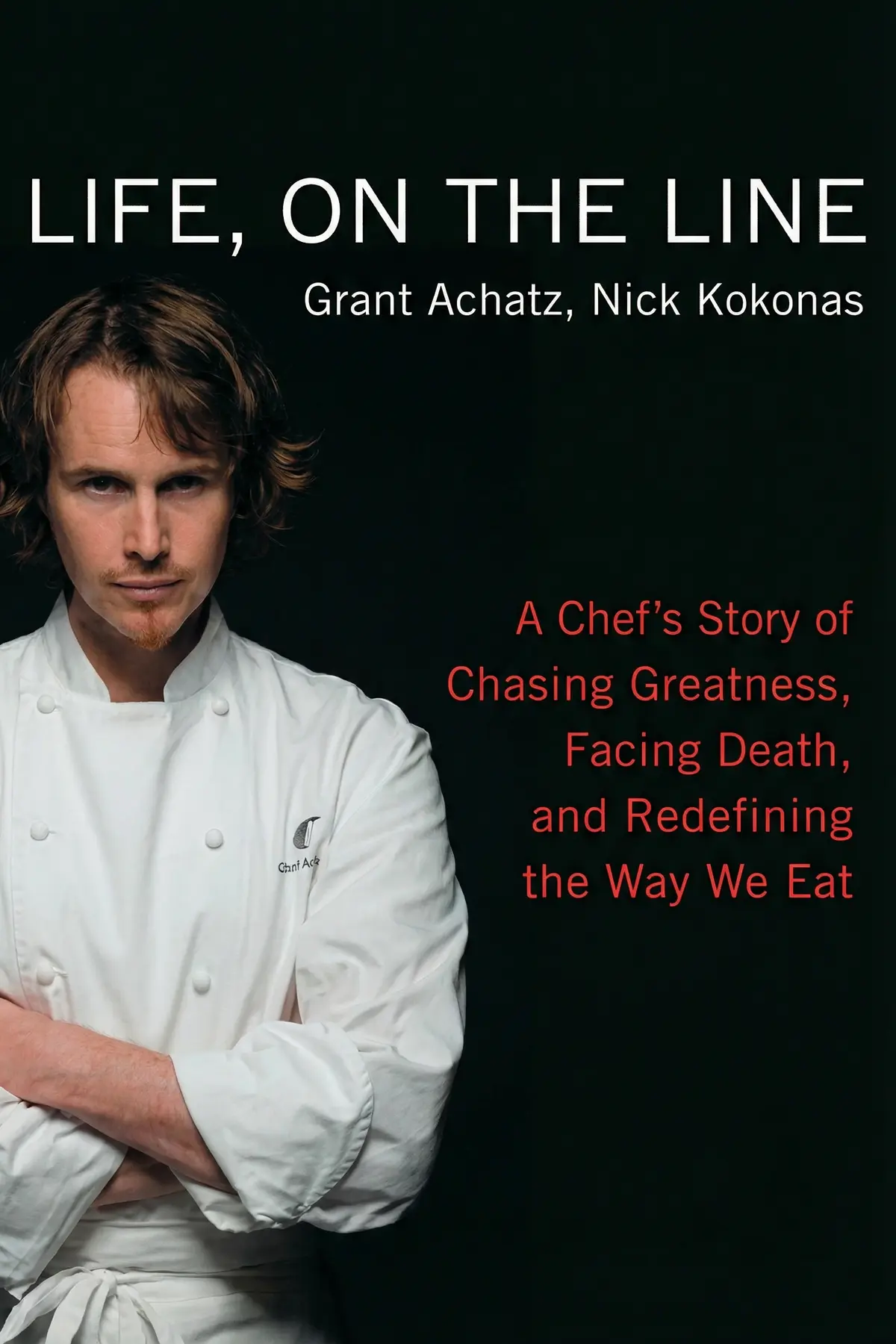
The story of how chef Grant Achatz chose his teachers, built Alinea into America's top restaurant, and kept it improving through tongue cancer by trusting a team he had trained to taste for him.
1 min 01 sec
Plenty of people chasing excellence stay too long in jobs that teach them nothing, then wonder why they stall. Grant Achatz did the opposite. In Life, on the Line, the chef and his business partner Nick Kokonas tell how he walked out of a famous Chicago kitchen within days because it was making him a worse cook, and how that choice shaped everything after it. His path ran from cooking eggs for regulars in a small Michigan cafe to Alinea, which Gourmet magazine named the best restaurant in America. Then came stage four cancer of the tongue, and months when he could not taste salt.
What carries the story is a simple pattern: greatness depends on the rooms you choose, the people you train and the inspiration you protect. Those choices kept his food getting better even after his body failed. Along the way there is a plain test for any job, a model of mentorship worth copying, and a lesson in hearing a new idea in a broken glass.
1 min 41 sec
Most beginners arrive at their first serious job with theory and no hours behind them. A boy in a small Michigan town had already logged years before his first class, and one generous chef noticed.
1 min 34 sec
He studied one chef’s cookbook every night and finally landed a trial in his kitchen. Within days the dream job raised a harder question: what do you owe a famous name that teaches you nothing?
1 min 45 sec
A tour of Europe’s most decorated restaurants was supposed to cure his burnout. Course after course, it did not. What finally worked came from somewhere no guidebook would point to.
1 min 38 sec
Fourteen letters got him a trial, and the first thing he saw on arrival was the famous chef holding a broom. That kitchen turned out to be the opposite of the one he had fled.
1 min 56 sec
A raw fish roe that stays raw inside fried batter, and a gelatin served hot. Seeing the impossible on a plate in Spain made a sous chef restless for a kitchen of his own.
1 min 40 sec
He had just built the best restaurant in America when a doctor’s verdict threatened the one tool his work depended on. What happened to the food next surprised even his business partner.
1 min 41 sec
Cancer free and freshly crowned best chef in America, he felt like quitting. His first instinct was to open another restaurant. His partner’s reply is worth hearing for anyone running on empty.
1 min 03 sec
Achatz’s career is easy to file under talent and luck. The memoir shows a chain of choices instead. He left a famous kitchen that was shrinking him. After three starred dining rooms let him down, he found the feeling he was missing at a Tuscan farmhouse table. He wrote fourteen letters to reach a chef who swept his own floor and taught what he knew. And he trained his cooks so well that when cancer took his taste, they tasted for him and the food still improved.
That last fact is the one to keep. A good measure of your skill may be what keeps working when you cannot.
Two things are worth trying this week. Ask honestly whether your current role is making you better at what you care about, and notice what you feel if the answer is no. Then look at the people around you. What could they carry if you were gone for a month, and what would you need to teach them now so they could?
And the next time something breaks at the worst moment, pay attention to it before you sweep it up.
Grant Achatz was cooking eggs for customers at his family's Michigan cafe by the age of ten. Within twenty years he ran Alinea in Chicago, which Gourmet magazine named the best restaurant in America. Then a white spot on his tongue turned out to be stage four cancer, and the treatment that saved his tongue also took away his sense of taste. Written with his business partner Nick Kokonas, Life, on the Line follows that whole arc. Achatz walks out of Charlie Trotter's famous kitchen because it is making him worse. He finds inspiration at a Tuscan farmhouse table after a tour of Europe's three-star restaurants let him down. He learns from Thomas Keller at The French Laundry, then earns four stars at Trio, where he later serves a frozen lavender dessert that the diner lifts out on its own popsicle stick. Readers get a candid inside view of elite kitchens and some lessons that carry well beyond them. Pick work that makes you better. Choose mentors who still do the work. Train people well enough that they can carry your standard when you cannot.
Early-career professionals unsure whether a prestigious job is really teaching them anything.
Team leads who want their standards to hold even when they are absent.
Food lovers and anyone recovering from illness or burnout who wants a story of coming back.
Grant Achatz, born in 1974, is an American chef known for progressive cuisine, sometimes called molecular gastronomy. He was sous chef at The French Laundry and executive chef of Trio in Chicago before opening Alinea in 2005, and he has won many awards. Nick Kokonas is a businessman and author who partnered with Achatz to own Alinea, Next and The Aviary in Chicago. He also founded the reservation company Tock.
Listeners find this chef's memoir compelling and accessible, viewing it as an absorbing narrative of perseverance. This well-crafted account offers useful perspectives on the culinary world, with one listener emphasizing the intriguing specifics of launching restaurants. Listeners admire the book’s momentum, with one noting it's full of fast-paced action, and they value the motivational themes, as one listener mentioned how it held their emotions throughout.
As someone who follows the high-end culinary scene, I found this deep dive into the mind of a visionary absolutely riveting. Grant Achatz isn't just a chef; he’s an architect of flavor, and his unrelenting grit when faced with a Stage IV diagnosis is nothing short of heroic. The way the narrative alternates between Grant’s intense kitchen focus and Nick Kokonas’s business savvy provides a balanced look at what it actually takes to build a world-class institution like Alinea. While some might find the technical food descriptions a bit much, I was fascinated by the sheer level of obsession required to reinvent the dining experience. It is a spirit-lifting journey that proves determination can overcome even the most impossible odds. Honestly, seeing how he navigated the healthcare system while maintaining his professional standards was the most gripping part of the entire book.
Show moreThis isn't just a standard rags-to-riches chef story; it’s a masterclass in psychological resilience and the power of a clear vision. Achatz’s refusal to accept the standard treatment for his tongue cancer—which would have left him unable to taste or speak—is a testament to his singular focus. I found the dual-author format quite refreshing, as Kokonas provides a window into Achatz that the chef himself seems too guarded to open. The behind-the-scenes look at the restaurant business is fascinating, detailing everything from kitchen design to the stressful lead-up to opening night. It’s a gripping tale of determination that held my emotions throughout, especially during the final chapters. If you want to understand what drives a person to reach the absolute top of their profession, this is the book for you. It’s a beautiful, harrowing, and ultimately triumphant read.
Show morePicked this up during a difficult time in my own life and found the author’s refusal to quit in the face of a terminal diagnosis incredibly moving. The story flows beautifully, transitioning from his childhood in a family diner to the peak of the culinary world. Achatz’s battle with tongue cancer is told with a raw, spirit-lifting honesty that I wasn't prepared for. It’s more than just a food book; it’s a study on how to face your worst fears without losing your identity. The details of his recovery and the way his sense of taste slowly returned were particularly fascinating to me. I finished it in two sittings because the pacing was so tight. This is a powerful, motivational journey that reminds us that our passion is often what keeps us alive. A truly remarkable story of a man who beat the odds.
Show moreAfter hearing about the 'cold griddle' and the floating desserts, I thought I knew what to expect, but the business side was actually the most fascinating part. The collaboration between Achatz and Kokonas is a fascinating case study in partnership. Nick’s sections provide a much-needed outside perspective on Grant’s genius, and the emails included in the text give it a real sense of immediacy. It’s a gripping tale of determination that doesn't shy away from the darker moments of his treatment or the strain on his personal life. The book is full of fast-paced action, moving from the pressure of the French Laundry to the high-stakes gamble of Alinea. It’s rare to find a memoir that is both this informative about a specific industry and this emotionally resonant. I came away with a huge amount of respect for his resilience. Truly an excellent, insightful read for anyone.
Show moreFinally got around to reading this after hearing so much about the 'molecular gastronomy' wizardry at Alinea. The book is a fast-paced look at a man who simply refuses to settle for 'good enough.' I particularly enjoyed the sections on his rivalry with Charlie Trotter and his eventual realization that he needed to forge his own path. The writing is sharp, and the inclusion of Nick’s perspective was a smart move; it adds a necessary layer of groundedness to Grant’s often ethereal pursuit of perfection. My only real gripe is that the ending feels a bit rushed once the cancer treatment concludes. Still, it’s an inspirational tale for anyone trying to disrupt a traditional industry. The logistical details of opening a restaurant were surprisingly the highlight for me, showing the chaos behind the curtain.
Show moreThe chapter on his training at the CIA and the French Laundry really highlights how Grant's rigid standard of perfection was forged long before he became a household name. He writes with a rapid-fire rhythm that mirrors the adrenaline of being 'on the line.' I appreciated the honesty regarding his shortcomings as a husband and father, even if those sections felt a bit brief compared to the pages dedicated to menu development. It’s clear that his work was his entire world, which makes the threat of losing his sense of taste even more terrifying. The pacing is excellent, keeping you engaged through the technical aspects of liquid nitrogen and scent-based pairings. While he can come across as a bit cold, his passion for the craft is undeniable. It’s a solid, insightful look into the high-stakes world of fine dining.
Show moreGrant Achatz writes with the same clinical precision he uses to plate a dish, which makes for a fascinating, if somewhat detached, reading experience. I loved the technical details about how he and Nick revolutionized the dining experience, from the custom-made serviceware to the way they handled critics like Frank Bruni. The book does a great job of explaining his culinary philosophy without sounding too academic. Personally, I found the interplay between the two authors to be the strongest element; Nick provides the warmth and social context that Grant lacks. It’s a compelling look at the industry grind and the cost of being a pioneer. While the timeline jumps a bit, the overall narrative arc is satisfying. You really get a sense of the 'unflinching determination' mentioned in the blurbs. It’s a must-read for any foodie or aspiring entrepreneur.
Show moreLook, I’ll be the first to admit that molecular gastronomy often seems a bit pretentious, but this book helped me understand the logic behind the madness. Achatz is clearly an intense guy—not necessarily someone you'd want to grab a beer with—but his dedication to his craft is infectious. The sections about his early career struggles and the sheer physical toll of the kitchen were eye-opening. I also liked the 'inside baseball' aspect of the restaurant business, like the stress of health inspections and the logistics of opening a high-concept space. The cancer portion of the book is relatively short, but it hits hard because you've seen how much he sacrificed to get to that point. It’s a well-written, easy read that offers a unique perspective on fame and health. A bit egotistical at times? Sure. But he has the talent to back it up.
Show moreEver wonder why memoirs often feel like a calculated PR move rather than a raw confession? This book hits that wall for me. While the story of a chef losing his sense of taste is objectively poetic, that central conflict doesn't even arrive until you're nearly through the entire text. The first 75% is a dense, somewhat repetitive log of culinary achievements and the industry grind. To be fair, the descriptions of his time under Thomas Keller are interesting, but Achatz’s personal life is treated like a footnote. He mentions fathering a child or getting a divorce with the same clinical detachment he uses to describe a deconstructed PB&J. I wanted to feel more of his soul, but instead, I felt like I was reading a very well-written business proposal. It’s an easy enough read, but the lack of introspection makes it hard to truly connect with the man behind the apron.
Show moreNot what I expected from a memoir that was marketed around a life-threatening illness. For a book titled 'Life, on the Line,' there is very little 'life' and an awful lot of 'line.' Achatz seems like a world-class narcissist who treats his family as distractions from his true love: teeny tiny food. He describes leaving his wife and children with a shrug, then spends five pages on the importance of a specific grape leaf. By the time the cancer diagnosis finally showed up on page 300, I had already lost interest in his journey. The writing is fine, but the lack of emotional depth is staggering. Even the struggle with chemotherapy feels glossed over in favor of restaurant logistics. I've read much better medical memoirs that actually explore the human psyche. This just felt like a long, self-congratulatory advertisement for Alinea.
Show moreIt is the memoir of chef Grant Achatz, written with his business partner Nick Kokonas. It follows him from his family’s Michigan restaurants through Charlie Trotter’s and Thomas Keller’s kitchens to Trio and then Alinea, which Gourmet named America’s best restaurant. It also covers his stage four tongue cancer, a treatment that cost him his sense of taste, and his recovery, during which he and Nick Kokonas began work on a new restaurant, Next.
He felt the job was making him a worse chef. The days ran sixteen hours, the kitchen was tense and unfriendly, Trotter berated his staff, and Grant never saw him cook. Trotter warned that leaving before a year meant Grant could not even list the restaurant on his resume. Grant left anyway, and soon after found the mentorship he wanted with Thomas Keller at The French Laundry.
Radiation and the drug cetuximab saved his tongue, but its skin peeled away and he could not taste even salt placed directly on it. He kept going to work after treatment and built Alinea’s fall menu with his cooks tasting for him. He had trained them well enough to trust their judgment, and Nick Kokonas found the food was actually improving during that period.
Ask whether a job is making you better, not only whether it looks impressive. Choose mentors who still do the work and teach it, as Keller did. Train your team well enough to hold your standard without you. And when you are worn out, rest before starting something new, the way Achatz did before the idea for Next arrived.
James Shapiro



Ben Macintyre

Jacinda Ardern
Ron Chernow
James Comey
Philip Freeman
AUDIO SUMMARY AVAILABLE
Get the key ideas from Life, on the Line by Grant Achatz, plus 5,000+ more nonfiction titles.









