

59 Seconds: Change Your Life in Under a Minute
Richard Wiseman
 English
A two-time NBA champion explains how purpose, training past exhaustion, putting the team first and calm in victory and defeat help any athlete or ambitious young person reach their potential.
57 sec
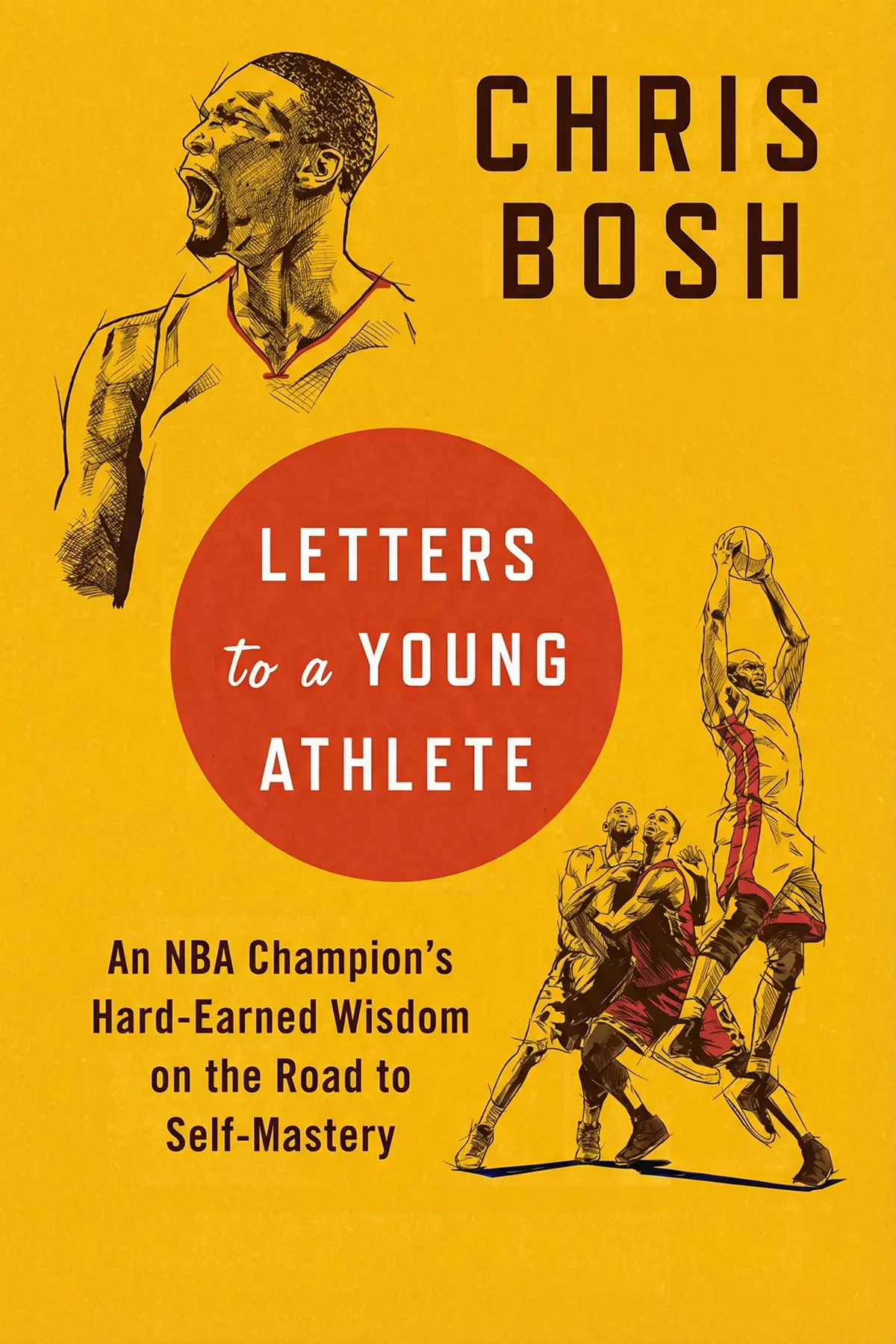
Talent gets young athletes noticed, but it rarely decides how far they go. In Letters to a Young Athlete, two-time NBA champion Chris Bosh argues that the deciding work happens away from the scoreboard: in drills that run past exhaustion, in a purpose bigger than money, and in the daily choice to serve the team before yourself. He wrote it after a blood clot in his leg forced him to retire.
Looking back, Bosh asked what he would tell the kid shooting in his driveway after dark. His answer is one argument: mastery comes from training beyond your limits for a reason larger than yourself, while keeping ego in check and protecting the body and mind that do the work. The stories run from a famous pass in the 2013 Finals to a beaten Karl Malone climbing onto the Chicago Bulls’ bus, and each one ends in something to try at your next practice, match or meeting.
1 min 32 sec
A high school coach stopped a teenage Bosh in the middle of a drill and asked him one blunt question. His stumbling answer, and a locker room full of cash, show what really keeps people going.
1 min 38 sec
With seconds left in an NBA Finals game and 20,000 fans screaming, Bosh made a pass that looked like nothing. It was the product of years spent doing something most people stop doing too early.
1 min 40 sec
A 19-year-old who had always been the best player around suddenly could not score, could not defend and ended up benched. The fix his coach found had nothing to do with skill.
1 min 39 sec
On a Miami team built around three superstars, players kept turning to a veteran who barely played and often watched in a suit. What he did shows how influence works without the spotlight.
1 min 45 sec
After one crushing Finals defeat, Bosh wept on national television. Years earlier, a rival who had just lost his best chance at a title did something on the winners’ bus that Bosh never forgot.
1 min 49 sec
One of basketball’s greatest players spends about $1.5 million a year on himself, and another star risked his job by refusing to play. Both understood something about who really owns an athlete’s future.
1 min 42 sec
Arguably the best shooter the NBA has ever seen still takes hundreds of shots after practice. The way he structures them, and a habit Bosh picked up from novels, change what hard work means.
1 min 08 sec
Bosh’s letters add up to a picture of self-mastery that faces outward. The work itself is lonely and hard, the suicide sprints and the 300 shots after practice, yet nearly every story turns on someone else: a coach asking a teenager what all this was for, a veteran in a suit setting the standard, a beaten Malone shaking hands on the winners’ bus. Bosh grew each time he stopped casting himself as the hero, and the moment Miami remembers best is a pass.
Name the reason you do this, one that would survive a loss and that money could never replace. When exhaustion arrives, treat it as the part of training that counts, while staying honest about the line between tired and injured. In any group, ask what the team needs before asking what you want, and listen longer than you speak. After a win, look hard for the flaw your rivals can already see.
The kid in the driveway after dark already had talent. What Bosh would hand him is a reason, a team and the patience to keep shooting.
Talent opens doors, but it does not keep anyone at the top. Chris Bosh learned that across 13 NBA seasons, two championships with the Miami Heat and a career cut short by a blood clot. Forced to retire, he asked what he would tell the kid shooting baskets in his driveway after dark. His answer is a set of letters on self-mastery. Bosh argues that you have to train past exhaustion because big moments will ask you to perform past it. You need a purpose deeper than money, and you have to set your ego aside to become what your team needs. He draws on his own career, from being benched as a struggling 19-year-old in Toronto to his famous pass to Ray Allen in the 2013 Finals, and on teammates and rivals such as Juwan Howard, Karl Malone, LeBron James, Kawhi Leonard and Stephen Curry. Readers get a clear way to lead without being the star and to handle wins and losses with the same steadiness. Bosh also shows how to protect body and mind, and how to plan practice around weaknesses so that hard work turns into real progress.
High school and college athletes who rely on talent and want to know what separates good from great.
Coaches and team leads trying to build trust, communication and a team-first culture.
Ambitious young people who struggle with ego, setbacks or pushing themselves too hard.
Chris Bosh played one season at Georgia Tech before the Toronto Raptors drafted him fourth overall in 2003. In 2010 he joined the Miami Heat alongside Dwyane Wade and LeBron James, winning NBA championships in 2012 and 2013. A blood clotting condition ended his career, with his final game on February 9, 2016. He entered the Basketball Hall of Fame in 2021, and again in 2025 with the Redeem Team. Through the Chris Bosh Foundation he promotes sports and education for young people in Dallas and Toronto.

Listeners find this book packed with practical advice and simple to digest, rendering it an ideal choice for a birthday present. They value the inspiring message, as one listener pointed out its effectiveness in helping individuals discover their own drive and sense of direction.
This book is a masterclass in the psychological side of professional sports. Chris Bosh uses his sudden, heartbreaking retirement due to blood clots as a springboard to discuss what truly sustains a career beyond mere talent. I loved the breakdown of that iconic 2013 pass to Ray Allen—it wasn't luck; it was the result of decades of training past the point of mental exhaustion. He weaves in Stoic philosophy and Seneca in a way that feels natural rather than forced. While some of the "letters" format can feel a bit repetitive, the core message about honoring your gift is profound. It’s not just for kids; even as an adult, I found the "torture you're most comfortable with" concept really hitting home. This is essential reading for anyone trying to find their higher purpose in any field.
Show moreEver wonder what really goes through a champion's head when the lights go out? Bosh gives us an intimate look at the grind, focusing on passion rather than the lure of a quick paycheck. The story about Coach Thomas Hill asking him "what he wanted to do with this" was a standout moment for me. It forced me to reflect on my own motivations and whether I'm chasing money or mastery. The writing style is conversational and punchy, making it a very quick read. I especially appreciated the sections on self-care and how LeBron James invests millions into his body. If you want to understand the discipline required to reach the top, start here. It’s a great birthday gift for any aspiring athlete in your life.
Show moreWow, I didn't expect to get so emotional reading a book by a basketball player. Bosh’s career ending so abruptly is a tragedy, but the way he channeled that pain into these lessons is inspiring. The chapter on facing defeat with the story of Karl Malone congratulating the Bulls was particularly moving. It’s a rare look at the humility required to be truly great. Sentence after sentence, you feel his passion for the game and his desire to help the next generation avoid his mistakes. I bought three copies for my friends' kids. It’s easy to read, full of real-world wisdom, and helps navigate the difficult path of finding one's purpose. Pure class from one of the NBA's most underrated stars.
Show moreFinally got around to reading this and I was pleasantly surprised by the breadth of topics covered. Bosh doesn't just talk about hoops; he talks about life. The section on Steph Curry making 300 shots after practice illustrates the level of work required for "perceived" effortless play. It’s a great reminder that the "zone" isn't an accident; it's a destination reached through thousands of hours of visualization and discipline. Personally, I loved his take on how reading Gatsby helped his court vision—it’s such an odd, wonderful connection. The book is motivational without being cheesy, which is a hard line to walk. Perfect for anyone starting a new venture who needs a bit of a push.
Show moreThe chapter on ego should be mandatory reading for every high school athlete in the country. Bosh explains how his own pride almost tanked his career in Toronto until he learned to play for the team’s needs rather than his own stats. It’s a tough lesson, but he delivers it with a "big brother" tone that feels supportive rather than condescending. I also really liked the advice about ignoring social media chatter and focusing on your own internal health. The book is full of these small, actionable nuggets of wisdom. Even if you aren't a sports fan, the principles of resilience and leadership are universal. A genuinely wise and well-written piece of work.
Show morePicked this up for my nephew who is obsessed with the NBA, but I ended up finishing it before I even wrapped it. To be fair, I thought it might be a bit "fluff-heavy" coming from a celebrity athlete, but Bosh is surprisingly vulnerable. He talks openly about crying after the 2011 Finals and how he had to learn to manage his ego to fit in with Wade and LeBron. My only small gripe is that some of the advice feels a bit standard—stuff like "work hard" and "listen to your coach." However, the way he frames it through his specific experiences in Toronto and Miami makes it feel more authentic than your average self-help book. It’s a solid manual for navigating the highs and lows of competition.
Show moreAfter hearing Bosh speak on a podcast, I knew I had to grab a copy of these letters. The book is structured beautifully, moving from physical training to the mental fortitude required to stay at the top. I was fascinated by the deep dive into Juwan Howard’s leadership style; it proves you don't have to be the star player to be the team's heartbeat. Bosh’s emphasis on communication and learning the "lingo" of your sport is a nuance often missed in these types of books. Truth is, I wish I had this when I was playing high school ball. It provides a roadmap for growth that extends far beyond the court. A few chapters felt a little short, but the wisdom packed into them is undeniable.
Show moreAs a coach, I'm always looking for resources to give my players, and this is definitely going on the recommended list. Bosh avoids the "hustle culture" trap by emphasizing mental health, meditation, and recovery over just "grinding" 24/7. He makes a great point about ego being the enemy of improvement; if you can't be benched without pouting, you'll never grow. The transition from being "the man" in Toronto to a "Big Three" role player in Miami is handled with great honesty. Some of the references might be a bit dated for younger kids who didn't see him play, but the logic holds up. It’s a fantastic guide for anyone looking to build a cohesive, communicative team.
Show moreLook, Bosh is a legend, but I found the middle section of the book to be a bit of a slog. While the anecdotes about Steph Curry’s pre-game shooting and Kawhi Leonard’s injury management were interesting, the "letter" format felt a bit restrictive after a while. I wanted more behind-the-scenes NBA stories and perhaps a bit less of the generalized motivational talk. That said, the advice on cultivating hobbies outside of sports—like Bosh’s own love for reading Harry Potter—is actually genius. It’s a good book for a specific demographic, namely middle-schoolers or high-schoolers looking for direction. For a seasoned reader, it might feel a bit surface-level in parts, though his sincerity shines through.
Show moreNot what I expected based on the hype. Frankly, it felt like a collection of blog posts rather than a cohesive book. If you’ve followed Bosh’s career or watched his interviews, there isn’t a whole lot of new information here. The "letters" are quite brief and often end just as they’re getting to the good stuff. It’s definitely written for a younger audience, so if you’re an adult looking for a deep dive into NBA history or complex sports psychology, you might be disappointed. I did appreciate the bit about the New Orleans Saints and Hurricane Katrina, but overall, it felt a bit too "inspirational quote" heavy for my taste. Good for a 12-year-old, maybe not for a serious fan.
Show moreChris Bosh, a two-time NBA champion whose career was ended by a blood clot, writes to the young athlete he once was. He argues that reaching your potential takes training past exhaustion, a purpose deeper than money, setting ego aside for the team, steadiness in victory and defeat, and real care for your body and mind. He draws on his own career and on players like Karl Malone, LeBron James and Stephen Curry.
Bosh calls ego the enemy of improvement. As a 19-year-old Toronto Raptor he believed he had to hold the ball and score, and his game collapsed until his coach benched him. Once he put his energy into what the team needed, starting with defense, the ball came to him and he became essential. His wish was to be remembered as a player who battled for his team.
Bosh warns against getting too high after wins, citing Seneca, because confidence turns into complacency while rivals study your flaws. That is how Miami lost the 2011 Finals to Dallas. For losses, his model is Karl Malone, who after losing the 1997 Finals boarded the Bulls’ bus and congratulated every player. If you play for a deeper purpose, a loss hurts but does not damage who you are.
No. Most of the stories come from the NBA and NFL, but Bosh frames his advice for anyone with big ambitions, from a hockey player to a physicist. His ideas on finding purpose, listening as a leader, telling helpful criticism from noise and planning practice around weaknesses carry over to study, work and team life.
Start by asking why your goal matters until you reach a reason beyond money. Treat the urge to stop as the start of useful training, but learn to tell exhaustion from injury. In a team, do what the group needs and listen more than you talk. Plan practice around your weak spots, as Stephen Curry does, and take up an outside interest that builds focus and creativity.
Richard Wiseman





William B. Irvine


Andrew D. Thompson
Jonathan Eig

AUDIO SUMMARY AVAILABLE
Get the key ideas from Letters to a Young Athlete by Chris Bosh, plus 5,000+ more nonfiction titles.









