
14 min 21 sec
Available in: English
Leadership on the Line: Staying Alive Through the Dangers of Change
Explains why people push back against anyone who asks them to change, and how to keep leading anyway: read the resistance, manage the heat, hand the work back and protect yourself from the role.
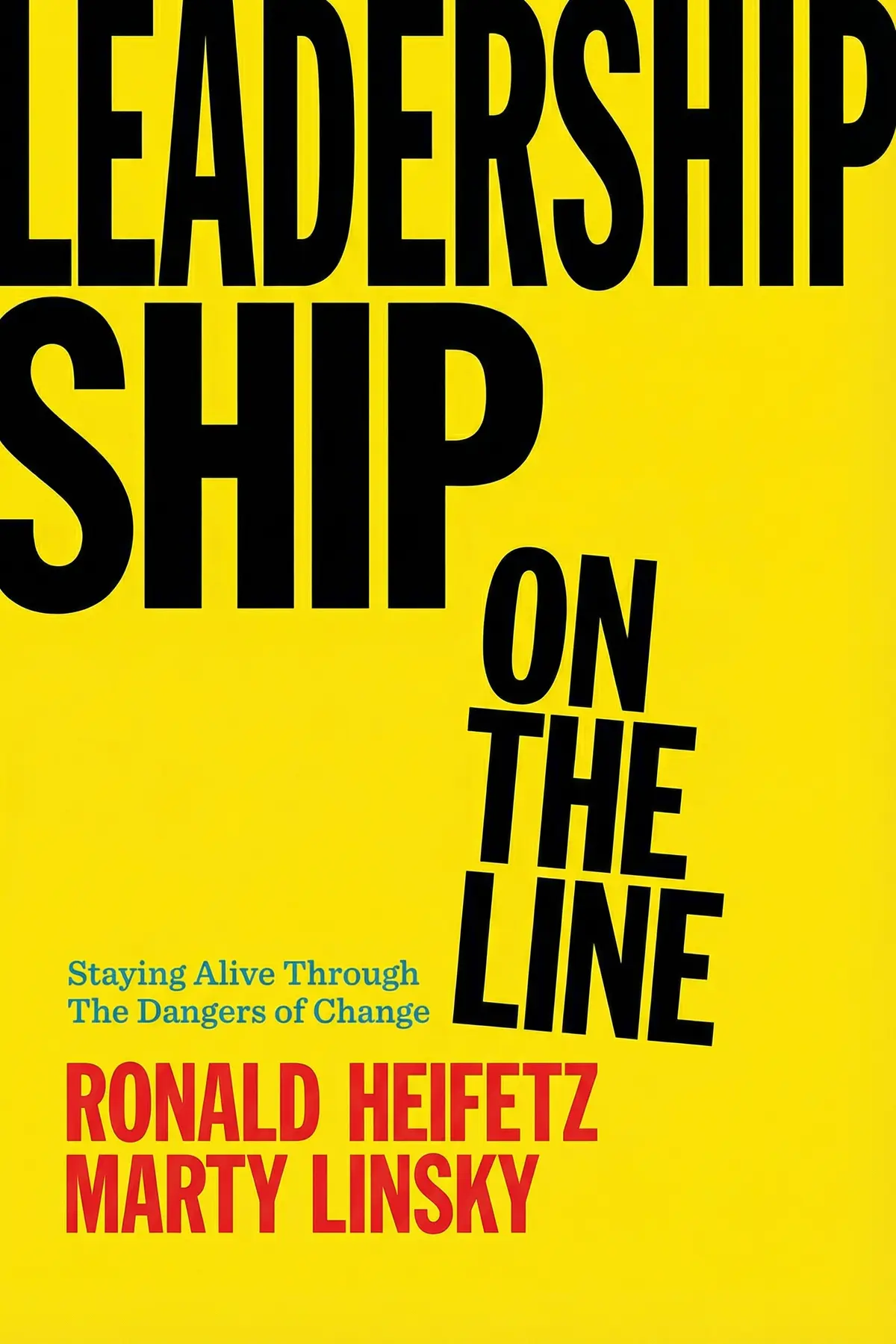
Table of Content
1. Introduction
59 sec
Pushing for change and then watching people turn on you instead of the problem is one of the loneliest moments at work. In Leadership on the Line, Harvard Kennedy School teachers Ronald Heifetz and Marty Linsky explain why it happens. People, they argue, do not resist change as such. They resist the loss that change asks them to absorb, and they often aim that pain at whoever is asking.
So leading puts both a career and a personal life at risk. Drawing on half a century of combined teaching and consulting, the authors insist the risk can be survived. Leaders who last read resistance for what it is, step back to see the pattern, hand the hard work to the people who must change, and keep a self the role cannot swallow. The payoff is a way to tell which problems need your expertise and which need everyone’s learning, plus a set of moves for pushing a group forward without being pushed out.
2. Tell a technical fix from adaptive work
1 min 52 sec
Most leaders who fail are not lazy or foolish. They make one diagnostic mistake again and again, and two women who kept holding meetings nobody attended show what the right diagnosis demands.
3. Recognize the four ways groups silence you
1 min 44 sec
Sometimes the threat to a leader looks like an insult. Sometimes it looks like a promotion or a warm round of applause. The authors argue all of them serve the same hidden purpose.
4. Watch the pattern from the balcony
1 min 43 sec
On a crowded dance floor you can only see the people next to you. A few steps up, the whole room comes into focus. Leading well depends on making that climb in the middle of the action.
5. Win allies before the meeting starts
1 min 38 sec
The image of the brave leader standing alone is inspiring, and according to the authors it is also how leaders get destroyed. A feuding church shows what happens when someone refuses to pick a side.
6. Keep the heat where people can learn
1 min 42 sec
Too little tension and nobody changes. Too much and the group breaks apart. The authors describe a leader’s real job as working a thermostat, and most organizations only know how to turn it down.
7. Hand the work back and hold steady
1 min 42 sec
Solving a team’s toughest problem for them feels generous and efficient. The authors argue it often guarantees that nobody learns, and that the person who solved it becomes the new target.
8. Separate yourself from the role you play
1 min 46 sec
Leaders rarely fall only because critics bring them down. More often something inside them gives way first. The authors explain which hungers do the damage and what keeps a person standing when the attacks get personal.
9. Conclusion
1 min 15 sec
With all that danger in view, Heifetz and Linsky still have to say why anyone should take the risk. Their answer is that leading gives life meaning through what it contributes to others, and that at its best it is a labor of love. They warn against what they call the myth of measurement, which confuses metrics with meaning. Hank Greenberg’s real significance, they suggest, may lie less in his statistics than in the moment he helped Jackie Robinson up and spoke to him. Jimmy Carter let go of the presidency, went on to build houses with Habitat for Humanity, and found himself placed to help societies work on old conflicts. The book’s final chapter, Sacred Heart, asks leaders to stay open under pressure instead of hardening.
So the practice is small and steady. When the next change meets resistance, ask what loss people are protecting before you judge them. Climb to the balcony in the meeting where the heat rises. Hand the hard question back to those who must answer it, and keep one daily place that belongs to you, apart from any title.
The people who push back are usually defending something they value, and a leader who remembers that can stay in the room long enough to help them let it go.
About this book
What is this book about?
Anyone who has tried to change a team, a company, a family or a community knows the pattern. The idea may be sound, yet the reaction lands on the person proposing it. Ronald Heifetz and Marty Linsky argue that this is no accident. People do not resist change as such. They resist the losses it asks them to accept, and they push against whoever is asking. The authors separate technical problems, which experts can fix, from adaptive challenges, which only the people who have them can solve by learning new ways. Treating the second as if it were the first is, in their view, the most common cause of leadership failure. They describe how groups silence leaders through marginalization, diversion, attack and seduction, and then set out the responses: stepping onto the balcony, thinking politically, orchestrating conflict, giving the work back and holding steady. The book also turns inward. Leaders are shown how to manage their own hungers for power, control, importance and intimacy, how to separate self from role, and how to find meaning that outlasts any title. Readers get a map of the dangers and a practical way to lead through them and last.
Book Information
Who it's for
Managers and team leads
Managers and team leads pushing a change their people keep resisting.
Founders, activists and officials
Founders, activists and public servants who have felt the backlash of asking a group to give something up.
Worn down by leading
Anyone in charge who is wearing out and wants to lead without losing themselves in the role.
About the Author
Ronald Heifetz
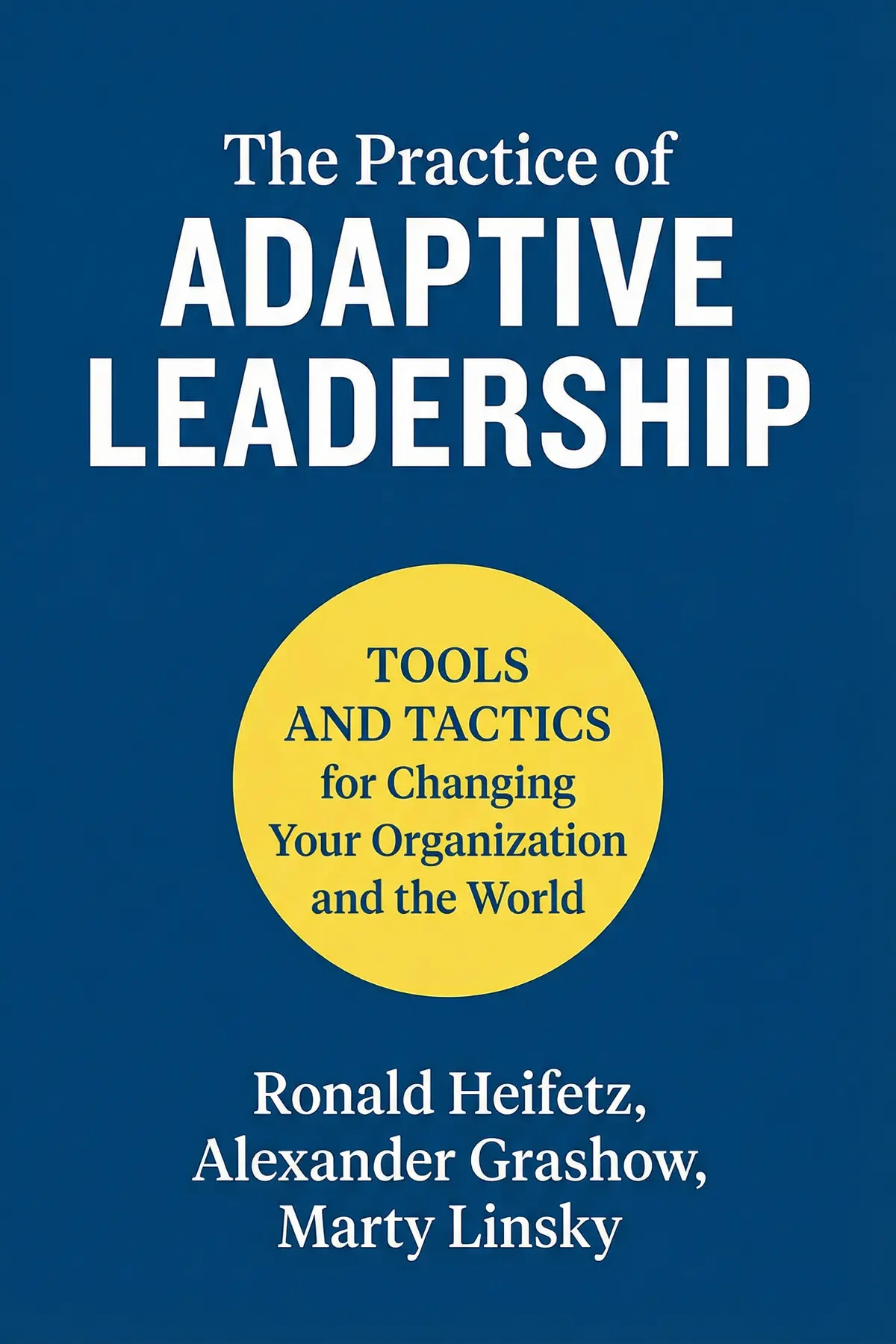
Ronald Heifetz founded the Center for Public Leadership at Harvard Kennedy School, where he holds the Hussein bin Talal Senior Lecturer in Public Leadership post. A former clinical instructor in psychiatry at Harvard Medical School, he has worked with leaders in government, nonprofits and business. Marty Linsky teaches at the Kennedy School and served Massachusetts Governor William Weld as chief secretary and counselor from 1992 to 1995. Together they co-founded Cambridge Leadership Associates and also wrote The Practice of Adaptive Leadership.
Ratings & Reviews
Ratings at a glance

What people think
Listeners consider this work an exceptional resource for leading and rank it among the finest titles they have encountered. They value the book's genuine perspective and depth, with one listener praising its candid examination and another pointing out its practical, grounded style. Its explanations earn high marks, including a mention from one review about the effective examples provided; listeners also appreciate the wealth of information, with one calling it an excellent instrument for managing the difficulties of leadership.
Top reviews
Maja
Finally got around to reading this after seeing it on every corporate 'must-read' list, and it actually lives up to the hype. The central metaphor of getting on the balcony to see the whole dance floor is a game-changer for anyone caught in the daily grind of troubleshooting. It’s not just about solving problems; it’s about distinguishing between technical fixes and the messy, painful process of adaptive change. Truth is, most of us just want to check boxes, but Heifetz and Linsky force you to confront the reality that real leadership means staying in the line of fire. I especially appreciated the 'managing the heat' concept, even if some of the political examples felt a bit dated. It’s a sobering read that doesn't promise easy wins or 'cheat codes' to the top. If you're looking for a shallow 'how-to' book, this isn't it, but for those willing to do the hard work of self-reflection, it’s gold.
Show morePisit
Ever wonder why some 'solutions' never stick? This book explains it perfectly through the lens of adaptive challenges versus technical problems. Technical stuff has a clear fix, but adaptive work requires people to change their values or habits—and that’s where the real pain starts. I loved the Scottie Pippen anecdote; it’s a brilliant illustration of letting the group resolve its own tension rather than the 'leader' swooping in to save everyone. Gotta say, the section on 'tuning the strings of a harp' was a poetic touch that actually made sense in a high-stress work context. I did find the pacing a bit sluggish in the middle chapters, and some of the geopolitical examples are definitely showing their age. Nonetheless, the framework for keeping an organization in the 'productive zone of disequilibrium' is something I will keep in my toolkit. It’s a solid, down-to-earth guide for anyone tired of the usual rah-rah leadership fluff.
Show moreMoo
Not what I expected from a leadership book, and I mean that in the best way possible. Most of these titles are full of 'highly effective habits' and ego-stroking, but Heifetz and Linsky treat leadership as a high-risk activity that might actually get you 'taken out' if you aren't careful. The concept of 'holding the heat'—creating enough tension to motivate change without blowing up the system—is pure genius. Personally, the most impactful part was the distinction between your professional role and your personal self. It’s a crucial shield for anyone who has ever felt like a failure because their team resisted a necessary change. The writing is clear and the insights feel authentic, earned from real-world political battles rather than just theoretical ivory tower posturing. It's a heavy read that demands you look at your own insecurities and 'hungers,' but it’s the most honest analysis of power I’ve seen. Truly a great tool for navigating complex environments.
Show moreMai
Picked this up during a particularly brutal season at my non-profit, and it felt like the authors were reading my mind. Leadership is often sold as a series of victories, but this book focuses on the survival aspect: how to stay alive and keep your soul intact while you’re being attacked. The advice to 'keep your opposition close' and find 'confidants' rather than just allies was exactly what I needed to hear. It’s an inspiring, sobering, and deeply human look at what it takes to drive meaningful change. I particularly appreciated the ending about maintaining an open heart despite the cynicism that leadership often breeds. It’s easy to get bitter when you’re on the line, but Heifetz reminds us that the goal is to serve, not just to survive. It’s the kind of book you don’t just read—you experience it. A must-read for anyone in a high-stakes environment who feels like they’re carrying the world on their shoulders.
Show moreThanit
This book is essentially a treatise on why change is so damn hard. Instead of giving you a 'cheat code' for the corporate ladder, it warns you that climbing that ladder often involves getting your hands dirty and your heart broken. I loved the emphasis on 'the work'—shifting the responsibility for solutions back to the people who actually own the problem. It’s a radical departure from the 'heroic leader' archetype we usually see. My only hesitation is that the book focuses heavily on large, politically charged environments. If you’re at a small startup, some of the advice on maneuvering and 'anchoring' might feel a bit overkill. Still, the insight into human resistance to change is universal. It’s a great tool for anyone who wants a more realistic, less 'sweaty' approach to management. Just ignore the weirdly specific lectures on personal life and focus on the 'balcony' work. It's worth it.
Show moreRodrigo
As someone who has navigated middle management for a decade, I found the distinction between leadership and authority to be incredibly validating. Heifetz and Linsky argue that you don’t need a title to lead, but you do need to be prepared for the 'faces of danger' that come with it. The book is dense, and frankly, the Harvard-centric academic tone can be a bit grating at times. However, the core idea—that leadership is essentially disappointing people at a rate they can sustain—is one of the most honest things I’ve ever read in a management text. It reframes conflict not as a failure, but as a necessary byproduct of growth. My only real gripe is the chapter on 'managing hungers' which felt a little too much like an unprompted therapy session regarding the authors' views on intimacy. Still, the practical advice on anchoring yourself amidst the storm is something I’ll be returning to frequently.
Show moreKai
After hearing several colleagues rave about the 'adaptive leadership' framework, I finally dove in. To be fair, the core thesis is solid. We often try to apply technical fixes to problems that are actually about human behavior and values, which is why so many initiatives fail. But man, the writing can be a slog. It’s a cascade of examples that sometimes feel overly simplified to fit the authors' narrative. I found the lecturing tone of the authors a bit much—they speak from a place of such ultimate authority that it can feel a bit patronizing. Also, the harp metaphor was nice, but do we really need ten different metaphors for the same thing? It’s a four-star read for me because while the 'nuggets' of wisdom are genuinely valuable, you have to dig through a lot of academic fluff to find them. Good as a reference, but maybe not the life-changing experience I was promised.
Show moreTanyaporn
The chapter on 'Managing Hungers' really threw me for a loop. I wasn't expecting a leadership manual to spend so much time discussing the perils of sex and intimacy using Bill Clinton as the primary case study. It felt out of place and a bit uncomfortable, look. On the flip side, the early chapters on diagnostic work are brilliant. Identifying whether a problem is technical or adaptive is a skill I’ve already started using in my meetings. However, the authors tend to use examples that feel a bit clueless regarding broader social dynamics. Mentioning things like police brutality or abusive relationships alongside corporate management feels clumsy at best. It's a book of high highs and weird lows. I’d recommend it for the 'balcony' metaphor alone, but be prepared to skim through some of the more tone-deaf sections. It’s useful, but definitely a product of its specific Harvard-business bubble.
Show morePrayoon
Honestly, this felt like another interchangeable management book designed to make MBA types feel like they’re doing something profound. The distinction between technical and adaptive challenges is basically just a fancy way of saying 'easy vs. hard.' I found the examples to be a huge distraction. Using Martin Luther King Jr.’s stance on Vietnam as a 'failure' of leadership because he lost popularity is a wild take that I just couldn’t get past. It feels like the authors are more concerned with the 'politics' of leadership than the actual ethics or outcomes. Plus, the writing is full of whiplash-inducing contradictions. Stay steady but change! Stay in the moment but get on the balcony! It’s the kind of stuff that sounds deep in a Harvard lecture hall but feels empty when you’re actually dealing with a crisis on the ground. Not for me, though it has a few decent metaphors buried in there.
Show morePot
Wow. I don't get why this is considered a masterpiece in the business sector. To me, it felt like a collection of contradictory platitudes wrapped in an elitist Ivy League bow. One minute you’re supposed to 'hold steady' and the next you need to be 'open to adaptive change.' It’s a lot of word salad that boils down to: some problems are hard and require people to change their minds. Big deal? Also, the way they use Anita Hill as an example of 'The Faces of Danger' is absolutely tone-deaf and borders on offensive. It completely ignores the power dynamics of race and gender to fit a narrow narrative about political maneuvering. I found myself rolling my eyes at the Bill Clinton sections too. In my experience, this feels like the blind leading the blind for people who want to feel deep without actually addressing systemic issues. Save your money and buy a book that actually respects its subjects.
Show moreQuestions about this book
What is the main idea of Leadership on the Line?
Heifetz and Linsky argue that leading is dangerous because real change asks people to accept loss, and people resist the loss far more than the change itself. Groups then try to silence the person pushing. The book shows how to recognize that pushback and respond to it, and how leaders can protect themselves so they survive long enough for the change to happen.
What is the difference between technical and adaptive challenges?
A technical problem can be solved with knowledge that already exists, and people in authority can solve it on others’ behalf. An adaptive challenge requires people to learn new ways, so those who have the problem must do the work themselves. The authors say treating adaptive challenges as technical ones is the most common reason leaders fail, in business, politics, nonprofits and community life.
What does getting on the balcony mean in leadership?
It is the authors’ image for stepping back mentally in the middle of the action to see the whole pattern, much as someone on a balcony can see an entire dance floor. The leader stays fully engaged but asks what is really going on, then returns to the action. The book compares it to athletes who play the game while also watching it as a whole.
What are the dangers leaders face according to Heifetz and Linsky?
The book names four: marginalization, which confines a leader to one narrow issue; diversion, which floods them with new duties or promotions until they lose focus; attack, which shifts attention from the issue to the person; and seduction, which plays on a craving for approval. All four share one aim, which is shutting the leader down so the familiar way of doing things survives.
How can I apply Leadership on the Line at work?
Start by asking who must learn something new and what they will lose. Line up partners before key meetings, and own your part in the problem. Manage the tension: raise it by naming avoided issues, lower it with small technical wins. Return problems to the people who own them instead of solving them yourself, and keep a daily sanctuary that keeps you separate from your role.
Featured in
Readers also enjoyed




A Year with Peter Drucker: 52 Weeks of Coaching for Leadership Effectiveness
Joseph A. Maciariello



Acting with Power: Why We Are More Powerful Than We Believe
Deborah Gruenfeld

All In: How Great Leaders Build Unstoppable Teams
Mike Michalowicz


AUDIO SUMMARY AVAILABLE
Listen to Leadership on the Line in 15 minutes
Get the key ideas from Leadership on the Line by Ronald Heifetz, plus 5,000+ more nonfiction titles.
- 5,000+ titles
- Listen as much as you want
- 7-day free trial
- Cancel anytime









