

13 min 11 sec
Available in: English
Lawyers, Liars and the Art of Storytelling
Shows how to persuade a jury, a client or a boss by turning raw facts into a story built on credibility, logic and emotion, then scripting and performing it the way television actors do.
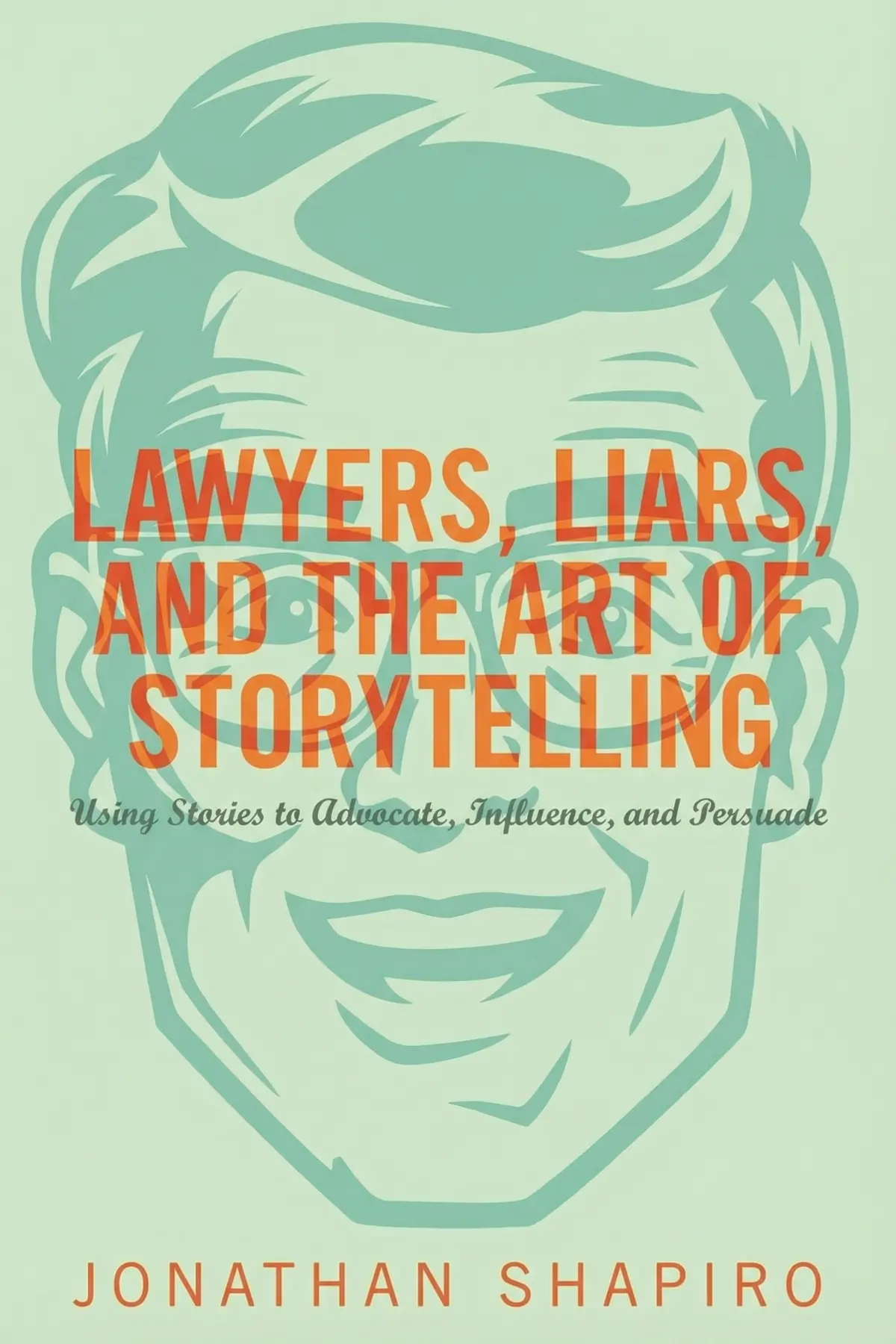
Table of Content
1. Introduction
1 min 04 sec
If your strongest arguments keep landing flat, the problem may be that you are presenting facts while your audience is waiting for a story. In Lawyers, Liars and the Art of Storytelling, Jonathan Shapiro, a former federal prosecutor turned television writer, argues that a courtroom and a TV series ask for the same thing: win over the people watching. Juries, clients and viewers respond to narrative far more than to legal jargon.
Shapiro builds his method on a framework from Aristotle, a triangle of credibility, logic and emotion, and insists that a persuasive story needs all three sides held in balance. Around it he adds the screenwriter’s habits: casting a hero and a villain, scripting the delivery and rehearsing like an actor. The approach travels well beyond the courtroom, into a pitch to a client, a request to a manager or any meeting where minds have to change. Each step comes with a case he watched or a mistake he made himself.
2. Turn your evidence into a story people follow
1 min 29 sec
Law students spend years on research and technical writing, yet the skill that most often wins over a jury is never formally taught. The material for it, Shapiro says, is already sitting in the case file.
3. Earn trust before you ask anyone to believe
1 min 46 sec
A story can be logical and full of feeling and still collapse in front of a jury. Shapiro traces the reason to an ancient Greek idea and to something as ordinary as the state of your office.
4. Build an argument your opponent has to accept
1 min 49 sec
In a Supreme Court fight over whether DNA could be owned, one careless comparison decided the outcome. Shapiro turns that moment into a three-step method anyone can use before a disagreement starts.
5. Let the facts stir feeling without pleading
1 min 34 sec
A defense lawyer asked one harmless question about his client’s childhood, and the mood of an entire courtroom shifted. He never asked the jurors for sympathy, and he did not need to.
6. Keep emotion on a short leash
1 min 27 sec
A young prosecutor planned a dramatic courtroom moment designed to make a jury furious. Within seconds his glasses were flying across the room and several jurors were laughing at the wrong person.
7. Rehearse your case the way actors learn scripts
1 min 40 sec
Books promise to teach lawyers how to stand and how to speak. Shapiro thinks there is a better teacher, and one television actor’s private margin notes show exactly what it looks like in practice.
8. Give even a dull case a hero and villain
1 min 14 sec
A lobbyist had to defend industrial pesticides in front of a minor state commission, hardly an audience waiting to be moved. He found a hero in the most unlikely place, the fruit bowl.
9. Conclusion
1 min 08 sec
Shapiro’s book rests on an observation from two careers: jargon persuades almost no one. What moves a jury, a client or a manager is a story that makes sense, comes from someone they trust and makes them feel something. Remove one of those and the whole thing tilts. The Kennedy trial shows emotion working because it arrived through plain facts. The flying glasses show what happens when feeling is forced. The DNA case shows careful reasoning beating a careless comparison.
For anyone who has to persuade at work, the method starts well before you speak. Read your material until you can name its characters and their conflict. Settle what everyone already agrees on and what came before, then listen for the weak point in the other side’s version. Let feeling come from details your audience notices for itself, and write in the margin of your notes what each part must make people feel.
And when a subject seems too dry for any of this, think of the citrus lobbyist. If a mandarin can be the hero in front of a climate commission, your next proposal can have one too.
About this book
What is this book about?
Lawyers spend years learning legal research and technical writing, yet the skill that most often wins a case gets no class of its own: telling a story. Jonathan Shapiro, a federal prosecutor for a decade before he wrote legal dramas for television, argues that a jury and a TV audience are won over in the same way. His framework is Aristotle's rhetorical triangle of credibility, logic and emotion. Shapiro shows how to build each side, from choosing trustworthy witnesses to a three-step method for grounding a story in facts nobody can deny, and why emotion works best when it arrives through details rather than pleas. His cases range from a Supreme Court fight over patenting DNA to the acquittal of Kerry Kennedy, along with a courtroom reenactment that went badly wrong in his own early career. He then turns the story into a performance, borrowing from films, from an actor's script notes and from the old habit of giving every case a hero and a villain. The result is a practical way to persuade jurors, clients, managers or anyone else who needs convincing.
Book Information
Who it's for
Law students and lawyers
Lawyers and law students who were taught research and writing but never how to tell a case as a story.
Professionals pitching and presenting
Professionals who pitch clients, ask for promotions or present to skeptical managers.
Writers curious about courtrooms
Writers curious how courtroom persuasion and screen drama borrow from each other.
About the Author
Jonathan Shapiro
Jonathan Shapiro spent ten years as a federal prosecutor before becoming a television writer and producer on shows including The Practice, Boston Legal, Life and The Blacklist. With David E. Kelley he co-created the legal drama Goliath, and his work has won Emmy, Peabody and Humanitas Awards. He has taught law at Loyola Law School and at the University of Southern California's Gould School of Law. He studied at Harvard, was a Rhodes Scholar at Oriel College, Oxford, and earned his law degree at Berkeley.
Ratings & Reviews
Ratings at a glance

What people think
Listeners find the book an excellent resource written with great skill, and one listener mentions how it teaches concepts without sounding condescending or overbearing. They also value its utility for legal professionals and describe it as very humorous. The narrative quality is highly regarded, with one listener specifically praising the inclusion of pertinent anecdotes from the author’s legal career.
Top reviews
Tanawan
As a first-year law student, I found this book to be a breath of fresh air in a curriculum that usually kills creativity. Shapiro argues that the heart of lawyering isn't just citations and research, but the ability to weave a compelling narrative. His writing is incredibly engaging and humorous, making it feel less like a lecture and more like a conversation over drinks. Truth is, law schools should make this required reading. The way he connects his Hollywood experience to the courtroom is brilliant. It reminded me why I wanted to join this profession in the first place—to tell stories that matter. To quote the book, creativity is often banned in law school, and Shapiro is the perfect person to bring it back.
Show moreLucas
Wow, I didn't expect a book about legal theory to be this much of a page-turner. Shapiro has a knack for blending humor with profound insights into the human condition. He treats lawyering as an art form, emphasizing that credibility and emotion are just as important as logic. I particularly enjoyed the sections on how to build ethos with an audience. The stories about his own career are not just rambling anecdotes; they are case studies in how narrative can make or break a person’s life. If you want to understand the heart and soul of the law, this is the book for you. It's an excellent read that stays with you long after you finish it.
Show moreRafael
Finally got around to reading this one after hearing Shapiro speak on a podcast. It's a breezy, enjoyable read that offers a subtle study of how narratives function in a legal setting. He avoids being pedantic or preachy, which is a rare find in legal literature. Instead, he uses his own career—both as a lawyer and a producer—to illustrate how to build a case. Some of the Hollywood stories go on a bit long, but they are relevant to his points about character and credibility. It’s funny, smart, and genuinely useful if you’re looking to add some personality to your writing. You will find yourself learning how to tell a story without even realizing it's happening.
Show moreCherry
Ever wonder why courtroom dramas feel so much more compelling than actual trials? Shapiro pulls back the curtain on that phenomenon, explaining how the art of the lie is actually the art of finding a deeper truth through storytelling. His passion for the craft is evident on every page. Personally, I loved the behind-the-scenes look at Boston Legal, though I can see why some readers might find it distracting from the legal theory. The book is very funny and manages to make complex ideas about persuasion feel accessible. It's a great pick for anyone who feels stuck in the rigid style of traditional legal writing. It proves that being a lawyer and being a creative are not mutually exclusive.
Show moreJavier
This book manages to be incredibly educational without ever feeling like a boring textbook. Jonathan Shapiro has a gift for making the legal part of lawyering feel creative and alive. I was impressed by how he explains the mechanics of storytelling through the lens of his own trials and tribulations. The tone is casual and conversational, which makes the pages fly by. My only minor gripe is the lack of a clear summary or checklist at the end of chapters; you really have to pay attention to catch the lessons. Still, it's a valuable resource for anyone who wants to improve their communication skills. It’s very funny and doesn't take itself too seriously, which I appreciated.
Show moreWachira
Whether you're a practicing attorney or just someone who enjoys a good David E. Kelley show, there's a lot to like here. Shapiro’s central argument is that lawyers are essentially storytellers, a fact often ignored in formal education. The book is filled with relevant stories that show what happens when you lose sight of the narrative. Not gonna lie, I was mostly here for the Boston Legal trivia, but I ended up taking several notes on how to structure a closing argument using logic and emotion. It’s a very funny, non-preachy look at a profession that often takes itself way too seriously. Excellent read overall for anyone interested in the heart and soul of the law.
Show moreBrooklyn
The chapter on ethos, logos, and pathos was easily the highlight of the entire experience for me. Shapiro does a solid job of refreshing these Aristotelian concepts for a modern audience, but the rest of the book feels like a collection of disjointed stories. I appreciate that he avoids a rigid how-to format, but a little more structure would have helped the flow immensely. One minute he's talking about a trial, the next he's discussing a script for a TV show. It’s a bit of a rambling journey. I did learn a few things about presentation and credibility, but I wish an editor had pushed him to stay more focused on the instructional side of the art. Great cover art, though!
Show moreCameron
Look, the premise here is genuinely fascinating, but the execution feels a bit messy. The idea of applying television writing techniques to the courtroom is a goldmine. However, Shapiro gets bogged down in very specific details about his TV career that don't always connect back to the main point. I found myself skimming through several pages of Hollywood gossip to get back to the advice on building a persuasive narrative. To be fair, there are some real gems of wisdom buried in here, particularly regarding the importance of presentation and character. It just requires some patience to find them among the anecdotes. It's an interesting look at the profession, even if it lacks a sense of flow.
Show moreAnthony
To be fair, Shapiro is clearly a gifted storyteller, but he sometimes forgets he’s supposed to be teaching us the 'how' as well. I went into this expecting a guide on the mechanics of story construction, but it felt more like a memoir about his transition from law to television. There is some useful, interesting information in Part 2, but the rest is a bit of a muddle. The cover art is fantastic, and the prose is high-quality, but the confusing structure and lack of clear guidance left me wanting more. It’s a decent book for fans of legal dramas, but perhaps less so for those seeking a strict, pedagogical manual on courtroom persuasion.
Show moreSomboon
Not what I expected. I picked this up hoping for a structured guide on improving my legal arguments, but instead, I got a memoir about writing for Boston Legal and The Practice. While some of the anecdotes were mildly entertaining, the author spends an uncomfortable amount of time praising Harvey Weinstein, which makes several chapters feel dated and cringeworthy. The structure is all over the place, and I felt like I was wading through a lot of fluff to find a single piece of actionable advice. Frankly, it could have been half the length and twice as effective. It's more about Shapiro's ego than actual pedagogy. Mostly, I think this book contributes to my skill set by showing exactly what not to do when trying to stay on point.
Show moreQuestions about this book
What is the main idea of Lawyers, Liars and the Art of Storytelling?
Jonathan Shapiro argues that the best way to persuade an audience is with a story, not with legal jargon. Drawing on his years as a federal prosecutor and a television writer, he shows that a winning narrative balances Aristotle’s three elements of credibility, logic and emotion. Once the story is built, he treats it like a script to be performed, borrowing techniques from films and actors.
What is the rhetorical triangle in Shapiro's book?
It is Aristotle’s model of persuasion, made of ethos, logos and pathos, or credibility, logic and emotion. Shapiro treats each as one side of a triangle. How much weight each side gets depends on the case, but none can be left out. A logical, emotional story still fails without a credible source, such as a witness who can back it up.
How do you build logic into an argument, according to Shapiro?
He describes three steps. Find the parts of the event both sides already accept. Go back to what happened earlier and gather more facts nobody disputes. Then study your opponent’s story for a weak point you can reasonably turn around. In a Supreme Court case on patenting DNA, one side compared DNA to gold, and the other won by comparing it to a prescription drug instead.
Is this book only useful for lawyers?
No. Shapiro notes that storytelling helps lawyers win clients and even persuade a boss to promote them, and his techniques apply to any presentation. Building a plot from your facts, earning trust, letting emotion come through details and giving even a dull subject a hero and a villain all work in pitches, meetings and proposals, as the citrus lobbyist’s mandarin argument shows.
Readers also enjoyed






AUDIO SUMMARY AVAILABLE
Listen to Lawyers, Liars and the Art of Storytelling in 15 minutes
Get the key ideas from Lawyers, Liars and the Art of Storytelling by Jonathan Shapiro, plus 5,000+ more nonfiction titles.
- 5,000+ titles
- Listen as much as you want
- 7-day free trial
- Cancel anytime









