

59 Seconds: Change Your Life in Under a Minute
Richard Wiseman
 English
A guide to the Swedish idea of lagom, or just enough, and how small shared habits around work, food, movement, friendship and spending can replace excess with a calmer, steadier kind of contentment.
1 min 03 sec
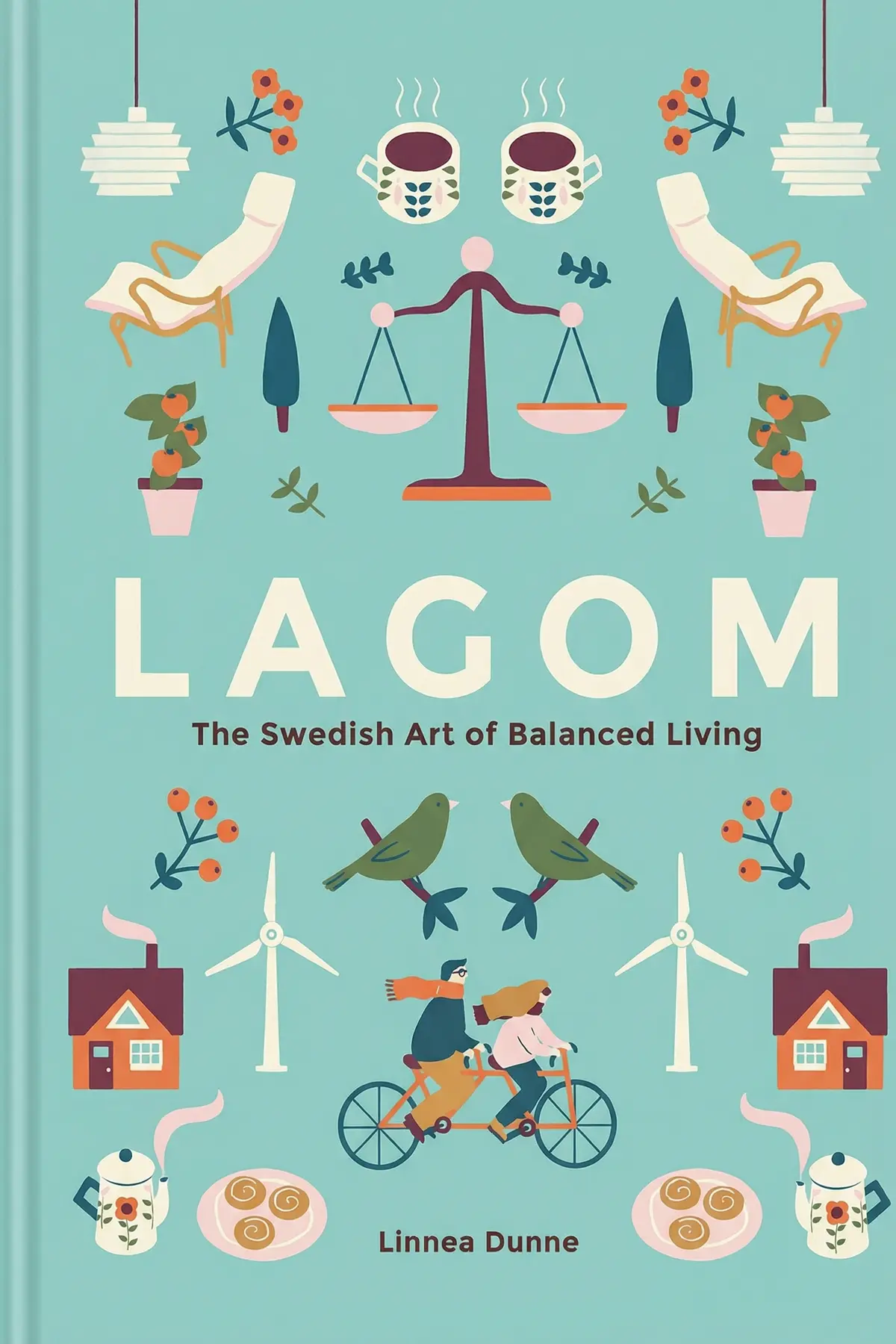
If your weeks swing between overwork and collapse, the Swedish word lagom offers another setting: neither too little nor too much, just enough. In Lagom, Linnea Dunne, a writer who grew up in Sweden, argues that this is a habit of balance, not a call to settle for average, and that it lives in ordinary choices, from how much milk goes in your coffee to how considerately you handle your part in community life.
Dunne felt its absence firsthand. She left Sweden for Dublin at 19, loved the new freedom, and soon missed the steady rhythm she had grown up with. The word probably reaches back to Viking times, when fair give-and-take held a group together. Her case is that a calmer, more content life comes from many small rituals of enough, in work, food, movement, friendship and spending, all held up by trust in other people. Each area offers a Swedish habit worth borrowing, and most of them can be tried this week.
1 min 48 sec
In some offices, walking out at the official end of the day raises eyebrows. In Sweden it raises nothing at all, and the reason begins long before the workday ends, in how decisions get made.
2 min 01 sec
Rest that waits for spare energy tends to never arrive. One modest Swedish Friday tradition, involving a sofa and a taco buffet, shows a sturdier way to make downtime survive even the busiest weeks.
2 min 04 sec
A cinnamon bun, a bottle of homemade cordial and a pan of yesterday’s leftovers might seem unrelated. Together they reveal a way of eating that keeps all the pleasure while trimming what you never needed.
2 min 25 sec
One man cycled 10 kilometers for a coffee maker and rode home in the rain on a flat tire. His stubbornness points to an attitude that turns exercise from a chore into something you barely notice doing.
2 min 02 sec
Swedes have a reputation for being reserved, even cold. Look closer and the same traits that seem distant at first turn out to make friendships, parties and even shared laundry rooms surprisingly easy.
2 min 03 sec
Saving the planet can feel like a task far too large for one household. Sweden’s approach starts somewhere smaller: a deposit on a can, a month without shopping and a single degree on the thermostat.
1 min 10 sec
Lagom keeps asking one plain question: what is enough here? Dunne’s Sweden answers it in places that seem unrelated, a coffee break, a Friday taco evening, a 10 kilometer bike ride, a shared laundry room, a bag of empty cans. Underneath each answer is the same idea. Balance lasts when it is built into routines that other people share, so nobody has to defend it alone. That is why trust keeps appearing: in decisions anchored with the whole team, in honest answers to how are you, in neighbors doing the spring clean together.
Begin where it costs least. Clear one corner of your home and keep only what you actually use. Choose one evening a week that is protected and simple, and hold on to it even when work is busy. When something new tempts you, try a short köpstopp before buying. And bring other people in, a colleague for fika or a neighbor for a shared task, because the Swedish version of enough was never meant to be practiced alone.
Not too little, not too much: a measure you can hold up against almost any part of your day.
Many people live in swings: long weeks of overwork, then collapse; spending sprees, then guilt. Linnea Dunne grew up with a different setting. In Sweden, life is guided by lagom, a word for the amount that is just enough, and she only noticed how much it shaped her when she moved to Dublin at 19 and found herself missing it. Dunne shows that lagom is about balance, not about settling for average. She follows it through Swedish working life, with its shared decision-making and daily fika breaks, through cozy Friday evenings and generous parental leave, through thrifty, seasonal cooking, everyday outdoor movement, frank friendships and cooperative housing, and finally through habits that cut waste and consumption. Readers get a set of small, specific practices to borrow, from a weekly protected evening to a buying stop, and a way of asking, in any part of the day, what enough would look like.
Professionals stuck between overwork and burnout who want rest that survives busy weeks.
Parents and households looking for simple routines around food, money and family time.
Anyone curious about Swedish culture who wants small, practical ways to consume less and connect more.
Linnea Dunne grew up in Sweden, where she began writing as a columnist for a local paper. She later moved to Ireland and then to London, where she studied Creative Writing and Political Communications. Her articles have appeared in the Irish Times, the Guardian and the Irish Independent. She founded Clearly Nordic, a copy agency that helps Nordic brands communicate in English, and she is also the author of Good Mornings.
Listeners find the book's illustrations charming and value its tips for everyday life. Yet, the readability earns varied reviews, as several listeners find the text bothersome and mention the subpar print quality. Additionally, the writing itself is viewed unfavorably, with listeners describing it as poorly composed.
Finally got around to reading this little gem, and it’s such a breath of fresh air compared to the chaotic pace of modern life. The way Dunne explores Swedish traditions like lördagsgodis and fika makes the concept of 'just enough' feel attainable rather than like another chore on the to-do list. I found the sections on sustainable living particularly inspiring because they don't demand perfection but rather a sensible middle ground. Not gonna lie, I’ve already started applying the 'not too little, not too much' mantra to my morning routine and I feel noticeably less stressed. It’s a beautiful, unpretentious guide for anyone who feels overwhelmed by the 'more is better' culture we live in today. The folksy illustrations and photography make it a coffee-table book you actually want to flip through. Sure, it’s a quick read, but the visual experience alone makes it worth the purchase.
Show moreWow, this was exactly the 'middle-of-winter' pick-me-up I needed to get my mindset back on track! I love how Linnea Dunne defines the essence of balance without making it feel like another extreme lifestyle change you have to fail at. The specific mentions of traditions like sportlov were so charming and gave me a real sense of the Swedish rhythm of life. It’s not a 'profound' academic text, but that’s the whole point—it’s supposed to be accessible and applicable to your own busy life. The photography and illustrations are so cheery that I find myself flipping through it even when I’m not reading, just for the vibe. This book proves that happiness isn’t about having everything, but about having just enough to be content with what you already possess.
Show moreEver wonder why the Scandinavians always seem to have their lives together while the rest of us are drowning in clutter and stress? This book offers some pretty solid answers by breaking down the Swedish art of balance into manageable chunks like work-life habits and home decor. While the writing can feel a bit simplistic at times, the aesthetic appeal of the book—with its gorgeous infographics and photography—makes it a joy to browse. To be fair, some of the advice feels a little like common sense, but having it all packaged in such a tidy, beautiful format serves as a necessary reminder to slow down. I did notice that some of the text was a bit small or hard to read against certain backgrounds, which was a minor annoyance. Overall, it’s a lovely little pick-me-up that encourages you to find your own 'middle way' without being overly preachy.
Show moreAfter hearing so much buzz about Hygge, I wanted to see how the Swedish approach differed, and this book provided a great introduction to the concept of Lagom. It isn’t just about being cozy; it’s a more structured philosophy about equity, sustainability, and finding that perfect sweet spot in everything you do. The chapter on style and health was particularly interesting, though I wish the author had dived a bit deeper into the sociopolitical roots of the mindset. Look, it’s not a scholarly thesis, but it is a charming and mindful guide that looks great on a shelf. I appreciated the inclusion of recipes, even if they aren't groundbreaking, because they help ground the philosophy in everyday actions. It’s a solid gift book for anyone looking to simplify their lifestyle without going full minimalist or sacrificing the things they love.
Show moreAs someone who has always struggled with the 'all or nothing' mentality, the concept of Lagom was a bit of a revelation for me. This book does a great job of explaining how the 'not too much, not too little' philosophy can be applied to everything from your wardrobe to your social life. I particularly liked the sections on avoiding consumerism and being more mindful of our environmental impact as a community. While I agree with other reviewers that the writing isn't exactly high literature, the message is clear and the presentation is top-notch. It’s a gentle, no-nonsense approach to life that really resonated with my need for a more sustainable way of being. I’d recommend it to anyone who enjoyed the Hygge books but wants something a little more grounded in daily practicality and social balance.
Show moreThis book is definitely a case of style over substance, although that style is undeniably very pretty to look at. Truth is, if you’ve spent five minutes on a Swedish tourism website, you’ve probably already encountered about 80% of the information presented here. While the illustrations are cheerful and the layout is clean, the writing lacks the profound insight I was hoping for from someone who grew up in the culture. It felt a bit like the author was just jumping on the Nordic lifestyle trend bandwagon without offering any new or unique perspectives. The recipes for cinnamon buns are a nice touch, but you can find better ones online with a simple search. It’s a pleasant enough read for a rainy afternoon, but don’t expect it to change your entire worldview or provide deep cultural analysis beyond the basics.
Show moreNot what I expected given the hype, especially because the physical quality of the book left a lot to be desired for me. While the ideas of balance and mindfulness are great, the print quality made it surprisingly annoying to read in certain lighting. Personally, I found the generalizations about Swedish culture to be a bit broad, making the whole thing feel more like a marketing pamphlet than a deep dive. I liked the focus on nature and social consciousness, but the execution felt a bit rushed and the writing wasn't particularly engaging. It’s a tidy little book that would probably make a good gift for someone who isn't already familiar with the trend. However, for those of us looking for more than surface-level 'how-to' guides, it might feel a bit hollow and repetitive after a few chapters.
Show moreThe chapter on work-life balance was easily the highlight of this book, but the rest of it felt a bit like filler. I struggle with how the author writes with such authority when she hasn't lived in Sweden for decades, which makes some of the observations feel dated or overly idealized. Frankly, the content is a bit of a mixed bag; some tips are genuinely helpful for daily living, while others are just fluff. The photography is stunning, though, and it definitely captures that 'Lagom' aesthetic that everyone is trying to emulate right now. I just wish there was more meat on the bones because it felt like I finished the whole thing in under an hour. It’s an okay introduction, but there are definitely more thorough books on the subject out there if you really want to learn the history.
Show morePicked this up during a particularly stressful week and it served its purpose as a light, easy distraction from the real world. It promotes a very healthy, mindful way of living that I think a lot of us in the West are desperately craving right now. That said, I can’t help but feel that it’s a bit overrated given how basic the advice actually is. It’s essentially a list of things we already know we should do—like spend time in nature and buy less stuff—just wrapped in a Swedish flag. The infographic-style formatting is fun, but it makes the reading experience feel a bit fragmented and shallow at times. If you want a quick hit of inspiration, it’s fine, but it won't be a book I return to for any serious guidance or deep cultural understanding.
Show moreThis book felt incredibly derivative and, to be honest, I felt like I was wasting my time by the halfway point. It’s a beautifully designed object, sure, but the actual content is so thin that it barely qualifies as a book on culture. Everything in here is just a collection of UN facts and basic observations that anyone could find with a quick search. I was hoping for something more personal or research-heavy, but instead, I got a recipe for cinnamon buns and advice on wearing red lipstick. The print is also quite difficult to read in some sections due to the color choices, which just added to my frustration. It’s a great example of 'trend-bait' that looks good on Instagram but offers very little value to the reader once you actually open it up.
Show moreLagom is a Swedish word for the amount that is just enough, neither too little nor too much. Dunne stresses that it is about balance, not mediocrity. It may go back to Viking times, when fair give-and-take mattered, and today it shapes how Swedes work, eat, move, socialize and spend, from the milk in their coffee to how they share responsibilities with neighbors.
Dunne describes Swedish workplaces built on trust. Decisions go through förankringsprocessen, which consults everyone from executives to new hires, so people own the outcome and work gets done without heavy overtime. Daily fika breaks let colleagues talk and recover. Leaving on time is accepted because the job is assumed to be finished, and rituals like fredagsmys, a cozy Friday evening, protect rest every week.
Start small. Pick one fixed evening a week for simple food and time with people you care about. Cook with leftovers, as Swedes do with pyttipanna, and try a köpstopp, a period of buying nothing. Turn the thermostat down one degree, which Dunne says can cut heating bills by about 10 percent, and clear clutter so your home holds only what you use.
It suits people who feel caught between excess and exhaustion and want gentle, concrete habits instead of strict rules. Busy professionals will find ideas about shared decisions and real breaks. Families get rituals such as cozy Friday and Saturday sweets. Readers interested in sustainability get small steps like plastic detoxes, deposit returns and buying secondhand.
Balance is easier to keep when it is shared and regular. Dunne shows Swedes protecting enough through routines that involve other people: fika with colleagues, home gatherings with friends, cooperative housing with neighbors, recycling as a common effort. Trust holds these habits together, so nobody has to rely on willpower alone to resist overwork or overconsumption.
Richard Wiseman





William B. Irvine


Andrew D. Thompson


Deepak Chopra
AUDIO SUMMARY AVAILABLE
Get the key ideas from Lagom by Linnea Dunne, plus 5,000+ more nonfiction titles.









