

13 min 17 sec
Available in: English
Labor of Love: The Invention of Dating
By Moira Weigel
A history of how dating was invented in industrial cities and reshaped by shopping, secrecy, teenage fads, free love and the AIDS crisis. It shows why today's apps judge people by their tastes.
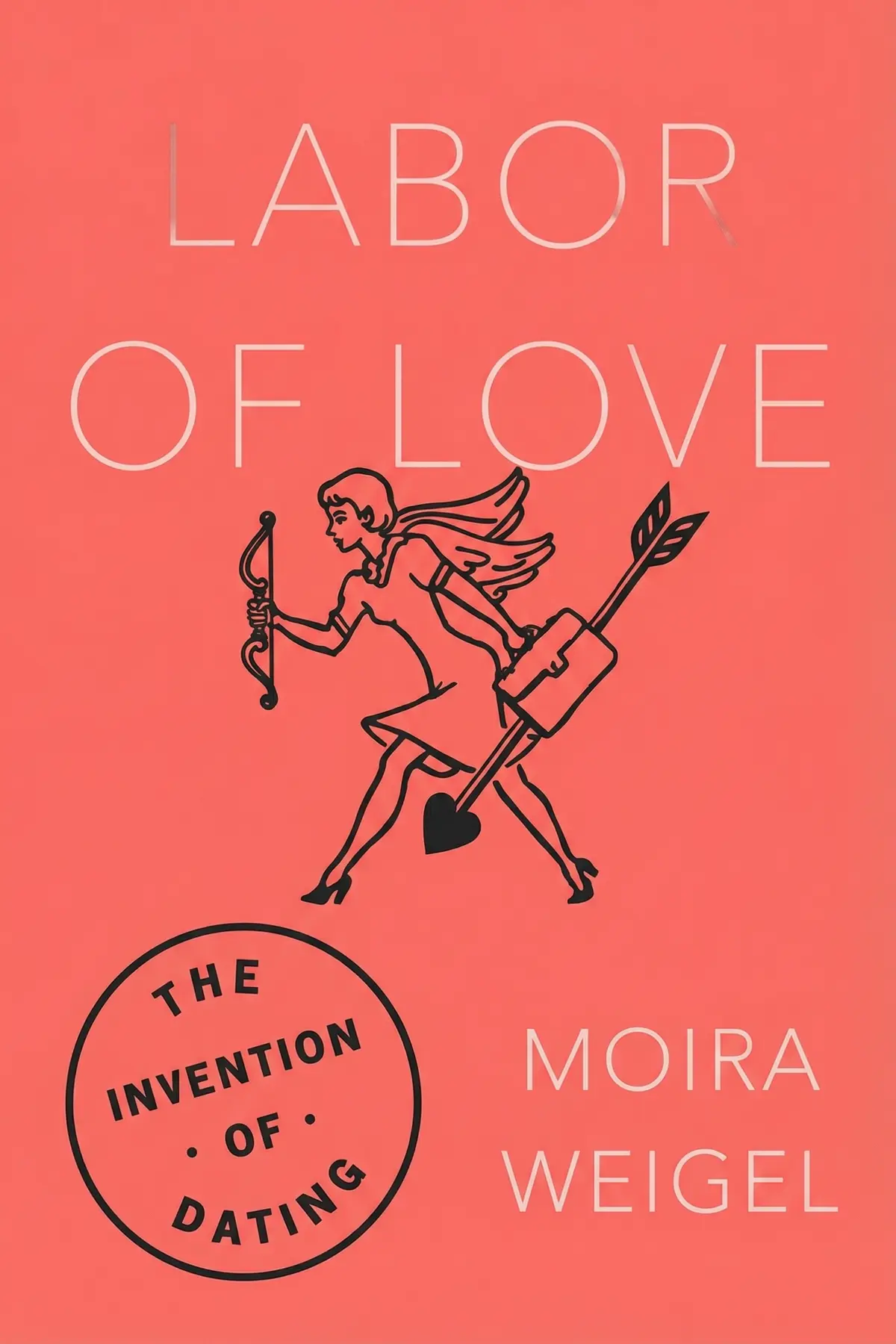
Table of Content
1. Introduction
1 min 04 sec
If swiping through strangers on a phone makes romance feel cheapened or broken, history offers a calmer view. In Labor of Love, scholar Moira Weigel shows that dating in its modern form only appeared in the late nineteenth century, when young women poured into industrial cities for work and courted in parks because they had nowhere else to go.
Her argument is that the way people look for love has always bent to the economy and culture around them. Phones and apps did not kill dating; they are its newest turn. Weigel follows that thread from parlor visits watched by servants to department store shopgirls, secret signals among gay New Yorkers, Harlem rent parties, teenagers going steady, the sexual revolution and the AIDS crisis. Each era solved its own problem of where, how and with whom to meet. Knowing those stories turns your own dating habits, and the questions an app asks you, into something you can see clearly and make choices about.
2. Trace modern dating back to crowded city streets
1 min 53 sec
For most of history, young people had little say in who they courted. Then a wave of new jobs changed the rules, and the places couples could afford to meet began deciding how romance worked.
3. Spot the shopping list hiding in dating profiles
1 min 43 sec
Dating sites want to know your favorite bands and foods long before they ask what kind of person you are. The habit goes back a century, to young women working behind department store counters.
4. Learn the hidden codes outsiders used to find love
1 min 52 sec
When the law could send you to jail for who you loved, an ordinary word or a choice of clothing could carry a dangerous message. Some of those signals still shape everyday language.
5. Going steady explains today's trial-and-error romance
1 min 51 sec
Moving from partner to partner before settling down feels like a recent habit. It took off decades ago among children, and it worried their parents for reasons one study suggests were well founded.
6. See how sexual freedom became something to sell
1 min 44 sec
A generation demanded the right to love whoever it chose, and the old rules fell fast. Two very different magazines spotted the opportunity, and their sales figures show how quickly desire became a market.
7. Learn what a crisis taught us about talking openly
1 min 52 sec
Calls for total abstinence went nowhere, so people had to find another way to stay alive. A small booklet and a government brochure changed what partners dared to ask each other before getting close.
8. Conclusion
1 min 18 sec
Weigel’s history makes one quiet point with large consequences: dating has never been a fixed tradition that technology is now destroying. It was invented in crowded cities, reshaped by department stores, hidden in codes, turned into a teenage ritual, sold through magazines and made frank by an epidemic. Each version answered a practical question of its age, mostly about money, space and risk. The app on your phone is one more answer.
That view takes some pressure off. If a profile asks for your favorite bands before anything about your character, you can see it as a habit inherited from the shopgirls’ era, and choose to look past it toward the traits that matter to you. If the rules of romance around you feel unfair or ill-fitting, remember the tilt of the head, the red bow tie and the Harlem rent party, all built by people the system had shut out. And before getting close to someone, ask the plain questions Koop’s brochure carried into millions of homes, about past partners and health.
Courtship has always bent to the world around it. Seeing that clearly lets you stop mourning an old way of meeting and start shaping your own.
About this book
What is this book about?
Swiping through strangers on a phone can make romance feel cheapened, as if technology broke something old and precious. Moira Weigel argues the opposite. Dating in its modern form is a recent invention, and the way people search for a partner has always bent to the money, work and culture of their era. Weigel starts with the 1880s, when young women moved to industrial cities for jobs and courted in parks because their homes were too crowded. The middle class, meanwhile, received suitors in the parlor. She then follows department store shopgirls who copied their rich customers, gay New Yorkers who signaled through coded words and clothing, Black domestic workers who met men at Harlem rent parties, 1950s teenagers going steady, the sexual revolution and the magazines that profited from it, and the AIDS epidemic that forced the public to talk about sex. The reader gets a clear map of where today's dating habits came from, including why online profiles ask about favorite bands and food before personality. It is a way to see your own love life as part of a longer story, and to choose more freely within it.
Book Information
Who it's for
Singles weary of swiping
Singles tired of dating apps who want to understand where today's rules came from.
Curious about intimacy's economics
Readers curious about how money, work and consumer culture shape private life.
Gender and history students
Students of gender, sexuality and social history looking for a compact, story-driven overview.
About the Author
Moira Weigel
Moira Weigel trained in modern languages, including German and Mandarin Chinese, and earned a PhD at Yale University in a joint program in comparative literature and film and media. Her research examines digital media in a global context, with a secondary focus on feminism, gender and sexuality. Labor of Love, her first book, has been translated into five languages. She cofounded Logic magazine and Logic Books and co-edited Voices from the Valley, a collection of interviews with anonymous tech industry workers.
Ratings & Reviews
Ratings at a glance
What people think
Listeners describe this book as a gripping listen that offers deep research and captivating anecdotes about the evolution of dating. The prose is quite immersive, with listeners often calling the material hilarious. When it comes to the specific vocabulary used, listeners express a variety of conflicting opinions.
Top reviews
Gin
This book is a revelation for anyone who has ever felt exhausted by the modern "romance" industry. Weigel argues that dating is essentially a form of unpaid labor, and her materialist perspective is absolutely brilliant. I loved how she skewered the self-help movement for turning relationships into a series of strategic maneuvers and marketing tactics. It’s hilarious in a dark way, especially when she details how early 20th-century authorities viewed women accepting dinner from men as a form of solicitation. The research is impeccable, covering everything from the rise of coed schools to the way the internet has carved out new lifestyle niches. Personally, I think this should be required reading for anyone before they’re allowed to download a dating app. It gives you the historical context to realize that the "good old days" were never actually that simple.
Show moreRatchada
Wow. I didn't think a book about the history of dating could be this profound. Weigel treats "love" not as some mystical force, but as something shaped by money, labor, and technology. The title "Labor of Love" is so clever once you realize she’s talking about the literal work women do to be "dateable." I found the sections on the 1950s "going steady" culture and the 1970s economic downturn particularly illuminating. She has this way of taking these everyday concepts and stripping them back to reveal the power structures underneath. Truth is, it’s refreshing to read something that isn’t trying to sell me a "method" for finding a husband. It’s just a sharp, critical, and often funny look at why we act the way we do. It’s intellectual but accessible, and the research feels incredibly thorough.
Show moreBig
Picked this up because the title caught my eye, and frankly, I’m glad I did. It’s an incredibly smart look at how dating shifted from supervised visits in parlors to "going out" in public spaces. Weigel connects the dots between economic changes and romantic habits in a way that feels fresh. It isn't just a list of dates and facts; she explores how dating became a literal marketplace where women had to market themselves. To be fair, it gets a bit bogged down in academic jargon toward the middle, which might slow some people down. However, the anecdotes about the first "daters" being treated like criminals by the police were eye-opening. If you want to understand why dating feels like a second job, this is the book for you. It’s light-years ahead of those mindless self-help guides that tell you how to play games.
Show moreSupranee
As someone who is currently wading through the nightmare that is online dating in my 30s, reading this was strangely cathartic. Moira Weigel has a great wit that shines through even when she’s discussing heavy topics like the wage gap or the AIDS epidemic. She makes a compelling case that dating has always been a reflection of the labor market. The transition from the "stay-at-home" courtship of the 19th century to the "shop girl" era was fascinating to read about. My only real gripe is that the book feels a little unfinished. She does a magnificent job explaining how we got to this point, but I was left waiting for a final "so what?" that never quite materialized. Still, it’s a very smart, well-researched book that makes you look at every dinner date you’ve ever been on through a completely different lens.
Show moreJack
Finally finished this and it’s basically everything I wanted Aziz Ansari’s book to be but with more intellectual weight. It’s a fascinating blend of anthropology and history that focuses on how women’s roles in the workplace have shaped how we find partners. The way Weigel discusses "consumer pleasure" as a driver for romance is both cynical and incredibly accurate. I especially appreciated the inclusion of how African American women’s history offers a necessary counter-perspective to the typical "liberation" narrative of the 60s. That said, the book is quite U.S.-centric and stays mostly within middle-class boundaries. It’s a very polished, academic work that manages to be entertaining most of the time, even if it does get a little dry when discussing the technicalities of economic shifts. A strong four-star read for history buffs.
Show morePhichai
Moira Weigel has a sharp eye for detail, and she uses it to dismantle our romantic assumptions. This book isn't about giving advice; it’s about showing how the very idea of a "date" was a radical invention born out of women entering the workforce. Look, if you’re looking for a juicy tell-all or a spicy history, this isn't it. The tone is very much that of a social scientist. But if you want to understand the intersection of gender roles and the economy, it’s brilliant. The book highlights how women were often arrested just for being out in public with men, which is a wild piece of history I never knew. It drags a bit when she gets into the internet age, perhaps because we’re all living it and it feels less "historical," but the overall journey is well worth the time.
Show moreWanida
Ever wonder why we call them "dates" in the first place? This book answers that, tracing the term back to calendar entries made by working women in the early 20th century. It’s a solid piece of social science, though I found the scope a bit too narrow for my liking. The author even admits that the research focuses primarily on white, middle-class, heterosexual couples, which leaves out so much of the American experience. While the sections on the 1960s sexual revolution and the impact of the AIDS crisis in the 80s were compelling, the writing style can be quite dry. Sometimes the sentences were so long and packed with academic vocabulary that I had to read them twice just to find the point. It’s informative, but definitely not a light history. I wanted more diverse perspectives and maybe a clearer conclusion on where we go from here.
Show moreJackson
The chapter on the early 1900s was easily the most interesting part of this book. Seeing the direct historical link between dating and prostitution—where women traded their company for meals or movie tickets—was a total "aha" moment for me. It explains so much about the gender dynamics we still struggle with today. However, the book didn't maintain that level of engagement for the whole duration. Once it got into the later decades, it felt like it was just checking boxes of major historical events without adding enough new insight. The prose is definitely on the scholarly side, and there were several sections where I felt the author was being overly wordy just for the sake of it. It’s a good resource if you need the history, but it's not exactly a page-turner. I’d recommend it to people with a specific interest in feminism or sociology.
Show moreSureerat
After hearing a lot of hype about this one, I have to say I’m a bit torn. On one hand, the research is top-notch and the premise is fascinating—treating dating as a form of labor is a great hook. On the other hand, the execution felt a bit uneven. Some chapters are vibrant and full of personality, while others feel like a chore to read through because of the dense vocabulary and academic framing. To be fair, she covers a lot of ground, from the 1900s to the present day, but the lack of a strong concluding argument left me feeling a bit unsatisfied. It felt like a collection of very good essays that didn't quite coalesce into a single, powerful message. It’s definitely a "thinker’s" book, but it could have benefited from a bit more editing to make the sentence structure more fluid.
Show moreAkosua
Not what I expected at all, and to be honest, it was a bit of a slog. Based on the title and the subject matter, I was hoping for something a bit more scintillating or at least fast-paced. Instead, what I got was a very dense, dry academic treatise that felt more like a sociology textbook than a cultural history. The vocabulary is needlessly complex, and the author’s thoughts are occasionally difficult to follow due to poor phrasing and a lack of well-placed commas. While the historical facts about the origins of dating are interesting, they are buried under layers of theory that just didn't hold my attention. If you’re a graduate student in gender studies, you’ll probably love this, but for the casual reader looking for an engaging narrative, it misses the mark. It felt like work to get through—which I suppose fits the title—but not in a good way.
Show moreQuestions about this book
What is the main idea of Labor of Love by Moira Weigel?
Weigel argues that dating is a modern invention and that the way people court has always followed economic and cultural change. It emerged when young women moved to industrial cities for work in the 1880s, and it was later reshaped by consumer culture, the 1950s fad of going steady, the sexual revolution and the AIDS epidemic. Apps are the latest stage of that history, not the end of romance.
Why do dating apps ask about your favorite bands and food?
Weigel links it to the rise of consumer culture. Early twentieth century shopgirls copied the dress and speech of their wealthy customers, and by 1925 consumer spending drove much of American life. As romance and shopping developed together, people learned to judge partners by what they buy and like. She notes that sites such as Match.com and OkCupid ask about tastes before personality traits like shyness.
How did people date before dating existed?
Before the late nineteenth century, parents and relatives largely controlled matchmaking. Once dating began, middle-class couples used a ritual called calling: a man knocked at a woman’s door, a servant took his name, and if she agreed he was invited in to talk and sing under supervision. Working-class couples, with cramped homes and little money, met in parks and alleys instead.
What does Labor of Love say about AIDS and dating?
The AIDS epidemic of the 1980s made casual sex a matter of life and death and forced people to talk openly about it. Calls for abstinence proved unrealistic, so safer sex guidance spread, including a booklet supervised by doctor Joseph Sonnabend. Surgeon General C. Everett Koop then sent a brochure to millions of homes on choosing partners carefully and asking about their sexual history.
How can I apply the ideas in Labor of Love?
Use the history to read your own dating life more clearly. When a profile lists tastes, remember it reflects a consumer habit and look for signs of character instead. When advice tells you how to be more desirable, ask who is selling something. And before intimacy, ask direct questions about past partners and health, as the AIDS era taught people to do.
Featured in
Readers also enjoyed

1491: New Revelations of the Americas Before Columbus
Charles C. Mann

A Year in the Life of William Shakespeare: 1599
James Shapiro

1929: Inside the Greatest Crash in Wall Street History--and How It
Andrew Ross Sorkin
Age of Anger: A History of the Present
Pankaj Mishra

A Biography of Loneliness: The History of an Emotion
Fay Bound Alberti

Agent Sonya: The Spy Next Door
Ben Macintyre

Alexander Hamilton
Ron Chernow
AUDIO SUMMARY AVAILABLE
Listen to Labor of Love in 15 minutes
Get the key ideas from Labor of Love by Moira Weigel, plus 5,000+ more nonfiction titles.
- 5,000+ titles
- Listen as much as you want
- 7-day free trial
- Cancel anytime









