

16 min 37 sec
Available in: English
 ไทย
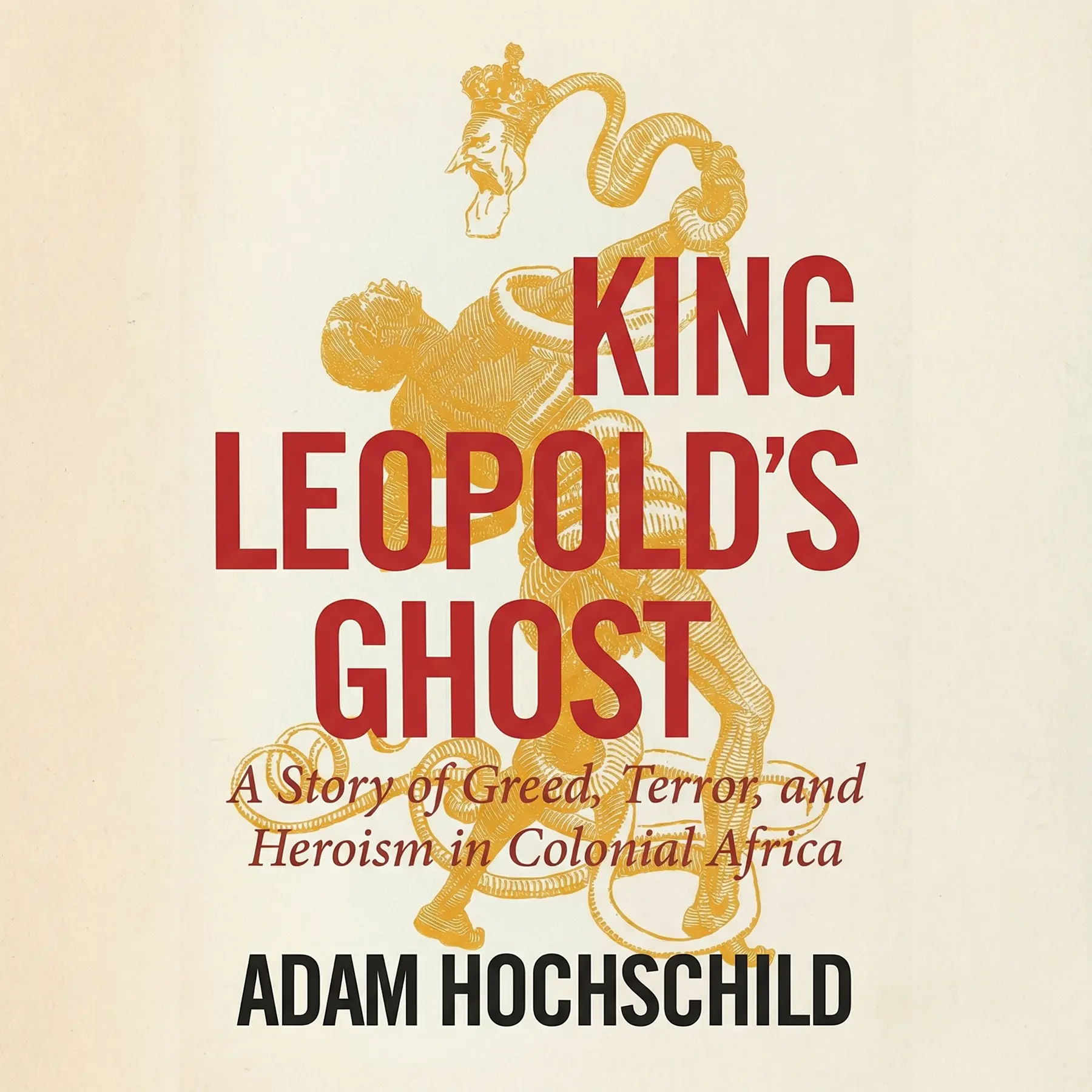
EnglishไทยKing Leopold’s Ghost: A Story of Greed, Terror, and Heroism in Colonial Africa
Shows how Belgium's King Leopold II ran the Congo as a private slave colony behind a humanitarian story, and how a few stubborn witnesses built the movement that finally exposed him.
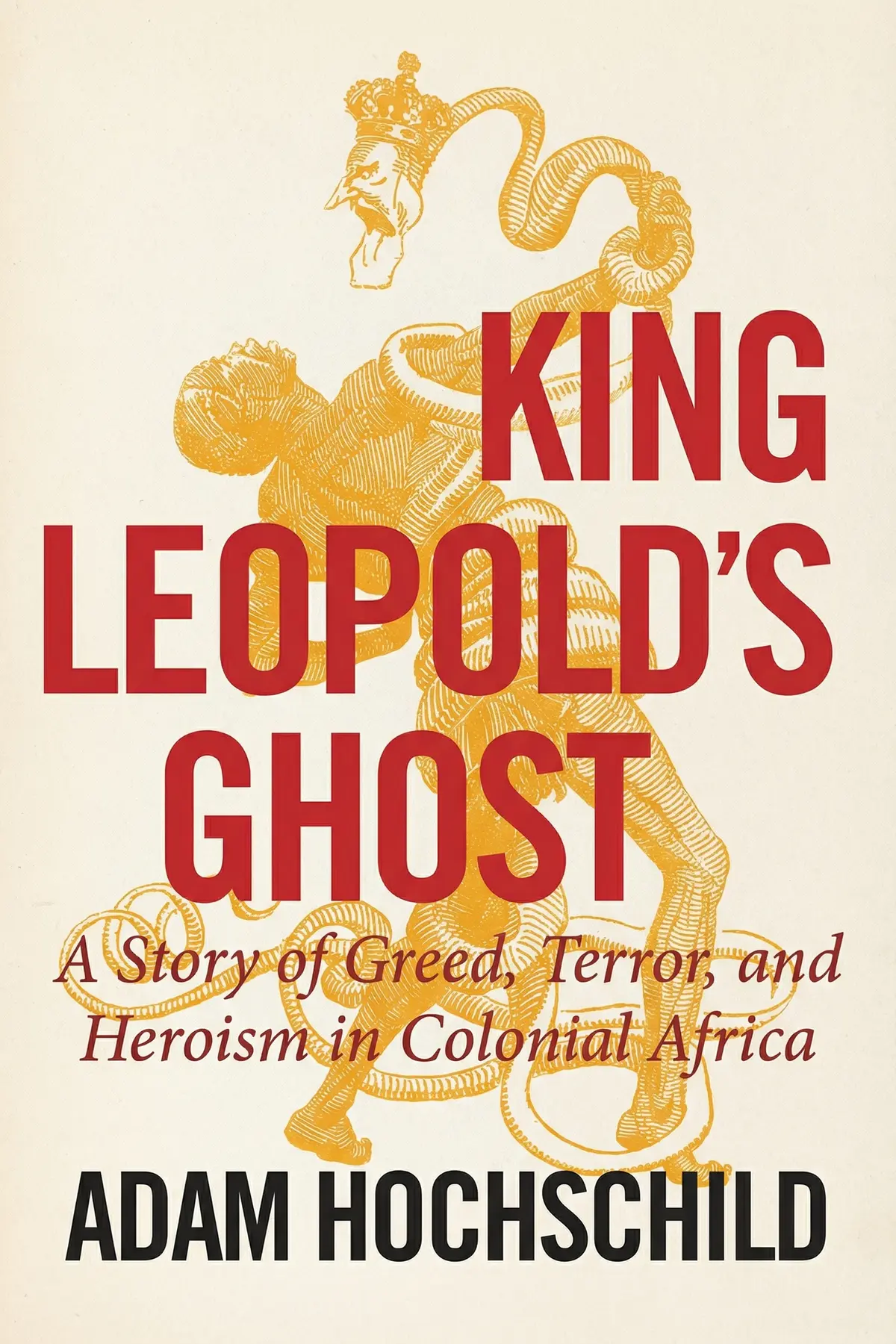
Table of Content
1. Introduction
1 min 00 sec
Most people know colonial rule in Africa was cruel, yet few can explain how one European king ran a slave colony for decades while being praised as a humanitarian. In King Leopold’s Ghost, journalist Adam Hochschild shows that the trick was a story: Leopold II of Belgium dressed a hunt for ivory and rubber in the language of charity and antislavery. Behind it, forced labor built him a fortune estimated at over $1 billion in today’s money, and an estimated ten million Africans died.
The book’s argument is that a cover story let the terror run, and that a few stubborn witnesses, including a young shipping employee who noticed what the ships at Antwerp brought in and sent out, tore it down. Follow how they did it and you gain a sharp test for any powerful institution that claims noble aims: compare what it takes with what it gives back, and listen to the people it rules.
2. Understand why profit shaped Africa from first contact
1 min 46 sec
A Portuguese captain sailing past the equator found the sea suddenly turning fresh. What he planted on that shore, and what local custom made possible, set the terms for the next four centuries.
3. Spot the charity mask on a land grab
2 min 05 sec
A Welshman who grew up in a workhouse became a famous explorer, and a king hungry for a colony saw in him the means to get one. The cover they chose made their land grab look like a crusade against cruelty.
4. Learn how paperwork and rifles built a private country
2 min 04 sec
Signatures from chiefs who had never seen writing, a conference in Berlin and a whip of hippopotamus hide turned a king’s wish into a country 76 times the size of his own.
5. One honest witness can break an official story
2 min 07 sec
Hundreds of Europeans and Americans visited the early colony and said little. One pastor and lawyer asked a question none of them had, and a young sailor carried what he saw into fiction.
6. Discover the tricycle tire behind millions of deaths
2 min 03 sec
A father in Belfast tinkering with his son’s tricycle had no idea what he was starting. His invention made a forest vine priceless and turned hostage taking into a business method.
7. Read the numbers powerful people forget to hide
2 min 04 sec
A clerk on the Antwerp docks spotted something odd in the shipping records and refused a promotion to forget it. With a stubborn consul at his side, he built a campaign out of evidence.
8. Watch a cover-up collapse under its own lies
2 min 16 sec
Leopold tried to win over American lawmakers, rig an inquiry and plant a fake report in the press. Each trick left him weaker, and yet his final exit still made him richer.
9. Conclusion
1 min 12 sec
Leopold’s Congo, in the end, is a story about distance. The rubber and ivory traveled to Antwerp. The fortune, which one Belgian historian puts at about $1.1 billion in today’s dollars, stayed in Brussels. The dead, an estimated ten million, remained in forests few Europeans ever saw. Charity was the word that covered the gap. Hochschild shows that the damage outlived the king, setting the stage for the CIA’s assassination of the elected prime minister Patrice Lumumba in 1961 and for mines that still feed the world’s diamonds, uranium and the coltan in phones.
The book supports a few plain habits. When an organization announces a noble purpose, compare what flows out with what flows back, as Morel did on the docks. Before trusting an official account, find the testimony of the people it describes, the step Williams alone took. Brussels, built on Congolese labor, has no monument to the Congolese who died. Hochschild’s point is that the stories a society buries shape it as much as the ones it honors.
About this book
What is this book about?
For nearly thirty years, the Congo was the private property of one man. Leopold II, king of the Belgians, used forced labor to strip the territory of ivory and then rubber. He built a personal fortune estimated at over $1 billion in today's money and presided over the deaths of an estimated ten million Africans. All the while, much of Europe saw him as a humanitarian fighting slavery. Adam Hochschild tells how that deception was built and how it was broken. He follows the explorer Henry Morton Stanley, who pressured hundreds of chiefs into signing away their land, and the hostage system and severed hands of the rubber boom. He also follows the witnesses who would not keep quiet: the American pastor George Washington Williams, the novelist Joseph Conrad, the consul Roger Casement and Edmund Morel, a shipping clerk whose campaign grew into the twentieth century's earliest international movement for human rights. Readers get a vivid, clear history and a lasting way of seeing through powerful people who hide profit behind noble words.
Book Information
Who it's for
Curious about colonial rule
Readers who know colonialism was brutal but want to understand how one regime actually worked.
History students
Students of African, European or human rights history looking for a clear, story-driven account.
Curious about exposing lies
Journalists, activists and professionals curious how a few determined people exposed a powerful lie.
About the Author
Adam Hochschild
Adam Hochschild, born in New York City in 1942, started as a daily newspaper reporter, then wrote and edited for Ramparts magazine and in the mid-1970s helped found Mother Jones. His articles have appeared in The New Yorker, Harper's Magazine and The New York Times Magazine. King Leopold's Ghost was a finalist for the National Book Critics Circle award, and Bury the Chains, his book on British antislavery, won the Los Angeles Times Book Prize. In 2008 the American Historical Association honored him for public service. He has taught writing at the journalism graduate school of the University of California, Berkeley.
Ratings & Reviews
Ratings at a glance
What people think
Listeners regard this title as an essential read that offers a definitive general history of colonial Africa, featuring deeply researched material and a superb writing style. The storytelling is lauded as a top-tier example of narrative non-fiction, and listeners value the thorough way it delivers biographical and factual data. While many find it absorbing, some mention that it can be tedious at points.
Top reviews
Priya
Wow. This book hit me like a physical blow. I thought I knew about colonial atrocities, but the sheer scale of Leopold's greed in the Congo is staggering. Hochschild doesn't just list facts; he paints a vivid, terrifying portrait of a "philanthropist" king who oversaw a literal hell on earth. The descriptions of the "chicotte" and the baskets of severed hands used to account for bullets are images I’ll never be able to unsee. It’s a dense read, sure, but it's paced like a high-stakes thriller that happens to be entirely true. I was especially moved by the section on George Washington Williams, a hero history seems to have conveniently forgotten. If you want to understand how the modern world was built on the bones of others, you have to read this. It’s visceral, heartbreaking, and absolutely essential for anyone who cares about human rights.
Show moreVimolwan
Ever wonder why certain monsters are household names while others are buried in the footnotes of history? Before picking this up, I had no idea that Leopold II was responsible for a death toll that rivals some of the worst dictators of the 20th century. Hochschild’s meticulously researched account exposes how the search for rubber and ivory turned an entire region into a slave colony. I was fascinated by the connection to Joseph Conrad’s Heart of Darkness, seeing how the fictional Kurtz was actually based on very real, very terrifying men like Léon Rom. The book does an incredible job of highlighting the early human rights activists who fought back, particularly Roger Casement and William Sheppard. It’s a sobering look at how easily the world can be fooled by a clever PR campaign. This isn't just a book about the past; it's a warning about the heights of human avarice.
Show moreSam
After hearing about this book for years, I finally dove in, and frankly, I am stunned by what I learned. The level of systematic cruelty described here—the kidnapping of hostages to force rubber production and the literal mutilation of children—is beyond anything I’ve encountered in other history books. Hochschild’s strength lies in his ability to weave together the biographies of the "villains" and the "heroes" into a cohesive, if agonizing, timeline. He captures Leopold’s obsession with his "small country" and his desperate need for an empire with such precision that the King feels like a Shakespearean antagonist. The fact that Leopold burned his archives before dying tells you everything you need to know about his guilt. This is a brilliant, gut-wrenching piece of investigative history that demands to be read by everyone. It’s a dark journey, but ignoring these ghosts only allows them to keep haunting us.
Show moreSirichai
Finally got around to reading this classic of narrative non-fiction, and it definitely lives up to the hype. The way Hochschild reconstructs the horrors of the Congo using the few records that escaped Leopold’s fires is nothing short of miraculous. It’s a deeply emotional experience to read about the "ghosts" of the millions who died, but the author balances the tragedy with the fascinating story of the first modern human rights movement. The sentence structure is varied enough to keep the prose lively, and the chapters are well-organized, moving from the initial "treaties" signed by illiterate chiefs to the global outcry that eventually followed. I particularly appreciated the inclusion of George Washington Williams’ open letter; his voice deserves to be heard. It is a haunting, powerful, and deeply researched book that everyone should have on their shelf.
Show moreWatcharee
The chapter on E.D. Morel alone makes this book worth the price of admission. It’s rare to find a history book that is both an authoritative academic resource and a page-turning drama, but Hochschild pulls it off with aplomb. He details the horrific "red rubber" trade with a clinical yet compassionate eye, making sure the reader understands both the economic machinery and the human cost. The revelation that Leopold never even set foot in the Congo while ordering these massacres makes the whole thing feel even more sinister. I did find the sections on Belgian domestic politics a little slow toward the end, but that’s a minor quibble in an otherwise flawless work. The book serves as a vital reminder of the power of the press and the importance of whistleblowers. Absolutely stunning work.
Show moreWilliam
As someone who enjoys deep dives into colonial history, I found King Leopold’s Ghost to be one of the most enlightening books I’ve ever picked up. It provides a comprehensive and deeply researched look at a genocide that has been largely erased from our collective memory. The biographical details of King Leopold—his arrogance, his dysfunctional family, and his pathological need for wealth—provide a fascinating psychological backdrop to the atrocities. The writing is top-tier narrative non-fiction, managing to be both informative and evocative without ever feeling overly sentimental. It was particularly eye-opening to see how the United States played a role in recognizing Leopold’s claim to the land early on. This is a heavy, dark, and essential piece of writing. It’s an absolute must-read for anyone who wants to understand the roots of systemic exploitation in Africa.
Show moreWararat
Adam Hochschild has managed to take a monumental amount of archival research and turn it into a compelling narrative that feels almost cinematic. The way he traces the web of deceit Leopold spun to convince the world he was performing a "humanitarian" mission is masterfully done. To be fair, there are moments in the middle where the focus on shipping manifests and diplomatic maneuvers felt a bit tedious, slowing down the otherwise breakneck pace of the tragedy. However, the portraits of figures like the whistleblower E.D. Morel and the explorer Henry Morton Stanley are so richly drawn that you can't help but stay invested. It’s an authoritative account that bridges the gap between academic history and accessible storytelling. While it’s a difficult subject to stomach, the writing style makes the bitter pill of the Congo’s history much easier to swallow.
Show moreGrace
This book reads like a cautionary tale about the intersection of corporate greed and absolute power. I found the analysis of the "International Association of the Congo" particularly chilling, as it showed how a private company could masquerade as a sovereign state to avoid oversight. Hochschild writes with a clear-eyed passion, avoiding the trap of being too academic while still maintaining a high level of factual integrity. My only real complaint is that some of the descriptions of the early explorers felt slightly romanticized compared to the brutal reality they helped create. That said, the account of E.D. Morel’s transformation from a shipping clerk to a world-class activist is incredibly inspiring. It shows that even one person with a bit of data and a lot of courage can topple a king. A truly authoritative look at a period of history that is still far too neglected in our schools.
Show moreWanphen
While I appreciate the meticulous research that went into this volume, I found the reading experience to be quite a slog. The author clearly knows his stuff, and the historical importance of the Congo Free State cannot be overstated, but the prose often felt dry and bogged down by minutiae. I was hoping for more focus on the Congolese people themselves, yet they often felt like background characters in a story dominated by white European men. Truth is, the middle chapters concerning the bureaucratic struggle in Liverpool and Belgium dragged on for far too long. I understand the need for detail in narrative non-fiction, but it occasionally crossed the line into being repetitive. It is certainly an informative text, and the sections on the "red rubber" system are harrowing, but I struggled to stay engaged throughout the entire 300-plus pages. It’s an important work, just not a particularly brisk one.
Show moreBella
Look, I know this is considered a masterpiece, but I had a really hard time finishing it. The subject matter is obviously incredibly important, but the writing style felt too much like a lecture for my taste. It felt like I was reading a very long series of articles about shipping companies and diplomatic cables rather than a cohesive story of the people in the Congo. The descriptions of violence are frequent and graphic, which I expected, but they almost started to feel repetitive after a while. I think a more concise version would have been more effective at conveying the horror without getting lost in the weeds of 19th-century logistics. It’s clearly a well-researched book, but for a casual reader of history, it might feel a bit more like homework than a compelling narrative.
Show moreQuestions about this book
What is King Leopold's Ghost about?
Adam Hochschild tells how Leopold II of Belgium ran the Congo Free State as his private colony, using forced labor to extract ivory and then rubber while claiming to fight slavery. An estimated ten million Africans died. The book also follows the people who exposed him, from George Washington Williams and Joseph Conrad to Roger Casement and Edmund Morel, whose campaign forced Leopold to give up the colony in 1908.
How did King Leopold hide what was happening in the Congo?
He presented himself as a philanthropist, hosting a conference of geographers and explorers in 1876 and running charitable associations as cover for the ivory trade. He told the Belgian parliament the Congo was not a business. Later he used rubber money for public displays such as the 1897 World’s Fair exhibit, set up a commission he expected to clear him, and planted a fake summary of its report in English newspapers.
Who exposed Leopold's crimes in the Congo?
Early warnings came from George Washington Williams, the only early visitor who asked Africans about Stanley, and from missionaries such as William Sheppard. The decisive figure was Edmund Morel, a shipping clerk in Antwerp who saw that ships returned to Africa carrying only weapons and soldiers. With the British consul Roger Casement, he founded the Congo Reform Association in 1904 and took the campaign to Britain and the United States.
How many people died in Leopold's Congo?
No exact number exists, because so many violent groups were operating at once. The figure Hochschild regards as most authoritative was given by an ethnographer from America who studied the Congo basin, and who concluded that the population dropped by at least half between 1880 and 1920, about ten million people. Leopold’s own efforts to hide the record make the full extent of the killing impossible to know.
What lessons does King Leopold's Ghost offer today?
The story shows how a noble-sounding cause can shield large-scale exploitation, and how it can be broken. Morel compared what came out of the Congo with what went in, Williams listened to the people affected, and the reform campaign spoke to every audience with hard evidence. Hochschild also traces the colony’s legacy to the 1961 assassination of Patrice Lumumba and to Congolese mines that still supply diamonds, uranium and coltan.
Readers also enjoyed
Alexander Hamilton
Ron Chernow

Alexander the Great
Philip Freeman


A History of Iran: Empire of the Mind
Michael Axworthy

A History of the World in 6 Glasses
Tom Standage

A Long Way Gone: Memoirs of a Boy Soldier
Ishmael Beah


AUDIO SUMMARY AVAILABLE
Listen to King Leopold’s Ghost in 15 minutes
Get the key ideas from King Leopold’s Ghost by Adam Hochschild, plus 5,000+ more nonfiction titles.
- 5,000+ titles
- Listen as much as you want
- 7-day free trial
- Cancel anytime









