
15 min 44 sec
Available in: English
KIND: The Quiet Power of Kindness at Work
Shows why kindness is a leadership strength rather than a weakness, and offers eight working principles, from self-kindness to listening and slowing down, that build trust and better results.
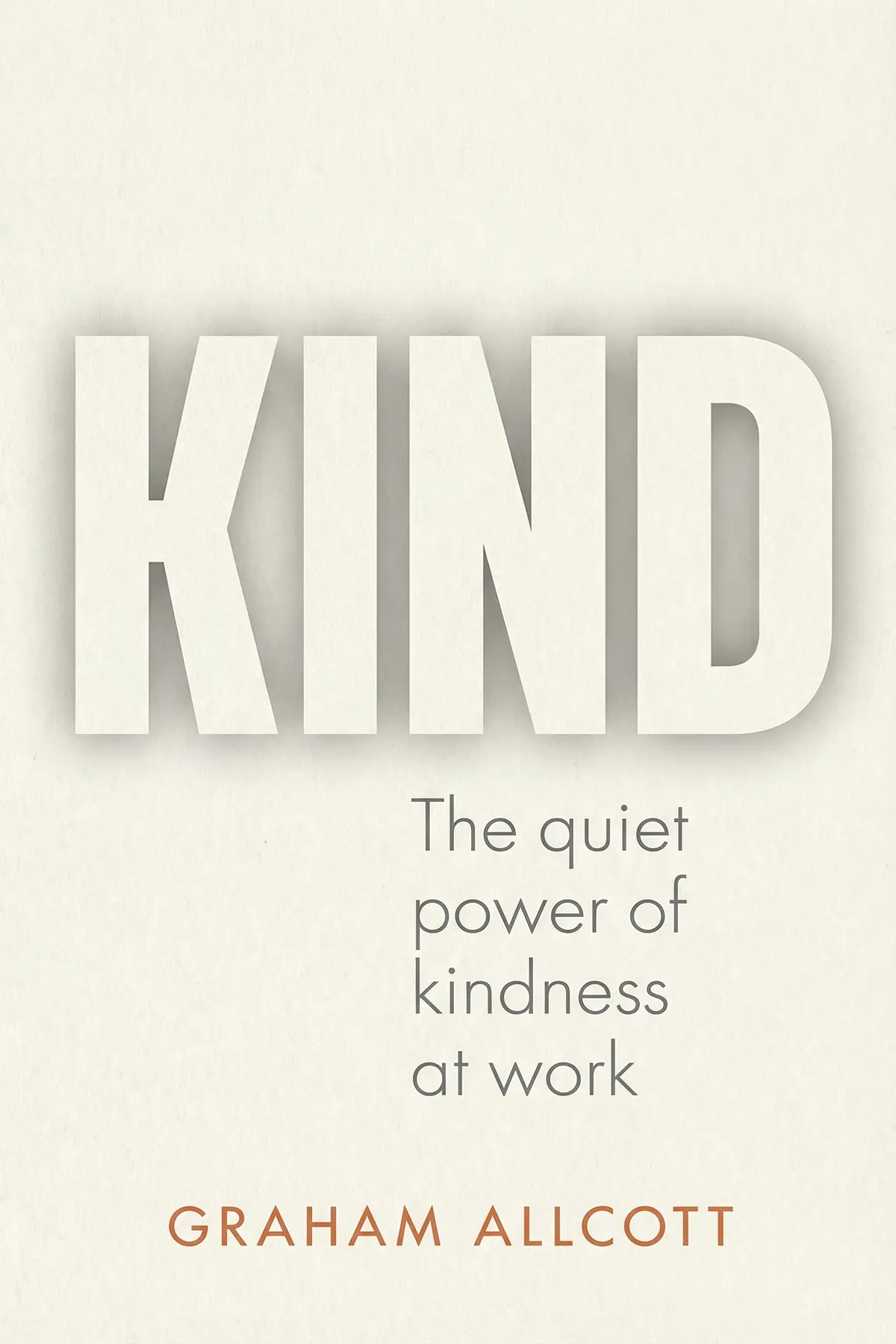
Table of Content
1. Introduction
1 min 05 sec
If you have ever held back a kind word at work for fear of looking soft, consider this: research finds that where kindness is routine, staff are more satisfied and 12 percent more productive. In KIND, Graham Allcott, who founded the training firm Think Productive after years running volunteering programs, argues that kindness is one of the strongest tools a leader has.
Kindness, in his account, is a deliberate strength that takes courage, boundaries and practice. It begins with how leaders treat themselves, shows up in clear expectations, careful listening and putting people first, and once it becomes daily habit it spreads into a culture where people speak up and do their best work.
Along the way come a health company that collapsed, a Danish bakery that gave its goods away and a football captain who changed a dressing room. The practical yield is eight principles, several paired with a small challenge to try, and a firm reply for anyone who still believes the ruthless boss wins.
2. See how one kind act spreads through a team
2 min 02 sec
Simply watching a stranger help someone changes something in your body. The effect grows for the receiver and grows again for the giver, and one remarkable medical case shows how far a single gesture can travel.
3. Drop the ruthless boss model and lead with trust
2 min 02 sec
Films keep telling us the cruel genius comes out on top. A celebrated founder who modeled herself on Steve Jobs shows how that story can end, and three stubborn beliefs explain why it survives.
4. Be kind to yourself, then make expectations clear
1 min 54 sec
The first rule of kind leadership has nothing to do with your team, and the second sounds more like management than warmth. Together they remove two of the biggest sources of stress at work.
5. Earn trust by listening and giving credit away
1 min 55 sec
Many people listen in order to respond rather than to understand, already busy drafting a reply. A five-minute exercise exposes the habit, and a small act of restraint after praising someone reveals another.
6. Put the person ahead of the deadline, always
2 min 00 sec
When a colleague’s life falls apart, one sentence from their manager decides whether the whole team stays honest or goes silent. Allcott insists on a rule with no exceptions, and on a way of caring that fits each person.
7. Slow down enough to notice people
1 min 43 sec
More than half of people blame one thing for not being kinder, and it is not a lack of goodwill. A writer caught himself doing something at his children’s bedside that showed him the cost.
8. Turn kindness into the way your team works
1 min 48 sec
A struggling national football team found its turning point after a single appointment. Allcott uses the story, and an old Italian coffee custom, to show how kindness stops depending on one person.
9. Conclusion
1 min 15 sec
What Allcott offers is a new definition of strength at work. The ruthless leader of the films looks strong until the company falls, as Theranos did. The kind leader looks soft until you see what the role demands: boundaries, expectations repeated until they stick, five minutes of listening without interrupting, praise with nothing added, flexibility when the policy is rigid. These are harder than shouting, and their returns show up in the body, in productivity and in people who keep coming back, like the customers of Kassow’s bakery.
The book also asks for patience, because kindness becomes culture only through small choices repeated until nobody thinks of them as special. The coming week is a fair place to begin. Make one deliberate kind act a day and notice what makes you hesitate. Watch your team for the gap, the early signs that someone needs help. And protect a little unhurried time, since a rushed leader misses most of what matters.
In an Italian café, a stranger may be drinking a coffee someone else paid for. Nobody made a speech about it, and that ordinary generosity is the workplace Allcott wants built.
About this book
What is this book about?
Many managers still picture the strong leader as tough, fast and unsentimental, and they fear that kindness will make them look soft or get them walked over. Graham Allcott argues the reverse. Kindness, in his view, takes courage, boundaries and practice, and it pays back in health, trust, productivity and loyalty. He opens with the evidence: the chemistry of giving and witnessing kindness, a company experiment in Madrid, a chain of kidney donors and a Danish bakery that let staff give its goods away. He then takes apart three myths that keep the ruthless boss in fashion, using the fall of Theranos as his warning. The heart of the book is eight principles for practicing kindness at work, from treating yourself decently and setting clear expectations to deep listening, humility, putting people before deadlines, slowing down and building kindness into a team's culture. Several come with a small exercise or challenge to try, so readers leave with something concrete they can practice.
Book Information
Who it's for
Managers wary of warmth
Managers who fear that warmth will make them look weak or get them walked over.
Founders and team leads
Founders and team leads who want people to speak up, share ideas and stay.
Professionals stretched too thin
Overstretched professionals who know rushing is costing them their relationships at work.
About the Author
Graham Allcott
Graham Allcott founded Think Productive in 2009, a firm that offers personal productivity training and consultancy, coaching people at their desks in place of dull time management courses. He has written six books, including How to Be a Productivity Ninja, and has hosted the podcast Beyond Busy. His roots are in the charity sector: he co-founded the student volunteering charity Intervol, led Student Volunteering England and advised the UK Government on youth volunteering policy.
Ratings & Reviews
Ratings at a glance

What people think
Listeners find KIND to be a restorative and functional leadership manual that successfully positions kindness as a tactical benefit instead of a passive shortcoming. Listeners value the combination of empirical studies and practical rules; one listener points out that the "People First, Work Second" philosophy is especially effective for building high-performing teams. Although some hold differing views on whether certain tips are excessively polite, they also describe the work as a fast, accessible read providing valuable methods for developing trust. Additionally, the presence of individual stories and reflection questions allows managers to quickly adopt a more compassionate leadership approach.
Top reviews
Look
The opening story about Allcott’s son, Roscoe, immediately sets a powerful tone that carries throughout the entire book. It’s rare to find a leadership guide that feels this vulnerable yet stays focused on the bottom line. I loved the emphasis on the 'People first, work second' principle. Too many managers forget that we are dealing with human beings who have complex lives outside of their 9-to-5. While some might find the 'Mother Teresa Effect' research a bit idealistic, the physiological data provided is hard to ignore. It proves that kindness isn't just a nice-to-have; it’s a biological necessity for a healthy culture. The reflection questions at the end of each chapter kept me honest. This isn't just theory; it’s a practical toolkit for anyone tired of the 'ruthless' executive stereotype. Highly recommended for new managers.
Show moreArnav
As a director who has survived several toxic environments, I found this book incredibly validating. Allcott manages to articulate exactly why those 'ruthless' cultures eventually fail: they destroy trust and psychological safety. The principle of 'Treat people the way THEY want to be treated'—the Platinum Rule—is a game changer. It forces you to actually know your team members as individuals. I’ve already started using the 'Kindness Challenges' with my direct reports, and the shift in morale is palpable. The writing is conversational yet authoritative, blending personal anecdotes with solid management theory. I especially liked the 'Caffè Sospeso' example toward the end. It reminds us that small, habitual acts can eventually transform an entire organization. If you want to build a high-performing team without losing your soul, read this book.
Show moreAna
Wow, I wasn't expecting so much hard science in a book about being kind. Allcott goes way beyond fluff, diving into how kindness triggers physiological responses that actually boost productivity. The concept of 'Kindfulness' is something I’ll be carrying with me for a long time. I loved the focus on humility and the idea that leaders should elevate others rather than seeking the spotlight. It’s a refreshing change from the ego-driven leadership books that usually top the bestseller lists. The eight principles are easy to remember and even easier to start implementing today. I’ve already recommended this to my entire HR department. If we can get even half of our managers to adopt the 'People First' mentality, our retention rates would skyrocket. This is essential reading for the modern workplace.
Show moreNew
Allcott has managed to dismantle the myth that you have to be a 'ruthless genius' to win in business. Using examples like Warren Buffett, he shows that trust and long-term relationships are far more sustainable than aggression. I found the 'Pushover Myth' chapter especially helpful for clarifying that kindness doesn't mean avoiding tough conversations. It just means having them with dignity and respect. The personal story about his son Roscoe brought a tear to my eye and perfectly illustrated why this topic matters so much. This book is a brisk read but packs a massive emotional and intellectual punch. It's the kind of leadership training that should be mandatory in every MBA program. Kindness is contagious, and Allcott provides the perfect spark to start a ripple effect in any organization.
Show moreSam
Finally got around to reading this after hearing Graham speak on a podcast, and it didn't disappoint. The book is structured like a training seminar, which makes it incredibly easy to navigate and digest. I particularly enjoyed the section debunking the 'Evil Genius Myth.' We’ve glorified the abrasive visionary for too long, often ignoring the trail of burnout they leave behind. Allcott’s eight principles offer a clear roadmap for a different approach. However, I’ll be honest: some of the 'Kindness Challenges' felt a little bit forced for a corporate setting. Trying to implement some of these might feel awkward at first if your culture is currently cold. Still, the core message about deep listening and setting clear expectations is gold. It’s a brisk, refreshing read that challenges you to slow down in a fast-paced world.
Show moreSara
This was a much faster read than I anticipated. Graham Allcott has a knack for taking complex psychological concepts and making them feel like common sense. I was particularly struck by the idea of 'Self-kindness' being the starting point. Leaders who burn themselves out are doing a disservice to their teams, yet we often wear our exhaustion as a badge of honor. Allcott challenges that narrative effectively. My only minor gripe is that some of the real-world examples felt a bit cherry-picked to support the thesis. Real life is usually messier than a case study. Regardless, the eight principles provide a fantastic framework for anyone looking to improve their management style. It’s a thoughtful guide that proves you don’t have to be a jerk to get results. Great for team book clubs.
Show moreEarn
The structure of this book is what sets it apart from typical leadership manuals. Each chapter ends with reflection questions that actually make you pause and think about your own behavior. I found the 'Slowing Down' principle particularly convicting. In our rush to hit quarterly targets, we often sacrifice the small moments of connection that build long-term trust. Allcott uses a great balance of crowd-sourced anecdotes and personal history to make his points. I did think the section on Elizabeth Holmes was a bit of a cliché—every business book uses her as the villain now—but it still worked to illustrate the 'Evil Genius' trap. Overall, this is an important read for anyone in a position of power. It’s a gentle reminder that our legacy isn't just our output, but how we treated people along the way.
Show moreRafael
Ever wonder why the 'Golden Rule' sometimes fails in a diverse office? Allcott’s sixth principle—treating people the way they actually want to be treated—addresses this perfectly. It’s about nuance and empathy, not just a one-size-fits-all approach. I appreciated how the book debunks the idea that kindness is a 'soft skill.' Instead, it's presented as a strategic advantage that impacts the bottom line. The chapter on 'Setting Clear Expectations' was a standout for me. Kindness isn't just about being 'nice'; it's about being clear and fair. I wish there was a bit more focus on how to handle truly 'unkind' people who refuse to change, but maybe that's a different book. Overall, a very insightful and practical guide for anyone looking to humanize their workplace.
Show moreSuphan
Is kindness actually a 'quiet power' or just a buzzword for the LinkedIn era? To be fair, Allcott makes a compelling case, but I found myself disagreeing with a few of the more passive suggestions. Sometimes leadership requires a level of bluntness that this book seems to shy away from. While the 'Pushover Myth' is addressed, the line between being kind and being a doormat still feels a bit blurry in some chapters. That said, the chapter on 'Deep Listening' was excellent and something I could apply immediately. The science-backed sections on stress reduction and immune boosts were also quite fascinating. It's a solid 3-star read for me—useful, though I worry that truly toxic bosses will just ignore it. It might be preaching to the choir a little too much, but it's well-written nonetheless.
Show moreAria
While the sentiment behind Allcott's work is noble, I struggled to find anything truly groundbreaking here. Truth is, most of this feels like standard Emotional Intelligence advice rebranded under the banner of 'Kindness.' The writing is pleasant enough, but the 'Mother Teresa Effect' and similar anecdotes have been covered extensively in other leadership books. I also felt the 'Do-Gooder Myth' section was a bit thin on actual solutions for high-pressure environments. If you’ve never read a book on empathetic leadership, this might be a 5-star revelation for you. For those of us who have been in the trenches for decades, it feels a bit repetitive. It's a nice sentiment, but I was hoping for more rigorous, new data rather than a collection of familiar stories. Just didn't hit the mark for me.
Show moreQuestions about this book
What is the main idea of KIND by Graham Allcott?
Allcott argues that kindness at work is a strength that takes courage, boundaries and practice, and that it pays back in health, trust and productivity. He challenges the image of the ruthless leader, using the fall of Theranos as a warning, and offers eight principles that run from self-kindness and clear expectations to listening, humility, putting people first, slowing down and building kindness into a team’s culture.
Does being kind make a leader a pushover?
Not in Allcott’s view. He calls that belief the Pushover Myth and separates kindness from people-pleasing. Real kindness, he says, needs confidence, firm boundaries and the willingness to make hard decisions without cruelty. He points to Jacinda Ardern’s leadership of New Zealand during the COVID-19 pandemic as an example of being decisive and empathetic at the same time.
What are the eight principles of kindness at work?
Allcott lists them as follows: kindness starts with you; set clear expectations; listen deeply; people first, work second, always; be humble; treat others as they wish to be treated; slow down; and it doesn’t end with you. The first concerns how leaders treat themselves, the middle ones how they treat individuals, and the last how kindness spreads through a whole team.
How can I practice kindness at work this week?
The book offers small tests. Do one deliberate kind act each day and notice how people react. Try a listening partnership, where you and a colleague each talk for five minutes without interruption. Praise a teammate’s work without adding your own story. Take an hour somewhere public with your phone left behind, and schedule some self-care that feels undeserved, such as a long walk.
Readers also enjoyed




A Year with Peter Drucker: 52 Weeks of Coaching for Leadership Effectiveness
Joseph A. Maciariello





Acting with Power: Why We Are More Powerful Than We Believe
Deborah Gruenfeld

All In: How Great Leaders Build Unstoppable Teams
Mike Michalowicz
AUDIO SUMMARY AVAILABLE
Listen to KIND in 15 minutes
Get the key ideas from KIND by Graham Allcott, plus 5,000+ more nonfiction titles.
- 5,000+ titles
- Listen as much as you want
- 7-day free trial
- Cancel anytime









