

15 min 20 sec
Available in: English
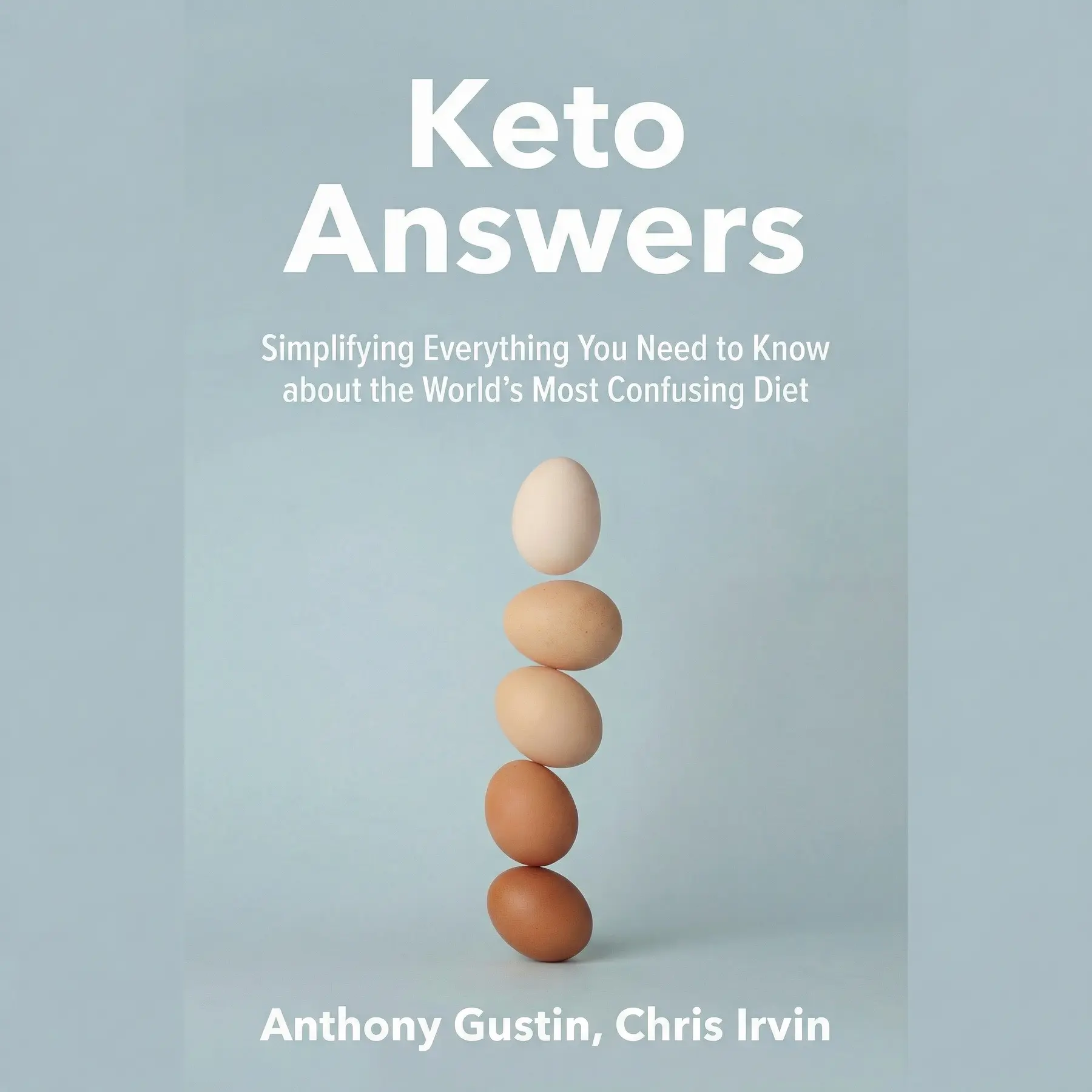
Keto Answers: Simplifying Everything You Need to Know about the World's Most Confusing Diet
Explains what makes keto different from other low-carb plans, how many carbs fit in a day, what the first weeks feel like and how to keep the diet going through workouts, travel and dinners out.
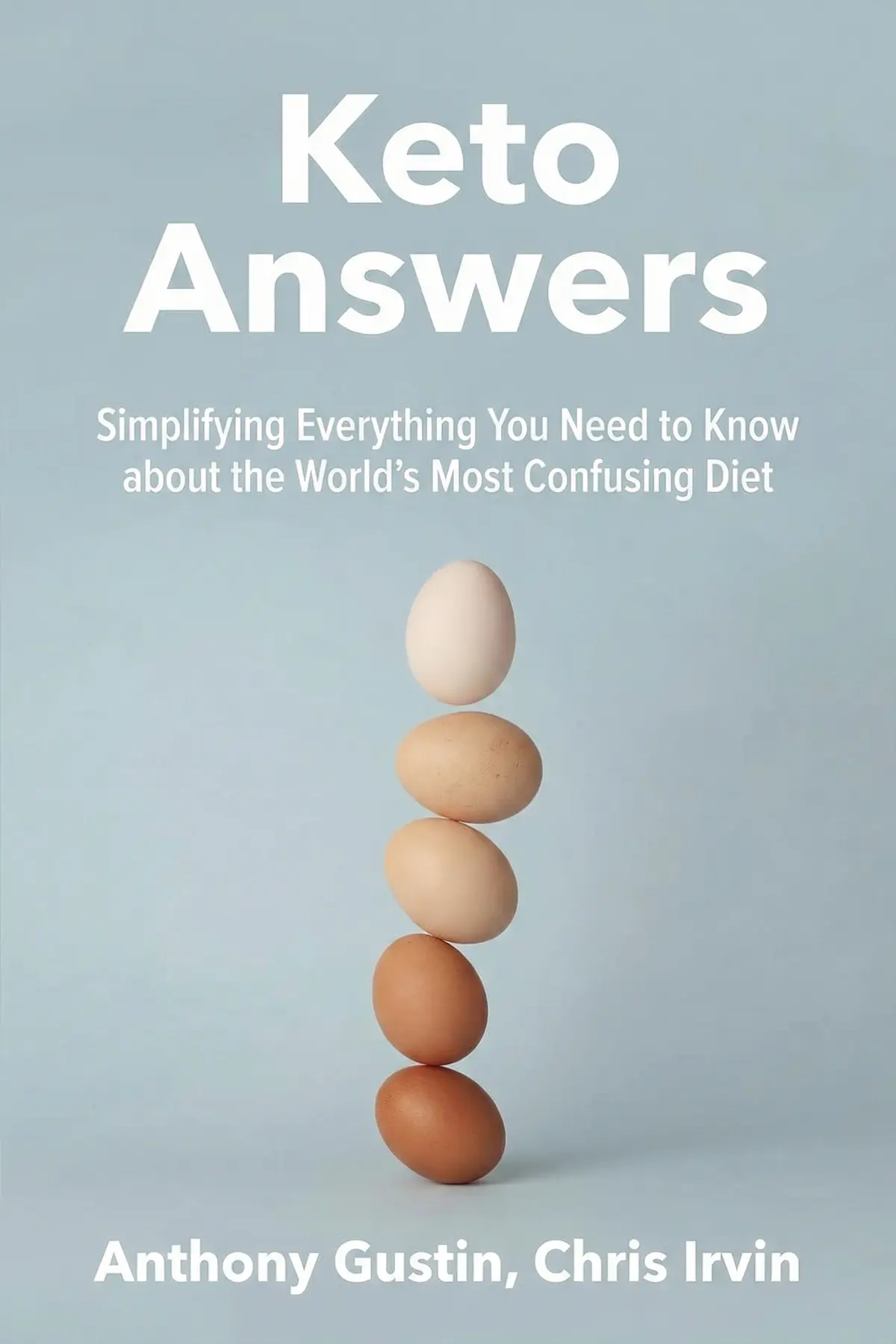
Table of Content
1. Introduction
55 sec
Many people try keto and quit within days, worn out by carb math and a foggy head, while others follow a faulty version for weeks and see no change. In Keto Answers, chiropractor Anthony Gustin and nutrition scientist Chris Irvin argue that the cure for that confusion is one idea: keto is the only low-carb plan built to put the body into ketosis. In that state, they explain, the liver makes ketones, a fuel that reaches the brain directly.
Almost everything else in the book follows from that state. Fat matters as much as cutting carbs. The first weeks feel rough for a known reason. And the plan has to fit real life to last. Understand ketosis, prepare for it, and the diet becomes something you can keep. Along the way you get a daily carb number, a picture of the right plate, a timeline for the first two months and tactics for dinners out.
2. Learn what keto does that other low-carb diets cannot
1 min 31 sec
Atkins, paleo and keto all cut carbs, and on paper they look almost the same. The authors point to one change inside the body that only keto aims for, and it explains a common complaint about low-carb eating.
3. Steady blood sugar means fewer hunger pangs
1 min 38 sec
Most diets make people feel worse the longer they last. The authors claim keto reverses that pattern, and the reason goes back to a clinic in the 1920s and a hormone that directs traffic in your blood.
4. Fill a keto plate using one simple picture
1 min 51 sec
Knowing keto in theory is one thing; filling a shopping cart is another. A single image of a dinner plate settles most choices, though a few healthy-sounding foods turn out to be traps.
5. Get through the hard first weeks of keto
1 min 41 sec
Fatigue, fog and thirst hit many beginners within days, and this is exactly where most give up. The authors map out what is happening in the body and how long it actually lasts.
6. Use short fasts to reach ketosis faster
1 min 44 sec
Our distant ancestors often went without food, and their bodies adapted in a way that looks a lot like keto. The authors explain how a deliberate pause in eating can help, and who should skip it.
7. Adjust keto for training days and stalled weight
1 min 37 sec
Athletes want carbs for big efforts, and long-time dieters hit plateaus that will not move. The authors offer versions of keto for both, each with a cost that is easy to overlook.
8. What women and men can expect from keto
1 min 49 sec
Couples who start keto together often compare scales after two weeks and draw the wrong conclusion. The authors explain why early numbers mislead, and what a study at Duke University found in women with one common condition.
9. Stay on keto through trips, dinners and cake
1 min 33 sec
Diets rarely fail at home on a quiet Tuesday. They fail at airports, on dates and at weddings. The authors share their tactics for those moments, including a surprising view on cheating.
10. Conclusion
1 min 01 sec
Keto Answers turns a confusing diet into one state and the habits around it. Ketosis is the goal, fat keeps it going, the first weeks are the price of entry, and planning lets it survive real life. The authors’ bet is that once a body is keto-adapted, the rough start gives way to steady energy, fewer hunger pangs and a way of eating that can bend around training, travel and birthdays.
Start where the book puts its weight. Build meals on the picture of a plate with 40 percent protein, a tenth fat and half vegetables, and keep carbs between 20 and 30 grams a day. Expect fog and fatigue in the first days, and meet them with sleep, water and electrolytes you arranged in advance. When the brownie wins one evening, eat it and return to the plan the next morning.
In the authors’ view, the keto that fails is the version people expected to be easy. The version that lasts is the one they planned for, hard days included.
About this book
What is this book about?
Keto is easy to start and easy to get wrong. People search online, find advice that contradicts itself, then quit after a few days of carb counting and fatigue, or follow a faulty version for weeks without results. Anthony Gustin and Chris Irvin set out to clear up that confusion. Their angle is that one metabolic state, ketosis, is the whole point. In ketosis the liver makes ketones, which the authors describe as a fuel the brain can use directly, and that is what they say separates keto from Atkins, paleo and other low-carb plans. From there they explain why the diet began as a therapy for insulin resistance, what a keto plate looks like and which foods to drop. Readers get a daily carb range, a timeline for the first two months, ways to ease the early side effects, an introduction to fasting and versions of keto for athletes and plateaus. The authors also cover how results differ for women and men, and how to stay on track while traveling, dating or eating cake at a wedding.
Book Information
Who it's for
Beginners who quit keto
Beginners who tried keto, felt foggy and quit within a week.
Busy professionals
Busy professionals who want a clear daily carb number and a simple way to plan meals.
Wanting keto that fits
Athletes and women with hormone concerns who want a version of keto that fits their body.
About the Author
Anthony Gustin
Dr. Anthony Gustin is a board-certified chiropractor and functional medicine practitioner with a master of science and a doctorate of chiropractic. He co-founded the nutrition company Perfect Keto and founded the supplement company Equip, and he works on health through exercise, diet, stress and rest. Chris Irvin holds a master's degree in exercise and nutrition science and studied the ketogenic diet for athletic performance and therapeutic uses in graduate school. He spent five years as education manager at Perfect Keto, also held senior roles at BioCoach, and hosts the Thinking Health podcast and newsletter.
Ratings & Reviews
Ratings at a glance
What people think
Listeners find this guide to the keto diet informative and thoroughly supported by research, offering significant depth in its explanations and documentation. The content is easy to follow and digest, featuring a Q&A structure that delivers detailed responses. They value how it functions as an excellent reference for keto-related inquiries and view it as a major move toward a healthier lifestyle that produces achievable results.
Top reviews
Wit
Finally got around to reading this huge guide after seeing a brief overview on Blinkist, and it is a total game-changer for anyone confused by the noise in the low-carb world. The Q&A format makes it incredibly easy to jump around and find specific answers without feeling like you’re wading through a dense, boring textbook. I especially appreciated the deep dive into metabolic health and how ketosis actually functions within the human body on a hormonal level. Truth is, many authors skip the 'why' and just give you generic recipes, but Gustin and Irvin actually respect the reader's intelligence here. While they do mention their own brand, the science provided stands on its own as a pillar for a healthier lifestyle. It’s a complete resource that I find myself pulling off the shelf whenever I hit a plateau or feel my energy dipping. Highly recommended for the clean keto crowd who wants to do things the right way.
Show moreWanida
This book is a massive resource that finally clears up the confusion surrounding the 'clean' version of ketosis. I loved the way they structured the chapters to address specific questions because it feels more like a conversation than a lecture. The authors go into great depth about how our bodies respond to different foods, especially regarding the insulin response and fat adaptation. Not gonna lie, I was skeptical about another diet book, but the documentation and research provided here are top-tier. It isn’t just about losing weight; it’s about becoming a more energetic person through metabolic flexibility. My favorite part was the actionable advice on swapping flours to make keto-friendly treats that actually taste good. It makes the transition feel sustainable rather than restrictive. If you want to understand the actual science behind your results, this is the one to get.
Show moreNim
Wow, the level of detail regarding how the ketogenic diet impacts your biology is truly impressive. This isn't just another book telling you to eat bacon and cheese; it focuses on a holistic, clean approach to metabolic health. The authors explain how ketosis is the only strategy that induces real change at a cellular level, which really motivated me to stay disciplined. I found the section on 'keto hacks' for baking particularly helpful for when the sugar cravings hit. Swapping wheat for almond flour has been a life-saver for my weekend brunches. To be fair, you have to be ready for some technical language, but it’s explained well enough for a layperson to grasp. This is the kind of book that helps you build a lifestyle rather than just following a temporary meal plan. It has been a vital tool in my weight loss journey.
Show moreSomrutai
After hearing Dr. Gustin on a podcast, I knew I needed to grab the full book to get the whole story. It’s an amazing scientific read that doesn't just skim the surface of weight loss but looks at the big picture of human health. The way they explain the metabolic state of ketosis is the clearest I’ve ever read. It’s helped me stay focused on 'clean' ingredients, which has made a massive difference in my mental clarity and skin health. Frankly, I didn't realize how much my hormones were being affected by my previous 'healthy' diet. The Q&A format is a lifesaver for when you have a specific question about things like fiber or fasting. It’s a must-read if you’re serious about making a permanent shift in your lifestyle. Truly an essential piece of keto literature that I recommend to everyone.
Show moreKek
In my experience, this book is probably the most thorough guide to keto currently on my shelf. The authors do a great job of breaking down complex biological processes into something the average person can use to get results. I especially liked the sections that addressed common diet myths, as there is so much misinformation out there right now. My experience with the book was overwhelming positive, even if they mention their own products throughout the text. Sometimes the focus on their own brand's philosophy felt a little heavy-handed, but the core science is undeniable. It’s helped me maintain my weight loss and keep my energy levels consistent throughout the workday. If you're looking for a roadmap to a healthier version of yourself, you'll find plenty of value in these pages. It’s a solid resource for beginners and veterans alike.
Show moreTen
As someone who has struggled with PCOS for years, finding a nutritional strategy that actually balances my hormones has been a long journey. This book does a fantastic job explaining why the ketogenic diet works for metabolic issues, and the sections on macronutrients are deeply insightful. Gotta say, I was impressed by how they debunk common myths that usually scare people away from high-fat living. However, I was a bit disappointed that they didn't provide more specific guidelines for daily electrolyte targets in milligrams. They suggest their own supplements quite a bit, which is fine, but I wanted more DIY calculation methods for my own specific ratios. Even with those minor gripes, the 'clean' approach they advocate for is far superior to the dirty keto advice you see on social media. It’s a solid, well-researched addition to any health-conscious reader's library.
Show moreJiraporn
I picked this up after seeing it recommended in several health forums, and it definitely lived up to the hype as a comprehensive guide. The writing style is approachable and easy to digest, even when they get into the weeds with hormone responses. Personally, I think the Q&A format is brilliant because you can find answers to specific concerns like 'keto flu' or 'stall periods' very quickly. My only real complaint is the lack of a deep dive into the 'calorie myth' which I was really hoping they would address more thoroughly. Still, the focus on whole foods and avoiding inflammatory additives makes this a huge step up from your average diet book. It’s a great resource for anyone who wants to take their health seriously and achieve long-term results. Definitely worth keeping on your nightstand for reference during your first few months.
Show moreSamroeng
Ever wonder why most diets fail after the first month? This book answers that by focusing on the underlying hormones that dictate our hunger and energy. I appreciated the emphasis on how different macronutrients affect us differently, which helped me understand why my old high-carb habits were making me so sluggish. The truth is, staying keto-adapted takes a lot of discipline, but the authors make it feel achievable with their clear guidelines. I did notice they were a bit dismissive of magnesium citrate’s bioavailability, which contradicts some other NIH studies I’ve seen online. Also, I would have liked more specific numbers for daily electrolyte intake rather than just broad brand suggestions. Despite those minor technical disagreements, the book is incredibly well-researched and serves as a fantastic foundational text. It’s a high-quality read for anyone wanting to improve their physical and mental clarity.
Show moreAom
The information here is solid, but the execution felt a little bit inconsistent in a few critical areas. On one hand, you get this amazing scientific breakdown of how ketosis induces fundamental physical changes inside and out. On the other hand, the authors seem to avoid addressing controversial ingredients like tapioca starch, which they actually use in their own products. Frankly, I was also confused as to why erythritol was completely ignored when it's the most common sweetener used in the community. They push monk fruit and stevia hard without explaining why the other options were left out of the conversation entirely. If you’re just starting out, you’ll find the Q&A format helpful for quick reference. Just be prepared for a decent amount of self-promotion for their brand throughout the chapters, which gets a bit old after a while.
Show moreSuthee
Not what I expected given the high ratings. While there is definitely some good information buried in here, it often feels more like a 400-page advertisement for Perfect Keto supplements. I was looking for specific, actionable numbers—like target mg per day for electrolytes or clear ratios for fat and protein—but they kept things frustratingly vague. Instead of giving me the tools to calculate things myself, they just suggested their own products as the solution. Also, their total omission of erythritol felt like a strange choice for a 'complete' guide. Look, if you want a basic overview of why keto is good, this is fine, but it lacks the precision that experienced keto followers are looking for. I wanted more science on things like tapioca starch and less marketing. It's a bit too basic and promotional for my taste, frankly.
Show moreQuestions about this book
What is the main idea of Keto Answers?
Anthony Gustin and Chris Irvin argue that keto differs from other low-carb diets because it aims for ketosis, a state in which the liver makes ketones that, they explain, feed the brain directly. Reaching it takes more healthy fat than other plans and very few carbs. The authors present keto as a long-term way of living, with benefits they say go beyond weight loss to energy, hunger and mood.
How many carbs can you eat on keto according to Keto Answers?
The authors set the daily range at 20 to 30 grams of carbohydrates and warn that going above 30 grams will keep the body out of ketosis. They suggest picturing a plate that is about 40 percent good-quality protein, 10 percent fat and half salad and low-carb vegetables, and they flag tomatoes, onions, most fruit and some nuts as higher in carbs than people expect.
What happens in the first weeks of a keto diet?
The authors describe three stages. Glucose withdrawal can begin within hours, and two to four days in, ketosis brings temporary fatigue, brain fog and dehydration. Within two to eight weeks the body becomes keto-adapted and, they say, the side effects fade. To get through, they recommend extra sleep, plenty of water, electrolytes such as potassium or magnesium, and possibly exogenous ketone supplements.
Can you cheat on keto?
Yes, in the authors’ view. They argue that forgiving yourself for an occasional lapse, such as one brownie, works better than quitting altogether, and they approve of planned breaks for events like a wedding. Athletes can use cyclic or targeted keto to add good carbs such as sweet potatoes, accepting that they may need to adapt to ketosis again afterward.
Readers also enjoyed







AUDIO SUMMARY AVAILABLE
Listen to Keto Answers in 15 minutes
Get the key ideas from Keto Answers by Anthony Gustin, plus 5,000+ more nonfiction titles.
- 5,000+ titles
- Listen as much as you want
- 7-day free trial
- Cancel anytime









