

59 Seconds: Change Your Life in Under a Minute
Richard Wiseman
 English
Shows how to add joyful years to later life, beyond simply longer or healthier ones, by challenging your beliefs about age and repeating four small daily actions: grow, connect, adapt and give.
1 min 05 sec
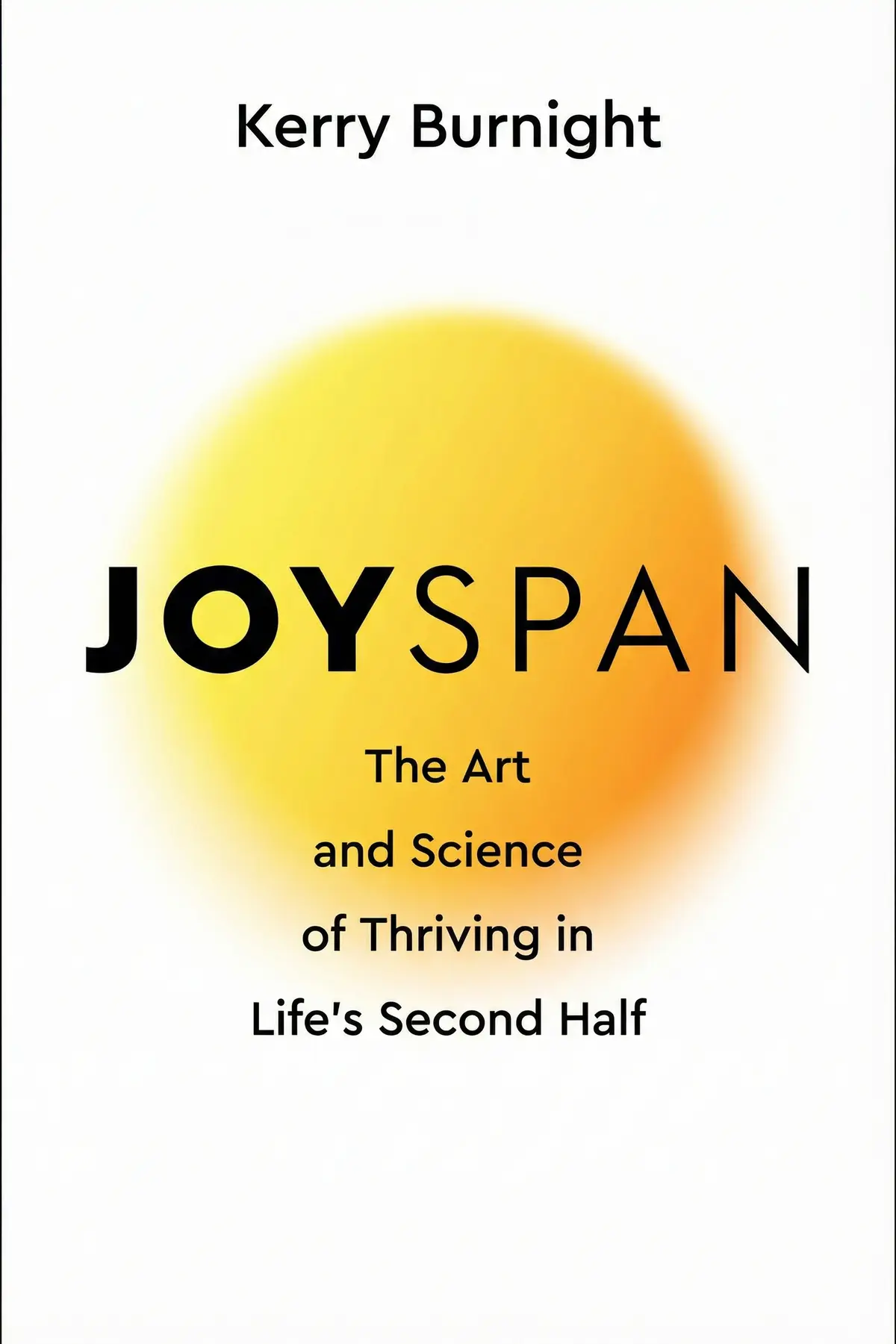
Many people go into the second half of life expecting a slow slide, and they plan only for more years or healthier ones. In Joyspan, gerontologist Kerry Burnight argues that the number worth tracking is a third one: how many of your later years actually feel good. She points to Betty, who at 96 lives on her own, never forgets an occasion, laughs often and keeps turning up for life. Betty is no fitness fanatic and no genetic exception, and Burnight says her good years are not luck. They match what research on later-life flourishing describes.
Burnight’s case is that joyful years are built, not inherited. They come from the beliefs you hold about age and from four small actions repeated daily: grow, connect, adapt and give. Along the way you will meet a pizza delivery that saved a family dinner, a friendship that started on a dog park bench, and a short daily check-in that catches a slump before it settles in.
2 min 11 sec
Two numbers usually describe how well someone ages, and both miss what most people care about. A study of autobiographies that nuns wrote in their early twenties suggests that a positive outlook, held early, may be worth seven to ten years.
2 min 12 sec
Picture two sisters with exactly the same DNA whose later years turn out completely different. What separates them is a set of choices small enough to start before lunch today.
1 min 48 sec
When her family lost their home, a woman decades older than her classmates went back to school. Her response shows three inner qualities that can be trained, and one of them is laughter.
1 min 49 sec
Loneliness carries a health risk on the scale of a daily smoking habit. One man kept a list on his wall, and one woman without a dog met a friend in a dog park who later became her maid of honor.
1 min 58 sec
A couple in their mid-eighties were stuck on a snowy train platform, cut off from their weekly family dinner. Their way out became a story their grandchildren still tell, and a model for handling change.
1 min 36 sec
Purpose can seem to leave with the last paycheck. A room full of older adults answered the question of what long lives are for, and their answers point to a habit that may affect the body as well.
2 min 05 sec
Poor sleep, low motivation and fading friendships are easy to blame on age. One woman did exactly that after a minor car accident, until she learned to read the slump as a signal.
1 min 09 sec
Joyspan’s message is that later life does not have to be one long slope to endure. Burnight quotes Oliver Sacks, who saw old age as an enlargement of life, with more freedom, more perspective and more room to bind together “the thoughts and feelings of a lifetime.” Her book is a manual for claiming that enlargement. She notes that several strengths often improve with age: caring less about other people’s judgment, steadier emotions, problem-solving built on experience, deeper spirituality and an easier laugh. The four actions give those strengths daily work.
None of it needs a grand plan. This week, catch one moment when you think you are too old for something and treat it as a belief to test. Draw your circles of people and call someone in the outer ring before they call you. When a routine breaks, ask what still remains and what you can change. And choose one Give of the Day.
Betty, at 96, is what that repetition looks like after decades. It starts with one small act today, done again tomorrow.
Most talk about aging counts years: how long we live and how long we stay healthy. Gerontologist Kerry Burnight poses another question instead. Of all those years, how much of the time do we actually enjoy? She calls that stretch your joyspan, and she argues it can be built at any age, even alongside illness, loss or disability. Burnight draws on well-being research, long-running studies of age beliefs, a study of nuns' early autobiographies and a Harvard study of adult development. Her conclusion is that genes set only part of the stage. Beliefs about age and everyday habits decide much of the rest. She organizes the method into four daily actions: grow by learning and trying new things, connect by investing in people, adapt by adjusting when life changes, and give by turning your purpose outward. The book is full of people who show the actions at work: a 96-year-old named Betty, a couple in their eighties who rescued a family dinner with a pizza delivery, a man rebuilding after scammers took his savings. Readers get concrete practices for body, mind and mood, plus a plan for spotting a joy slump early and climbing out of it.
Adults nearing or in retirement who fear decline and want their later years to feel worth living.
People supporting aging parents or partners who want practical ideas for connection and purpose.
Anyone in a slump after illness, loss or isolation who suspects it is not just age.
Dr. Kerry Burnight is a gerontologist who studies well-being in later life. For 18 years she taught geriatric medicine and gerontology at the University of California, Irvine School of Medicine. She has also worked in elder justice: she cofounded the first Elder Abuse Forensic Center in the US and founded TheGerontologist.com. She has spoken at the White House and the US Department of Justice and appeared on CBS News, NBC News, The Doctors and The Dr. Phil Show.

Listeners describe this work as very accessible and value its hands-on advice for leading a more intentional life. Furthermore, it provides an invigorating perspective on the later years of life; one listener highlights how it strips away the negative labels linked to aging. They also appreciate the blend of scientific data and moving anecdotes, which helps people of all ages change how they view growing older.
Wow. Dr. Kerry Burnight has managed to turn what could have been a dry medical lecture into something deeply personal and transformative. The way she weaves together scientific data with the charming anecdotes about her 95-year-old mother, Betty, makes the concepts of the Joyspan matrix—Grow, Connect, Adapt, and Give—feel entirely attainable. I particularly appreciated the section on why curiosity is vital for neuroplasticity as we age. It’s not just about living longer; it’s about ensuring those years are filled with genuine life satisfaction and purpose. While some of the advice on social connections might seem basic to some, the evidence-based insights provided a necessary nudge for me to reach out more. It really peels away the stigma of getting older. This is a heartfelt, essential guide for anyone looking to reframe their later years.
Show moreThe chapter on curiosity absolutely changed my perspective on how I spend my time. We often think of aging as a period of winding down, but Burnight argues it should be a time of 'growing.' Using her mother Betty as a prime example of someone thriving at 95, she shows that staying inquisitive is the key to neuroplasticity. The book is filled with heartfelt stories that make the scientific data feel much more human and relatable. I loved the emphasis on laughter and how our 'laugh count' drops so drastically as we hit middle age—it was a real wake-up call for me to lighten up! This is hands down one of the most inspiring books on aging I’ve read. It doesn't just tell you to live longer; it gives you a roadmap for living better.
Show moreEver wonder why kids laugh hundreds of times a day while we adults barely manage four? Dr. Kerry Burnight dives deep into this discrepancy in Joyspan, and it's fascinating. She makes a compelling case for 'play' at every age, showing how it impacts our overall health and longevity. I've read several books on aging, but this one felt different because of the warmth in the writing. The stories about her 95-year-old mother, Betty, are the highlight; they prove that age is just a number if you keep a positive attitude. I did feel the author repeated her main points a few too many times in the beginning, almost like she was talking down to the reader. However, once you get past the introduction, the advice is solid and very actionable. It’s a great gift for anyone entering their 'third act.'
Show moreNot what I expected from a book on aging! I thought Joyspan would be a dry list of 'don'ts,' but it’s actually an inspiring guide to 'dos.' I initially listened to the audiobook, but I realized I needed the physical copy so I could go back and reference the matrix guidelines. The chapters on laughter and mindfulness were especially helpful for my daily routine. To be fair, it’s not all new info—much of it is standard healthy living advice—but the way Burnight applies it specifically to the challenges of getting older is brilliant. It helped me reframe my approach to my own health and even improved how I relate to my aging parents. It’s a heartfelt book that manages to be both scientific and soulful. Highly recommended for anyone who wants to age with grace and a lot of joy.
Show moreFinally got around to reading Joyspan, and it's a solid guide for anyone feeling a bit stagnant in their middle years. The core message focuses on 'joyspan'—the portion of your life where you actually feel satisfied—rather than just the number of years on the clock. Burnight uses a matrix of four actions: grow, connect, adapt, and give. Truth is, the book starts a bit slow and repeats itself in the first few chapters, which almost made me put it down. However, once she gets into the specific evidence-based recommendations like laughter and gratitude practices, it really picks up. The stories about real people help illustrate how to apply these concepts in a way that doesn't feel like a chore. It’s highly readable, even if it feels a bit like a polished version of positive psychology books I've encountered before.
Show moreAs someone who is fast approaching sixty, I found the evidence-based approach here quite refreshing. Dr. Burnight breaks down what is actually 'normal' aging—like the 10-15% loss of muscle mass—versus what we can actively change through movement and play. It helps peel away the fear and stigma often associated with getting older. The writing style is very accessible, making complex science feel like a conversation over coffee. I especially liked the focus on 'Adapt,' which is about adjusting to the physical changes we can't avoid without losing our sense of self. To be fair, some of the suggestions like keeping a gratitude journal are a bit cliché in the wellness world. Still, the way they are framed within the context of later life gave them fresh relevance. It's a very practical guide for staying vibrant.
Show morePicked this up on a whim, and I’m glad I did because it really reframes the whole concept of getting older. Instead of focusing on the inevitable decline, Joyspan highlights how our emotional regulation actually improves as we age. I found the 'Give' pillar of the matrix particularly moving; it reminded me that service to others is one of the quickest ways to find purpose when your career starts to wind down. The book is peppered with interesting facts about heart disease and bone density, which keeps it grounded in reality. Some might find the tone a bit too 'cheerleader-ish' at times, but I think we need that when society treats aging like a tragedy. It’s a quick, uplifting read that provides plenty of food for thought for both the elderly and their adult children.
Show moreAfter hearing so much about the 'Joyspan' matrix, I wanted to see if the advice was truly practical. It turns out, it is. The focus on 'Connect' was especially poignant for me, as I've been feeling a bit isolated lately. Burnight doesn't just say 'make friends'; she explains why social connections are a biological necessity for survival. The book is well-organized, with each chapter tackling a different aspect of thriving. I particularly liked the evidence-based insights into how our brains can continue to develop new paths if we stay curious. Not gonna lie, some of the medical stats about blood pressure and skin elasticity were a bit sobering, but the author uses them to empower the reader rather than scare them. It’s a refreshing take on a stage of life that is too often ignored or maligned.
Show moreLook, I appreciate the sentiment behind this book, but much of the advice feels recycled from general wellness materials. The 'matrix' of growing, connecting, adapting, and giving is a nice framework, but it isn't exactly revolutionary. If you've read any positive psychology in the last decade, you've heard about the importance of social connections and mindfulness. That said, the specific focus on the elderly is a nice touch, and the book is undeniably easy to read. I found the sections on hearing loss and muscle health to be the most informative parts because they were backed by actual data rather than just anecdotes. It’s a decent 'idea book' for someone who hasn't explored the genre much. Not a life-changer, but a helpful enough reminder to stay active and engaged as the years pass.
Show moreThis book could have been a single blog post or a four-item bulleted list. While Dr. Burnight is clearly passionate about aging, I found Joyspan to be offensively repetitive. The entire 300-page volume is just an expansion of four basic ideas: be curious, make friends, adapt to change, and serve others. Do we really need ten pages to be told we should laugh more? Frankly, if you’ve ever glanced at a health magazine or an AARP newsletter, you already know everything in these chapters. It’s over-simplified and takes forever to get to the point. I was looking for unique medical insights or deep data, but instead, I got advice to 'practice yoga and eat your veggies.' It’s a nice sentiment, but it doesn't offer enough new information to justify the length. Avoid this if you're looking for something groundbreaking.
Show moreJoyspan means the later years of life in which lasting satisfaction and a sense of psychological well-being are part of your daily experience. Burnight places it at the top of a pyramid, above lifespan, which is how long you live, and healthspan, which is how long you stay physically well. She argues that joy can exist alongside illness, loss or disability, and that it can be built through daily actions.
Burnight names four daily actions. Grow means continuing to learn and seek new experiences. Connect is about putting effort into regular, two-way contact with relatives, friends and your community. Adapt means adjusting how you think, feel and act when conditions change. Give means sharing your time, attention and skills to lift others. She recommends cycling through all four and repeating them.
Burnight cites research suggesting they do. In long-running studies, people with positive beliefs about age lived about seven and a half years longer on average and kept better function for 18 years. Research on nuns showed that those whose autobiographies from their early twenties reflected an optimistic outlook lived between seven and ten years longer. She warns that internalized ageism leads people to withdraw and stop contributing.
Burnight treats a dip as a signal, not just aging. Name the cause first: a health setback, isolation, fear of being a burden, grief or feeling your best days are over. Then respond with a matching step, such as testing discouraging thoughts against the facts, asking someone to talk, making one clear request for help or setting a small forward-looking goal. A daily check-in helps catch dips early.
It suits people in or approaching life’s second half who want their years to feel meaningful, not just to last. It also helps adult children and caregivers looking for practical ideas. The book offers specific habits, from protein and sleep targets to drawing your circles of friends, asking two questions when a routine breaks, and doing one small Give of the Day.
Richard Wiseman





William B. Irvine


Andrew D. Thompson


Deepak Chopra
AUDIO SUMMARY AVAILABLE
Get the key ideas from Joyspan by Kerry Burnight, plus 5,000+ more nonfiction titles.









