

15 min 03 sec
Available in: English
It Was All a Lie: How the Republican Party Became Donald Trump
A veteran Republican strategist argues that Trump did not corrupt his party's values but revealed they were never real, and shows how to test political promises against what leaders actually tolerate, vote for and spend.
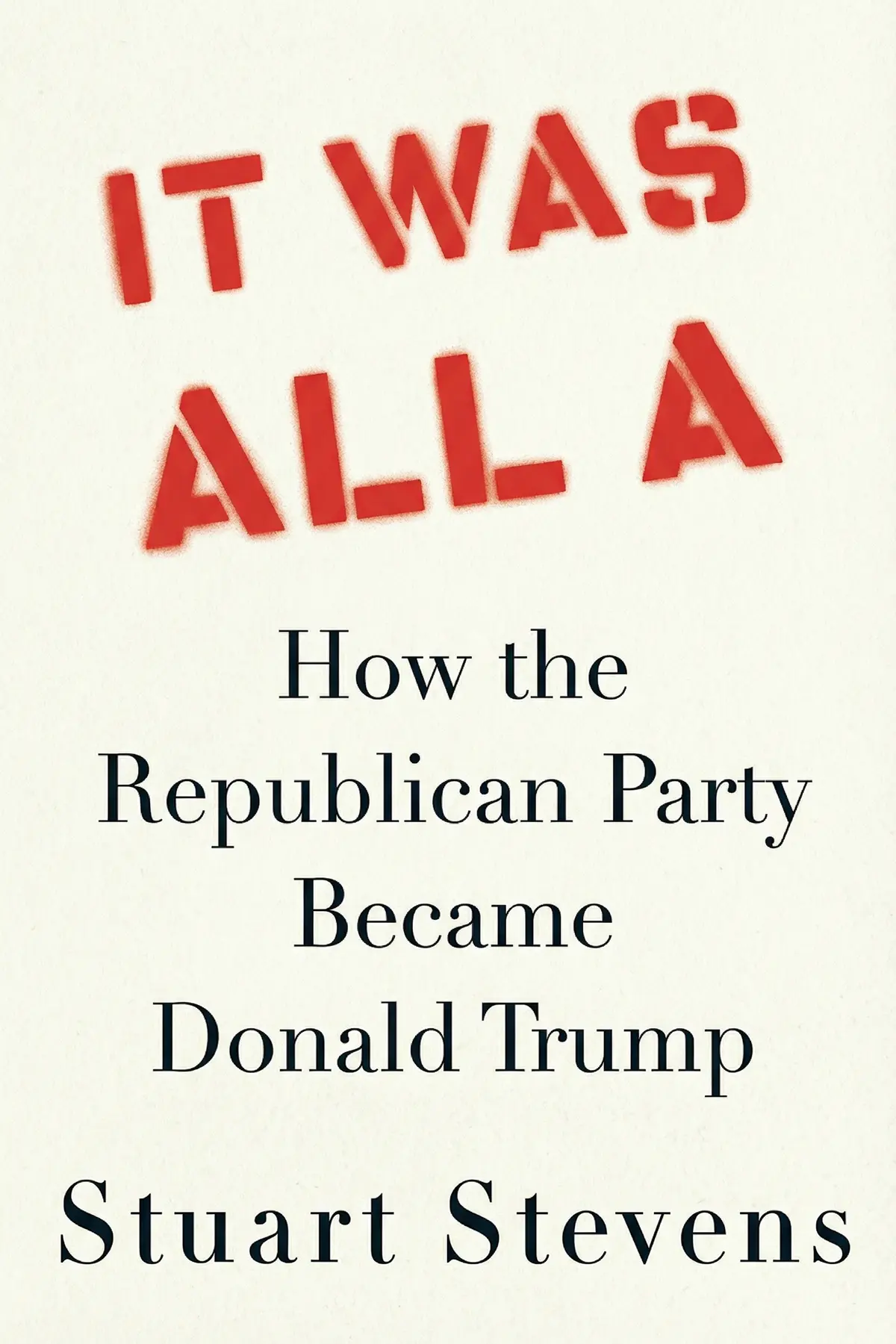
Table of Content
1. Introduction
1 min 08 sec
If political speeches leave you unsure what a party really stands for, Stuart Stevens offers a blunt test: watch what its leaders tolerate. In It Was All a Lie, the veteran Republican strategist, who worked on four presidential races, argues that Donald Trump did not hijack his party. In Stevens’ telling, Trump simply removed its disguise.
For 50 years, he says, Republicans sold voters on character, personal responsibility, careful spending and openness to immigrants, and those slogans covered racial grievance, deceit and fear. Stevens counts himself among the salesmen and accepts part of the blame.
His case runs from a 1980 Reagan rally in Mississippi to a 1987 broadcasting decision and a 1994 gun vote that ended careers. Follow it and you gain a way to hear the coded message inside a campaign speech, to check a stated value against a voting record, and to see why the silence of insiders can matter more than the loudest crowd.
2. Hear the coded message behind polite speeches
1 min 48 sec
A candidate can say nothing openly offensive and still send an unmistakable signal to one audience. Stevens follows such a signal from the party’s most admired hero to the man many assumed had broken with him.
3. Watch who a party stops trying to win
1 min 43 sec
In 1964 a Republican presidential candidate could count on a large share of Black voters. That share later nearly vanished, and Stevens argues the party’s reaction to the loss tells you more than any slogan.
4. Judge a value by what its champions excuse
1 min 52 sec
Commentators were shocked when the self-described party of family values embraced Trump. Stevens thinks the shock itself was the mistake, and his reasoning says something uncomfortable about how moral language gets used in public life.
5. Follow the budget, not the speeches about it
1 min 54 sec
Republicans praised Trump as a brilliant businessman and themselves as guardians of the public purse. Stevens checks both claims against the numbers, including ads he made himself that turned out to be badly wrong.
6. Spot news that sells feelings instead of facts
1 min 53 sec
One quiet regulatory change in 1987 helped turn conservative media into a billion-dollar business. Stevens explains how that business persuades its audience, and why a single two-word phrase became an answer to everything.
7. Spot the fear that pushes reasonable people into extremes
1 min 52 sec
In 1994, thirty-eight Republicans in Congress defied their party on a single gun vote. Stevens tracks what happened to every one of them, and what their fate taught everyone who came after.
8. Learn who history will blame most for Trump
1 min 42 sec
Stevens helped elect many of the lawmakers he now condemns, and he does not spare himself. Yet he draws a sharp line between his own hypocrisy and the choice his party made once Trump became its nominee.
9. Conclusion
1 min 11 sec
Stevens’ book works as a confession as much as an indictment. A man who spent his career selling Republican values returns to say the labels were false. Character, family, thrift and honesty were the packaging, he argues, and inside were racial grievance, deception and fear. Trump is simply the moment the wrapping came off.
You do not have to share Stevens’ politics to use his method, and it fits any party, company or movement that asks for your trust. Listen to where a phrase is spoken and to whom, the way states’ rights carried a different weight in Neshoba County. Set a group’s stated values beside what it forgives in its own leaders and beside its record, such as a debt that grew by $2 trillion in two years. And pay attention to the people inside an institution who stop speaking, because their fear of losing their place often decides more than any crowd.
Stevens keeps himself in the picture to the end, a consultant who helped build what he now condemns. His warning is plain: power kept through cowardice is still a defeat, and history remembers who stayed silent.
About this book
What is this book about?
Over fifty years, the Republican Party pitched itself as the natural home for character, personal responsibility, frugal budgets and support for immigrants. Stuart Stevens helped sell that image on campaign after campaign, including four presidential races. In this book he turns on his own work and says the image was false. Stevens argues that Donald Trump is not a strange break from Republican tradition but its logical result. He traces coded racial appeals from Ronald Reagan's 1980 rally in Mississippi to Trump's speech in Alabama, follows the party's retreat from Black and young voters, and sets its talk of family values and fiscal discipline against its record. He links the party's habit of bending the truth to a 1987 broadcasting decision that helped Fox News grow, and he shows how fear, from immigration anxiety to the power of the gun lobby, keeps officials in line. Readers get a sharp insider's account of how a major party changed, and a practical way to judge any institution: listen for coded signals, compare stated values with what leaders forgive, and watch who stays silent.
Book Information
Who it's for
Curious how Republicans changed
Readers who want an insider's account of how the Republican Party changed before and during Trump.
Students and voters
Voters and students who want a practical way to test political slogans against records and votes.
Curious about silent leaders
Professionals curious why leaders inside institutions stay silent when they know something is wrong.
About the Author
Stuart Stevens
Stuart Stevens grew up in Mississippi and spent decades as a Republican political consultant. He co-founded the Washington, DC media firm Stevens and Schriefer Group, worked on several presidential campaigns, served as a top strategist for Mitt Romney in 2012, and later joined the Lincoln Project, a Republican group opposed to Donald Trump. He has also written for television dramas and for The New York Times and Esquire. This is his eighth book.
Ratings & Reviews
Ratings at a glance

What people think
Listeners find the work exceptionally easy to read and thoroughly supported by facts, offering a sincere look at the history of the Republican Party. The prose is straightforward, and one listener mentions that it is composed in a way that remains accessible to all. There is respect for the author's bravery in being truthful, with one listener characterizing the book as an "exquisite distillation of conservativism." People express varied opinions on how frightening the content is, though several listeners describe it as equally terrifying.
Top reviews
Sukit
This book is a brutal, necessary autopsy of the Republican Party’s ideological collapse. Stuart Stevens writes with the clarity of a man who no longer has any skin in the game, and that makes his perspective incredibly valuable. He dismantles the myth that Trump was an aberration, instead tracing a direct line from the Southern Strategy to the current state of affairs. Truthfully, the section on fiscal hypocrisy—where he admits the 'balanced budget' talk was mostly a marketing gimmick—was eye-opening. The prose is lean, sharp, and remarkably easy to follow for such a heavy subject. It’s a fast read but it sticks with you long after the final page. This is a powerful distillation of everything that went wrong.
Show moreWichai
Wow, Stuart Stevens really didn't hold anything back in this scathing indictment of his former home. He provides an insider's view that confirms everything critics have suspected for years about the party's focus on power over principle. Not gonna lie, seeing him describe the GOP as a 'white person's party' was jarring coming from a top-tier strategist, but it felt authentic. The way he breaks down the transition from Reagan-era optimism to the current era of resentment is masterfully done. It's a quick, punchy read that packs a significant intellectual wallop. This isn't just a political book; it's a confession that everyone should probably read regardless of their own affiliation.
Show moreSook
The chapter on the 'Southern Strategy' alone is worth the price of admission. Stevens connects the dots between the 1960s and the present with a precision that only an insider could manage. He is unsparing in his criticism of the cynicism that drove win-at-all-costs campaigning for decades. Gotta say, I was impressed by how he didn't try to sugarcoat his own role in the process. The book is terrifying because it shows how intentional the shift away from core principles actually was. It’s well-documented, well-written, and incredibly timely. Every chapter feels like a gut punch, but it’s the kind of truth-telling that we desperately need in today’s polarized climate. Truly an eye-opener.
Show morePatchara
Not what I expected from a veteran Republican operative, but it’s a welcome surprise nonetheless. This is a brave, lacerating look at the GOP that refuses to pull any punches or make excuses for the author's own past. Stevens is a talented writer who knows how to keep the reader engaged while delivering some very uncomfortable truths about race and power. The discussion on how the party abandoned its stance on Russia and the national debt was particularly stinging. It’s rare to see someone in politics admit they were wrong on such a fundamental level. This book is a service to the country and a must-read for anyone who cares about the future of democracy.
Show moreMint
Ever wonder how we actually got here? Stevens provides a roadmap that is as fascinating as it is deeply unsettling. He doesn't just blame the voters; he looks in the mirror and admits how his own ads helped stoke the flames of grievance. Personally, I found the bits about the internal GOP culture and the 'litmus tests' for candidates to be the most revealing parts of the narrative. It’s written in a way that feels like a conversation over a drink, though the subject matter is anything but light. While I wish he’d spent a bit more time on specific policy alternatives for the future, the historical documentation is rock-solid. This is an essential read for anyone trying to understand modern American politics.
Show moreEye
Picked this up on a whim after seeing an interview with the author and I’m glad I did. The writing is clear and avoids the dense jargon that usually bogs down political memoirs of this type. Stevens has a way of explaining complex strategies—like how the party used race as a wedge—in language that anyone can understand. To be fair, some parts felt a little repetitive, especially toward the end when he's hammering home the same points about hypocrisy. But the historical anecdotes about working for five different presidents are worth the entry fee alone. It’s a frightening look at how easily a national movement can be hollowed out from the inside.
Show moreRatchanee
After hearing about this book for months, I finally sat down with it and finished it in two sittings. It’s an exquisite distillation of how the modern conservative movement lost its way. Stevens uses his decades of experience to show that the current state of the party isn't a fluke, but a feature of the system he helped build. In my experience, most political books are either dry or overly partisan, but this manages to be neither. It’s a readable, fast-paced account that balances personal anecdotes with cold, hard data. My only real gripe is that it’s a bit short and I wanted more depth on the specific campaigns he managed. Still, it is a very solid four stars.
Show moreAir
Truth is, it’s terrifying to see the mechanics of how a party loses its way through the eyes of someone who was in the room. Stevens doesn’t just focus on the current leadership; he looks back at decades of decisions that led to this moment. The writing is incredibly sharp, and he has a knack for summarizing complex political shifts in a few memorable sentences. I found the sections on the influence of talk radio and the 'outrage industry' to be particularly insightful and well-documented. While it can be a depressing read at times, the clarity of his argument is undeniable. It’s an honest, if painful, account of a life spent in the political trenches. Highly recommended for any political junkie.
Show moreSai
As someone who has followed the Lincoln Project since the beginning, I was excited to dive into this. Stevens is clearly a gifted communicator, and the book is meticulously researched with a bibliography that rivals a doctoral thesis. However, I can't help but feel a bit cynical about the timing of this conversion. Frankly, it’s hard to give five stars to a man who spent decades perfecting the very tactics he now decries as dangerous. The research is top-notch and the writing is engaging, but the 'mea culpa' feels a little too polished at times. It’s a good history lesson, but the emotional resonance fell a bit flat for me because the damage is already done.
Show moreNatalie
Look, I appreciate the honesty, but this felt like too little, too late for me. Stevens spent his entire career building the very machine he’s now trying to dismantle, and the book feels more like a PR move than a genuine apology. He writes about the damage done to the country with a strange clinical detachment that I found off-putting. The research is certainly thorough, and the writing is professional, but the tone comes across as self-serving. I wanted more accountability and less 'everyone was doing it.' If you want a history of GOP strategy, it’s fine, but don't expect a soul-searching masterpiece. It's just another political operative trying to save his reputation after the fire started.
Show moreQuestions about this book
What is the main argument of It Was All a Lie by Stuart Stevens?
Stevens, a longtime Republican strategist, argues that Donald Trump is the logical result of 50 years of Republican politics, not a break from it. In his view, the party’s claims about character, family values, fiscal responsibility and support for immigrants were sales pitches. Underneath, he says, were racial grievance, a culture of deceit and the use of fear. Trump made all of this visible, and the establishment chose to support him anyway.
How does Stuart Stevens connect Ronald Reagan to Donald Trump?
Stevens points to coded racial language, or dog whistles. Reagan spoke of African American welfare queens and, in 1980, praised states’ rights at a Neshoba County, Mississippi rally, close to the site of the 1964 murders of three civil rights volunteers. Thirty-seven years later, Trump told a mostly white audience in Alabama that football players kneeling to protest police killings disrespected our heritage. Stevens sees a direct line between the two.
What does Stevens say about Fox News and the fairness doctrine?
Stevens dates the rise of Fox News to 1987, when the Federal Communications Commission ended its enforcement of the fairness doctrine, a rule that had demanded balanced coverage of important public issues. Conservative media then grew into a billion-dollar industry free to report feelings over facts. He cites the birther claims about Barack Obama as an example, and argues that the phrase fake news became an easy reply to any unwelcome fact.
Who should read It Was All a Lie?
It suits readers who want an insider’s view of how the Republican Party changed, written by someone who helped run its campaigns, including Mitt Romney’s in 2012. It also helps anyone who wants a method for judging political claims: listen for coded language, compare values with voting records and budgets, and notice which failings a group forgives in its own leaders.
How can I apply the ideas in It Was All a Lie?
Stevens’ argument suggests a few habits. When a phrase sounds mild, ask where it is said and to whom. When a party claims to guard public money, check what happened to the debt while it held power, as with the $2 trillion rise in two years under Trump. And in any organization, notice when people stop voicing their views out of fear of punishment, as the 38 Republicans of the 1994 gun vote learned.
Readers also enjoyed


A Promised Land
Barack Obama

A River in Darkness: One Man’s Escape from North Korea
Masaji Ishikawa

A Theory of Justice
John Rawls



A Warning
Miles Taylor


AUDIO SUMMARY AVAILABLE
Listen to It Was All a Lie in 15 minutes
Get the key ideas from It Was All a Lie by Stuart Stevens, plus 5,000+ more nonfiction titles.
- 5,000+ titles
- Listen as much as you want
- 7-day free trial
- Cancel anytime









