

17 min 14 sec
Available in: English
 ไทย
EnglishไทยIslam: A Short History
A clear history of Islam built around one idea: a faith whose highest aim is a just society on earth, and how that aim shaped its rise, its law, its golden age and its modern crises.
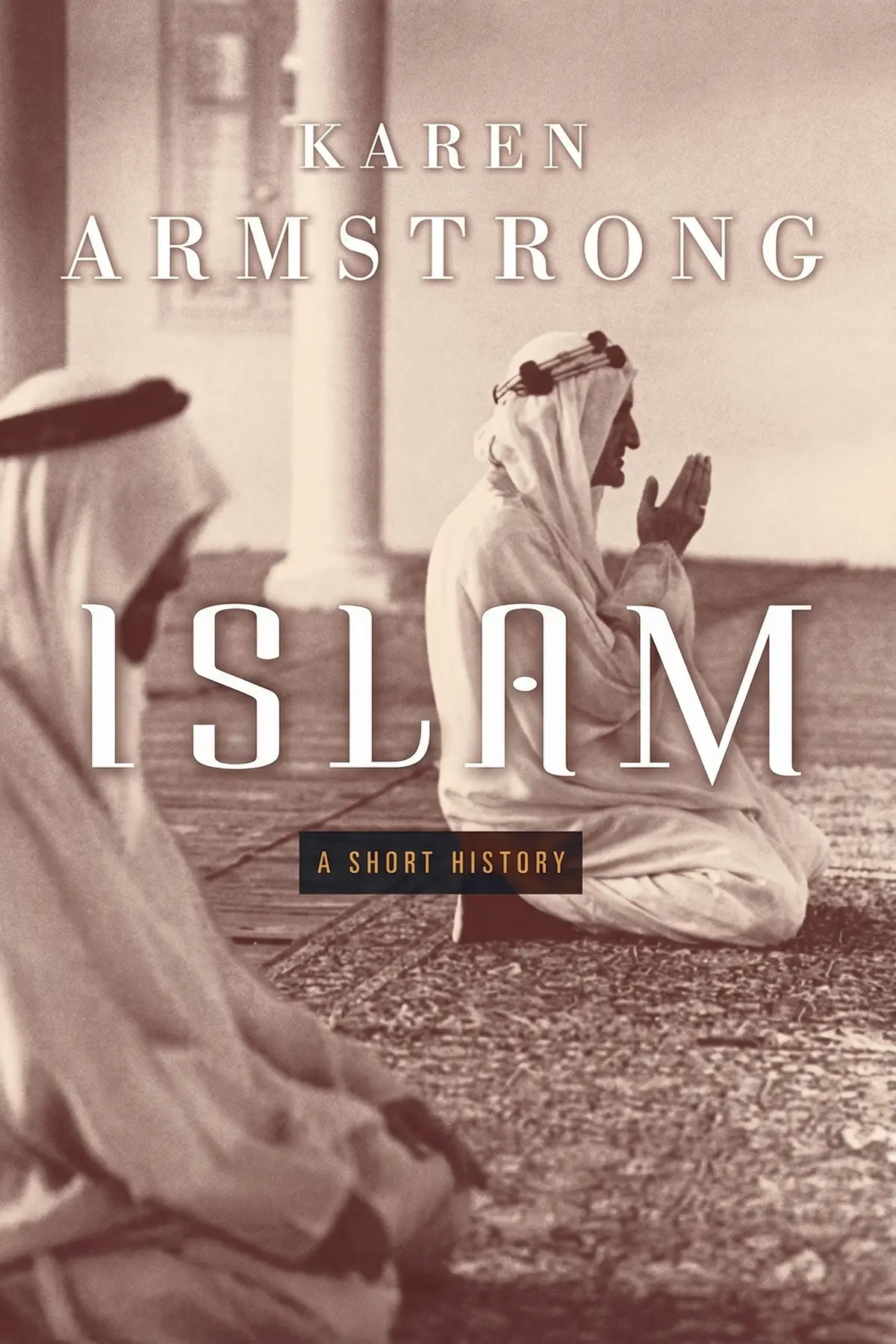
Table of Content
1. Introduction
1 min 00 sec
Most people meet Islam through a few stock images: the hijacker, the tyrant, the silenced woman. In Islam: A Short History, Karen Armstrong, a former nun who writes about what the world’s faiths share, offers a better key. Islam, she argues, is unusually political: its highest goal is a fair society here and now, and believers meet God through what they do in history.
Hold that key and fifteen centuries start to make sense. Muhammad’s preaching becomes a protest against greed in a rich trading town. Islamic law grows up as a check on kings. Colonial conquest turns into a crisis of faith, since a society obedient to God was not supposed to fail. And modern fundamentalism proves to be newer than it claims. By the end, the story from Mecca to the Taliban is one you can retell, along with the reason piety and politics never come apart in it.
2. Discover how Islam treats a just society as sacred
1 min 44 sec
Most religions keep a careful distance from power, treating politics as a necessary stain. Islam took a different path from its first day, and that choice still shapes every argument in the Muslim world.
3. Understand the crisis Muhammad's message answered
2 min 07 sec
A trading tribe had grown fabulously rich, and something in Arabian life was breaking. A man of the powerful Quraysh tribe began reciting verses that named the problem, and the city’s elite came to see him as a threat.
4. Medina, the model Muslims still measure against
2 min 04 sec
Leaving your tribe in seventh-century Arabia was close to unthinkable. A small band of believers did it anyway, and the simple, pious life of the town they built became an example for all believers.
5. Spot the myth of the religion of the sword
2 min 02 sec
Within a generation of Muhammad’s death, Arab armies ruled from North Africa to Afghanistan. The way they governed those lands sits awkwardly with the most familiar story told about how Islam spread.
6. Law and learning that outlived the empire
2 min 17 sec
Kings grew powerful and courts grew lavish, and devout Muslims sensed their faith slipping away. Their response looked like retreat, yet it produced a golden age that no single ruler controlled.
7. Understand the reasons copying the West kept failing Muslim states
2 min 37 sec
Europe overtook the Islamic world, then ruled most of it. Rulers who raced to imitate their conquerors expected strength in return, and the gap between that promise and the outcome still shapes the region.
8. See through fundamentalism's claim to tradition
2 min 05 sec
Fundamentalists promise a return to a pure golden age of faith. Look closely at one of the most influential of them, and his central idea turns out to be something the tradition never taught.
9. Conclusion
1 min 18 sec
Armstrong’s history keeps returning to one figure: a believer who meets God by trying to make the world fair. That figure explains the protest against Meccan greed, the constitution of Medina, the scholars who wrote law to restrain kings and the schools that held a divided civilization together. It also explains why colonial conquest cut so deep. If a just and obedient society cannot fail, defeat raises questions about God, and Muslims have spent the modern age trying to fit their faith to nations, secular states and borders drawn by others.
The book leaves a few habits worth keeping. When you hear about politics in a Muslim country, listen for the religious argument inside it, since for many believers the two were never separate. When someone calls Islam a religion of the sword, recall an early empire that discouraged conversion and protected Jews and Christians in return for a tax. And when any group, in any faith, promises to bring back a pure golden age, compare its program with the founder it claims to follow.
Qutb’s followers and the Taliban fail that comparison. The prophet who began by defending Mecca’s poor remains the measure.
About this book
What is this book about?
For many people, Islam is a set of headlines and stereotypes. Karen Armstrong sets out to replace them with history, and she does it with one guiding idea. Unlike faiths that place justice in the next world, Islam treats building a fair society here and now as a sacred act, so politics and piety cannot be separated. Armstrong follows that idea from Muhammad's preaching against the greed of Mecca's merchant elite, through the community at Medina and an empire won almost by accident, to the scholars who shaped Islamic law as a check on kings and the decentralized golden age of Cairo and Bukhara. She then turns to the shock of European colonial rule, the failure of rulers who tried to copy the secular West, and the rise of fundamentalism. Readers come away with a compact map of fifteen centuries, a way to read political arguments in the Muslim world as religious ones, and a sharp case that modern fundamentalism is far less traditional than it claims.
Book Information
Who it's for
Wanting Islam's real history
Readers who know Islam mainly from news headlines and want its real history in one clear story.
Working with Muslims
Students and professionals working with Muslim colleagues, clients or regions who need context fast.
Exploring religion and politics
Anyone trying to understand why religion and politics stay joined in much of the Muslim world.
About the Author
Karen Armstrong
Karen Armstrong was born in 1944 in Worcestershire, England. She spent years as a Roman Catholic nun, graduated in English from Oxford, left the convent in 1969 and later taught literature at the University of London. Her writing explores what the major religions share, especially compassion and the Golden Rule. She won the TED Prize in 2008 and used it to call for a Charter for Compassion. Her books include A History of God and The Lost Art of Scripture.
The Lost Art of Scripture: Rescuing the Sacred Texts
Karen Armstrong
Ratings & Reviews
Ratings at a glance
What people think
Listeners find the text deeply researched and educational, with one listener mentioning that academic particulars can be skimmed. Furthermore, the writing is expertly executed, and listeners enjoy the succinct, approachable style and brisk tempo. The book also offers a thorough historical account and significant religious insights. Nevertheless, perspectives on the author's objectivity are varied.
Top reviews
Ratthapong
As someone who only knew the basics of Islamic history, this book was an absolute revelation. Karen Armstrong manages to condense fourteen centuries into fewer than two hundred pages without making it feel like a dry list of dates. I was particularly struck by her focus on the 'ummah' and the early Muslim community's deep commitment to social justice. To be fair, the speed of the narrative is blistering, moving from the life of Muhammad to the Abbasid dynasty in the blink of an eye. However, the way she explains the Shii and Sunni split helped me finally understand the roots of modern theological divides. It is an authoritative and masterfully written introduction that challenges many common Western misconceptions. Truly, this is an essential read for anyone seeking to understand the cultural renaissance that once flourished in places like Baghdad and Istanbul.
Show moreWoravit
This serves as a powerful corrective to the typical Western narrative regarding the spread of Islam across the globe. We are often taught that the religion was spread solely by the sword, but Armstrong clarifies how the 'ahl al-kitab' were actually treated with relative tolerance. I appreciated the specific details about 'dhimmis' and the poll tax system which allowed for a pluralistic society long before Europe managed anything similar. The book is incredibly well-researched and informative, providing a comprehensive overview of the rise and fall of various dynasties. Truth is, I had no idea about the depth of the cultural renaissance during the eighth century. Her writing is accessible and helps bridge the gap between academic history and the general reader. It makes you realize how much of our global history has been filtered through a very narrow lens.
Show moreJack
Karen Armstrong has a way of humanizing vast historical shifts that usually feel cold and distant to Western readers. I was fascinated by the descriptions of the cultural renaissance in Istanbul and the architectural wonders produced under the Ottomans. This book highlights the strong concern for social equity that drove the early 'ummah' and how that ideal was often betrayed by later political leaders. The way she handles the split between Sunni and Shii branches is the clearest explanation I have ever read. Truth is, we rarely get to see Islamic history from this perspective, and it is incredibly illuminating. The book is concise yet provides a comprehensive look at the various schools of thought and religious developments. It left me wanting to explore more of her work on the history of myth and religion. High-quality writing throughout.
Show moreBig
Finally got around to reading Armstrong after seeing her work referenced in so many history podcasts. The writing is masterfully done, though I must warn you that it feels like a verbal machine gun fire of names and places at times. You really have to pay attention or you will miss the significance of figures like Harun al-Rashid or the impact of the Mongol invasions. Personally, I found the chapters on the Ottoman Empire and Suleiman the Magnificent to be the strongest parts of the book. She provides a much-needed perspective on how the West was viewed during the Crusades and colonial periods. While some might find her tone a bit too sympathetic, I think it works well as a corrective to the negative bias we usually see. It is a concise, quick-paced journey through a complex history.
Show moreNang
Ever wonder why the tension between the West and Islamic societies feels so deeply rooted in the past? Armstrong traces these conflicts from the early Caliphates through to modern fundamentalism with remarkable clarity and insight. The book is masterfully written, though it is quite short for such a massive subject. I loved the inclusion of a glossary for Arabic terms, as it kept me from getting lost in the terminology. To be fair, she does skim over some of the more violent aspects of the conquests to focus on the ideal of social justice. This makes the book feel a bit lopsided at times, but as a summary of the faith's evolution, it is brilliant. The pace is fast, and you can easily finish it in a few sittings. It is a great starting point for further study.
Show moreSavannah
The pace of this book is blistering, almost like a crash course in a long weekend. In just under two hundred pages, you get a bird’s-eye view of everything from the flight to Medina to the fall of the Ottoman Empire. Karen Armstrong has a gift for making complex theological shifts, like the emergence of Sufism, feel accessible to a layperson. Not gonna lie, I had to keep flipping to the back to keep all the different Caliphs and dynasties straight in my head. Some of the scholarly details are a bit dense, but you can skim those and still get the main points. It is a valuable resource for anyone who feels like they missed out on this part of world history. The book successfully humanizes a faith that is often unfairly maligned in the news. Definitely worth the time for the perspective alone.
Show moreValentina
Picked this up to fill some gaps in my knowledge regarding the Middle East and was pleasantly surprised by the depth. Even though it's a short history, it doesn't feel like it's missing the major milestones of the faith. Armstrong covers the Crusades and the Mongol invasions with a focus on how these events shaped the Muslim psyche. Gotta say, the section on the secularization of Turkey in the 1920s was particularly interesting and well-explained. The book is masterfully done, balancing historical facts with religious philosophy in a way that feels seamless. My only minor criticism is that she occasionally repeats her main thesis about social justice a bit too often. Still, it provides valuable insights into why the relationship with the West remains so fraught today. It’s a quick, informative read that I’d recommend to anyone.
Show moreWillow
After hearing so many conflicting things about this book, I decided to see for myself if it lived up to the hype. In my experience, it is a very solid introductory text that manages to be both concise and comprehensive. Armstrong is clearly an expert, and her grip on the subject matter is evident in every chapter. She does a great job of explaining the importance of the Quran and the Prophet’s life without getting bogged down in too much jargon. While I agree with other reviewers that she can be quite sympathetic, it’s a necessary balance to the usual negativity. The book flows well and moves quickly through the centuries, making it a perfect starting point for students. To be fair, some sections on the Abbasid decline were a bit dry, but the overall impact is very positive. A masterfully written overview of a complex world religion.
Show moreLuckana
Not what I expected given the 'popular history' label, as it often feels more like a dense textbook. While I agree that it is well-researched and informative, I suffered from a bit of academic PTSD while trying to track the endless succession of rulers. The names and dates come at you so fast that it’s hard to form an emotional connection to the history. Armstrong’s writing is masterfully done in a technical sense, but the tone is quite impersonal for most of the middle chapters. To be fair, she picks up the energy when discussing modern fundamentalism and the challenges of Westernization. It is a useful book for those who already have a baseline knowledge of the region. However, for a complete beginner, it might feel like a dry list of impersonal facts. It’s a decent introduction but not exactly a page-turner.
Show moreSirirat
Look, I appreciate the research that went into this, but the bias is impossible to ignore throughout the text. Armstrong is a talented writer, yet she seems determined to paint every historical event in the most apologetic light possible. She claims the Battle of Poitiers was exaggerated by Westerners, which feels like a strange dismissal of a massive military turning point. I've read the primary sources, and her interpretation that Islam has always been a religion of peace and feminism feels like modern propaganda. Frankly, the book ignores the harsher realities of the early conquests and the lived experiences of those who were conquered. It is a blitzkrieg of facts that tries to convince you of a very specific, modern political viewpoint. If you want an unbiased history of the Middle East, you might want to look elsewhere. I don't have the patience for this level of historical revisionism.
Show moreQuestions about this book
What is the main idea of Islam: A Short History by Karen Armstrong?
Armstrong argues that Islam is an unusually political faith. Where other religions treat history as secondary to eternal truth, Islam’s highest aim is a just society in this world, and Muslims experience God through their deeds. She follows that idea from Muhammad’s protest against Mecca’s greedy elite, through empire, Islamic law and a golden age, to colonial conquest and modern fundamentalism.
Was Islam spread by the sword according to Karen Armstrong?
Armstrong disputes that picture. The first empire grew when the caliphs Umar and Uthman redirected traditional Arabian raids outward, since Muslims could no longer raid each other. The conquests came almost by accident. Conversion was discouraged, Arab Muslims lived in separate garrison towns, and Jews and Christians kept their faith and received protection in return for a special poll tax.
How does Armstrong explain Islamic fundamentalism?
She sees fundamentalism as part of a backlash found in every major religion, driven by the sense that aggressive secularism threatens religious values. Fundamentalists claim to restore a golden age, but Armstrong shows their ideas are often new. Sayyid Qutb reinterpreted the Quranic word for pre-Islamic ignorance to target all modernizers, an innovation that led followers to assassinate Muslim leaders such as Anwar al-Sadat.
Why did modernization fail in many Muslim countries?
Rulers such as Muhammad Ali of Egypt and later Atatürk, Nasser and Saddam Hussein tried to copy the secular West and suppressed Islam by force. Armstrong argues this clashed with the Muslim belief that religion and politics belong together. The activist Jamal al-Din noted that the West built its modernity from its own traditions over centuries, so Muslims would need to create an Islamic modernity of their own.
Who should read Islam: A Short History?
It suits readers who want an accessible overview of Islamic history that goes beyond stereotypes, from students to professionals working across cultures. It covers Muhammad’s life, the early empire, the birth of the Shariah, the golden age of Cairo and Bukhara, European colonialism and modern fundamentalism, all tied to one argument about faith and justice.
Readers also enjoyed

Alexander Hamilton
Ron Chernow

Abundance: The Inner Path to Wealth
Deepak Chopra

Alexander the Great
Philip Freeman

Aflame: Learning from Silence
Pico Iyer

Alcoholics Anonymous
Alcoholics Anonymous World Services

A History of Iran: Empire of the Mind
Michael Axworthy

A History of the World in 6 Glasses
Tom Standage
AUDIO SUMMARY AVAILABLE
Listen to Islam in 15 minutes
Get the key ideas from Islam by Karen Armstrong, plus 5,000+ more nonfiction titles.
- 5,000+ titles
- Listen as much as you want
- 7-day free trial
- Cancel anytime









